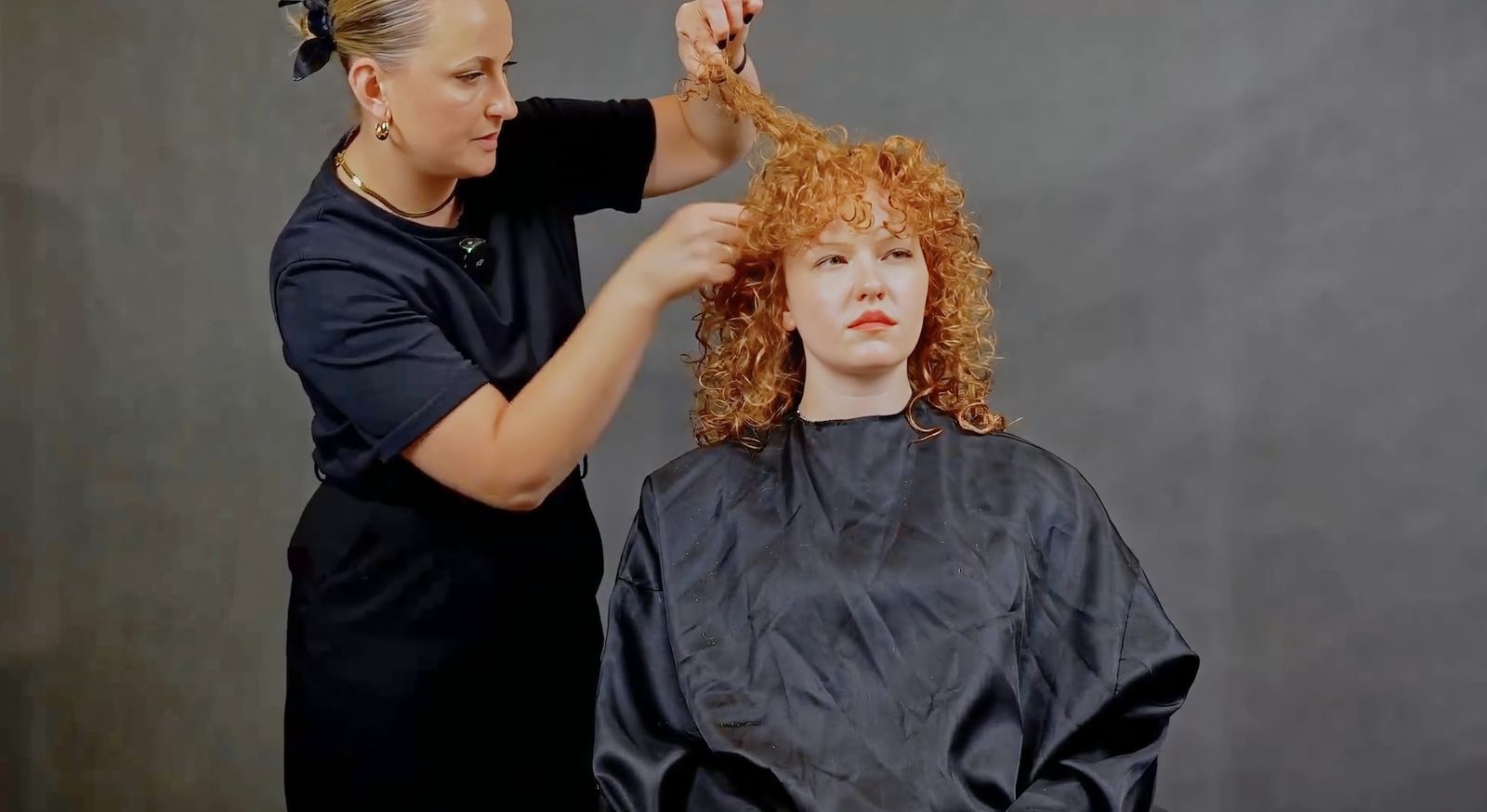
Cutting natural curls follows different rules than working with straight hair. Curls shrink after drying, distribute weight differently, and forgive far fewer sectioning mistakes. Klaudia Piotrowicz’s “Textured Curl Cutting” course organizes this knowledge: how to read curl type, how to guide the scissors, and where to remove weight so the hairstyle falls into place on its own — even a month after the appointment.
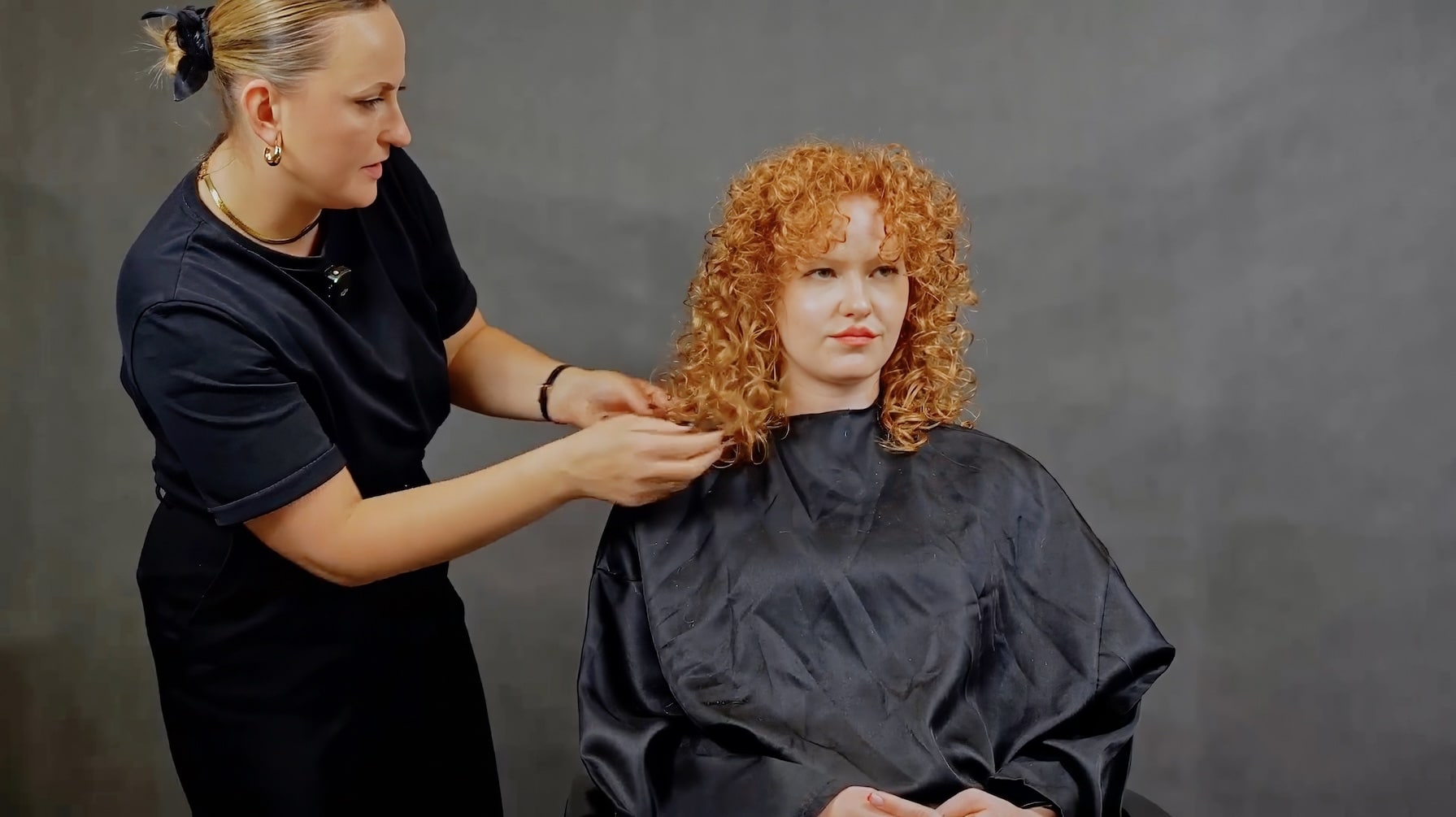
Klaudia Piotrowicz – precision in curl cutting
Klaudia Piotrowicz, a hair care and color specialist, works with multidimensional blondes and precision haircuts. She is the founder of OMH! Creative Team and a graduate of the Sassoon Academy in Los Angeles — an influence clearly visible in her approach: every cut stems from a specific structure and consistent sectioning, not improvisation.
Her textured curl cutting course combines hair diagnosis with technique. Before the first cut is made, you define the curl type, porosity, and density — only then do you choose the shape, layer length, and method of removing weight.
“In a world where most techniques are tailored to straight hair, I had to create a method that does justice to natural curls,” explains Klaudia.
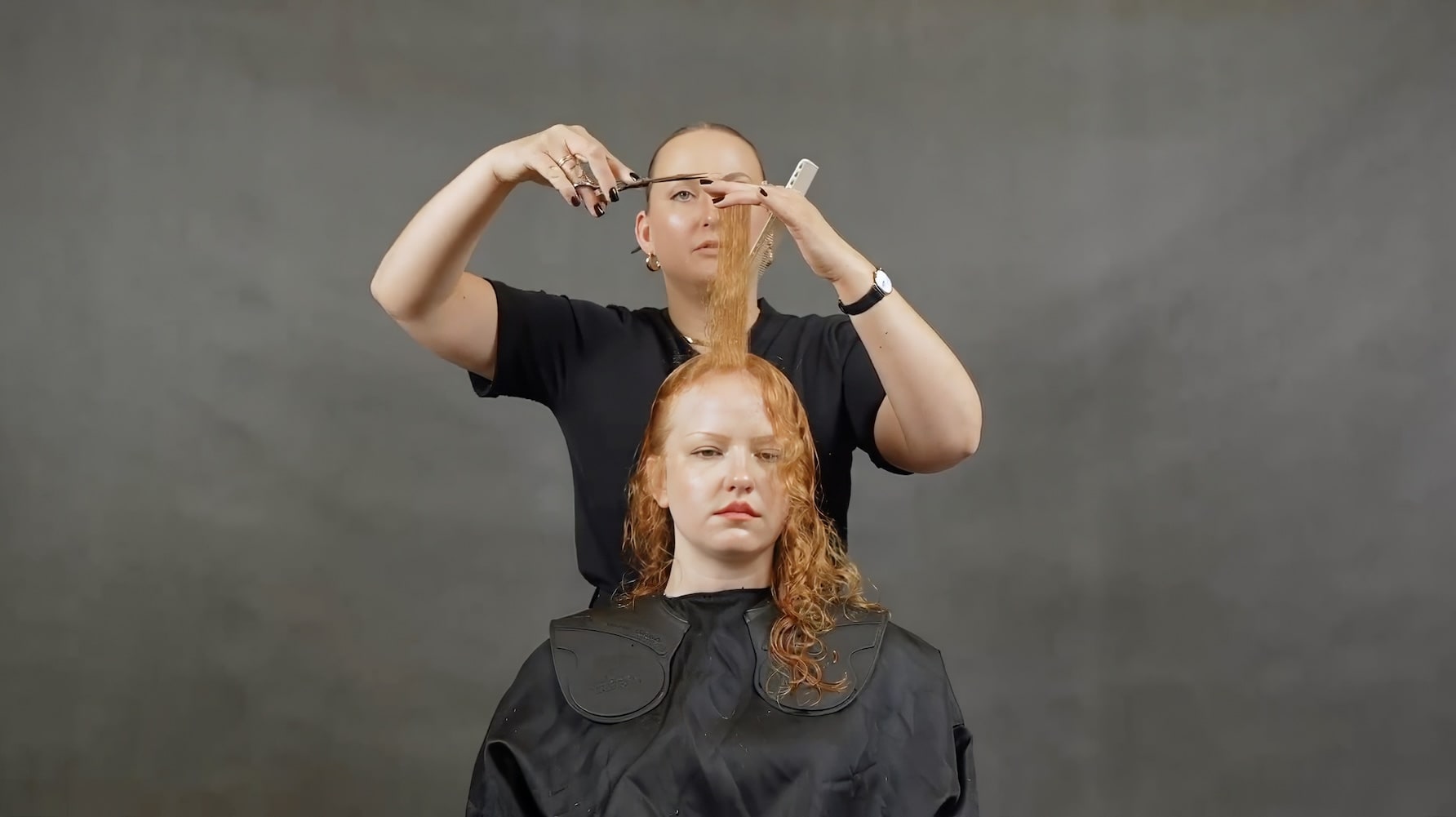
What textured curl cutting involves
The technique is built on three pillars that set it apart from “flat” cutting:
- Working with the curl’s structure, not a flat surface: a curl has volume and direction, so layers are designed to follow the natural curl pattern rather than work against it. You section according to the growth lines, check how the strand falls when dry, and only then determine the layer’s weight.
- Layering without the “helmet” effect: instead of hard, parallel layer lines, Klaudia angles the scissors and point-cuts the ends. “I use point cutting and angled scissor work, which allows for smooth transitions between layers,” says Klaudia. Vertical, soft transitions break up the line and eliminate a dense, dome-shaped top.
- Adapting to curl type: the same shape looks completely different on 2A hair versus 4C hair. The course teaches how to modify layer length, the amount of weight removed, and the depth of point cutting across the entire Andre Walker curl scale, from 2A to 4C.
The most common problems in curl cutting and how to solve them
- Problem: curls shrink after drying, so a cut measured while wet ends up too short. Solution: “I use the ‘dry cutting’ technique in the final stage, which allows for precise length adjustment,” explains Klaudia. The shape is finished dry, once the curl has fully formed and its real length is visible — rather than the stretched value from a wet diagnosis.
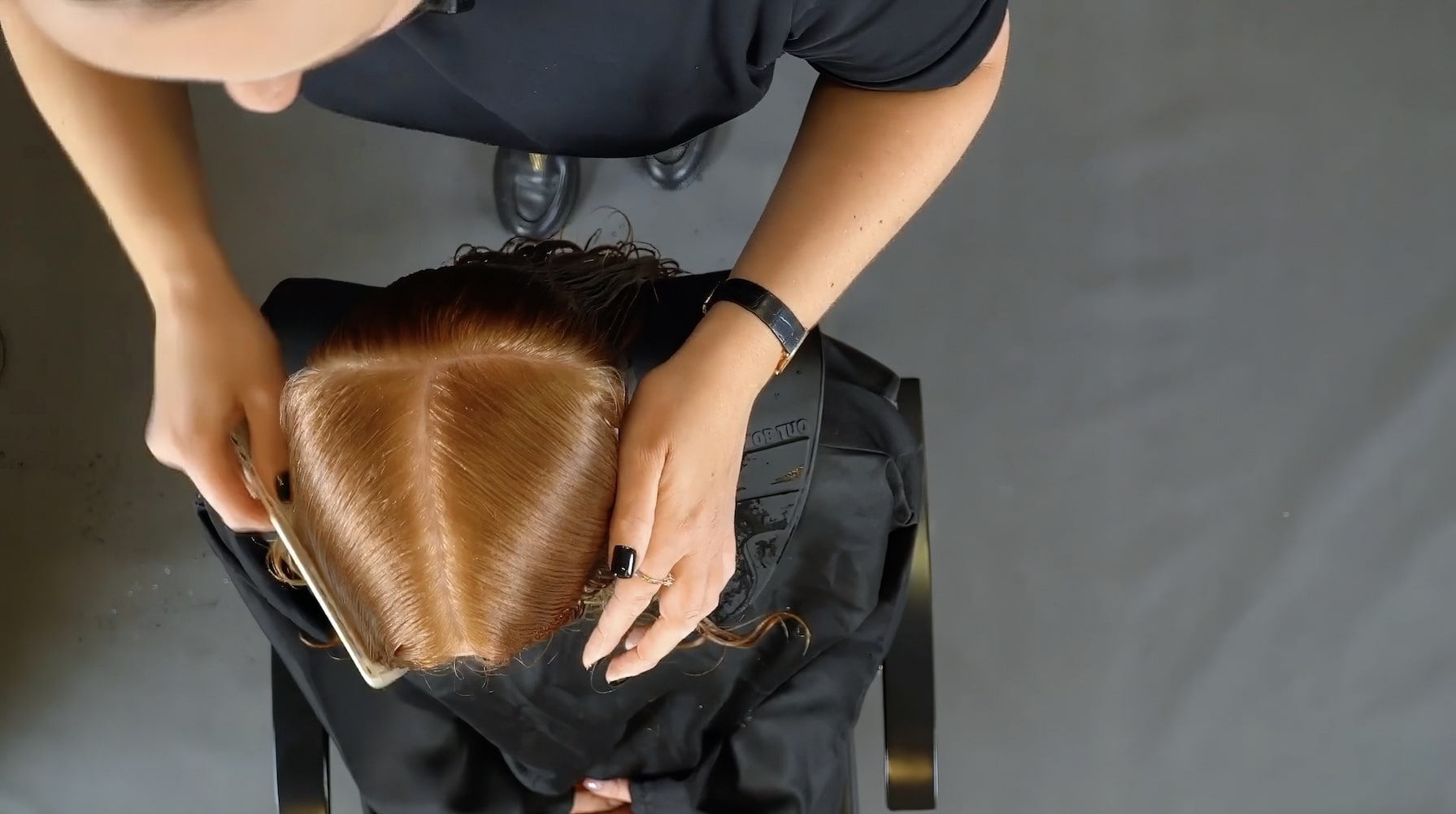
- Problem: loss of volume at the crown and flat, drooping sections at the root. Solution: Klaudia demonstrates the “root lifting cut” technique, which builds support at the root through shorter interior layers that lift the longer strands from underneath.
- Problem: difficulty achieving symmetry, since curls mask unevenness and asymmetry between sides is easy to miss. Solution: the course introduces a “head mapping” method — fixed control points and reference sections that ensure both sides of the cut follow the same geometry.
Comparison with other curl cutting techniques
| Technique | Advantages | Disadvantages | Who is it for? |
|---|---|---|---|
| Devacut | Great for very curly hair | Can be too radical for looser curls | Clients with 3B-4C hair types |
| Rezo Cut | Excellent for adding volume | Can be difficult for everyday styling | Clients with dense but looser curls |
| Klaudia’s Textured Cut | Versatile, adaptable to different curl types | Requires precision and practice | Ideal for all curl types, from 2A to 4C |
What mastering this technique gives you in the salon
- A new client base: people with curly hair look for a hairdresser who understands their hair, and they come back once they find one.
- Higher service rates: curl cutting is diagnostic, time-consuming work, which justifies pricing it differently from a classic haircut.
- Fewer touch-ups: a cut finished dry and based on head mapping reduces the risk of a hairstyle that’s too short or asymmetrical.
- Educational specialization: a mastered, repeatable technique is the foundation for running your own courses and workshops.
What exactly the course teaches
- Advanced cutting techniques:
- Point cutting the ends, which breaks up a hard line and adds texture without losing length
- Slide cutting for smooth transitions between layers and soft layering
- Controlled weight removal with thinning shears where the curl is too heavy
- Curl analysis and classification:
- Practical recognition of curl type on the 2A-to-4C scale
- Choosing the shape and number of layers for specific hair density and porosity
- Styling and care:
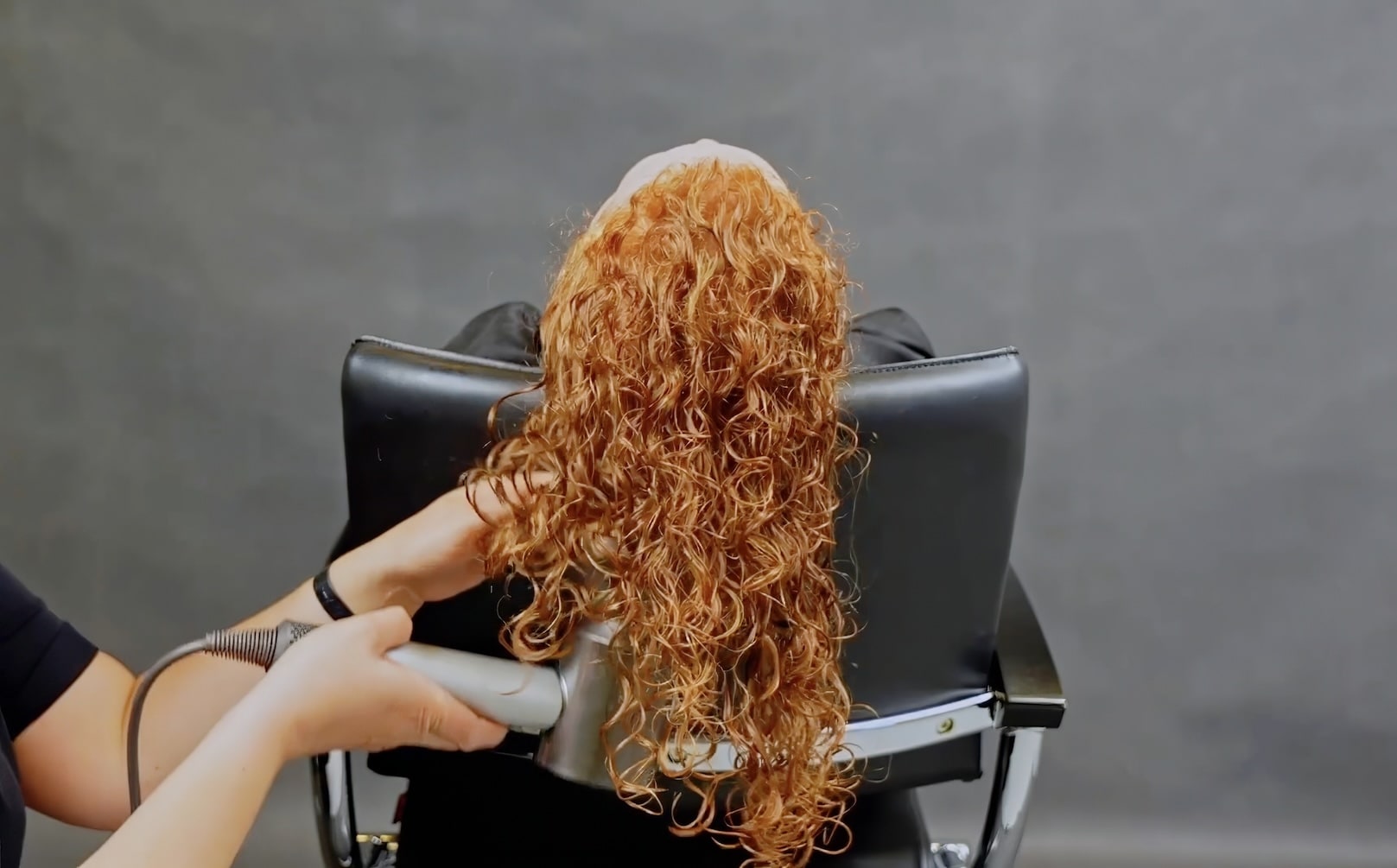
- Diffuser drying tailored to curl type, without disrupting the curl pattern
- Selecting and combining styling products for the specific hair structure
Curl trends worth knowing
The approach to curls is changing fast. Here are a few directions that genuinely impact salon work:
- Product personalization: choosing care not only based on curl type, but also hair porosity, climate, and the client’s lifestyle. This gives the hairdresser a tool for precise at-home recommendations, not just behind-the-chair service.
- Cutting in line with the hair’s natural pattern: techniques that follow the curl pattern instead of forcing it produce hairstyles that look good right after the appointment and are easy to style at home.
- Broader hair condition diagnosis: hairdressers increasingly advise on curl condition, not just cut it. Better recognition of hair condition translates into a longer-lasting cut result.
- Modern drying tools: dryers with temperature and humidity control help finish the shape without over-drying the curl. Skilled use of them is now the standard, not an extra.
- Client education: clients expect guidance on how to maintain the result between appointments. The ability to clearly communicate curl care builds trust and loyalty.
Working with curls rewards those who treat every head of hair as an individual case: a different curl pattern, different porosity, different weight. The more precise the diagnosis before cutting, the fewer touch-ups afterward.
Grow with Connected Hair
By joining the Connected Hair Academy, you not only gain access to Klaudia’s course, but also:
- A course library: from wavy mullet to C-shape layering.
- Webinars with experts: staying current with the latest techniques.
- A professional forum: sharing experience and solving problems with other hairdressers.
- Course completion certificates: building your portfolio and your salon’s prestige.
Curl cutting is a skill honed through practice, and continuous skill development translates into real results behind the chair. Klaudia Piotrowicz’s course provides a structured, repeatable method for working with natural curls, from diagnosis to finishing.
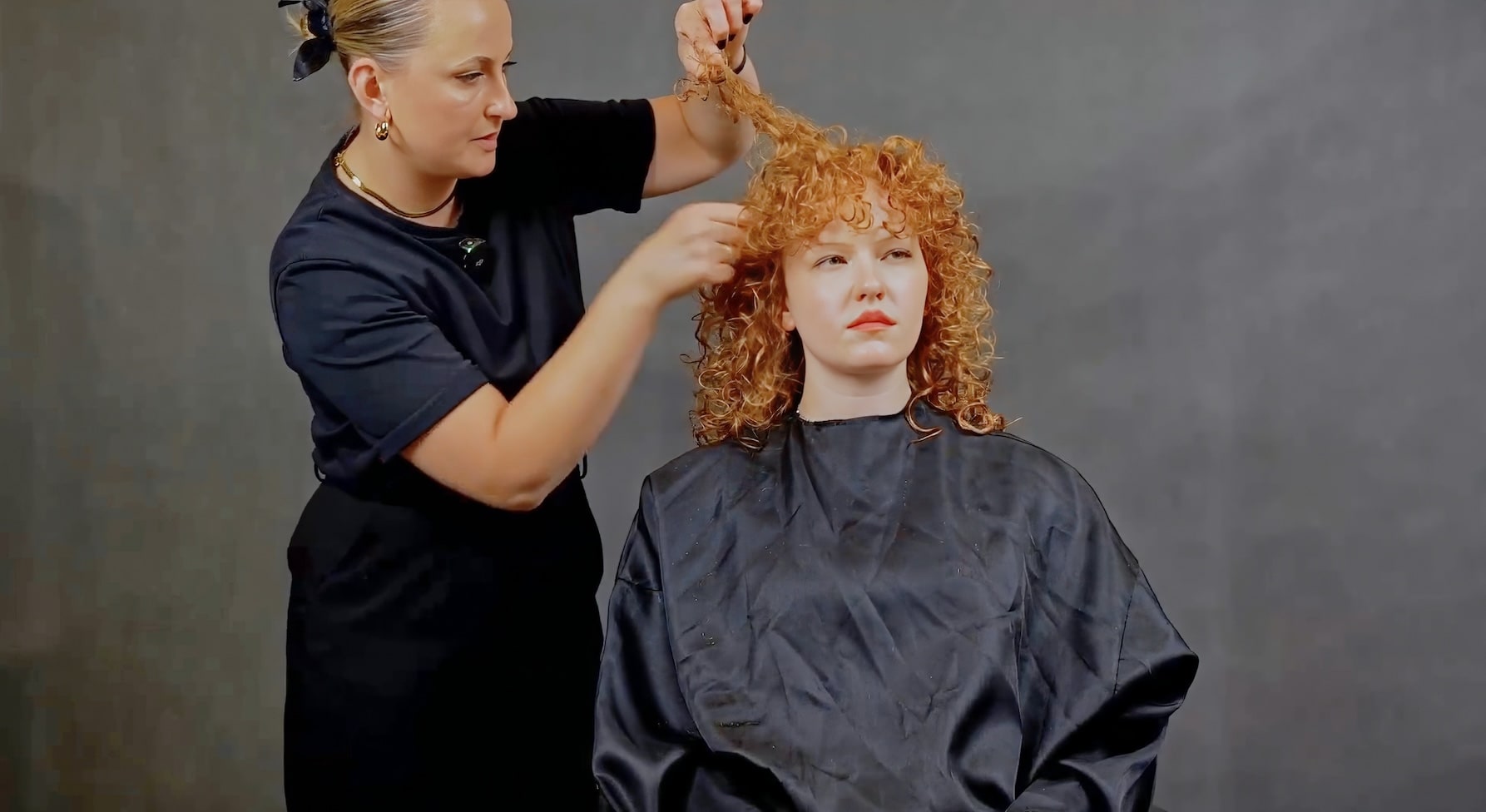
See it in practice: in the textured curl cutting course with Klaudia Piotrowicz you’ll follow the entire process step by step on a model, with commentary from the instructor.