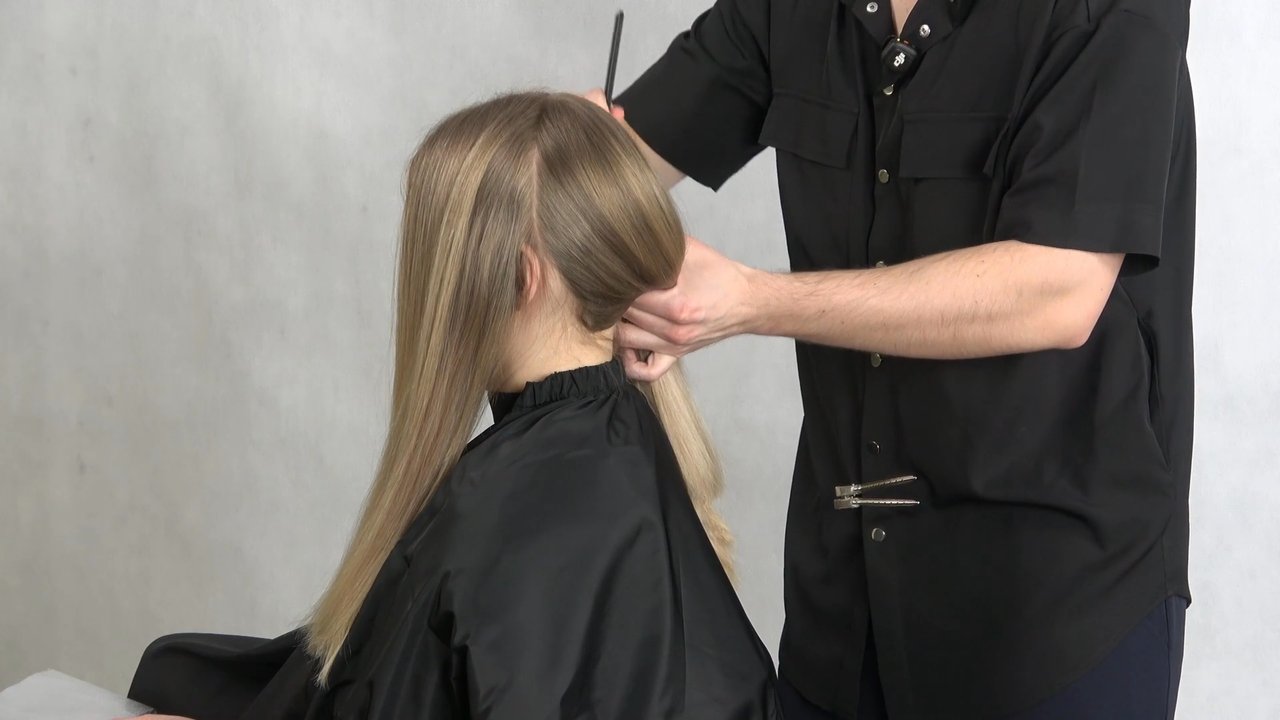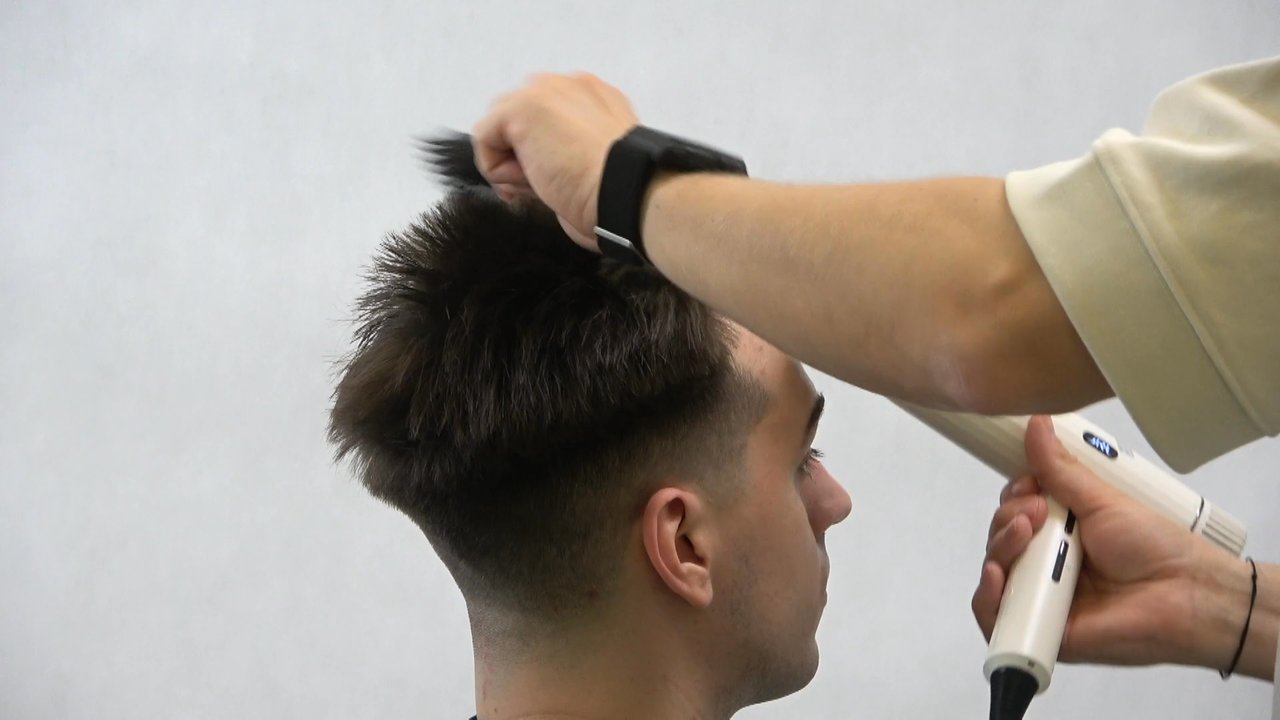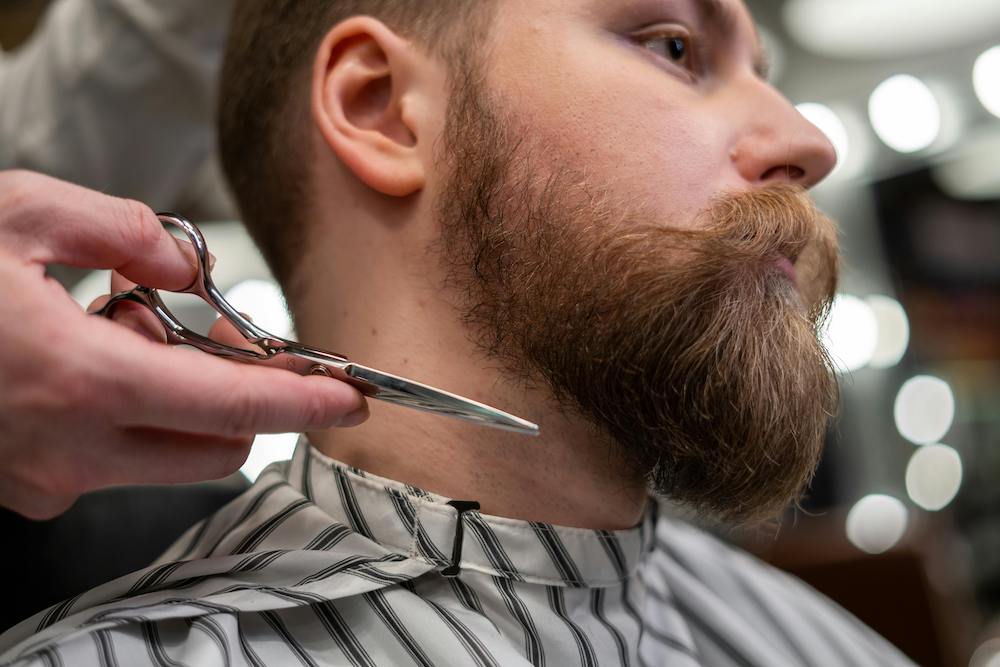
The beard line-up determines whether a beard looks intentional or neglected. It's those few millimeters on the cheek, neck, and around the mustache that either define your client's facial structure or flatten it. Below you'll find a concrete, hands-on approach: how to read the face, how to choose the right tools, and how to guide the clippers so the line-up comes out clean, symmetrical, and grows back evenly.
Preparing for the Line-Up
Assessing Face Shape and Hair Growth Direction
Before you pick up a trimmer, analyze the client's face dry, ideally with a few days' worth of growth. Look at three things: the jawline, the density of growth in each zone, and the direction the hair grows. These are what determine where the line should sit — and what you shouldn't touch.
Practical rules worth keeping in mind for every face shape:
- Round face – leave more length on the chin and shorten the sides to visually lengthen the oval. Keep the cheek line higher and sharper.
- Long face – the opposite: fuller sides, shorter beard underneath, and a softer cheek line so you don't lengthen the face even further.
- Square face – a slightly rounded line-up at the jaw softens a strong jawline.
- Heart-shaped face – more weight at the bottom of the beard balances out a wide forehead.
The neckline matters just as much. A standard that works well: the lower edge of the beard sits above the Adam's apple, roughly two fingers above the throat, curving ear to ear. Go too low and you get a messy-looking neck; cut too high and you shorten the beard and expose the chin.
Tip: For a full breakdown of face shapes and matching beard styles, check out the course “Cutting and Trimming a Long Beard“.
Choosing the Right Tools
Trimmers and Clippers
A clean line-up takes more than one tool. Each does a different job, so it's worth keeping a full set on hand:
- Trimmer with guards (clipper) – reduces the overall weight of the beard and builds the gradient. Guards are chosen in steps, typically from longer on the chin down to shorter on the sides.
- Line trimmer with a close blade exposure – for drawing the actual line-up on the cheek, around the mustache, and around the mouth. This is what defines the edge.
- Razor or razor blade (shaper) – for final clean-up beyond the line, on bare skin, so the edge is as sharp as if drawn with a compass.
Keep your blades sharp, sanitized, and well-oiled. A dull or loose blade tugs at the hair, leaves a ragged line, and irritates the skin. It's the same logic as with any other cutting tools.
Tip: We cover blade maintenance in detail in the article “The Secrets of Keeping Scissors Sharp” – the same habits apply to trimmers.
Line-Up Techniques
Defining the Beard Line
You define the line in three zones: the cheek (upper line), the neck (lower line), and the mustache along with the lip line. Always work symmetrically, side to side, rather than finishing one whole side at once — otherwise it's easy to lose balance.
- Cheek line – draw an imaginary straight line from the corner of the mouth to the temple or to the bottom edge of the sideburn. Everything above that line goes down to zero. Hold the trimmer perpendicular to the skin and guide it in one smooth edge, without pressing down.
- Neckline – mark out the curve above the Adam's apple and cut away everything below it. Remember to round off the corners near the ears rather than leaving them sharp — hard corners give away an unnatural-looking line-up.
- Mustache and lip line – gently reveal the upper lip and even out the lower edge of the mustache parallel to the lip line. Save this zone for last, since it's the most visible.
Once you've marked the edge with the line trimmer, go over it with a razor just beyond the line, stretching the skin with your other hand. Tension is key: taut skin gives an even, sharp cut with less irritation.
Tip: We practice smooth blending of the beard into the haircut at the ear and sideburn in the “Burst Fade“ course.
The “Fade” Technique in Beards
A beard fade is a smooth transition from shorter growth at the sideburn to full length on the chin, with no visible jump line. Most often, the fade runs vertically: short near the ear, longer toward the chin.
- Divide the beard into length zones and assign guards to each — for example, the shortest guard at the sideburn, with each next one a step longer toward the chin.
- Cut zone by zone, guiding the clippers from bottom to top. The borders between guards will remain visible as steps.
- Blend the steps using the “clipper over comb” technique, or by tilting the guard away from the skin at an angle so the blade only picks up the tips where the zones meet.
- Finish with the trimmer with no guard attached, using blending strokes upward until the transitions disappear and the gradient is smooth.
The mechanics here are identical to a hair fade: the same step-down guard selection and the same line-blending process. Anyone who's got a feel for fades in haircutting will quickly transfer it to beard work.
Tip: We break down fade mechanics step by step in the “Side Part Skin Fade” course – the same principles apply to beards.
Aftercare Following the Line-Up
Beard Care Products
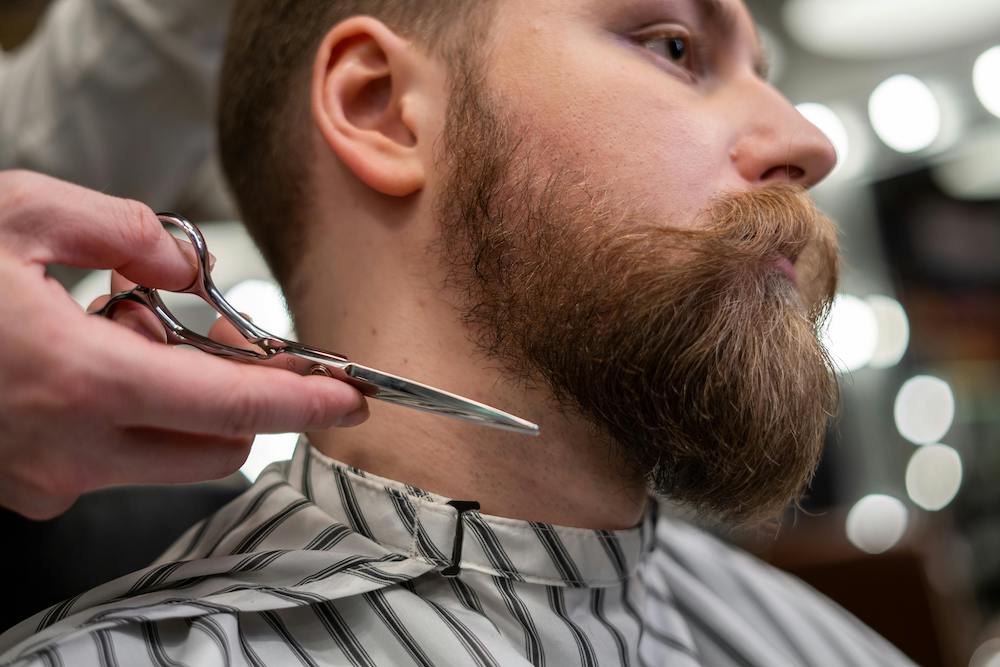
After the service, the skin along the freshly cut line is irritated, especially wherever the razor has been at work. Closing out the service with proper aftercare isn't an add-on — it's part of the craft that determines how the client remembers the visit.
- Right after shaving the line-up – a cool compress or soothing balm closes the pores and reduces redness along the line.
- Daily beard care – oil hydrates the skin beneath the beard and adds shine, while balm keeps longer hair disciplined.
- Maintaining the line at home – show the client where their natural neckline sits so they don't cut too high between visits.
Tip: We cover care products that work well for both hair and beards in the article “The Latest Trends in Men's Hair Coloring“.
Trends in Beard Line-Ups
From Classic to Contemporary
Beard line-ups have their own trends, and it's worth knowing the two poles clients tend to move between. On one side, a sharp, geometric line-up with a strong, straight cheek line and crisp edges cleaned up with a razor. On the other, a natural, soft style, where the line is only suggested and the beard blends into the skin more organically.
The choice isn't a matter of the barber's taste — it comes down to what suits the client's face and lifestyle. A sharp line-up needs more frequent touch-ups, since regrowth quickly blurs a precise line. A natural style is more forgiving and holds its shape longer between visits.
Tip: We track current directions in men's haircutting and beard styling in the article “5 Hottest Hairdressing Trends“.
Common Line-Up Mistakes
Most botched line-ups don't come down to lack of skill — they come down to repeatable slip-ups. Check yourself before every service:
- Cheek line too low – takes height away from the beard and ages the face. It's better to start higher and work down than to try to save an overly aggressive line.
- Neckline too high – shortens the beard and exposes the chin. Stick to the curve above the Adam's apple.
- Lack of symmetry – step back from the chair often and compare both sides from a distance, ideally in a mirror behind the client.
- Too sharp a length jump – if the fade isn't blended, a visible line remains between zones. Keep blending the transitions until they're gone.
Summary
A clean beard line-up comes down to a handful of habits: reading the face before you start, having a full set of sharpened tools, guiding the line symmetrically and zone by zone, and closing out the service with proper aftercare. Every one of these steps can be trained — and what separates a correct line-up from a perfect one is consistency, not any single trick.
For more techniques and step-by-step breakdowns, check out our blog and browse our course offering.