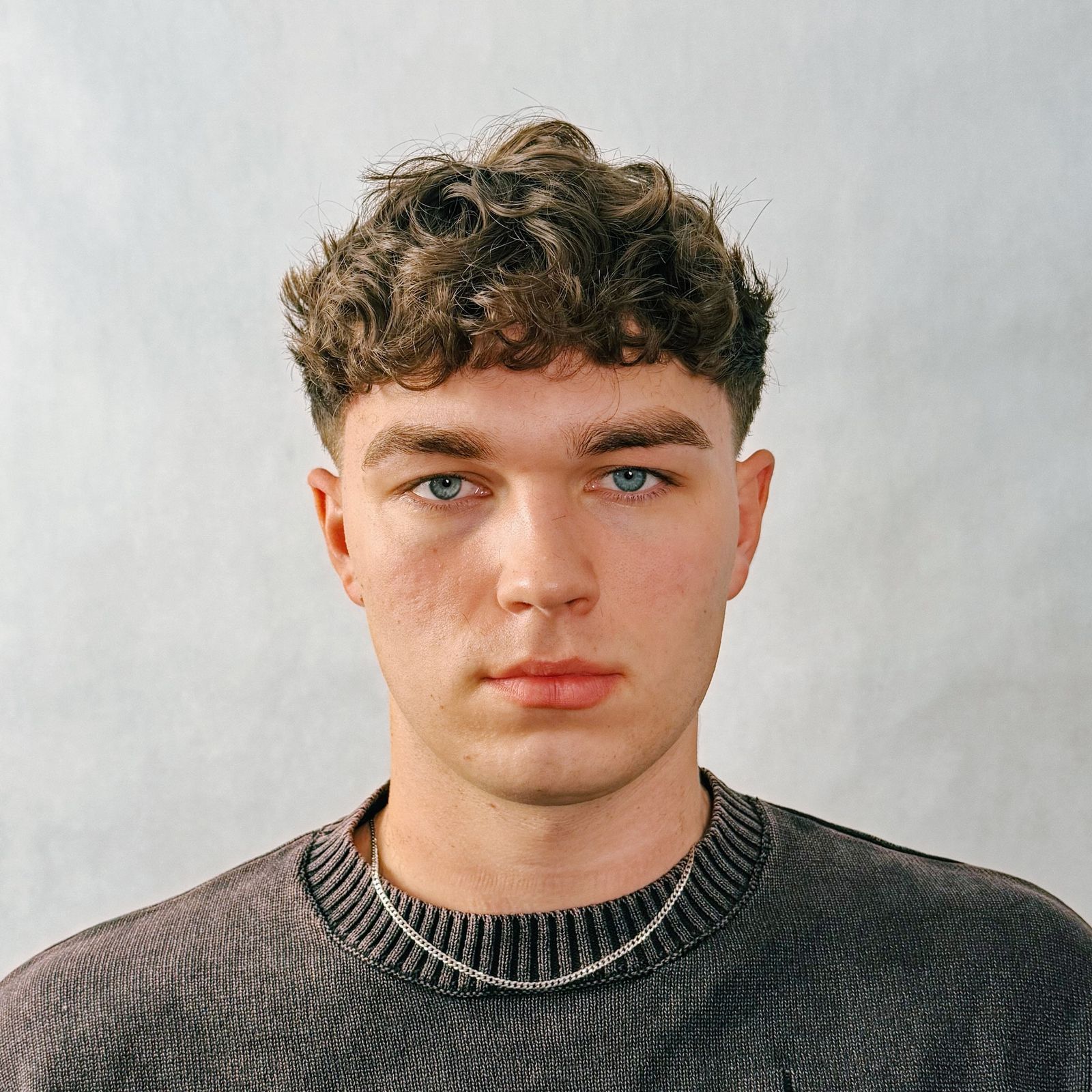
The wolf cut looks like it was grown out on purpose, not by accident. The whole secret isn't in the length — it's in where the barber removes weight, and where they leave it.
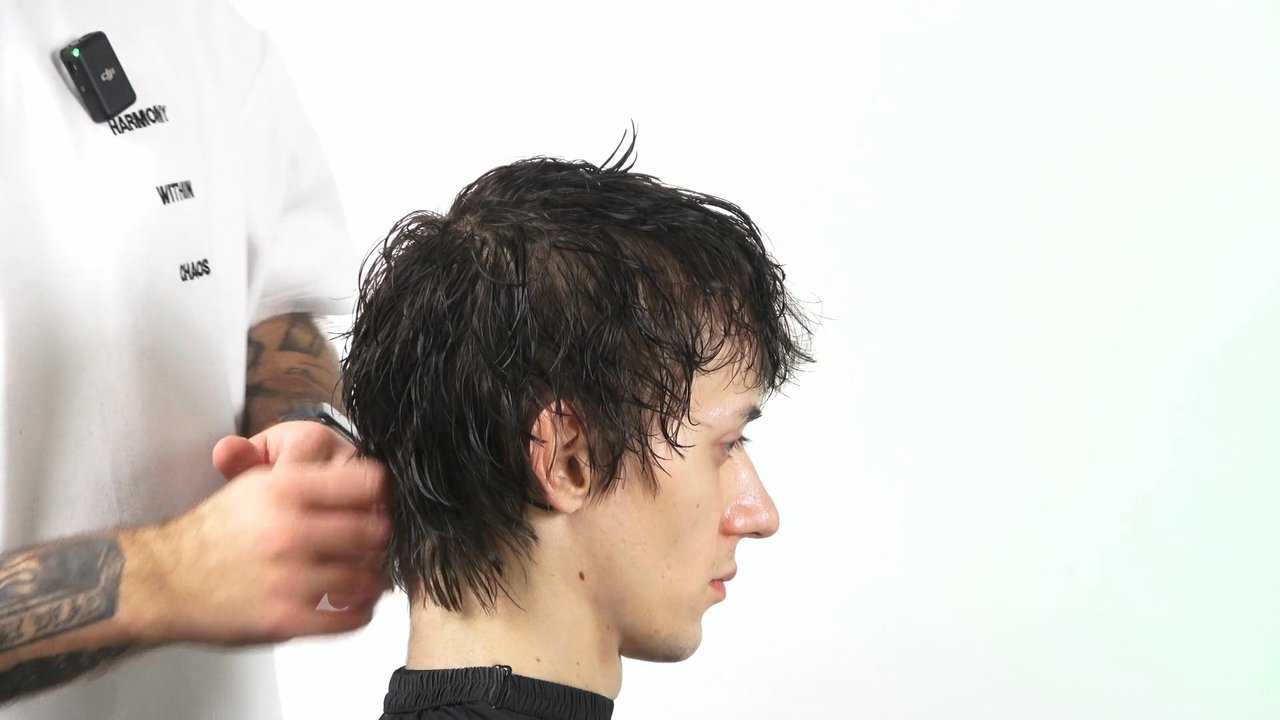
The wolf cut is a men's layered haircut that keeps length at the nape and temples while removing weight from the mid and top sections of the head. The result is a lean silhouette — less weight on the sides and more visual length toward the nape, with pronounced texture. It's the right solution for anyone who's currently growing their hair out. A close cousin of the mod and the mullet, just longer and more built up at the bottom.
How the wolf cut differs from the mod
In Marek's approach, the wolf cut and the mod belong to the same family of layered cuts, and the main difference lies in the length left at the nape and the bottom. The shorter, more polished version is the mod. Proportions and weight distribution also shape the final character, but as the same hair grows out over the following months, the shape naturally evolves into a wolf cut.
Marek Krzymiński builds both hairstyles on the same principle: layers across the whole head, length kept at the nape and sideburns, weight removed from the middle. That's why a single cut can carry a client through several stages of growing out their hair, without any radical changes to the silhouette.
Who the wolf cut is for
The wolf cut works best on people who already have a grown-out nape and sides but struggle with excess volume on top of the head. Hair with a slight wave or perm tends to fall into this shape naturally. All it needs is some structure and shaping.
This cut isn't about shortening. The barber removes excess weight from the inner layers but leaves the outer length at the nape and temples. This gives the haircut lightness and lift, while it still looks long along the perimeter.
A client in the chair isn't paying us for how much hair falls on the floor — they're paying for the haircut they walk out with.
Marek Krzymiński
See how Marek explains this shift in thinking behind a cut that looks minimal but changes the entire silhouette:
If the length at the nape is already right, there's no reason to touch it. You only cut what actually affects the final result.
How the wolf cut is built, step by step
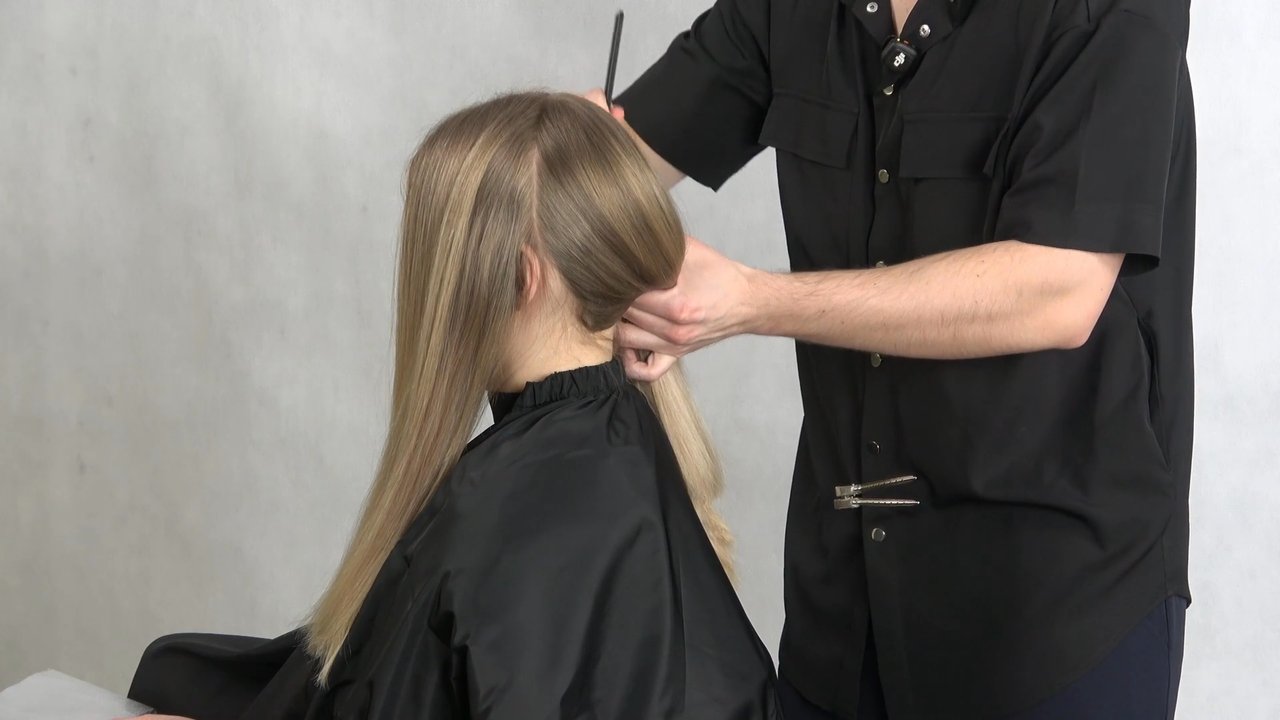
The wolf cut is cut using the layering technique, at a high elevation, with a round horizontal silhouette instead of a square one. In this structure, the high elevation removes weight from the inner layers without shortening the length at the nape and along the perimeter. The round shape doesn't widen the head — it follows its curve.
Marek's process is built on very simple partings:
- One large section on top including the fringe and crown, two sides, and one panel at the back.
- The first vertical section, along the axis of symmetry at the back, serves as the stationary guide.
- Layers at an angle of around 120 degrees, with the length at the nape left untouched.
- Subsequent sections are combed perpendicular to the curve of the head, toward a shared center point, creating a round shape.
- The sides follow the same approach, with length combed toward the temples.
Every subsequent section is checked against the shape of the head rather than pulled out to one flat line, which is what makes the silhouette round instead of widening the sides. The widest point of the head sits above the ear. That's the point hair from the temples is combed toward, to extend the shape toward the face and leave material for the sideburns.
The fringe and the 90-degree angle
In the wolf cut, the fringe is cut at a 90-degree angle so it lifts instead of sitting too heavy. Marek works from the shorter corners as a reference length and matches the middle to them, building an externally square fringe shape.
There's one practical trick here from everyday work behind the chair. See how combing the hair up from underneath makes it easier to hold a high elevation:
The fringe is technically disconnected from the sides — it's not blended into them by length — but it still works visually with the whole silhouette. This disconnection keeps width and density where the hair is thinner, at the receding corners.
Styling the wolf cut
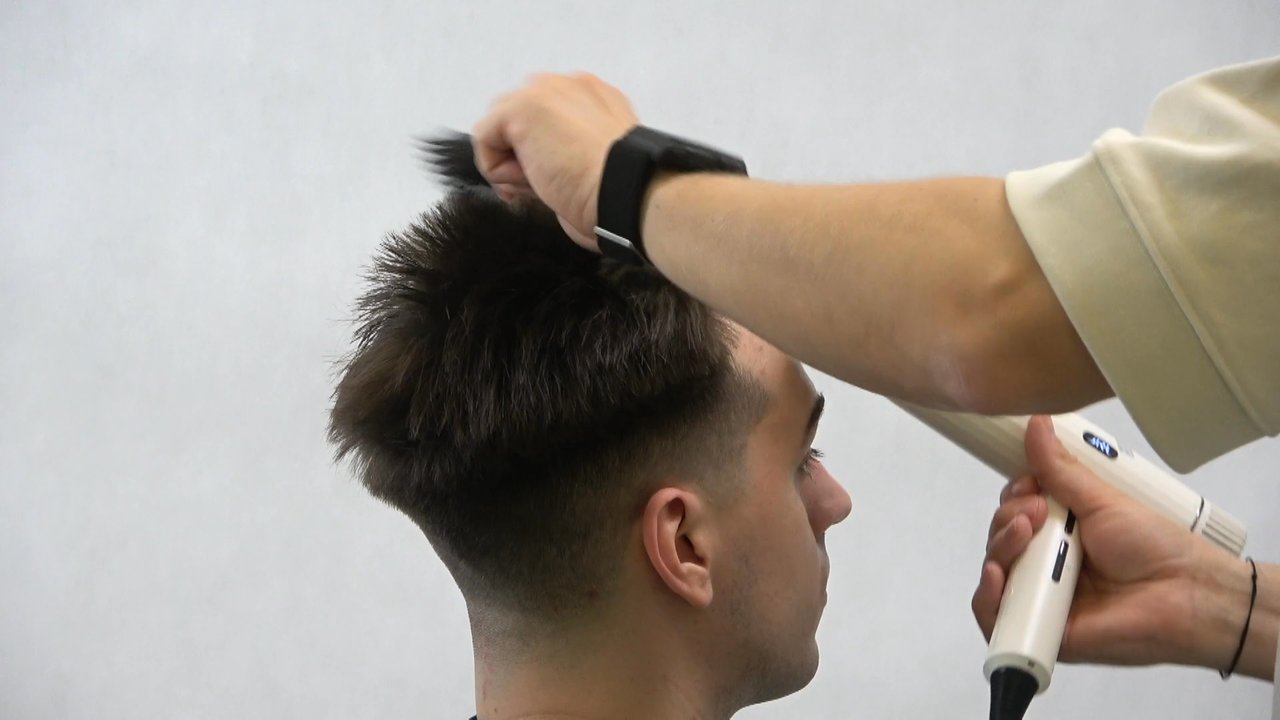
The wolf cut is styled on wet hair with curl cream and dried with a diffuser on low airflow and high heat. Marek controls the diffuser's distance and drying time throughout, and for dry, lightened, or porous hair, it's worth adjusting the temperature to match the hair's condition. The cream boosts wave and texture, lifts the hair from the root, and doesn't give a stiff hold, so the style keeps moving loosely all day.
First, wet the hair evenly, then apply the product along the full length, including at the root, adjusting the amount to the hair's density and how it responds. See how Marek works the cream through the whole head:
It's worth reminding the client that there's hair at the back too, and the nape needs product as well. That kind of education behind the chair pays off in loyalty. To finish, you can boost the style with a touch of powder or hairspray, since the cream alone doesn't give a strong hold.
How long a wolf cut lasts
A well-cut wolf cut looks good for two to four months, because the weight doesn't build up in one place. The outer shape and length barely change — only the weight distribution inside shifts. This lets clients keep growing their hair out with no sense that the style is falling apart.
If your wolf cut ends up too heavy on top, or you keep losing length at the bottom, it comes down to weight distribution and layer elevation. Marek Krzymiński walks through the entire cut step by step in the Mod Wolf Cut course: how to work layers at a high elevation, build a round shape perpendicular to the curve of the head, and finish the style with a diffuser so it works on its own, no brush needed.