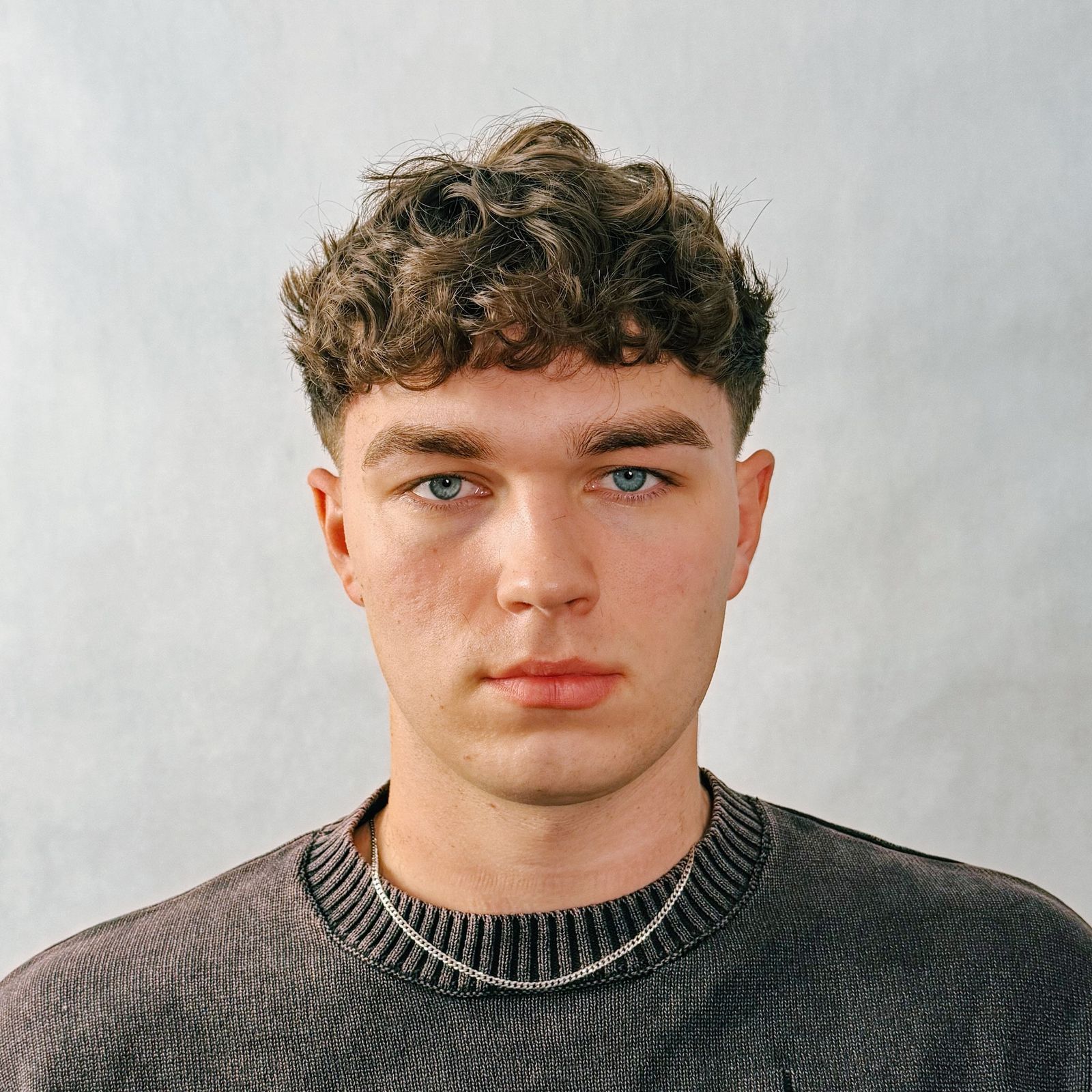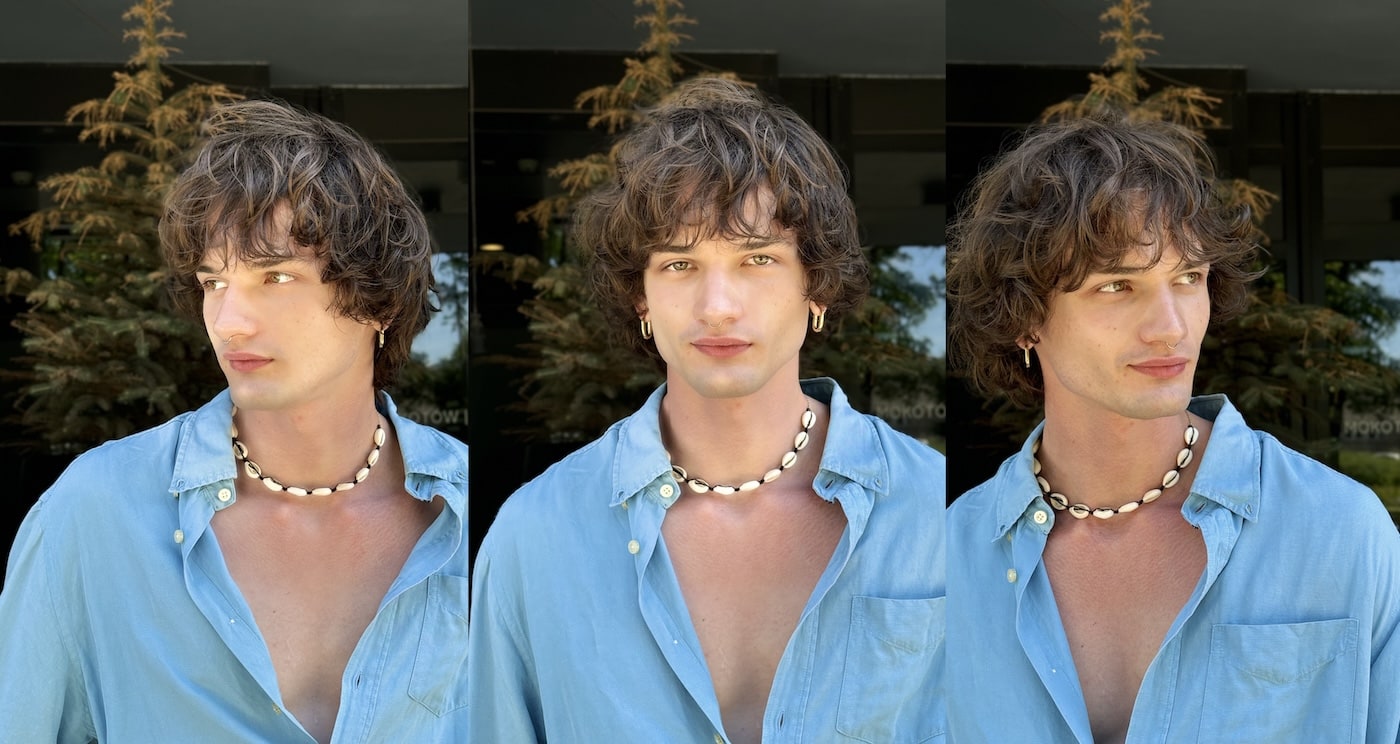
Shaggy Wolfcut combines the lightness and undone ease of a shaggy cut with the strong texture and volume of a wolf cut. The result: a hairstyle that works with movement rather than rigid geometry. Below, we break it down from a craft perspective: how to read the client's hair, how to section, how to guide the cut, and how to finish it so the texture falls into place on its own.
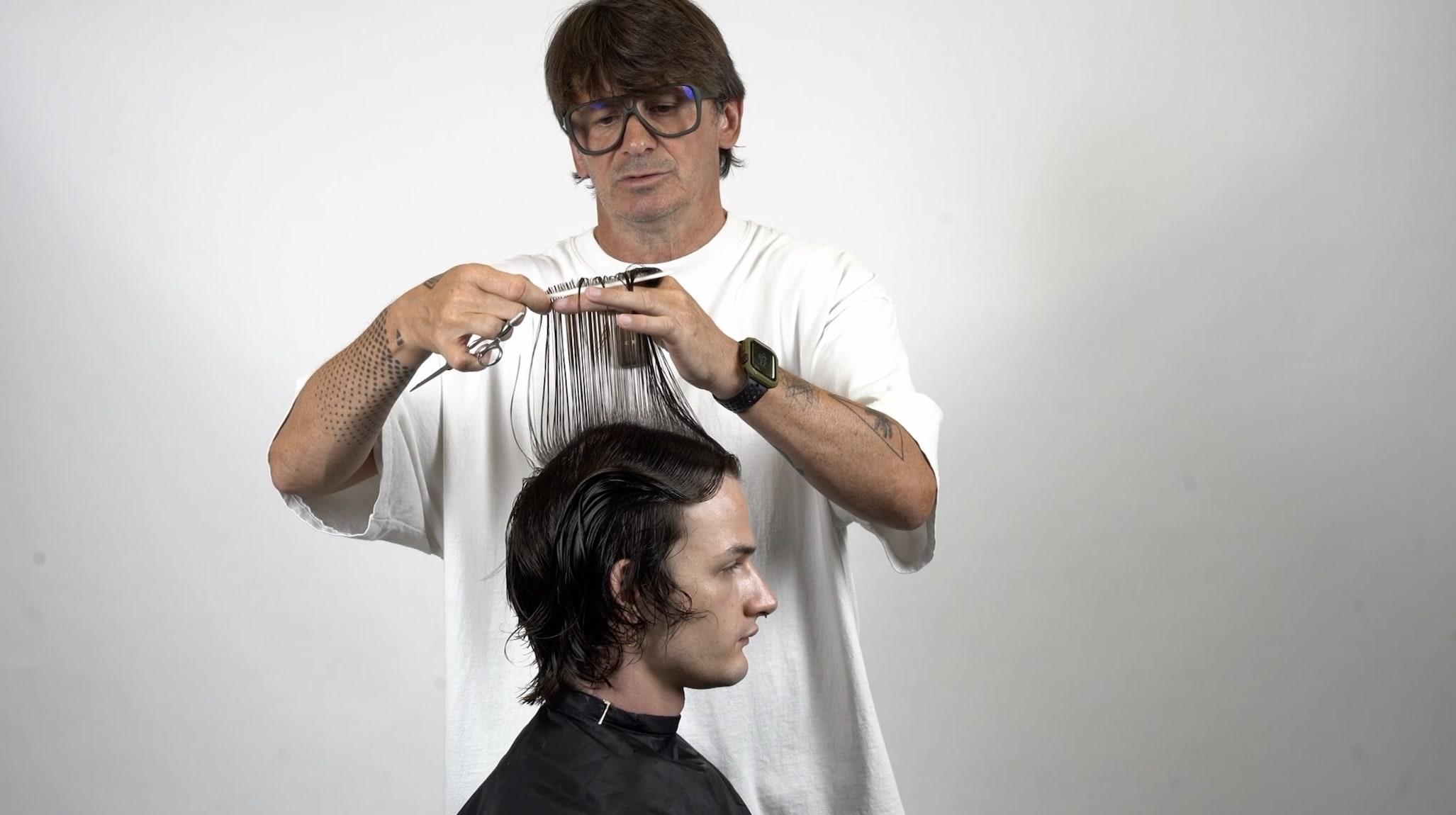
Wolf cut as the foundation of Shaggy Wolfcut
To truly understand Shaggy Wolfcut, you need to know its starting point — the wolf cut. It's a combination of classic mullet elements with a heavily layered cut: more volume and shorter, dense layers on top of the head, a gradual transition to longer hair at the back, and clearly textured ends that give the whole look its dynamic feel.
The wolf cut gained popularity because it's versatile. It works well on different hair types and is fairly forgiving to style, which — combined with its strong presence on social media — earned it recognition among both women and men. In men's hairdressing, it's valued for its modern look and the room it gives for individual style. It's precisely these traits, paired with the softness of the shaggy cut, that gave rise to the Shaggy Wolfcut technique.
If you want to break down the base technique itself, Connected Hair offers a course dedicated to the Wolf Cut technique, led by educator Sergiusz Pawlak. It's a great way to round out your knowledge of the techniques behind Shaggy Wolfcut.
What is Shaggy Wolfcut and how does it differ from the wolf cut
Shaggy Wolfcut takes the volume contrast from the wolf cut (dense top, lighter and longer sections at the back) and the soft, relaxed ends with no hard lines from the shaggy cut. In practice, this means less aggressive layering than in a pure wolf cut, and more focus on keeping the transitions blurred rather than sharply defined.
What defines it:
- The lightness and freedom of the shaggy cut — soft ends with no defined edge
- The texture and dynamics of the wolf cut — contrast between a full top and lighter sides and back
A well-designed Shaggy Wolfcut:
- Highlights the hair's natural structure instead of fighting its growth direction
- Adds volume where it's needed and removes weight where the hair falls flat
- Is easy to style day-to-day and forgiving when you're short on time in the morning
- Can be adapted to different hair types and face shapes
Why this technique deserves a place in your repertoire
Shaggy Wolfcut isn't just a passing trend. It's a technique that genuinely expands what your salon can offer:
- Versatility: works on straight, wavy, and curly hair — only the texturizing and finishing method changes
- Personalization: you can easily scale the length of the layers and the intensity of the texture to suit each client
- A modern edge: it fits current trends in men's cutting, and clients recognize it from social media
- Universality: it works on clients of any gender and age, since the level of texture determines its character
Key elements of the Shaggy Wolfcut technique
What sets a well-executed Shaggy Wolfcut apart from random layering is discipline at every stage — from diagnosing the hair, through sectioning, to guiding the cut.
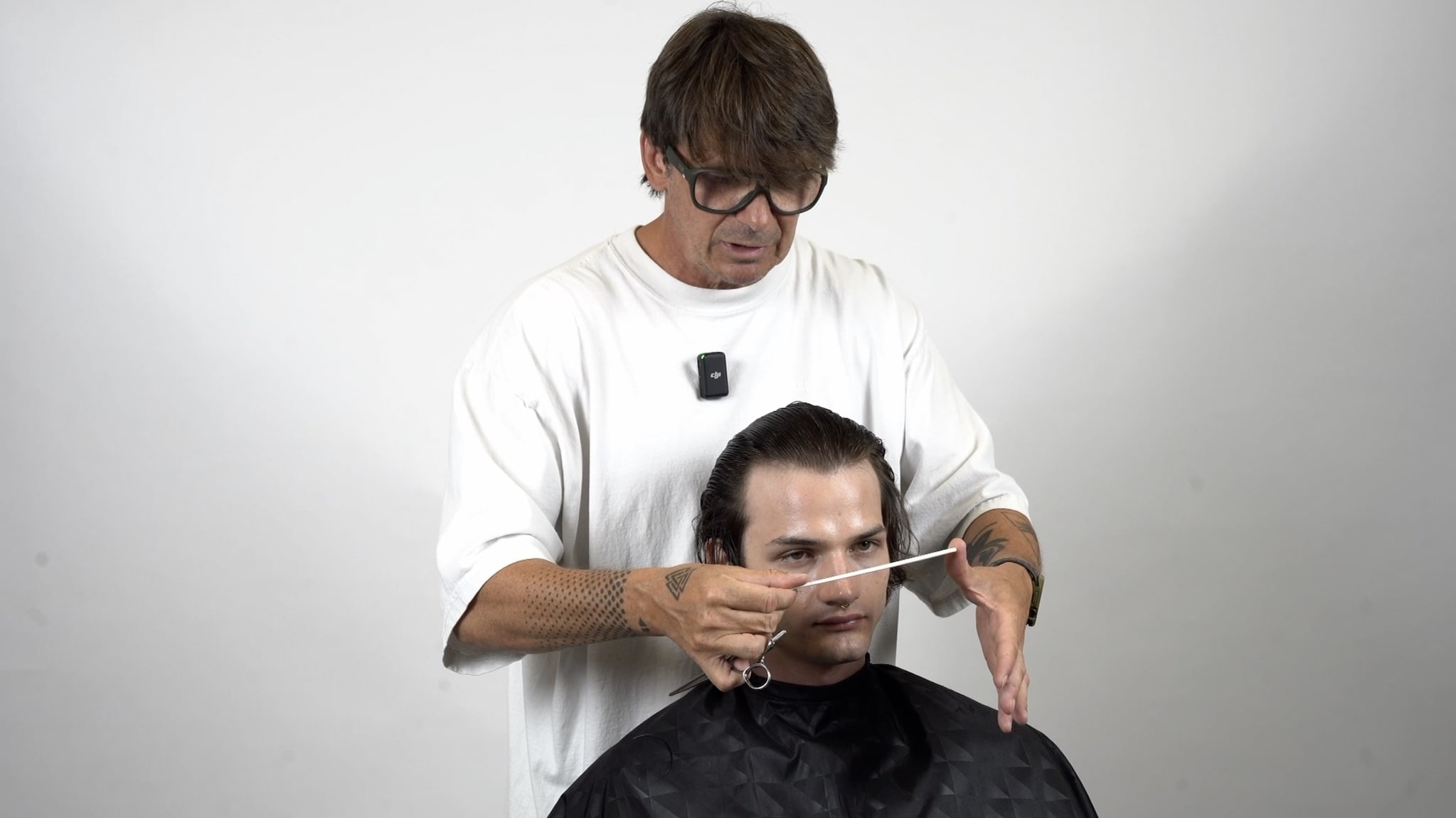
- Hair structure analysis: before you pick up your scissors, assess the hair type, density, individual strand thickness, and natural growth direction — especially around the temples, crown, and nape. Dry hair shows you how the texture actually falls, while wet hair makes it easier to control length.
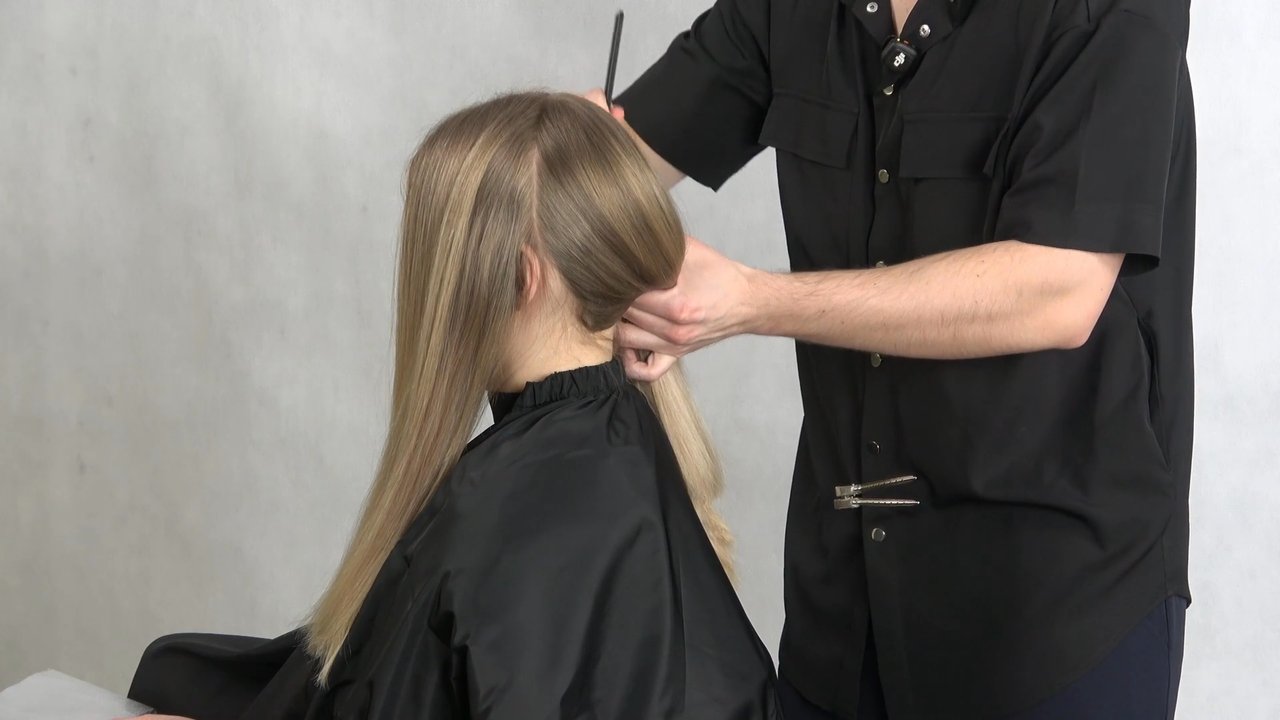
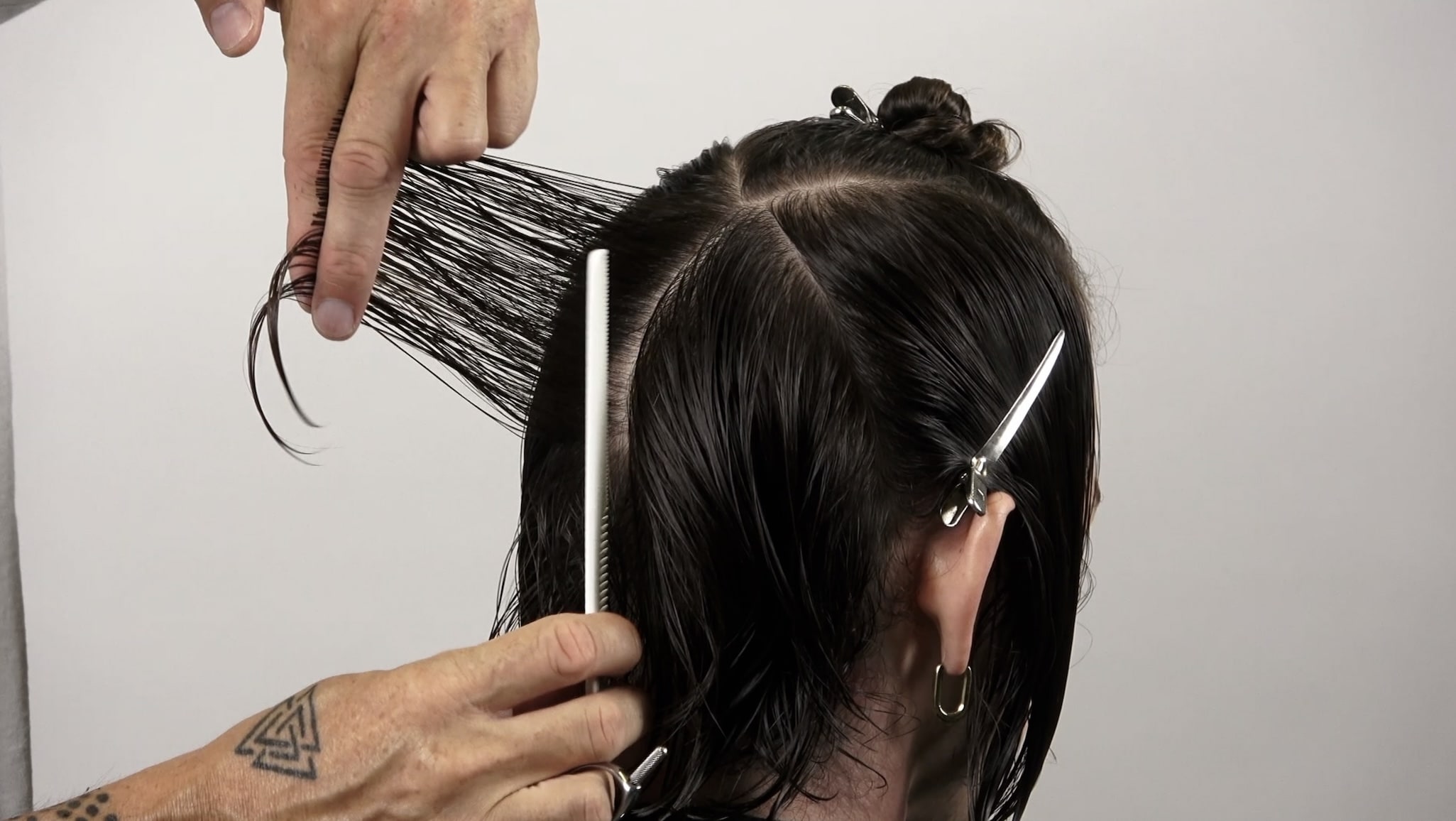
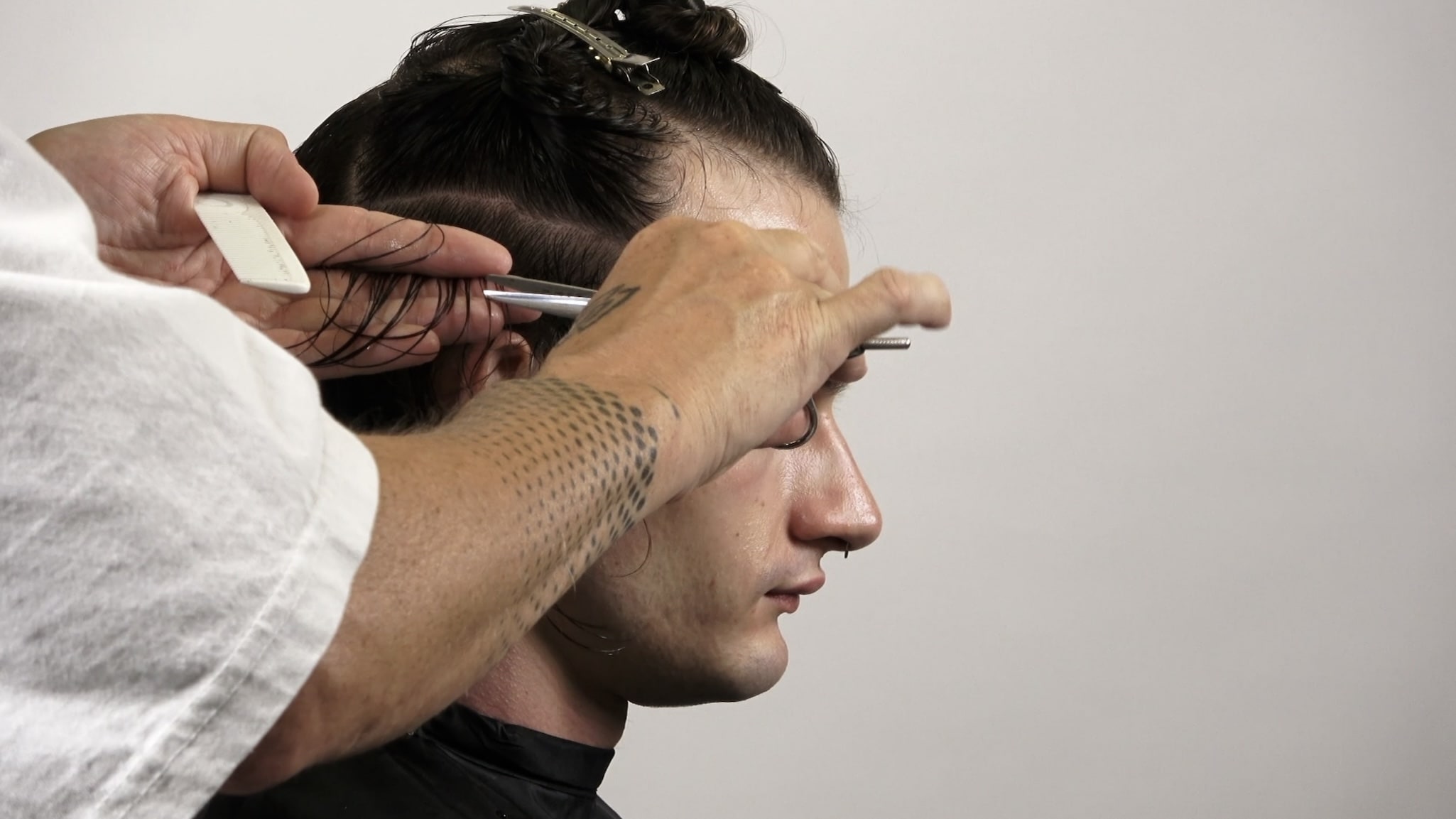
- Precise sectioning: the foundation is a clean division into sections, including the signature triangular section running from the temples to the center of the head. This triangle determines where the dense top begins and where the layers start to fall back.
- Redirecting the sections: the key move in this haircut. Sections lifted and guided to a stationary guide, or redirected relative to the head shape, build volume on top and lightness below. The higher the elevation, the shorter the layers and the more volume.
- Working with the natural curl pattern: the goal is to highlight the natural texture, not smooth it out. On curly and wavy hair, work dry rather than wet, and with less tension, so you don't cut it too short once it dries and the curl shrinks up.
- Texturizing and finishing: breaking up the edge is the essence of shaggy. Point cutting, slicing, or working with the wide-tooth section of the comb blur the line and create soft, undone ends. At the very end, a dry check and diffuser drying lock in the shape.
How to master the Shaggy Wolfcut technique
The fastest way into this technique is by following a full haircut step by step on a model. Connected Hair offers the Shaggy Wolfcut course, led by Kamil Cesarski.
During the course, you will learn:
- Correct sectioning of the hair, including the triangular section
- Cutting and texturizing techniques that build volume contrast
- Styling and finishing methods using a diffuser and products
- Adapting the haircut to different hair types and face shapes
The course is available as part of the Akademia Pro subscription, so you get access to it along with many other courses.
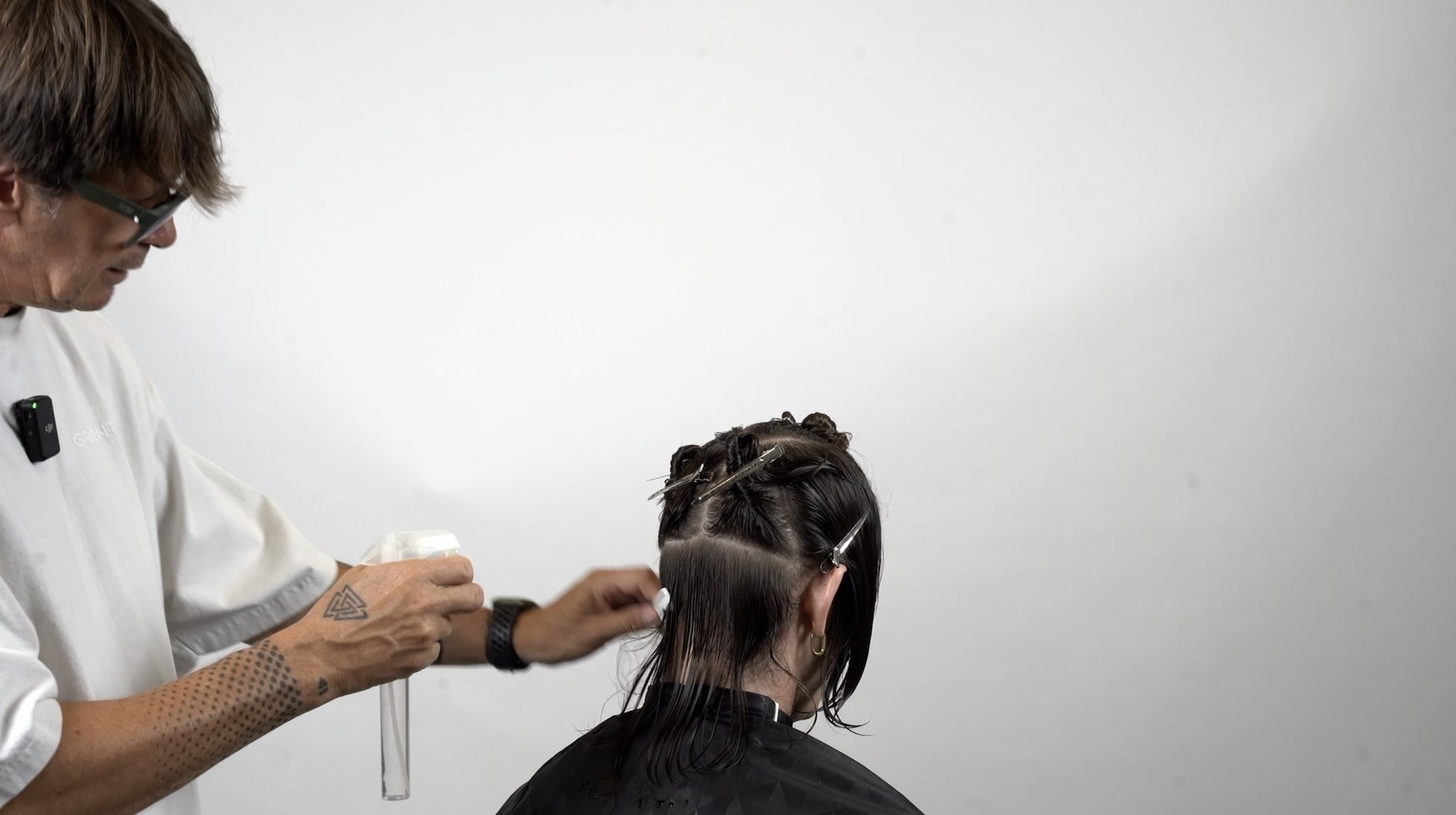
Tools and products for Shaggy Wolfcut
The kit is simple, but the quality of your tools has a direct impact on how clean the texture turns out:
- Sharp, good-quality hairdressing scissors, for point cutting and softly breaking up the ends
- A wide-tooth comb for working with low tension and combing through without pulling
- A diffuser attachment for the dryer — an essential tool for bringing out volume and natural curl
- Styling products: mousse as a base, curl cream to define the curl pattern, and texturizing powder for root volume
Blunt scissors crush the end instead of cleanly breaking it up, which immediately ruins the soft shaggy character. You can read more about keeping your scissors sharp in the article: Secrets to Keeping Hairdressing Scissors Sharp.
Styling and Care for Shaggy Wolfcut
The cut is only half the job. The other half is the finishing — and whether the client can recreate this hairstyle at home. Walk them through the styling process behind the chair so they know how to dry it and what to style it with.
- Drying:
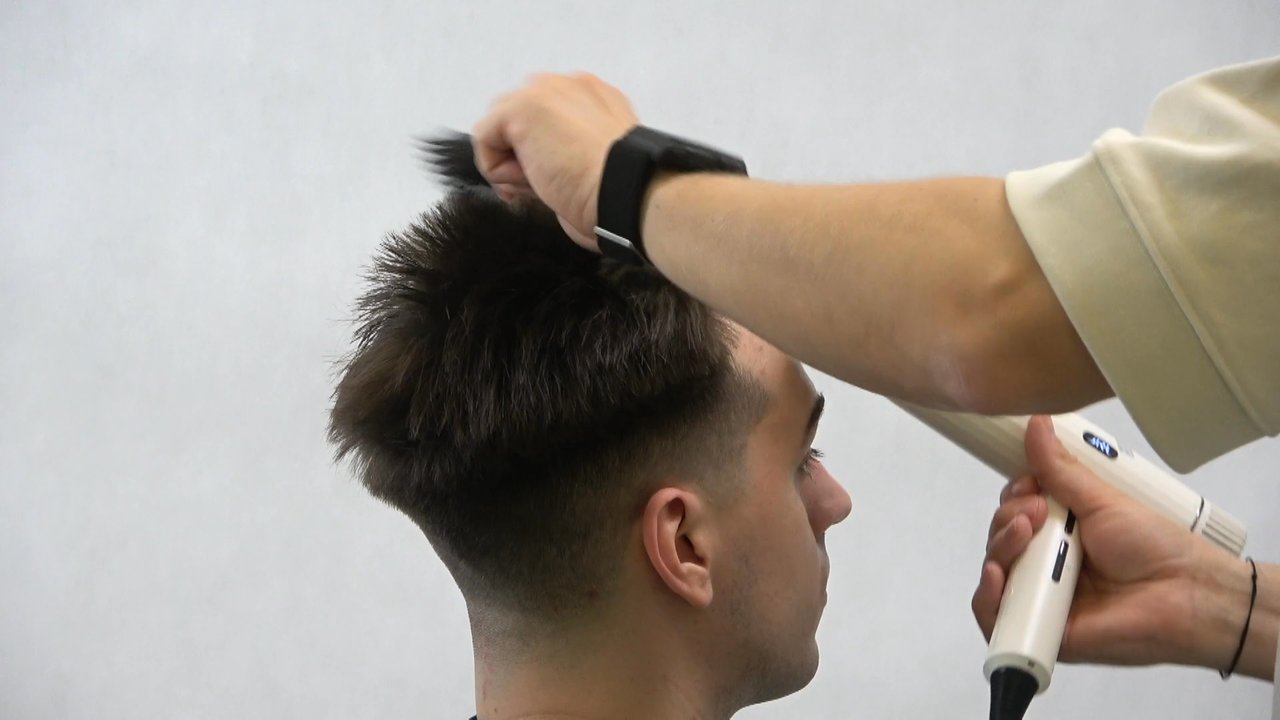
- Dry with a diffuser on medium airflow and medium heat — airflow that's too strong breaks up the curl
- Don't swirl the diffuser around in the hair while drying; let it fall naturally
- Dry to about 80% and let the rest air-dry
- You'll bring out root volume by finishing the drying with the sections lifted up, either flipping the head down or lifting the sections with your fingers
- Products:
- Use lightweight products that don't weigh the hair down or clump the texture together
- Apply mousse to damp hair as a base before drying
- Curl cream helps define the natural curl pattern on wavy and curly hair
- Apply texturizing powder in targeted spots at the root on dry hair, for volume and a matte finish
- Daily care:
- Encourage clients to use a sulfate- and silicone-free shampoo so the texture doesn't get weighed down
- Recommend conditioners and masks suited to the client's hair type
- Advise drying with a microfiber towel by gently pressing, without rubbing, which causes frizz
- Refreshing the hairstyle:
- Show the client how to quickly refresh the hairstyle with a water spray bottle and a bit of styling product, without washing their hair again
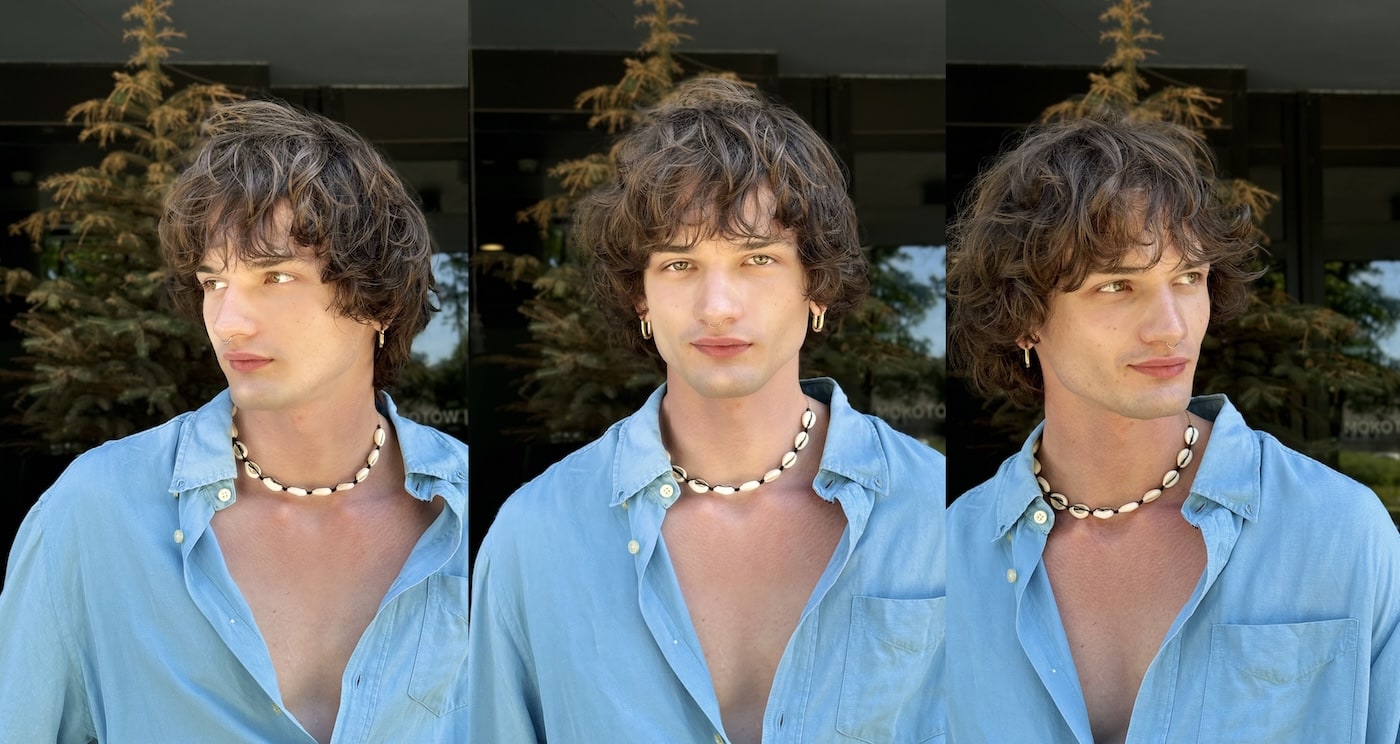
See it in practice: in the Shaggy Wolfcut course with Kamil Cesarski you'll follow the entire process step by step on a model, with commentary from the instructor.
Summary
Shaggy Wolfcut is a technique that rewards a real understanding of hair: the volume contrast of the wolf cut plus the soft, broken-up edges of shaggy. Mastering the diagnosis, the triangular section, redirecting the sections, and texturizing gives you a haircut you can genuinely tailor to every client — one they can recreate themselves at home.
Want to see the entire haircut on a model, step by step? Check out the Shaggy Wolfcut course with Kamil Cesarski. And if you're curious about the bigger picture of current trends, take a look at the article: Top 10 Men's Cutting Techniques.
Frequently asked questions
Is the Shaggy Wolfcut suitable for all hair types?
Yes, this haircut can be adapted to various hair types, from straight to curly. The key is to properly adjust the technique to the client's hair structure.
How often should the Shaggy Wolfcut be refreshed?
Usually every 6-8 weeks, but this can depend on how fast the hair grows and the client's preferences.
Does the Shaggy Wolfcut require a lot of time for daily styling?
No, it's a relatively easy haircut to style. Basic styling can take anywhere from 5 to 15 minutes, depending on the length and texture of the hair.
What are the best styling products for a Shaggy Wolfcut?
Lightweight mousses, curl creams, and texturizing powders work best. Avoid heavy oils and pomades that can weigh the hair down.
Is the Shaggy Wolfcut suitable for clients of all ages?
Yes, this haircut can be adapted for different age groups. The key is to properly match the length and texture to the client's style and preferences.
How do you deal with difficult sections of hair, like natural cowlicks?
Kamil Cesarski advises: "Observe how the hair falls naturally. Sometimes these 'difficult' sections can become a unique element of the haircut. Work with them, not against them."
Will the Shaggy Wolfcut work for clients with light facial hair?
Yes, this haircut can blend perfectly with various types of facial hair. It can be tailored to enhance even a light beard.