
Buzz Cut with a Zoned Fade
A men's haircutting course in which Kacper Trzaskowski creates a buzz cut with a 6mm top and a fade on Slavic hair: analyzing hair structure and skull hollows before the first move, a zero line placed with intention above the occipital bone, zone graduation with 4.5mm, 3mm, and 1.5mm guards across two blade lever settings, closing the bottom line with a trimmer and shaver, breaking up dark patches with thinning shears, and a razor line-up.
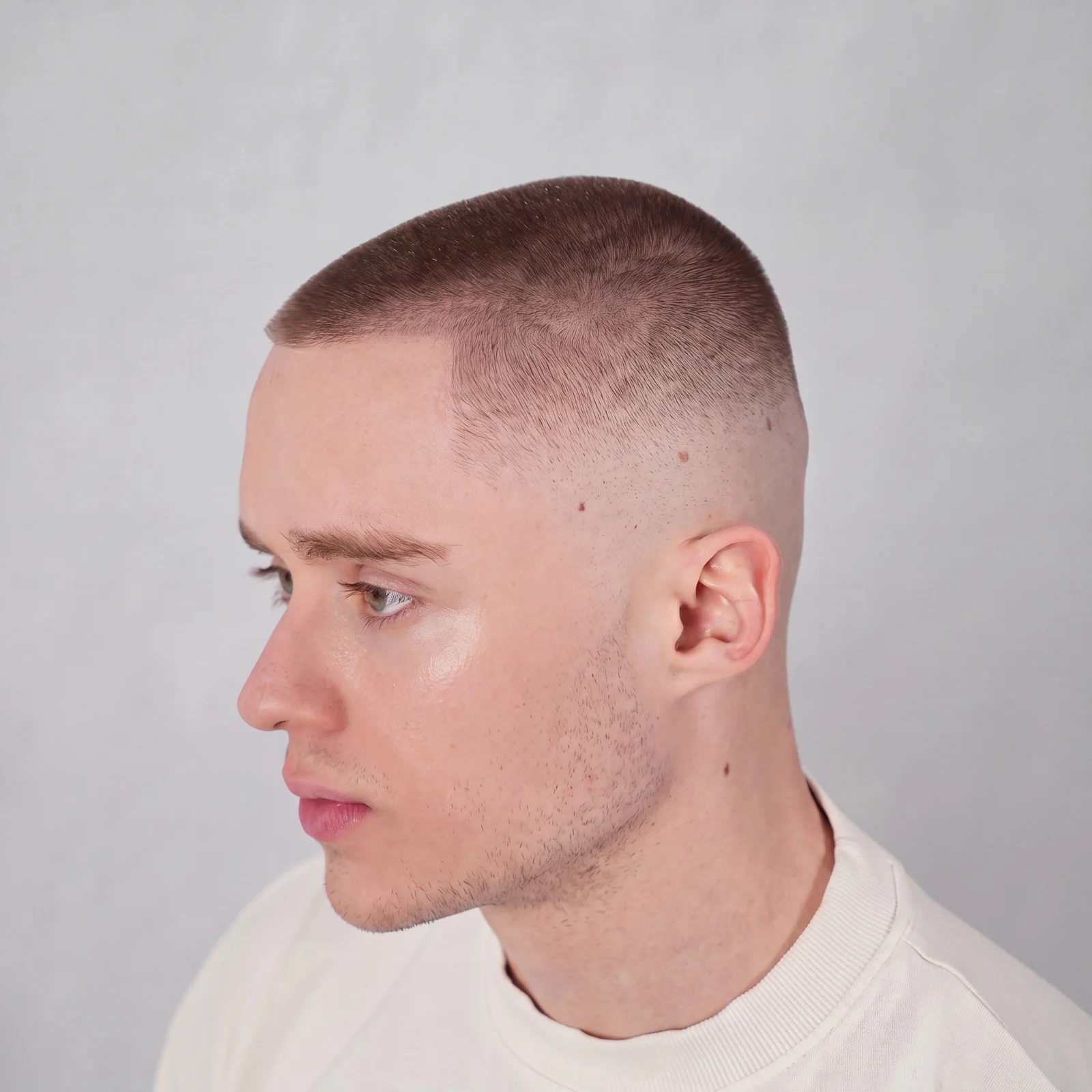
Result and process

About the course
Buzz Cut with a Zoned Fade is a course about a haircut every barber does, yet few show how to do it well. Kacper Trzaskowski works on Slavic hair: light, medium-density, on a skull with pronounced hollows - the conditions where graduation forgives the least.
The material walks through the full process, but its core lies in the decisions made before the clippers ever touch the head. Analyzing hair structure and skull shape determines where the zero line will sit, how much room is left for graduation, and which zone will be stretched the most. From there comes the zone-based work with 4.5mm, 3mm, and 1.5mm guards across two blade lever settings, closing the bottom line with a trimmer and shaver, breaking up dark patches with thinning shears and scissors, and finishing with a razor line-up.
In this course, you'll see
- How dividing hair into three density-and-color categories determines the distribution of light and shadow in the graduation
- Finding skull hollows by hand and routing the zero line around them, instead of copying a line from someone else's photo
- The rule of placing the zero line above or below the occipital bone, with no in-between option
- Three hairline line-up options on the forehead and how each one affects how high the fade appears
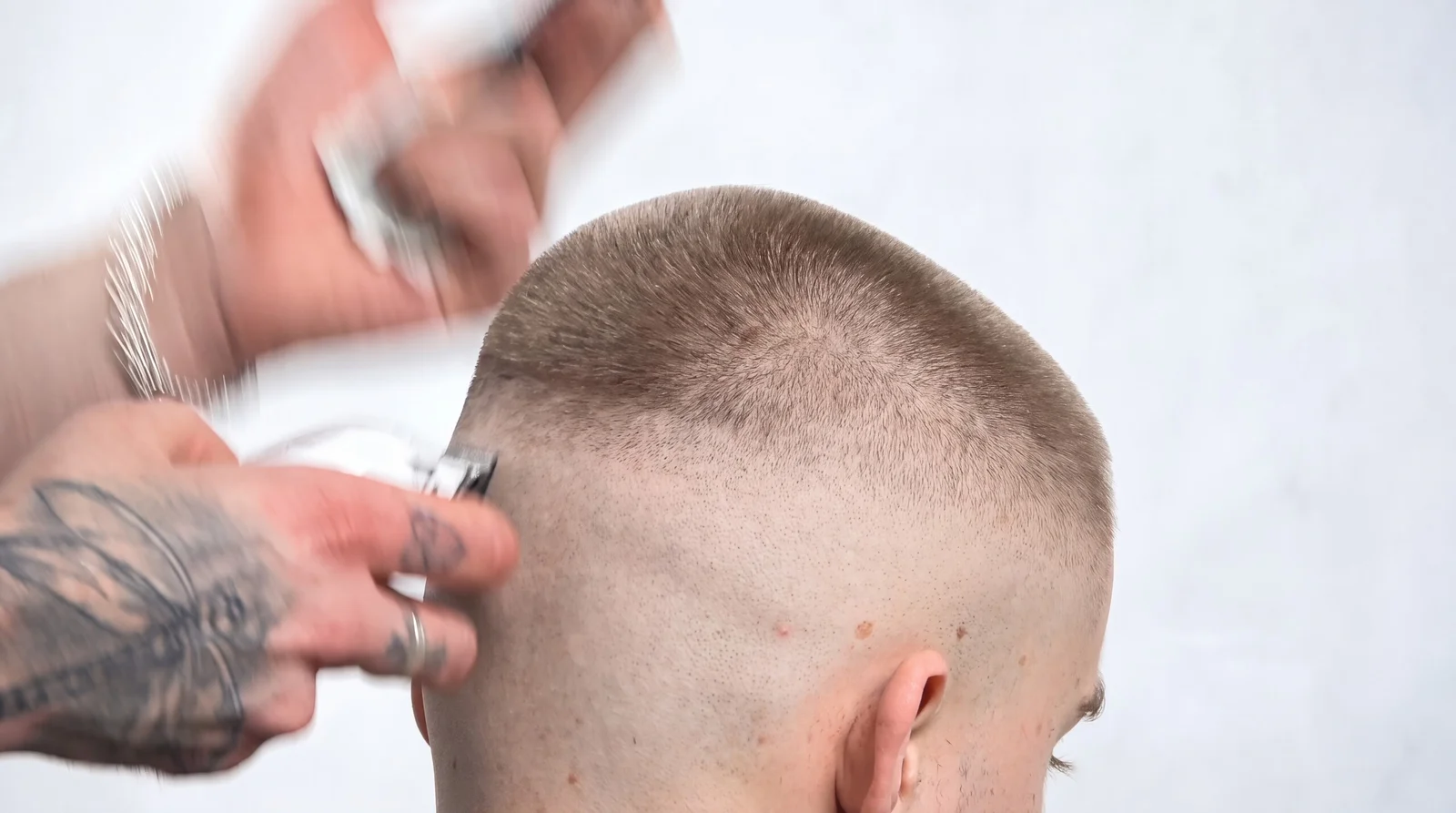
- Zone work with 4.5mm, 3mm, and 1.5mm guards on the third and closed lever settings, flat against the head, without lifting the hand
- Closing the bottom line with a trimmer and shaver, then checking the result with a hand casting shadow, a mirror, and a phone camera
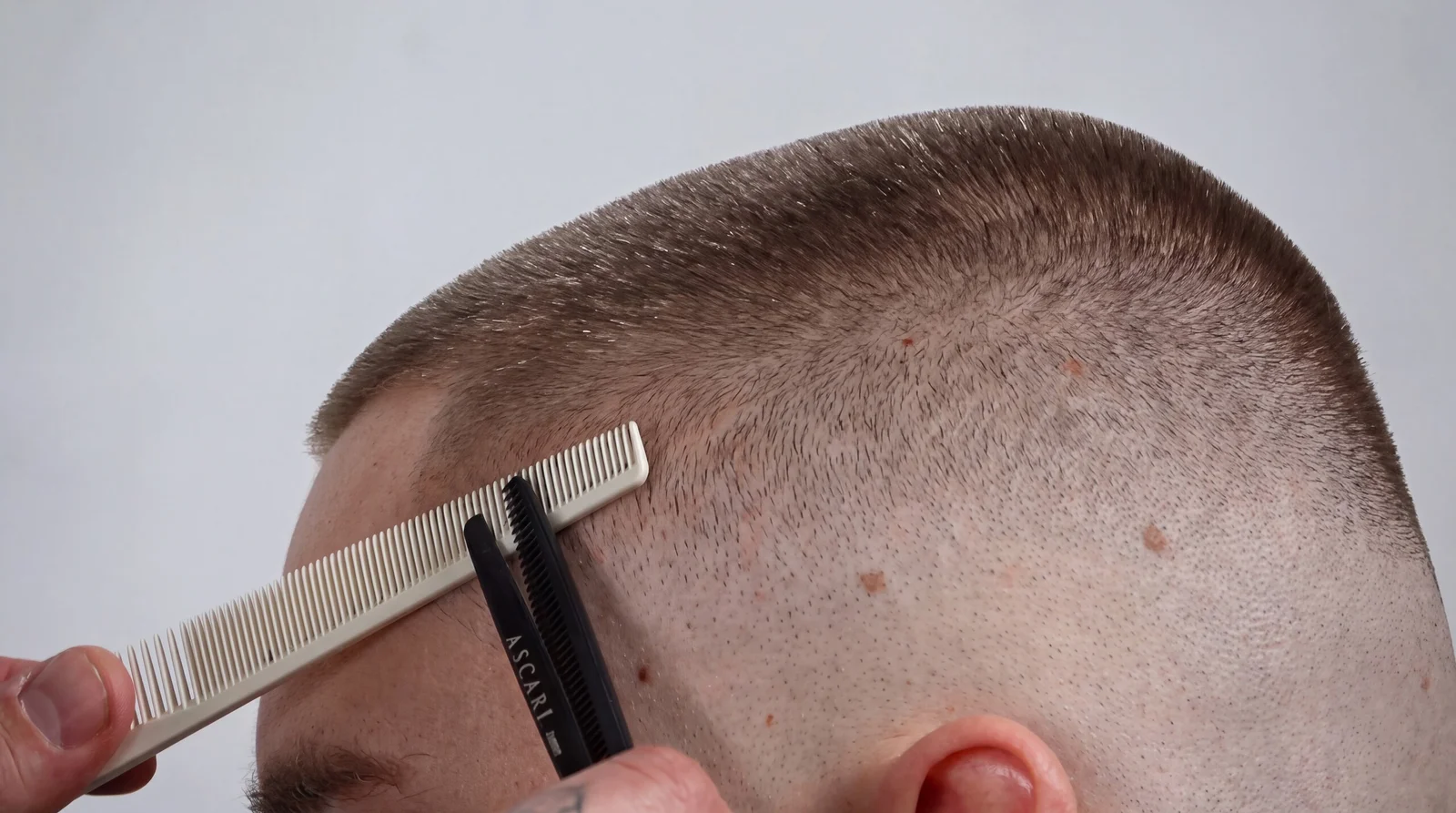
- Breaking up dark patches with thinning shears on a narrow comb, the bare blade, and the tip of the scissors
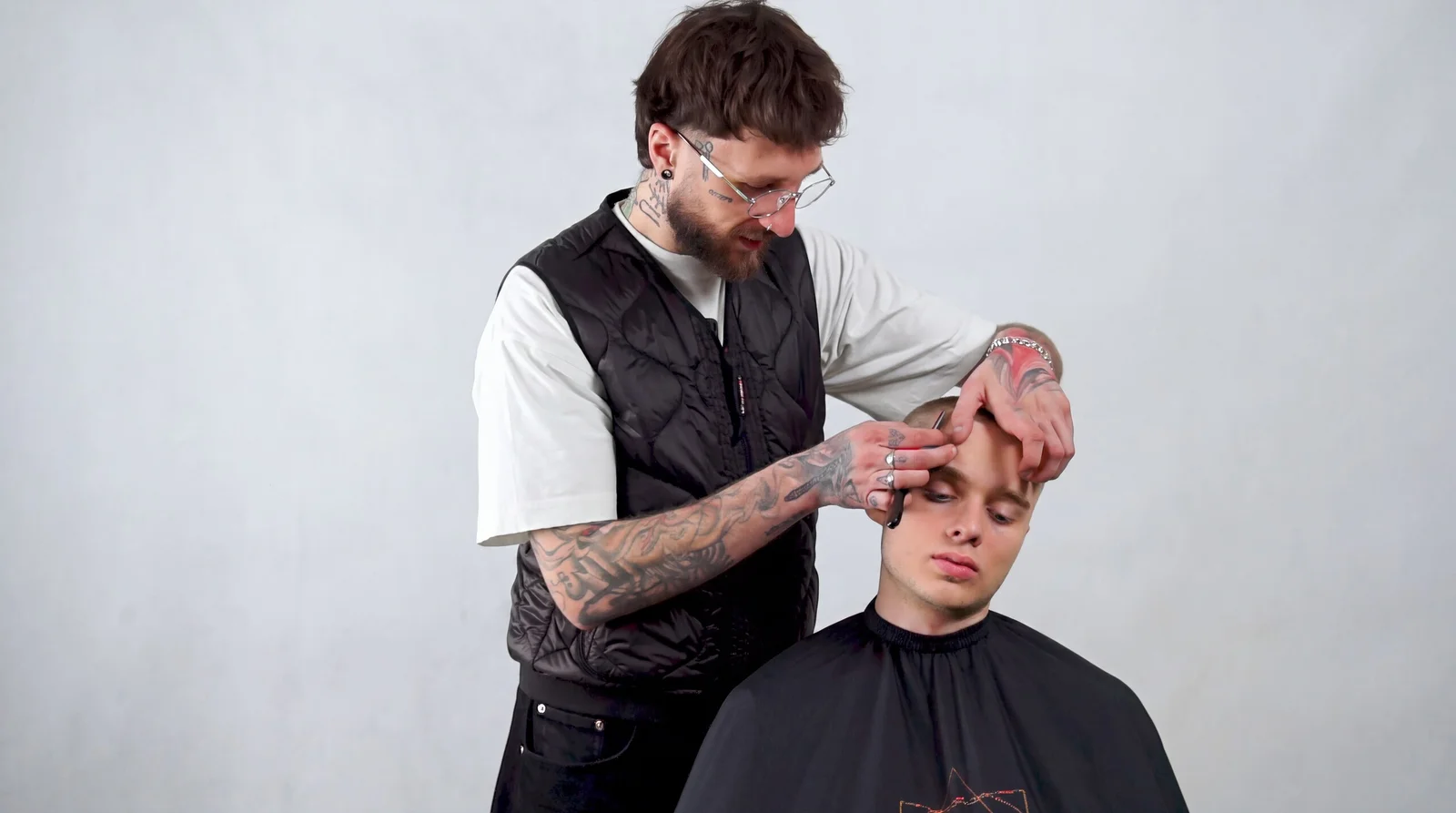
- A razor line-up with a stopping motion at the end of every stroke
What you will learn
- 01How to work out the distribution of light and shadow from hair category and skull shape, before the clippers ever touch the head.
- 02How to place the zero line above or below the occipital bone, and why the in-between option always shows through.
- 03How to work in zones with 4.5mm, 3mm, and 1.5mm guards across two blade lever settings, flat against the head.
- 04How to close off the bottom line with a trimmer and shaver - the part of the haircut the client sees most clearly in the mirror.
- 05How to check the graduation with a hand casting shadow, a mirror, and a phone camera, instead of trusting your eye under a salon's overexposed lighting.
- 06How to break up dark patches with thinning shears, the bare blade, and the tip of the scissors, without taking away the dark top.
- 07How to create a clean fade on light, average hair and an uneven skull - not just on a picture-perfect model.
What's inside
Full access with the course 0:27
0:2701The Fade Starts with Analysis
For me, a fade always starts with the same thing - analyzing the shape of the head and the structure of the hair.
 2:03
2:0302Above the Occipital Bone or Below It
I do the fade either above the occipital bone, or below the occipital bone.
 2:58
2:5803The Zero Line Can't Be an Accident
The zero line can never be a matter of chance - like seeing something on Instagram and thinking, if I make a perfectly straight line, it'll turn out fine.
 4:31
4:3104Minimum Two Fingers for Graduation
I need a minimum of two fingers' width of room for the graduation.
 16:29
16:2905The Blade Cuts, Not the Guard
The blade is what cuts, and wherever it actually is, that's where the most hair gets taken off.
 17:13
17:1306A Zone's Margin of Error Is a Fingernail's Width
When I work in zones, the maximum I can overshoot in height is, at most, the width of a fingernail.
 20:55
20:5507The Client Sees the Bottom Line
Remember, the client sees the bottom line that's left behind very clearly in the mirror.
 22:21
22:2108Checking the Graduation with a Hand's Shadow
Cover the graduation with your hand so you cast a good amount of shadow over it.
 39:44
39:4409Working in Zones Gives You Confidence
Remember, working in zones gives you confidence.
 42:22
42:2210A Clean Fade Is Always Possible
You can do a clean fade on any Polish head. No patches, no holes, no stripes.
 45:10
45:1011A Fade Needs to Grow Out Well
A client's fade grows out fairly quickly, but it needs to grow out well - not like Swiss cheese.
 46:22
46:2212The Top Has to Stay Dark
My top needs to stay dark, because if it doesn't stay dark, my fade essentially won't have an endpoint.
 53:17
53:1713The Razor and the Stopping Motion
Remember, as you finish the stroke, you need to make a stop at the end.
FAQ
Who is this course for?
What tools do I need?
Why can't the zero line just be straight?
What if the client wants the fade higher than the head shape allows?
Why cover the finished graduation with your hand?
What do you use to break up dark patches once the graduation is done?
Can you get a clean fade on Slavic hair?
Details
Educator

Kacper Trzaskowski
Educator · 7 courses
Co-founder of the CUT HOUSE salon in Toruń and speaker at Barbernight and BarberFest. In his teaching, he rejects learning specific hairstyles in favor of universal work frameworks built on analysis. He teaches how to work with intention when choosing fundamental techniques and shapes to match the client's head anatomy and hair structure. Over the past year, through courses and live demos, he has trained close to 100 people.
Ready for the next level
Unlock full access to the Connected Hair course library.
Join the Academy