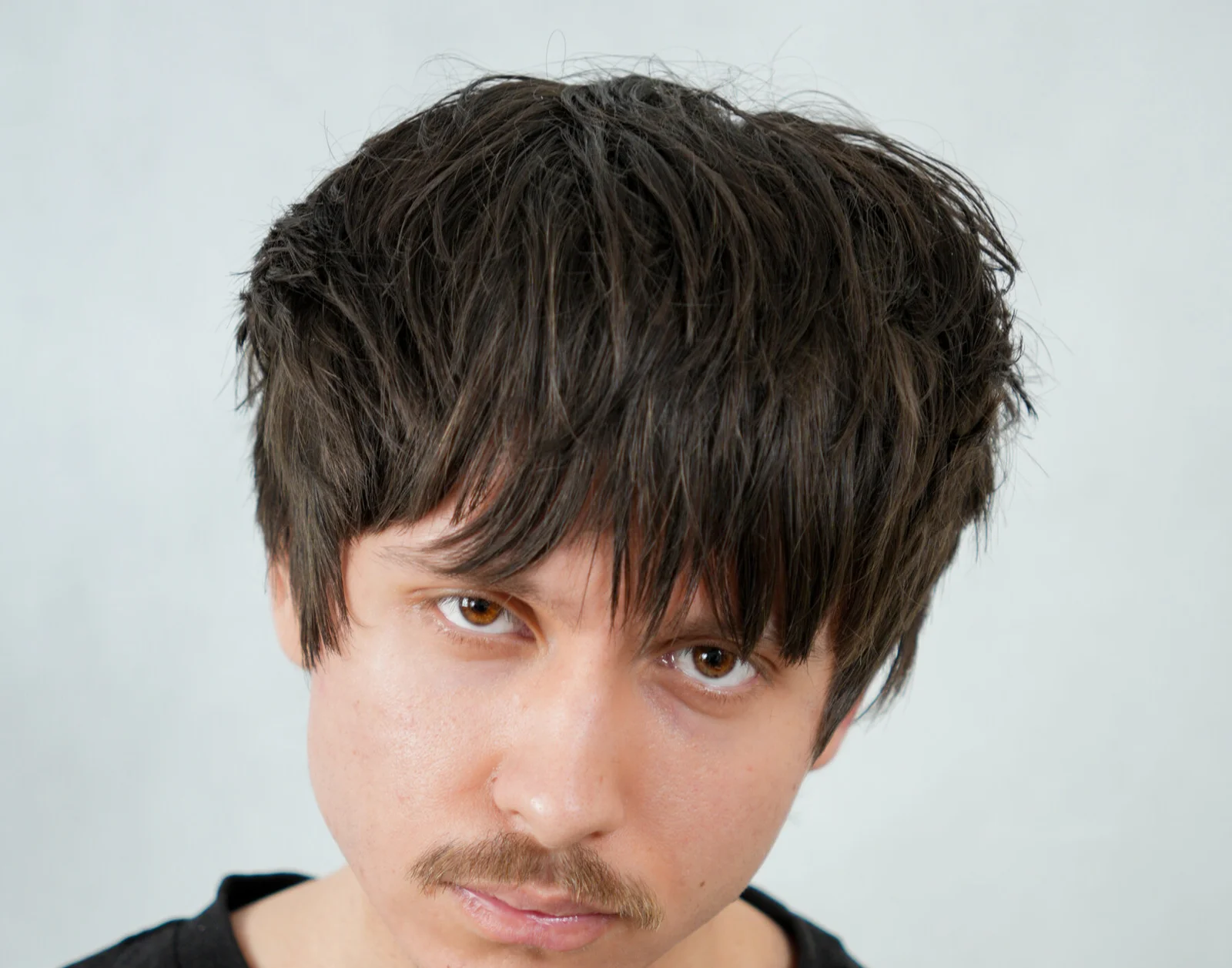
Mod Cut on Mid-Length Hair
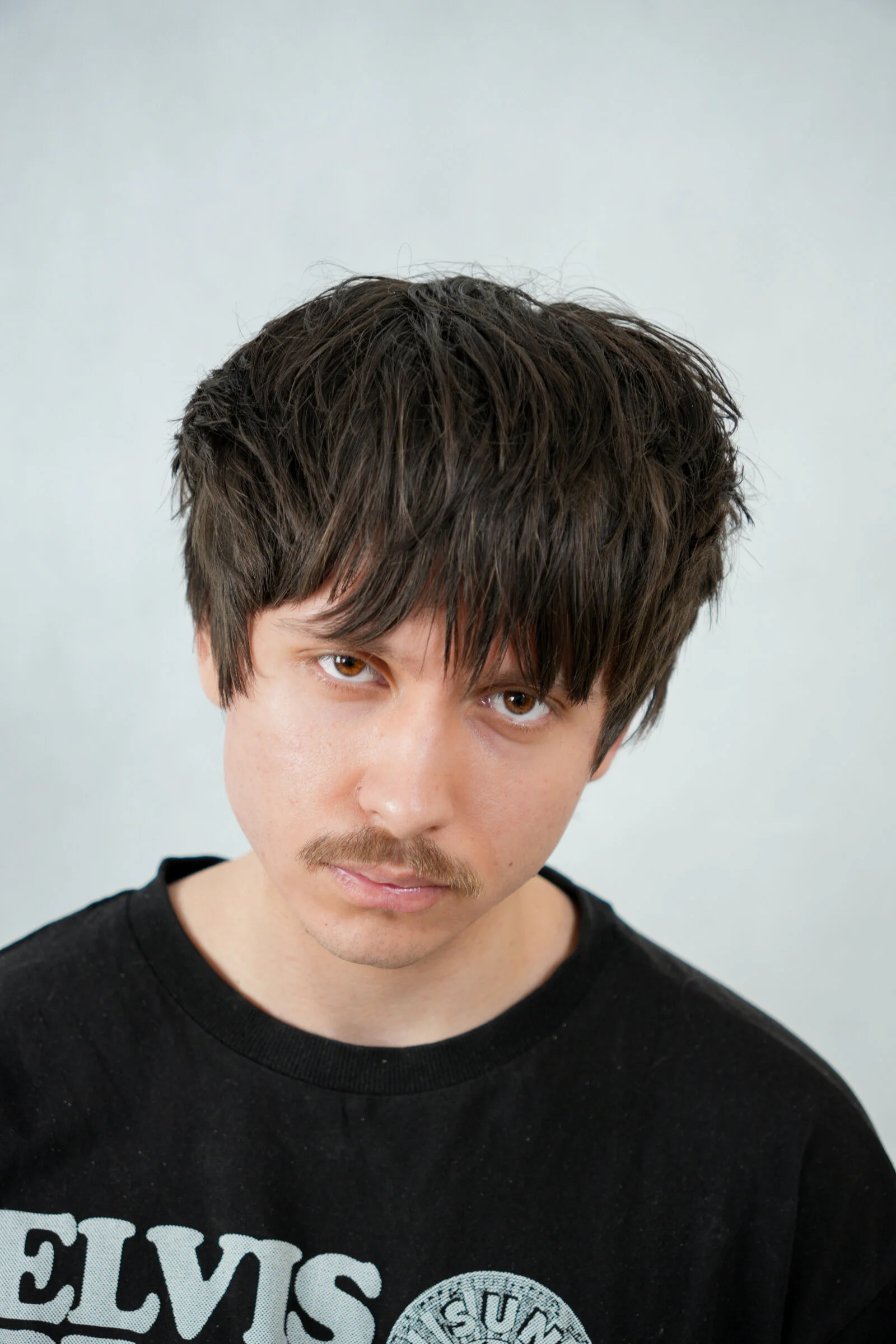
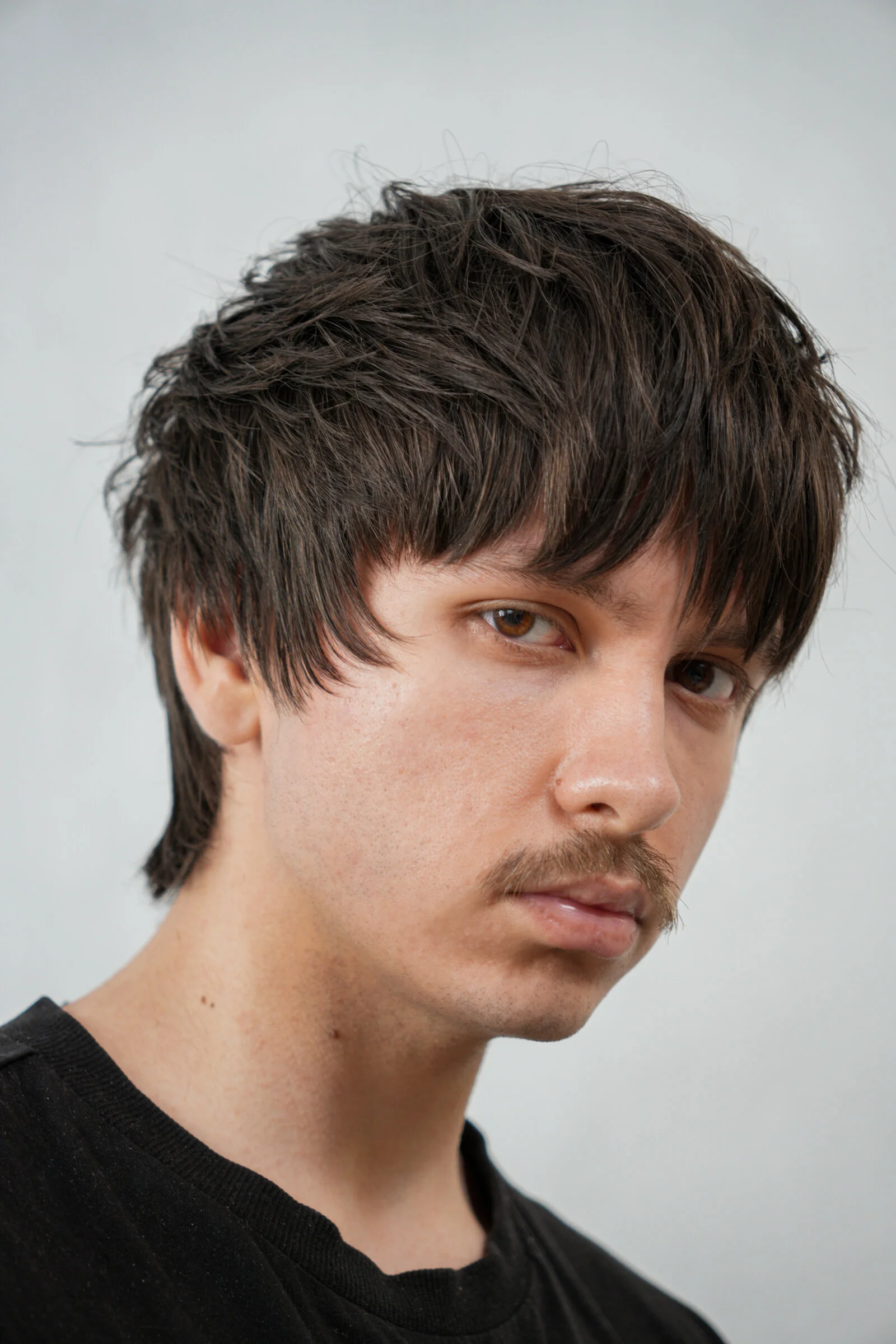
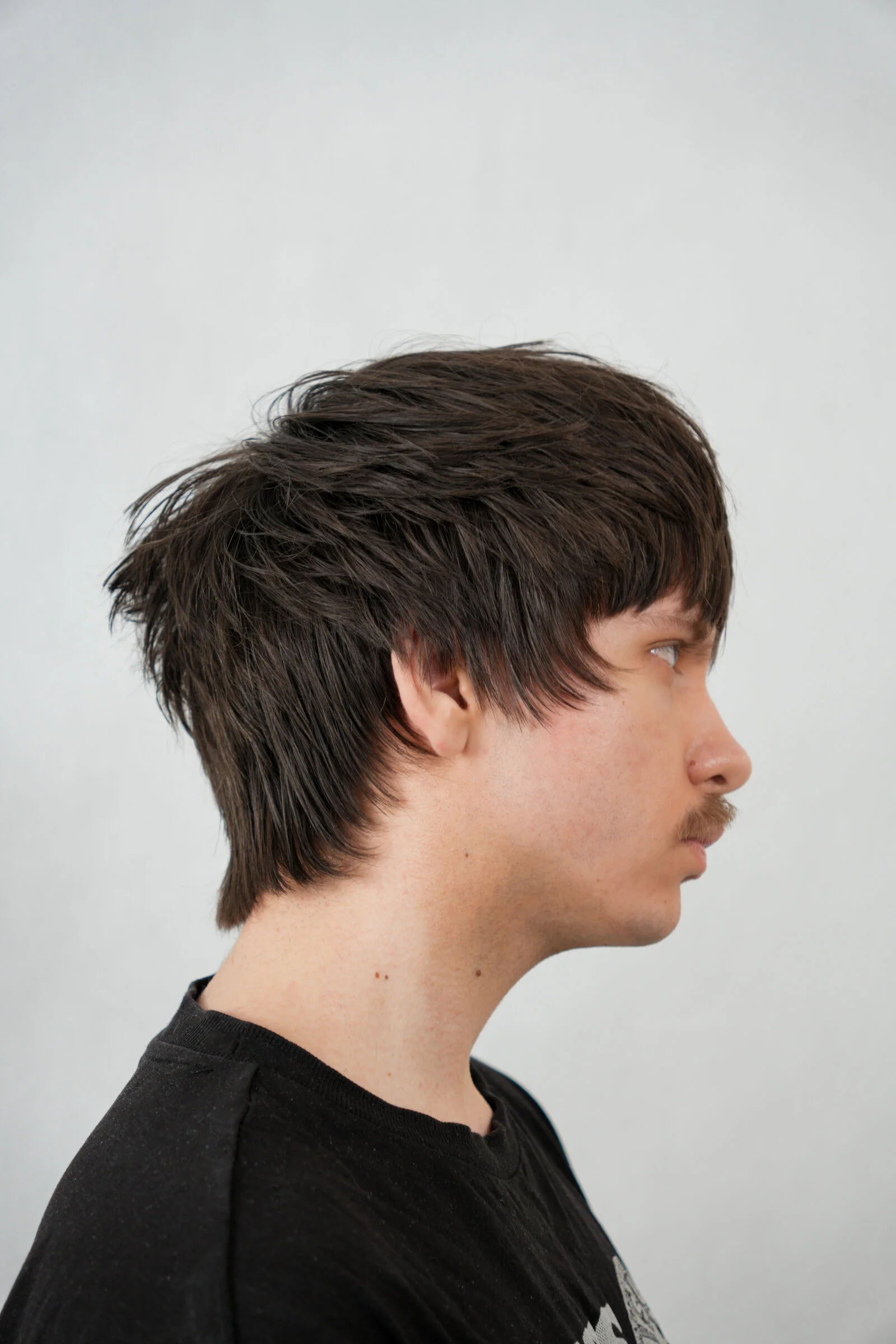
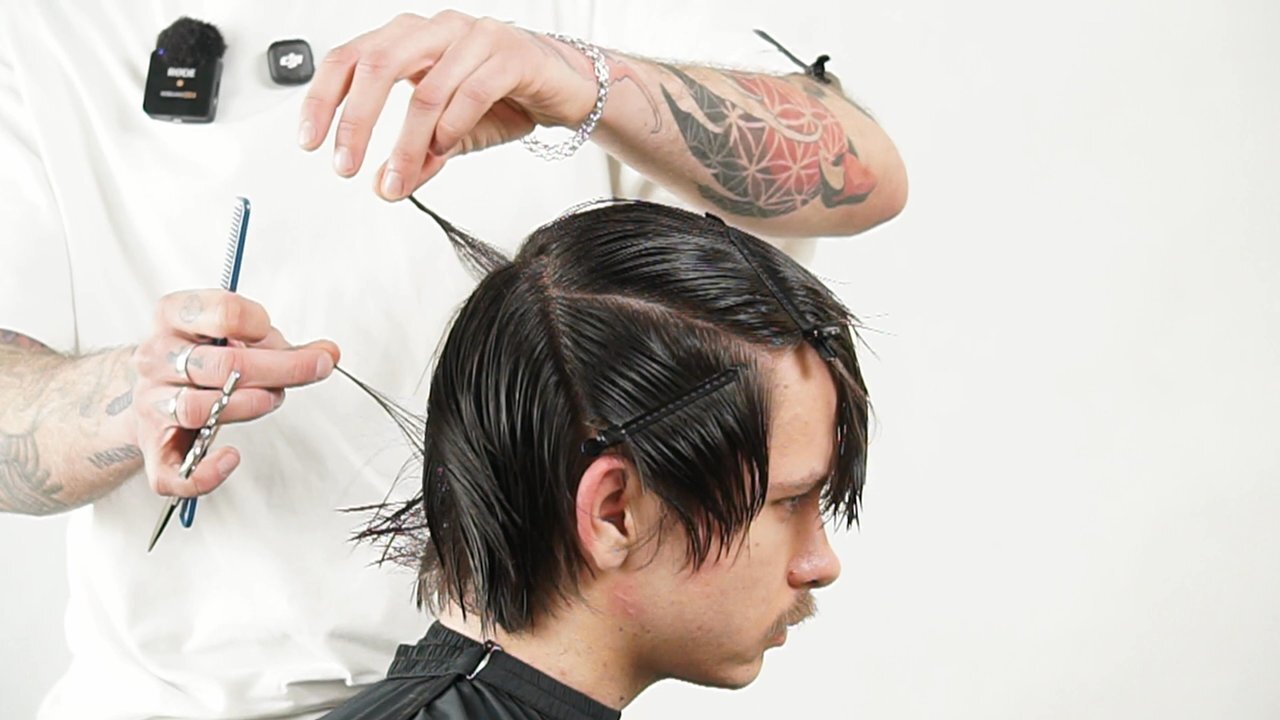
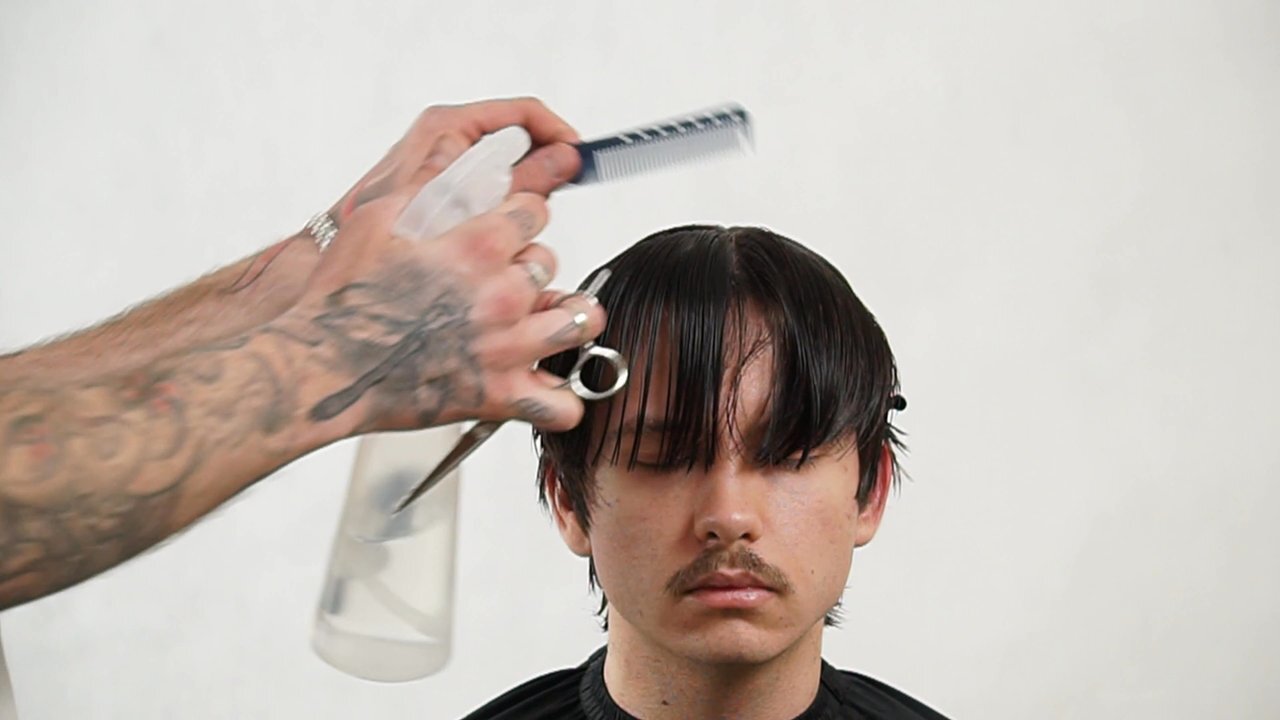
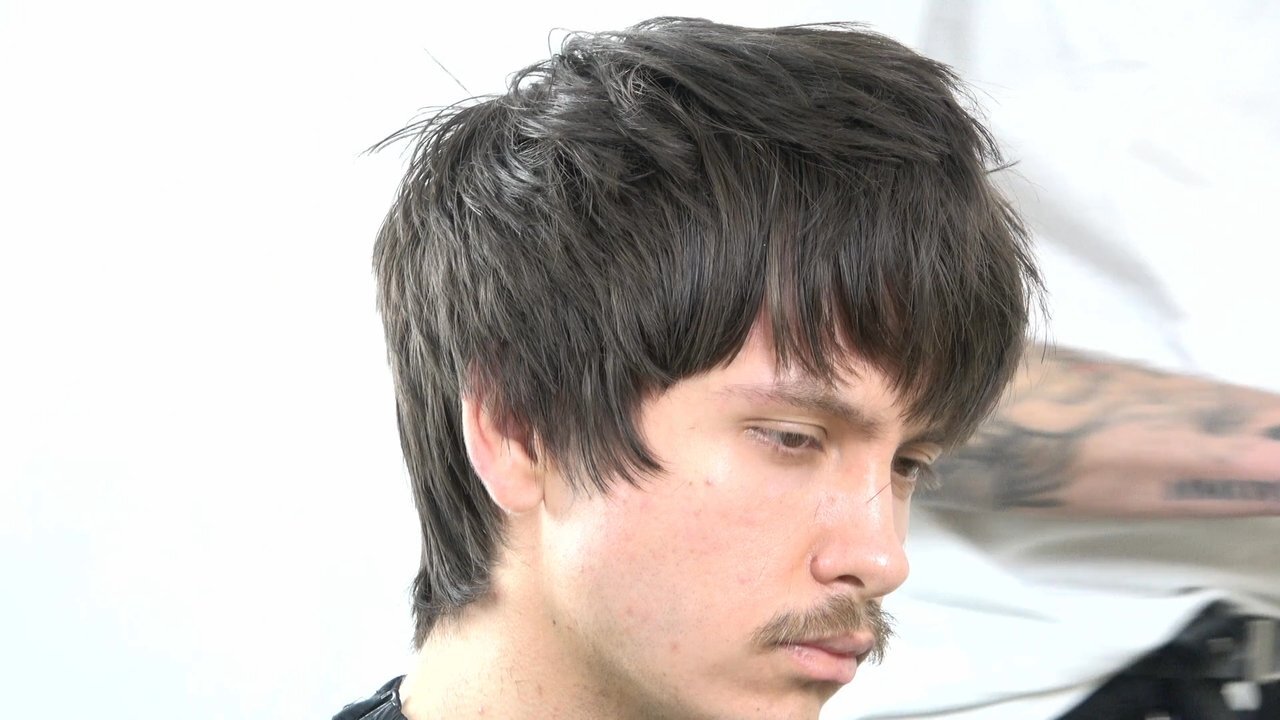
A men's cutting course in which Kacper Trzaskowski builds a mod cut on mid-length hair: reading the head shape, the occipital bone and the mastoid processes before the first cut, sectioning along the natural fall of the hair, a circular nape line with a Chinese razor, layers cut with the tip of the scissors at roughly 160 degrees against a guide strand, a fringe shredded under the brow line, a square connection between top and sides, and dry styling with sea salt and matte clay.
Result and process
About the course
Mod cut on mid-length hair is a course about a haircut that sells itself and falls apart on one thing: badly planned texture. Kacper Trzaskowski works on straight, fine but very thick hair, for a client who wants a fringe at brow level, a visually narrower head and a cut he will not have to style every morning.
The film covers the full haircut, but its core is the chain of decisions that starts before the first cut. The hair category and the place where weight has collected decide the layering projection. The shape of the head decides whether a section is pulled straight out of the plane or follows the curve. The way the client wears his hair every day decides the section lines and how wide the nape will stay.
What you will see
- Reading the head shape, the occipital bone and the mastoid processes, and why sectioning starts from them
- The four conditions of a clean section: water, combing direction, the narrow side of the comb, and the finger left in place
- Placing the section line in front of the mastoid process so the nape stays wide and dense
- Working the nape with a Chinese razor in a circular shape, and the case for cutting with a margin
- Choosing between 90, 140, 160 and 180 degrees of projection, and what each of them takes away
- Running a guide strand down the centre and meeting two sections in the middle
- Protecting the outer bottom line so the side layers do not thin the nape
- Cutting the fringe under the brow with a Chinese razor and building its density back up
- Three ways of connecting top to sides, and why the square wins here
- Blow-drying against the hair and finishing with sea salt and matte clay
What you will learn
- 01How to derive the layering projection from hair category and the place where weight has collected, before the first strand is cut.
- 02Why sectioning starts at the mastoid processes and what breaks when the line runs to them instead of in front of them.
- 03How to build a circular shape at the nape with a Chinese razor, and why to cut with a margin on a new client.
- 04How to run a guide strand and meet two sections in the centre across the whole back of the head.
- 05How to protect the outer bottom line so side layers do not thin out the nape and sideburn.
- 06How to cut the fringe under the brow with a Chinese razor and build its density instead of fixing it after drying.
- 07How to choose between three ways of connecting top to sides, and why the square does not grow into a bulge.
- 08How to dry and style the cut so the client can repeat it at home on his own.
What's inside
Full access with the course 0:37
0:3701The cut begins with analysis
This haircut is going to be based on a careful reading of what is on the client’s head, the shape of the head and the structure of his hair.
 1:45
1:4502The occipital bone on longer hair
On long hair the occipital bone is my friend in the cut.
 2:00
2:0003The only symmetrical thing on a head
The mastoid process is one of the few things on a client’s head that really is symmetrical.
 3:27
3:2704Every technique takes something
Every technique gives us something, but every technique also takes something away, and layering takes density out of the hair.
 5:14
5:1405Sections are for the hairdresser
Sections are meant to be for me, not for the client, not for Instagram, not for a good film.
 6:06
6:0606In front of the mastoid, not to it
You have to set your section line in front of the mastoid process.
 11:13
11:1307Better to leave too much
Remember that it is better to leave too much hair and trim a little more off than to cut too little off.
 21:17
21:1708Go back to basics instead of chasing miracles
We start looking for extraordinary courses and extraordinary solutions, when in reality all we need is to go back to basics.
 23:29
23:2909Styling starts in the chair
For me the styling really started the moment the client sat down in the chair.
 23:57
23:5710Without a plan you cut hair, not a haircut
If you do not have an idea for the haircut from the very beginning, it will be hard to style it well at the end.
 40:55
40:5511The fringe is the first thing the client sees
And remember, the fringe is the first thing the client will see. If you do a bad job there, the whole haircut is doomed.
 46:24
46:2412Join to the back, do not cut into it
I join to the back, I do not cut into the back. The back is already finished.
FAQ
Who is this course for?
What kind of hair does Kacper Trzaskowski work on?
Does this course work without a Chinese razor?
Which layering projection is the right one?
How long does this haircut take behind the chair?
Does the course cover styling?
Is this a course for beginners?
Details
Educator
Kacper Trzaskowski
Educator · 7 courses
Co-founder of the CUT HOUSE salon in Toruń and speaker at Barbernight and BarberFest. In his teaching, he rejects learning specific hairstyles in favor of universal work frameworks built on analysis. He teaches how to work with intention when choosing fundamental techniques and shapes to match the client's head anatomy and hair structure. Over the past year, through courses and live demos, he has trained close to 100 people.
Ready for the next level
Unlock full access to the Connected Hair course library.
Join the Academy