Grey hair on men is one of the toughest coloring jobs behind the chair. Hair stripped of melanin has a different structure, absorbs pigment differently, and grows out differently than the rest of the head. In this guide you'll learn how to assess the percentage of grey, choose the right technique and product, apply color for even coverage, and plan for regrowth so the client keeps coming back—instead of masking mistakes at home.
Why Grey Hair Colors Differently
Greying is the loss of pigment (melanin) in the hair shaft. The process is usually genetically determined, though stress, diet, and certain health conditions also play a role. For coloring purposes, what matters isn't the cause but how that hair behaves under color. Three traits shape the entire application strategy:
- Grey typically starts at the temples and along the ear line, only reaching the crown and back later. That means a single head can have very different grey percentages across different areas—you can't treat them all with one application scheme.
- Grey hair is thicker, coarser, and less porous, with a denser, tighter cuticle. It's harder to swell and open, which makes grey the most resistant hair on the head when it comes to accepting color.
- No melanin means no natural base. The color you apply has nothing to build on, so on grey hair, cool shades can turn out green or ashy, and shades that are too light simply won't cover. That's why the rule is to work with a gold or natural pigment base.
The practical takeaway: resistance and thickness in grey hair are offset with processing time and developer strength, while the lack of a base is offset by pigment choice. These are two separate problems, and you solve them separately.
Assessing the Degree of Greying Before Application
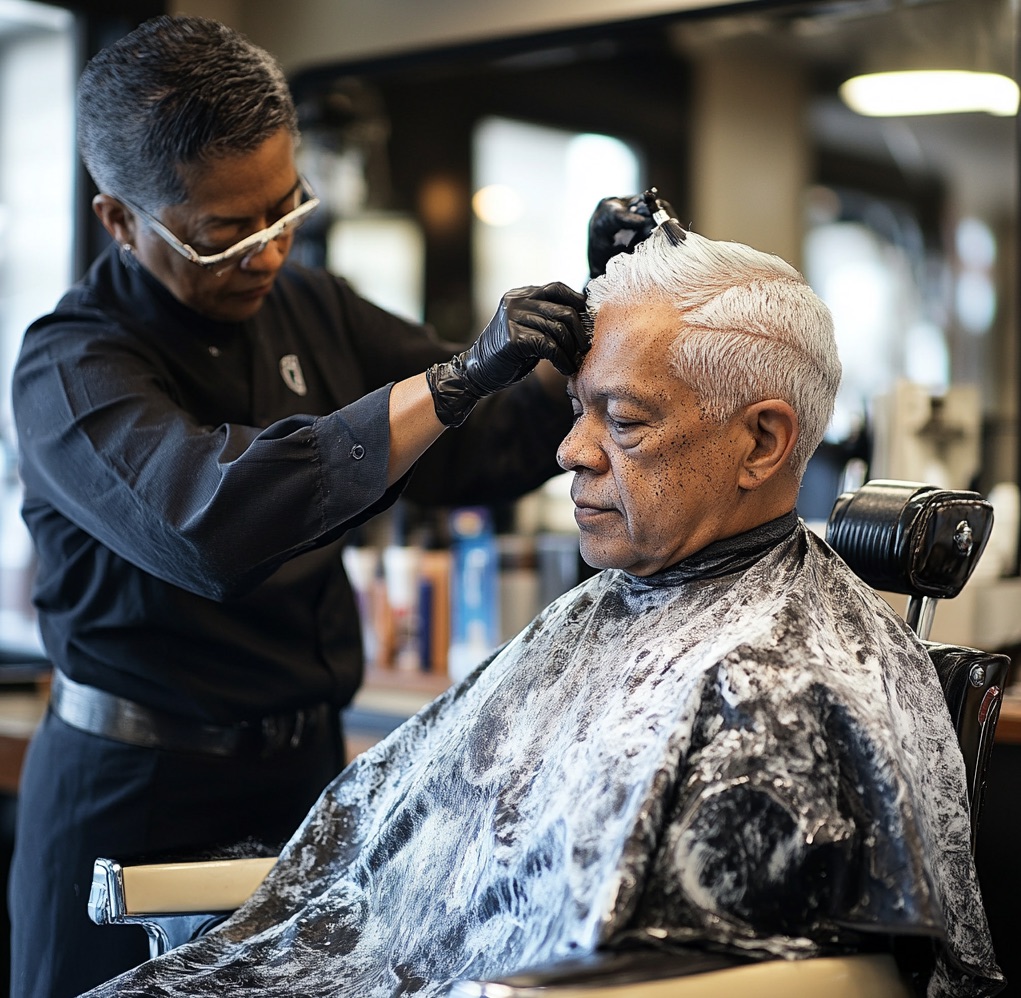
Determine the grey percentage on dry, unwashed hair, in daylight, section by section: temples separately, crown area separately, back separately. This isn't a single number for the whole head—it's a map. As a working guide, it's broken down into four stages:
- Early greying (up to 25% grey hair)—individual strands, usually at the temples.
- Moderate greying (25-50%)—grey is clearly visible but still the minority.
- Advanced greying (50-75%)—grey dominates the front section.
- Full or near-full greying (over 75%)—hair is predominantly pigment-free.
The 50% mark is a conventional decision threshold. Below it, the client's natural pigment still acts as a base, and often a simple toning or darkening will do. Above 50%, treat the head as a full-coverage grey coloring job—stronger base pigment and longer processing time. The temples, which are almost always greyer than the rest, need their own slightly warmer or darker formula, or they'll come out ashy against a darker top.
Basic Techniques for Coloring Grey Hair
Four core approaches, each suited to a different grey percentage and client expectation:
- Full coverage—uniform color across the entire head. Use for high grey percentages or when the client wants a clear change. On grey hair, always base the formula on a natural or gold-toned shade, since pure cool tones have no base here and won't cover.
- Darkening (tone on tone)—choosing a shade close to the client's natural color on a low-volume developer, so the grey blends in rather than standing out. The safest option, with soft regrowth.
- Lightening and highlights—instead of fighting the grey, you lighten sections so the contrast between grey and dark disappears. Great for 30-60% grey, since regrowth stays invisible.
- Toning—a light shade correction on a low-volume developer, used to blend a few grey strands and refresh coolness. The least invasive option, with the shortest lifespan.
The choice comes down to three variables: grey percentage, the client's natural color, and how the regrowth should look four weeks out. The higher the contrast between the base and the target color, the more visible the regrowth line—so with men, you should almost always aim for techniques that blur the line rather than sharp, uniform coverage.
Coloring Products—What to Choose?
Each product group offers different longevity and different grey coverage. This table breaks down the choice by how much grey you're working with and how long-lasting an effect you want:
| Product | Use | Longevity | Grey Coverage |
|---|---|---|---|
| Permanent color | Full coloring | 4-6 weeks | High |
| Semi-permanent color | Darkening, toning | 4-12 washes | Medium |
| Color-depositing shampoos | Subtle darkening | 2-3 washes | Low |
| Grey-reducing treatment | Gradual darkening | Cumulative | Medium |
| Henna | Natural coloring | 4-6 weeks | High |
A few workshop notes on this table. Permanent color is the only reliable route to full coverage on resistant grey, but it requires a stronger developer and longer processing time on the greyest areas. Semi-permanent colors and color-depositing shampoos only coat the hair with pigment, so on pure grey they give a semi-transparent effect that fades with every wash—treat them as a refresh between visits, not full coverage. Henna bonds permanently with keratin and can be very effective, but it's practically irreversible and complicates later chemical coloring, so always ask the client if they've used henna before applying color with developer.
Professional Coloring Techniques
In-salon techniques all serve one goal: cover or blend grey so the result looks natural and the regrowth doesn't give away that the client colors his hair. Here are the most commonly used:
- Men's balayage—hand-painting lightener onto selected sections, with or without foil. Softens the contrast between grey and dark and gives invisible regrowth, since there's no sharp root line.
- Micro-balayage—a finer, denser version of balayage, ideal for early-stage grey when you just want to soften a few strands at the temples.
- Tone-on-tone coloring—a shade matched very closely to the client's natural color on a low-volume developer. Gives soft coverage and near-invisible regrowth. The most common choice for men's grey.
- Color Camo (camouflage)—a fast, partial coloring service designed for men, usually just the temples and beard line, working in a few minutes. It doesn't cover 100%, deliberately leaving some grey for a natural look.
- 3D coloring—working with several shades at once to build depth and dimension instead of a flat, uniform block of color.
Application Rules for Resistant Grey Hair
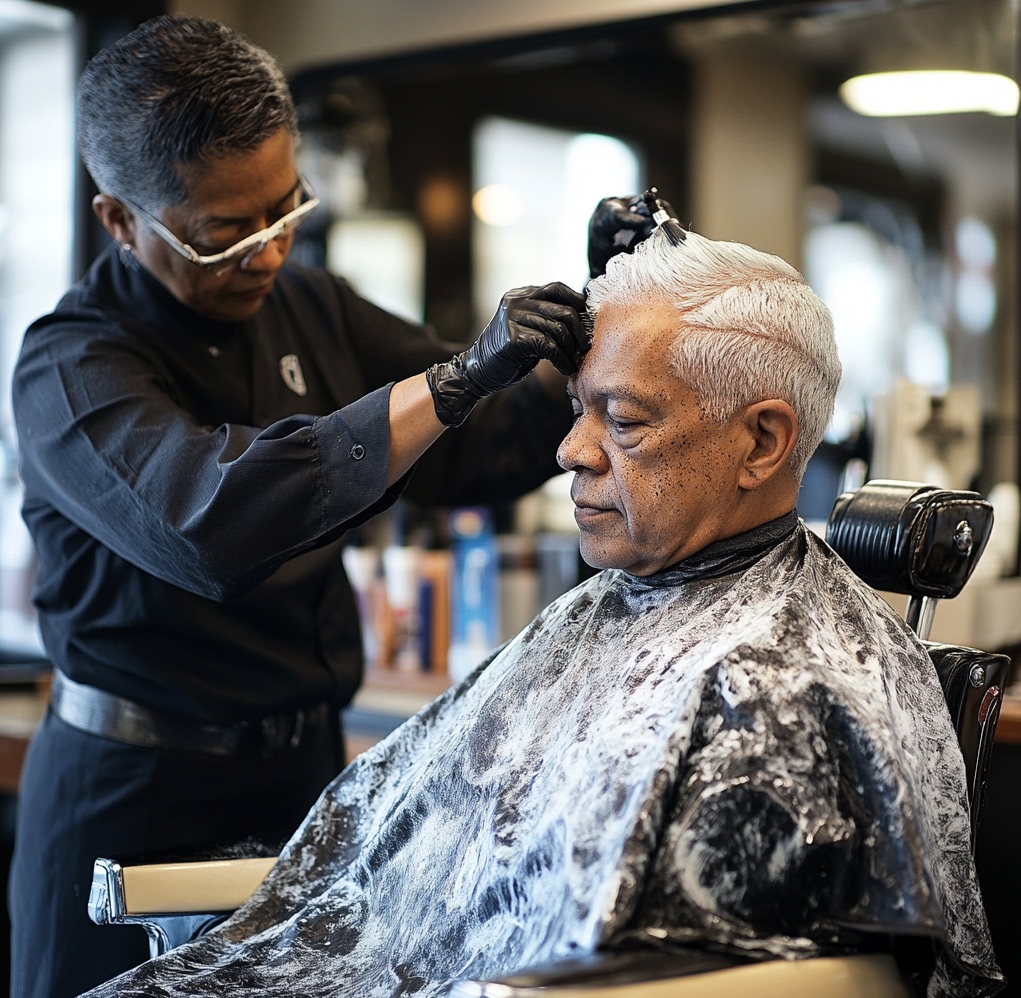
- Start application on the greyest areas, usually the temples, since that's where the pigment needs the most time. Do the back and less grey zones last.
- Section into thin strands and apply color densely, working it thoroughly into the root. Sparse application on grey leaves gaps in coverage.
- With a high grey percentage, add a natural or gold base to the formula to give the color something to sit on and avoid a green or ashy cast.
- Hold the full processing time—don't cut it short. Resistant grey needs the whole window for the pigment to set, and cutting the time short is the most common cause of patchy coverage.
For more on professional coloring techniques, check out our article on the latest trends in men's hair coloring.
Aftercare for Colored Hair
At-home advice is part of the service—it determines how long the color lasts and how the client remembers the result. Give him a simple routine:
- Use shampoo and conditioner made for colored hair, free of harsh detergents that strip pigment.
- Limit washing to 2-3 times a week, since every wash removes some color, especially with cool shades.
- Use products with UV filters to protect color from sun exposure, which speeds up fading.
- Wash with cool or lukewarm water. Hot water opens the cuticle and washes out pigment faster.
- Use nourishing masks regularly, since coloring—especially with lightening—dries out the hair.
For more aftercare tips, check out our complete grooming guide.
Natural Methods for Dealing with Grey Hair
Some clients ask about chemical-free solutions. It's worth knowing these options and their real limitations, so you can set expectations honestly:
- Henna—a natural alternative to chemical dyes, giving a long-lasting, intense effect, but practically irreversible and a complication for later chemical coloring.
- Essential oils—some, like rosemary oil, are sometimes linked to stimulating melanin production. Treat this as support for hair condition, not a method of covering grey.
- Supplementation—vitamin B12, D3, and copper may affect hair pigmentation. That's a topic for a doctor or dietitian, not a promise you make in the chair.
- A healthy diet rich in antioxidants is sometimes linked to slowing down the greying process.
The effects of natural methods are subtle and play out over time. None of them will cover visible grey the way color does, so if a client expects full coverage, don't promise it with a supplement or an oil.
Common Mistakes in Coloring Grey Hair
- Color too dark—a solid dark block looks unnatural on a mature face, emphasizes wrinkles, and gives away the color job. It's safer to go half a shade to a full shade lighter.
- No pigment base—applying a cool shade without a natural or gold undertone ends up with a green or ashy cast, since grey has no base of its own.
- Cutting processing time short—resistant grey won't have time to take the pigment, leaving gaps in coverage. The most common cause of undercoverage.
- Ignoring regrowth—with high contrast, regrowth becomes visible after just two or three weeks. Set a regular visit schedule with the client before choosing a technique.
- Poor match to the client's features—color should work with the client's skin tone and facial hair, not be picked from a swatch without considering the face.
Trends in Men's Hair Coloring
The direction in men's grey coloring is clearly shifting from full coverage toward working with a natural effect. Currently popular:
- Natural grey accents—instead of full coverage, deliberately leaving and highlighting grey, for example at the temples.
- Cool shades—platinum blondes and ashy browns, which require an especially careful base choice on grey hair.
- Colored accents—subtle colored strands for more adventurous clients.
- Gradient transitions—smooth transitions between shades that blur the regrowth line for the most natural effect.
To stay current with the latest trends, follow our blog and sign up for our online hairdressing courses.
Summary
Coloring men's grey hair comes down to three decisions: a section-by-section grey map, a technique matched to the percentage and expected regrowth, and a formula with a pigment base that gives the color something to sit on. The rest is application discipline: start with the greyest zones, apply densely, and hold the full processing time.
If you want to deepen your coloring craft, check out our online courses. You'll find courses ranging from color theory fundamentals to advanced techniques used by top stylists.