The Pompadour is one of the most recognizable men's hairstyles: a tall, swept-back top with strong contrast against shorter sides. For a barber, it's more than just a haircut — it's a matter of shape and volume. Below, we break the Pompadour down to its core elements: the structure of the haircut, cutting techniques, matching it to hair type and face shape, and styling that holds the lift all day long.
The History of the Pompadour
The Pompadour takes its name from Madame de Pompadour, mistress of King Louis XV, who popularized high, swept-up hairstyles in the 18th century. In the men's form we know today, the style flourished in the 1950s thanks to icons like Elvis Presley, becoming a symbol of style and rebellion. The modern Pompadour has kept that signature lifted silhouette, but it's come a long way — from heavily pomaded classics to textured, relaxed interpretations with fades and tapers.
Key Characteristics of the Pompadour
You can recognize a classic Pompadour by a few consistent features:
- Long hair on top, swept back and lifted above the forehead
- Short sides and back that clean up the silhouette and pull volume upward
- Strong contrast between the length on top and the sides
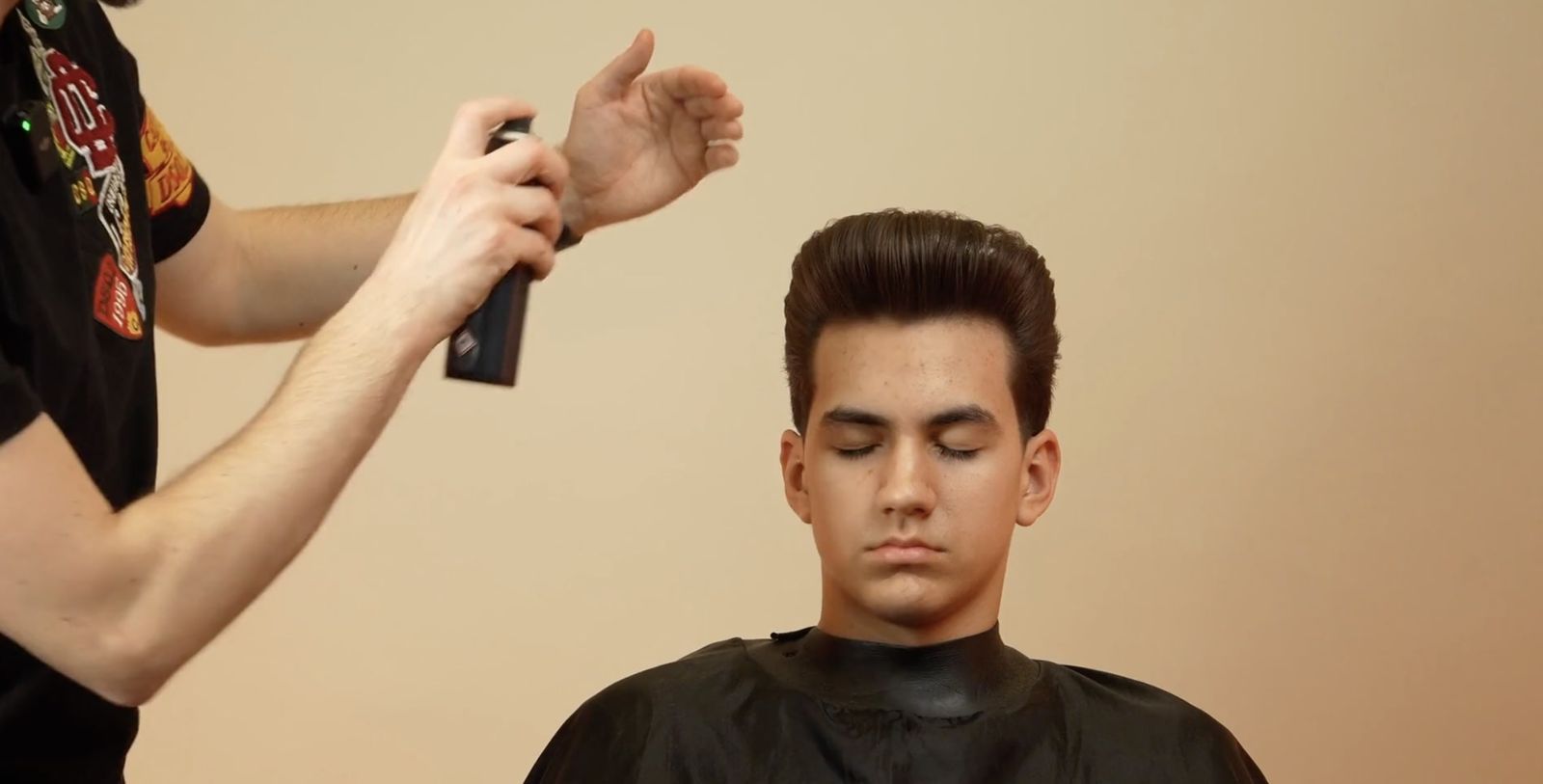
- A three-dimensional effect: the front is the highest point, with the top curving gently backward, giving the style depth and character
The key difference from a simple slicked-back style is the shape. In a Pompadour, the top doesn't lie flat — it's built up at the root to create a clear lift above the forehead. That lift is established at the cutting stage (leaving more length in the front and crown areas), and styling only enhances it. Without the right length and direction on top, no pomade will hold the shape.
Modern Variations of the Pompadour
At the Connected Hair barbering academy, we offer courses covering four different takes on this classic haircut:
Classic Pompadour
- Taught by Mateusz Poznański
- Focuses on a traditional take on the style with elegant, clean lines
- Uses both clippers and scissors for precise shaping
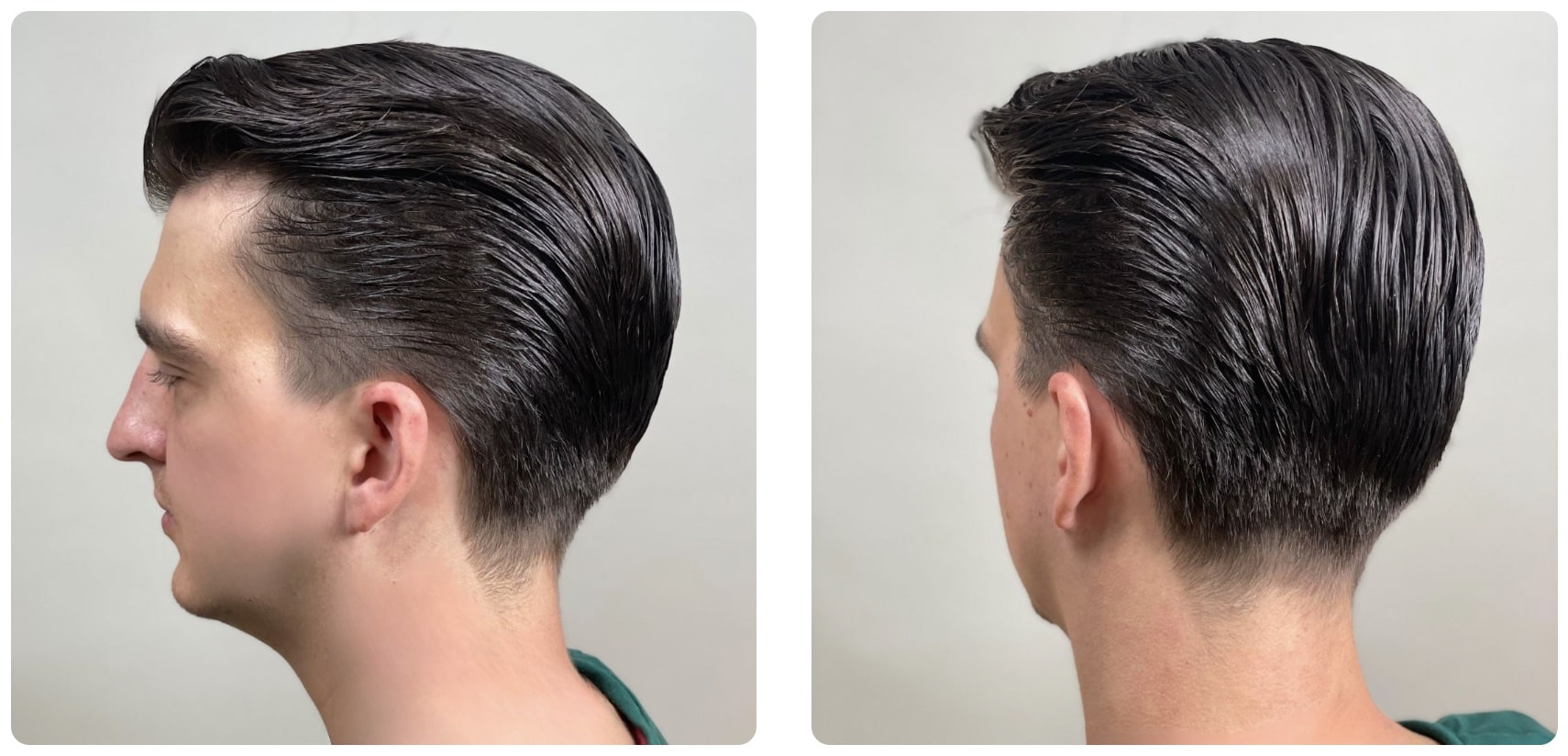
Pompadour, Pollheimer Style
- Presented by Paweł Pollheimer
- A unique approach blending classic and modern elements
- Focuses on layering and graduation techniques to achieve a three-dimensional effect
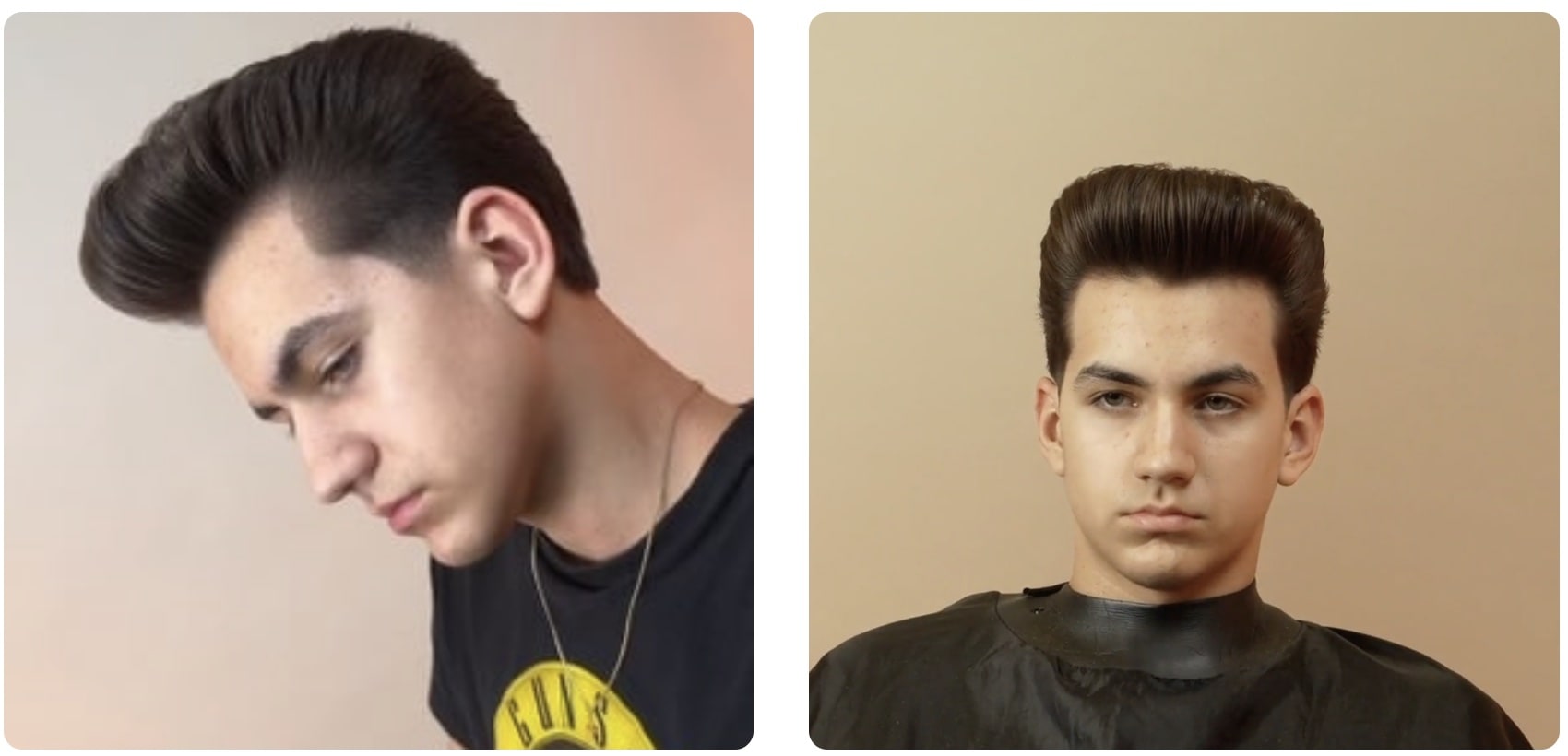
Modern Loose Pomp with Taper (Pompadour Messy Chic)
- Course taught by Mateusz Banaszek
- A more relaxed, “tousled” take on the classic Pompadour
- Uses tapering technique for a modern, clean transition on the sides
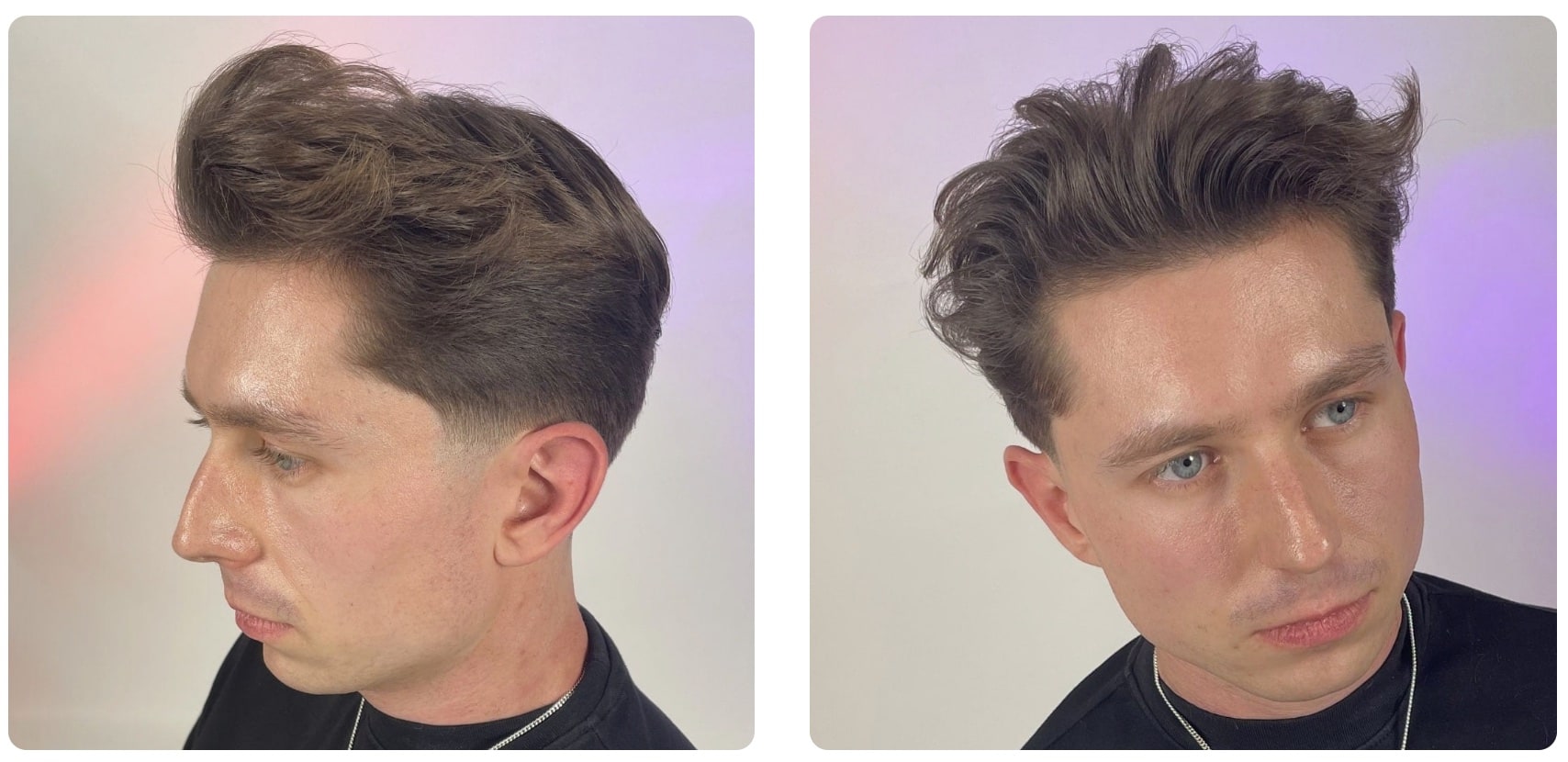
Pompadour Styling as a Bonus to the Middle Part Haircut
- Presented by Vlad Pozhoga
- Shows how to transform a Middle Part haircut into a striking Pompadour
Pompadour and Different Hair Types
The Pompadour can be adapted to any hair type, but each one calls for a different approach at both the cutting and styling stages. The rule is simple: work with the hair's natural texture, not against it.
- Straight hair – the most forgiving base. It easily builds a smooth, elegant shape and holds the swept-back line well. The main challenge here is root volume, which you build up with a brush and airflow from underneath.
- Wavy hair – brings natural movement and texture, so it works great for messy versions. It's worth working with the wave instead of smoothing it out, and cutting so the wave direction runs consistently one way.
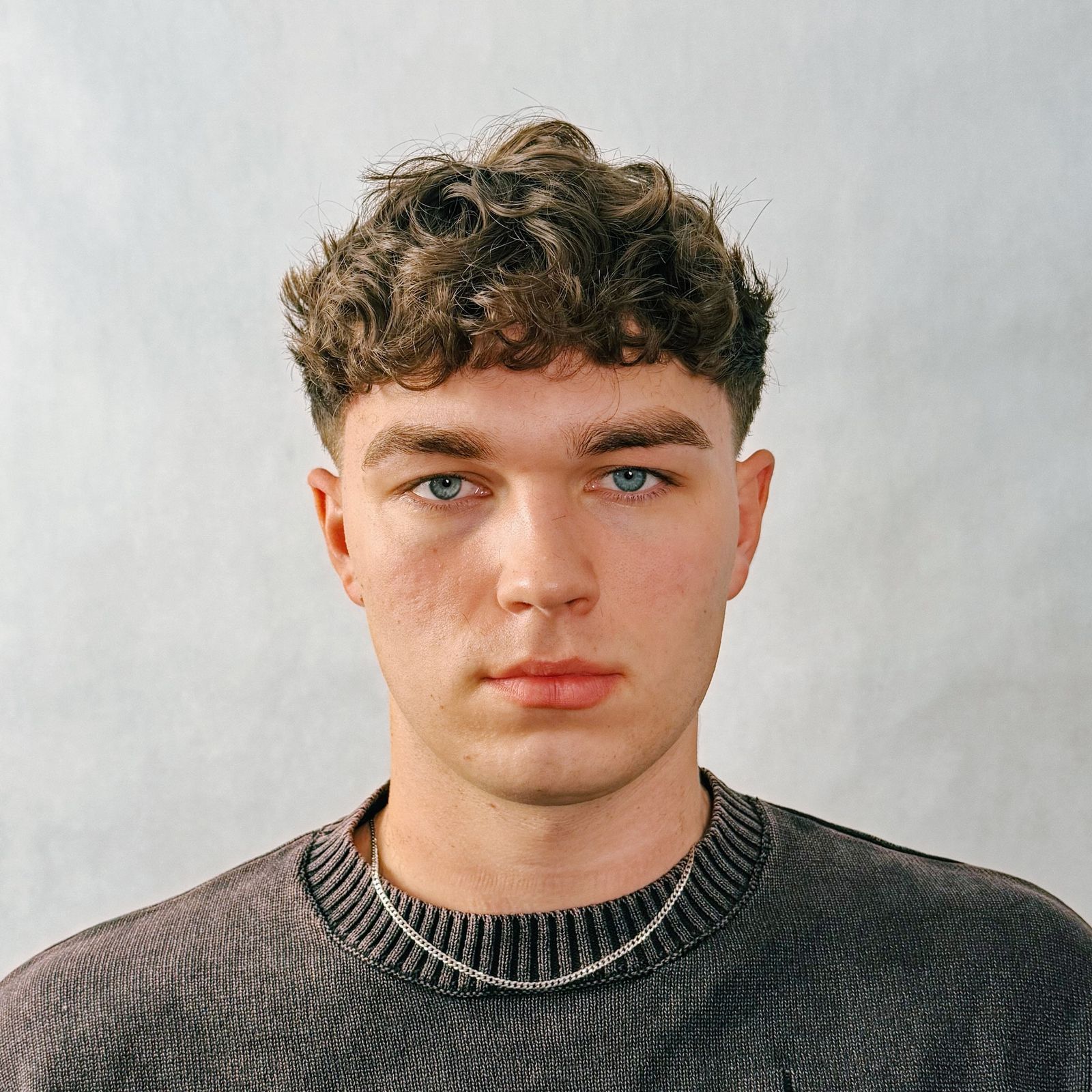
- Curly hair – more of a challenge, but it can produce a very voluminous Pompadour. The key is cutting with curl shrinkage in mind (hair is shorter dry than wet) and styling with products that define the curl instead of gluing it flat.
- Fine hair – needs volume built in. It helps to leave more density on the crown, thin carefully, and use texturizing products at the root. Don't thin the top too much, or the shape will collapse.
- Thick hair – gives a strong shape but can look heavy. Layering and thinning remove weight from the interior, so the top doesn't stick out like a block and styles more easily.
Our educators, like Mateusz Poznański and Paweł Pollheimer, cover in detail in their courses how to adapt cutting and styling techniques to different hair types.
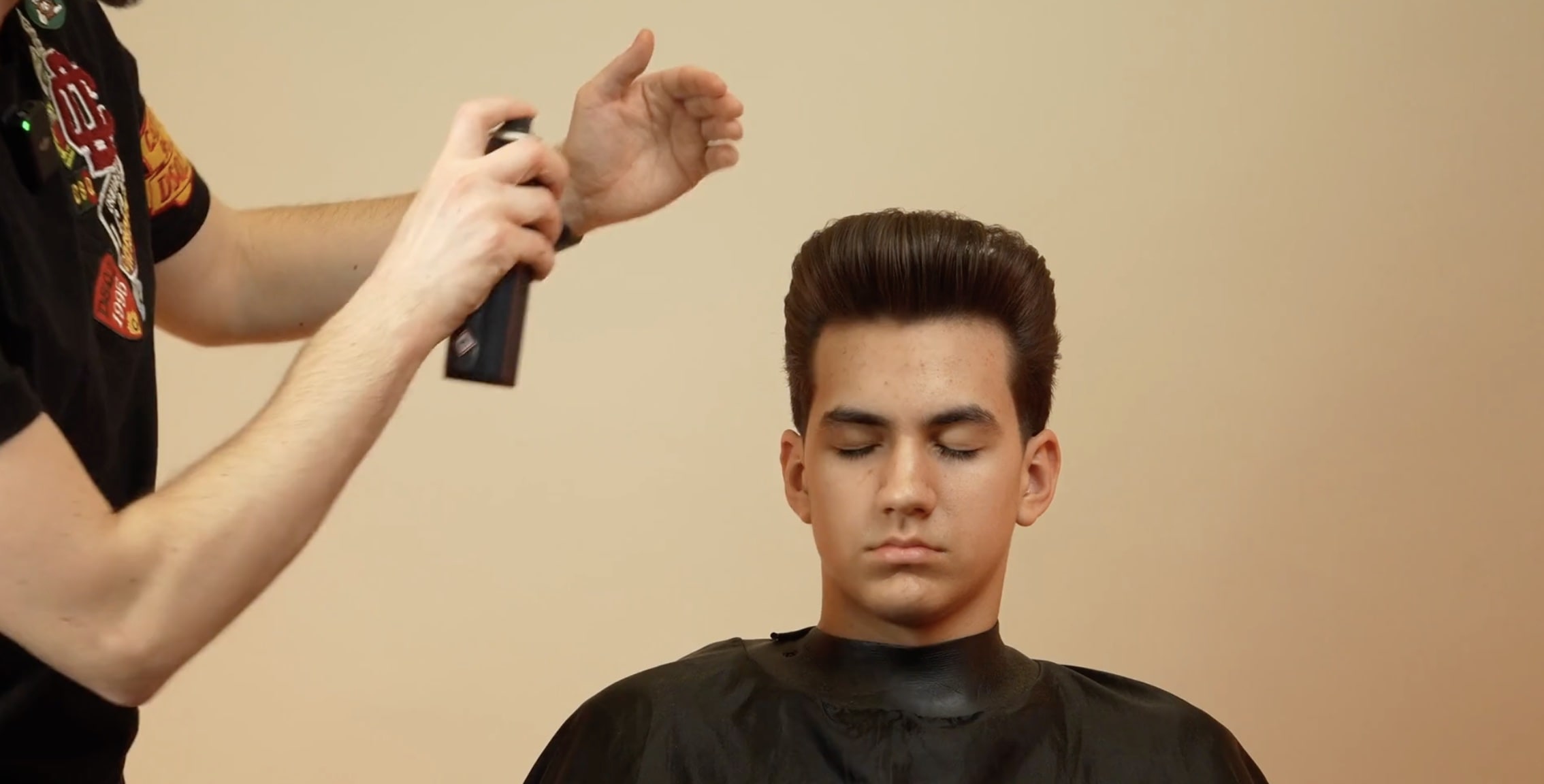
Pompadour Trends
Despite its classic form, the Pompadour keeps evolving. In recent years, the clearest trend has been combining it with different techniques on the sides and more texture on top.
- Pomp Fade – the classic lift on top paired with a fade on the sides, meaning a smooth transition from skin to longer hair. The lower the fade starts, the softer the effect; a high fade gives a sharp, strong contrast.
- Pompadour with undercut – sides cut to a single length with no transition, creating a hard, defined boundary between the top and sides. Bolder and more graphic than a fade.
- Textured Pompadour (messy) – more of an “undone” character, a matte finish, and a less product-heavy top. This is the direction we cover in the Modern Loose Pomp with Taper course, taught by Mateusz Banaszek.
These trends reflect the broader direction in men's hairdressing: blending classic and modern elements to create hairstyles that are both elegant and bold.
Most Common Mistakes When Creating a Pompadour
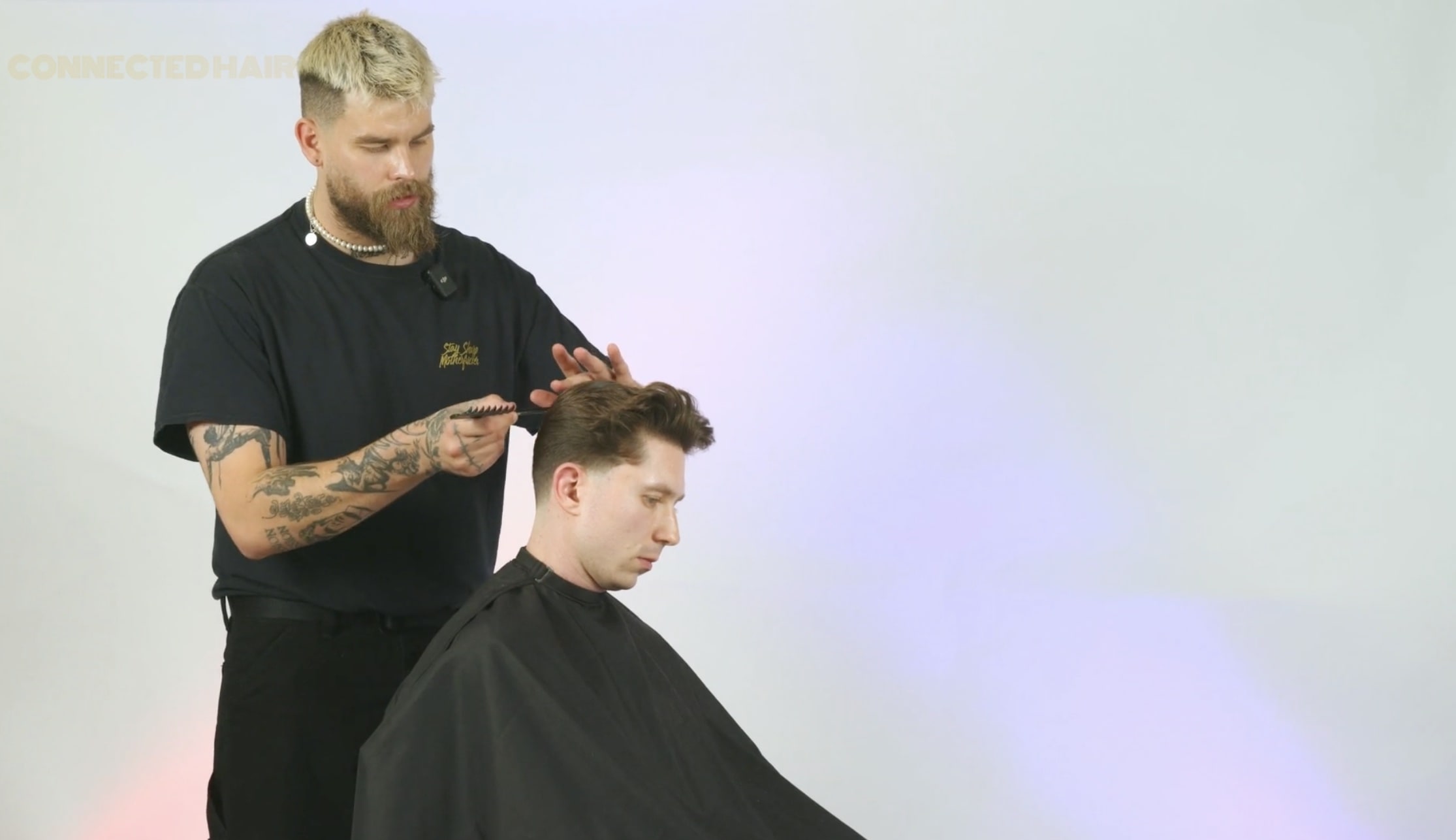
A perfect Pompadour comes down mainly to proportion and reading the client's head. Here are the pitfalls that most often ruin the result:
- Wrong top-to-sides proportions – too much contrast without a smooth transition makes the style look unnatural, like it's been glued on. Match the height of the shape to face length, not to the maximum possible.
- Insufficient layering – if the line between the top and sides isn't blended out, the style loses depth and looks flat. The temple area and above the ear determine whether the shape sits naturally.
- Ignoring hair growth direction – crowns, whorls, and a receding hairline can throw off the sweep. Check the growth pattern before cutting and shape the length so the client can style it themselves at home.
- Too much product – excess pomade weighs the hair down, the shape collapses, and the style looks greasy. It's better to build up product in layers than apply it all at once.
- Styling on a poorly prepped base – without blow-drying with root lift, even the best pomade won't build volume. The shape is created at the blow-dryer stage; product only locks it in.
Our educators, like Mateusz Poznański and Paweł Pollheimer, cover these issues in detail in their courses and show step by step how to avoid them.
Mastering the perfect Pompadour comes down to continually refining your craft. Connected Hair offers a wide range of hairdressing courses, including specialized courses covering different Pompadour variations. Our experienced educators share techniques that will help you raise your cutting skills, whether you're just starting out or already have years of experience behind the chair.
Advanced Pompadour Cutting Techniques
Each of our educators builds the Pompadour a little differently. Below is a summary of the cutting process for four variations, as we present them in our courses.
Classic Pompadour (Mateusz Poznański)
- Even moisturizing of the hair before cutting, to work on one controlled length
- Precise definition of the cutting line and sectioning — dividing the head into a top zone and a side-and-back zone
- Cutting with clippers, holding the hair out at 90° elevation for a square, even shape
- Layering and thinning with scissors for a natural, soft transition between lengths
- Personalizing the haircut to match the client's natural hair properties and growth direction
Pompadour, Pollheimer Style
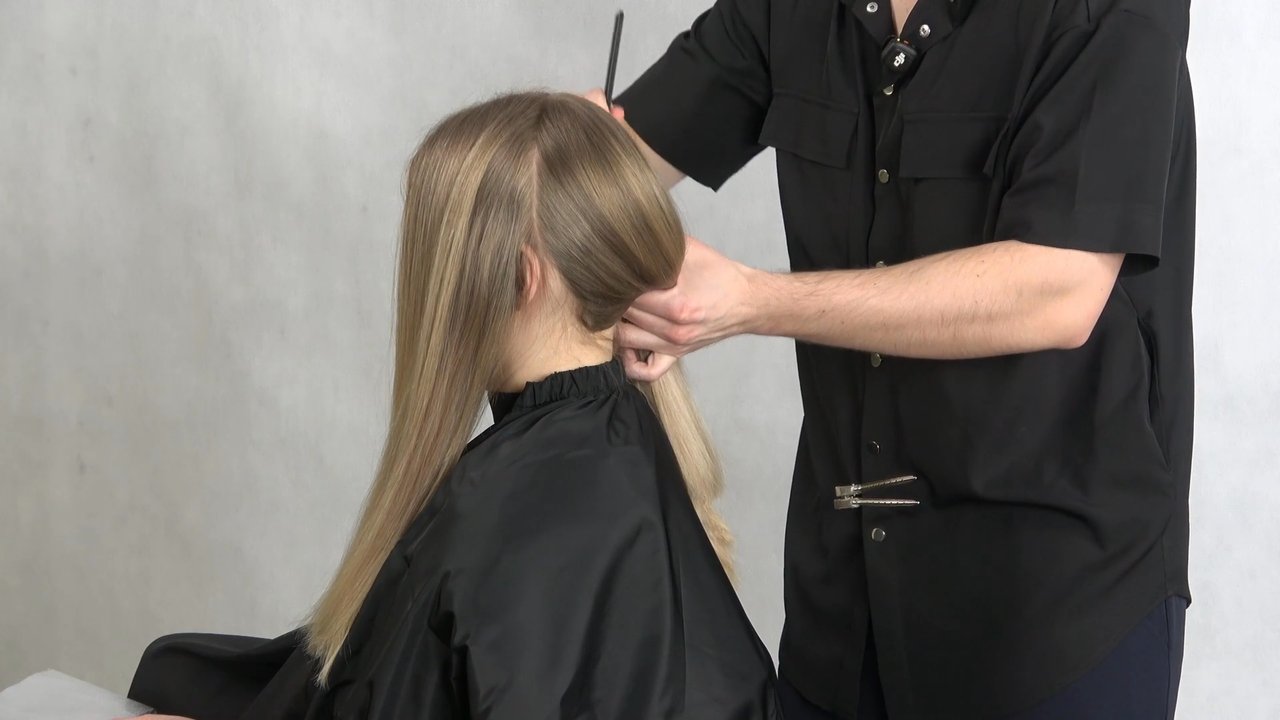
- Creating a stationary guide (the first length line) that the rest of the cut is referenced to
- Graduation all around, holding the hair out at 90° elevation from the head, building an even layer
- Shaping the sides into a triangle and the back into a square, so the overall shape has correct geometry
- Precise layering of the top section to achieve the desired lift above the forehead
Modern Loose Pomp with Taper (Mateusz Banaszek)
- Analyzing the client's hair structure before cutting (density, curl pattern, growth direction)
- Layered cutting using the point cutting technique — cutting into the ends with scissor tips to break up a hard line
- Applying tapering on the sides for a smooth, seamless transition between lengths
- Texturizing the top to add lightness and a relaxed, “messy” character
The difference between a fade and a taper can be confusing: a taper is a slight shortening at the hairline (temples, nape), with the rest of the side staying longer; a fade is a transition that goes all the way down to the skin across a larger area of the side. In a loose Pomp, a taper gives a clean finish without the aggressive contrast typical of a fade.
Styling the Pompadour Step by Step
The styling process varies by variation, but the base is the same. The most important rule: the shape is created with the blow-dryer, and product only locks it in.
- Apply a volumizing product or styling base to damp hair, working it in from the roots
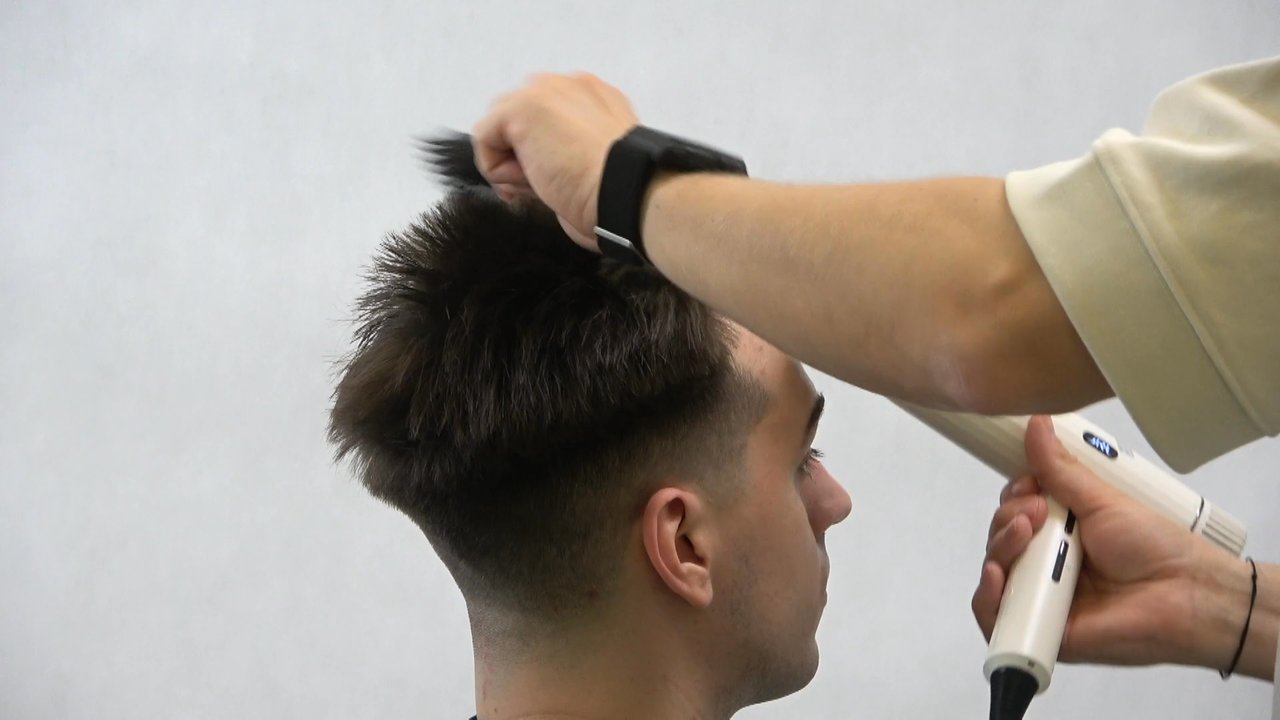
- Blow-dry the hair with a round brush, lifting it at the root and directing airflow from underneath to build volume and push the front upward
- Apply pomade, wax, or matte paste: pomade gives shine and clean lines (classic look), matte paste gives texture and a natural look (messy versions)
- Form the final shape by combing the top back and emphasizing the lift above the forehead
- Lock in the style with hairspray, applying it from a distance so you don't flatten the volume
For detailed styling guidance, check out the Pompadour Styling course taught by Vlad Pozhoga.
Who Is the Pompadour For?
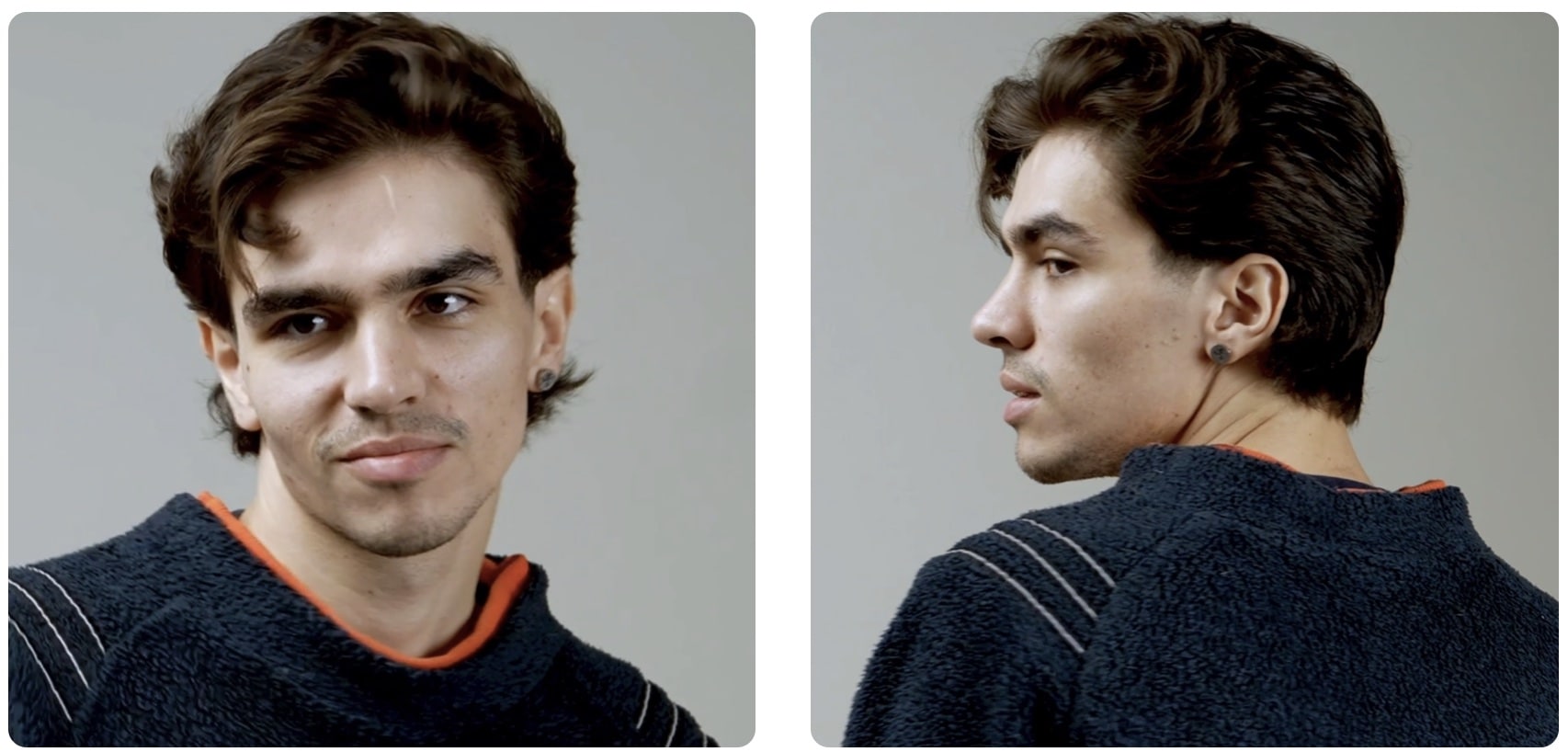
The Pompadour looks best on men:
- With straight or slightly wavy hair of decent density on top
- With oval, square, or triangular face shapes (the lift adds height, elongating a round face and balancing a wide one)
- Looking for a style that's elegant yet bold
The style also works well across different professional contexts. A classic, smooth Pompadour looks professional in business settings, while more textured, bold versions suit creative industries. For athletes and active clients, it's best to suggest a version with shorter sides for comfort. Vlad Pozhoga's styling course shows how to adapt the Pompadour to different occasions and lifestyles.
Care and Maintenance of the Pompadour
The Pompadour lives on contrast, and that contrast fades quickly as the sides grow out. To help the style hold its form, advise clients to:
- Get regular trims every 3-4 weeks, especially to refresh the sides and fade, which blur out fastest
- Choose products suited to their hair type and desired effect (pomade for shine, matte paste for a natural finish)
- Style daily with a blow-dryer, since without drying with lift the shape won't return
For more tips on maintaining different men's hairstyles, visit our Connected Hair Academy.
The Pompadour in Popular Culture
This hairstyle is inseparably linked to icons like:
- Elvis Presley
- James Dean
- David Beckham (in a more modern take)
Pompadour: A Timeless Classic Worth Mastering
The Pompadour blends classic elegance with modern character. Thanks to its many variations and cutting techniques, it can be adapted to any hair type, face shape, and client style — from clean, elegant lines to a relaxed, textured look. For a barber, it's a haircut that truly puts your craft on display: reading the head, building the shape, layering, and styling.
If you want to master the perfect Pompadour, join our PRO Academy, where you'll find in-depth courses taught by experts like Mateusz Poznański, Paweł Pollheimer, Mateusz Banaszek, and Vlad Pozhoga. Develop your skills and stay ahead of the latest hairdressing trends with Connected Hair.
See it in practice: in the Pompadour course with Paweł Pollheimer, you'll follow the entire process step by step on a model, with commentary from the educator.