
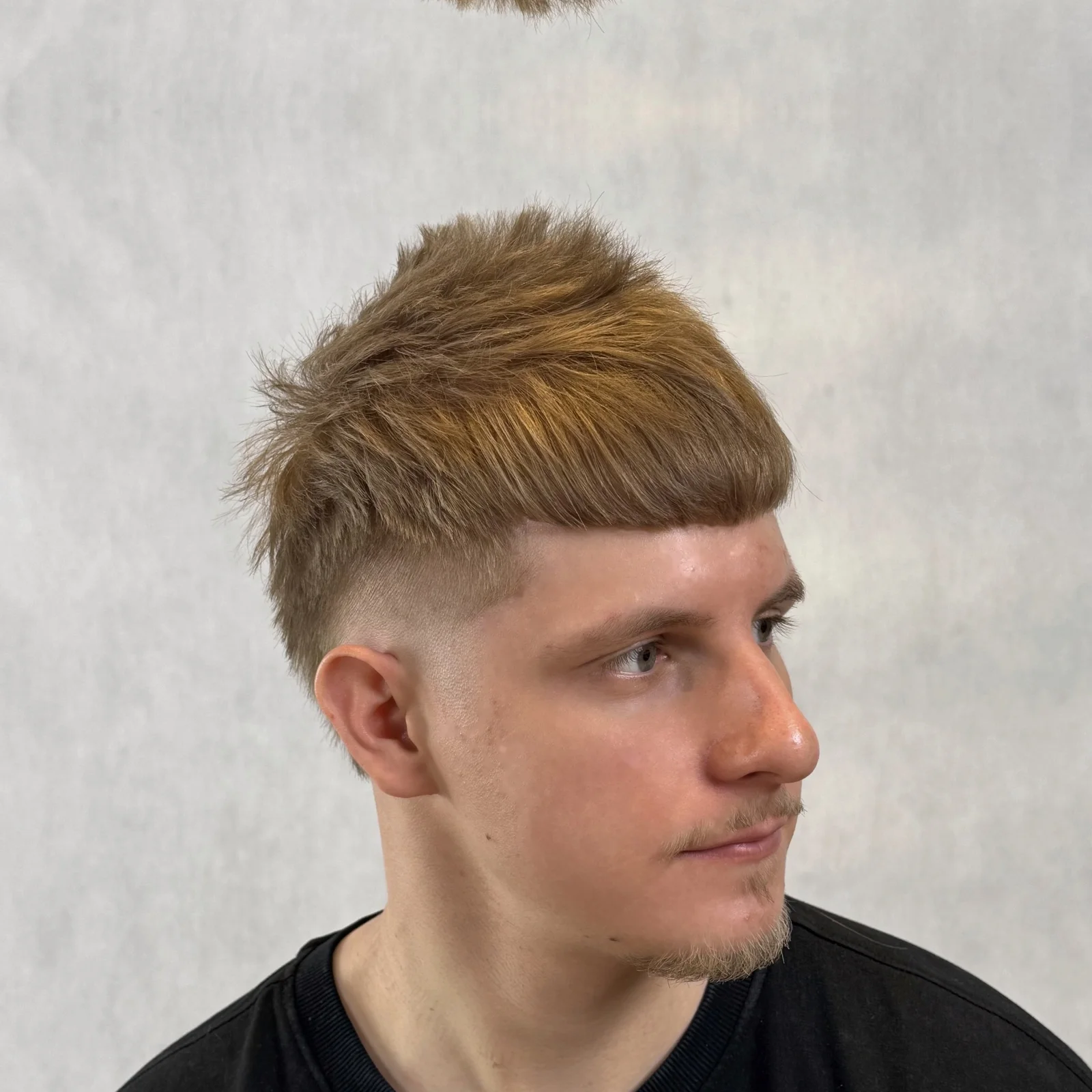
Burst Fade with a Crop in Salon Time
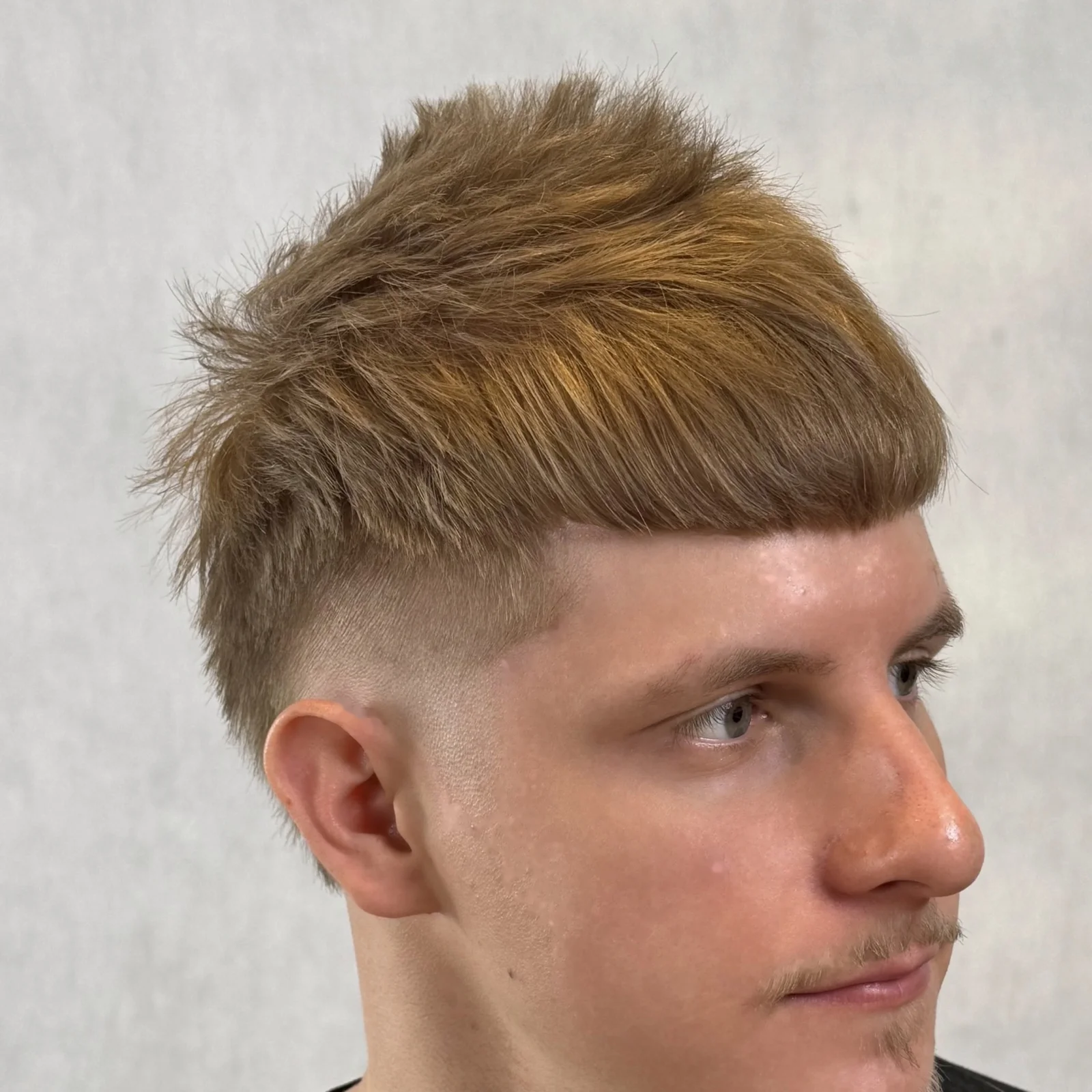
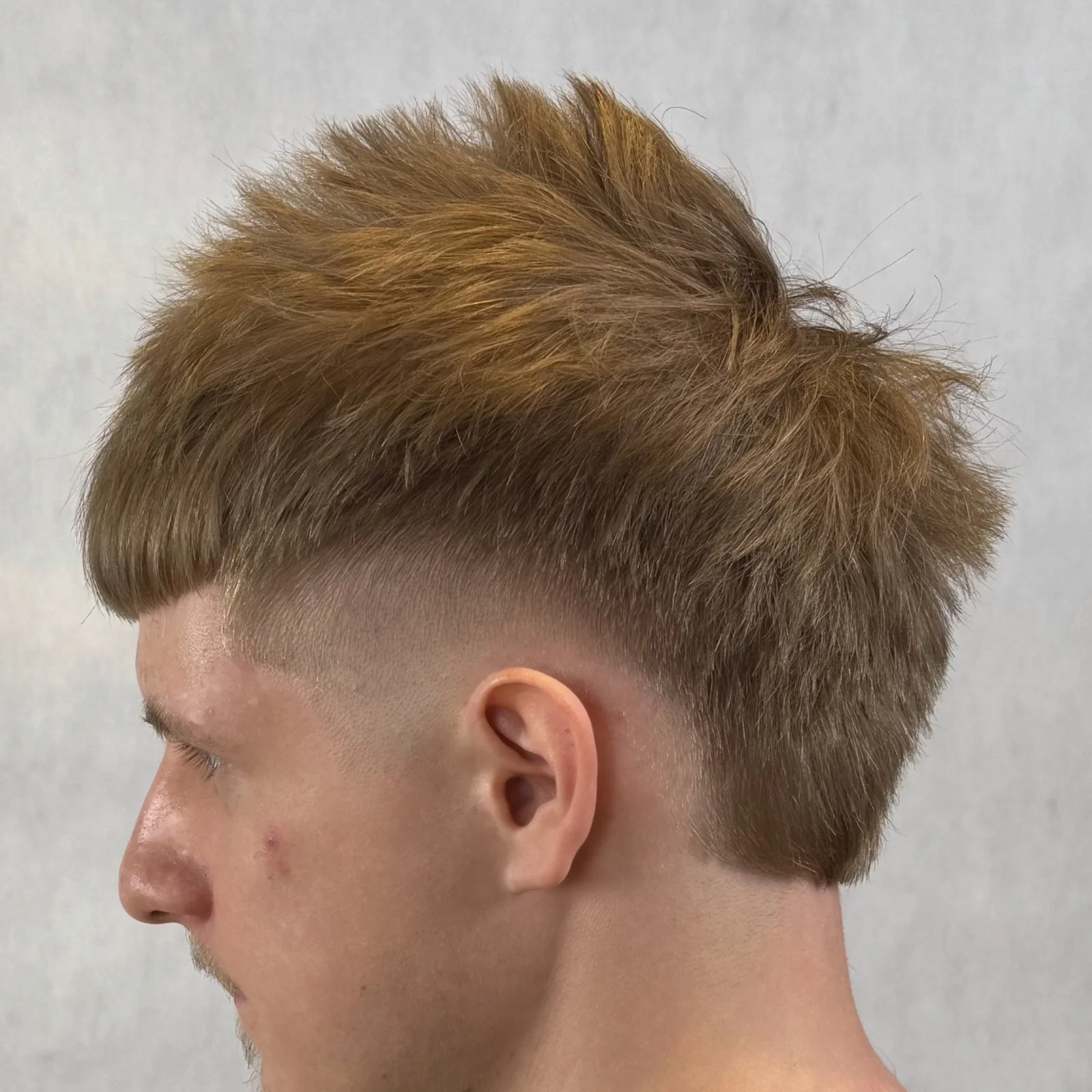
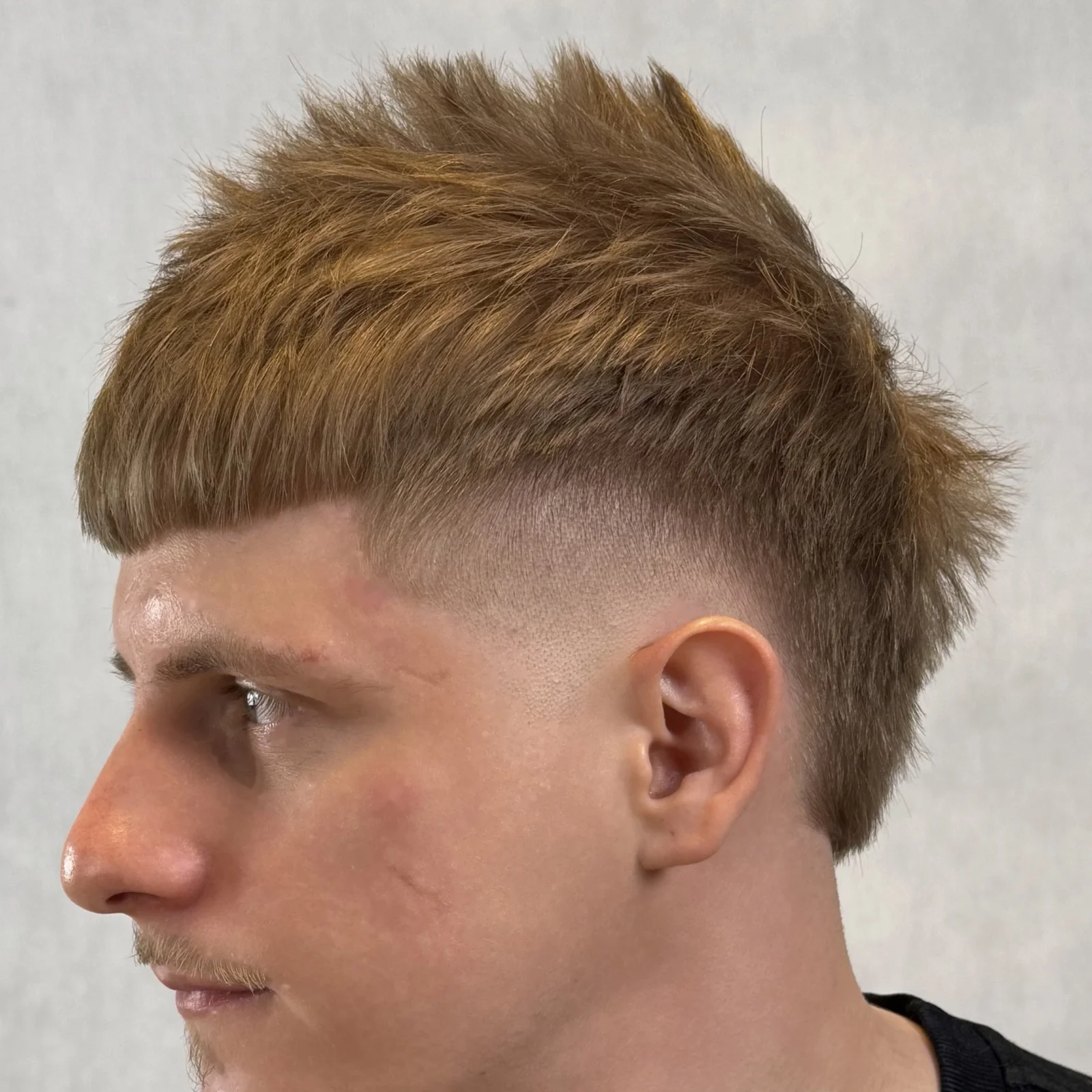
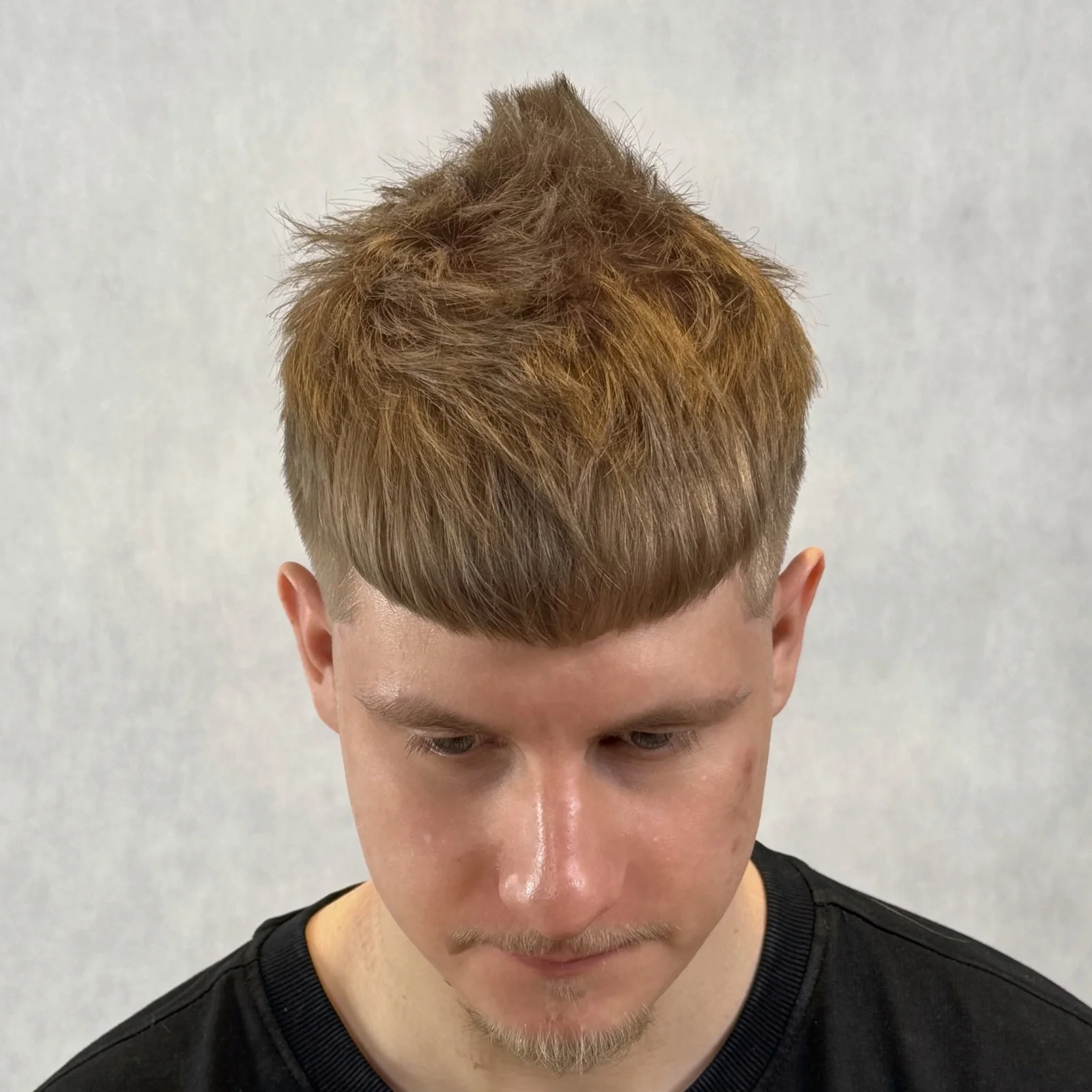
A men's haircutting course in which Wiktor Ossowski does a burst fade with a crop and a forward-swept fringe on fine, light hair: the haircut starts at the fringe instead of the sides, the work runs without sectioning or parting on the hair's natural fall, the weight line is run in a half-circle around the ear, the back is finished by connecting the dots with horizontal sections, the top is cut in a circle at the back and a square at the fringe, and the fading goes from the comb and the open guard to the closed one, with a conscious switch between the flick and the top-to-bottom technique.
Result and process
About the course
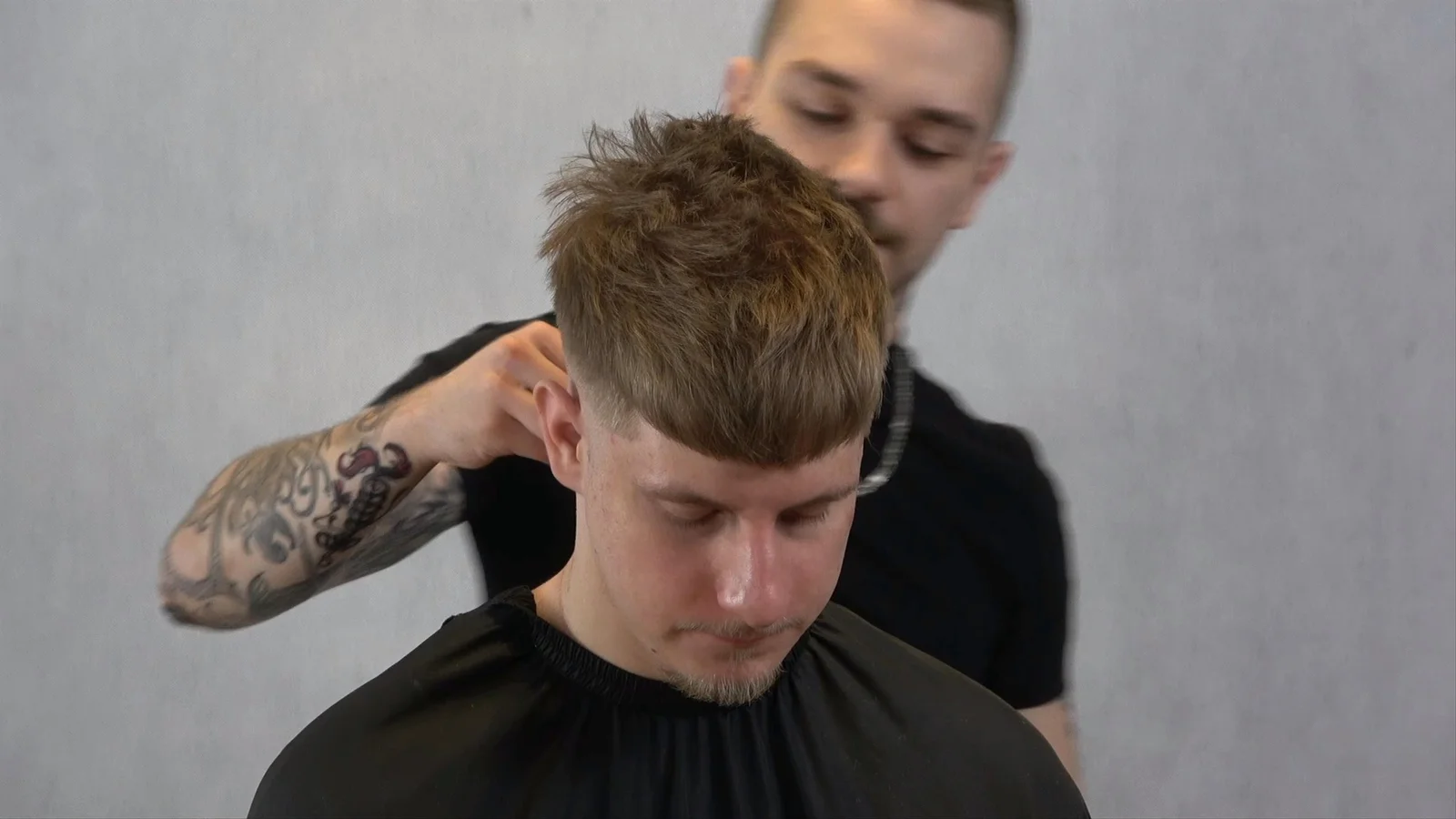
Burst Fade with a Crop in Salon Time is a course about a haircut that many barbers do every single week, shown under normal working-day conditions. Wiktor Ossowski works on fine, light hair and runs the entire haircut without sectioning or parting, following the hair's natural fall.
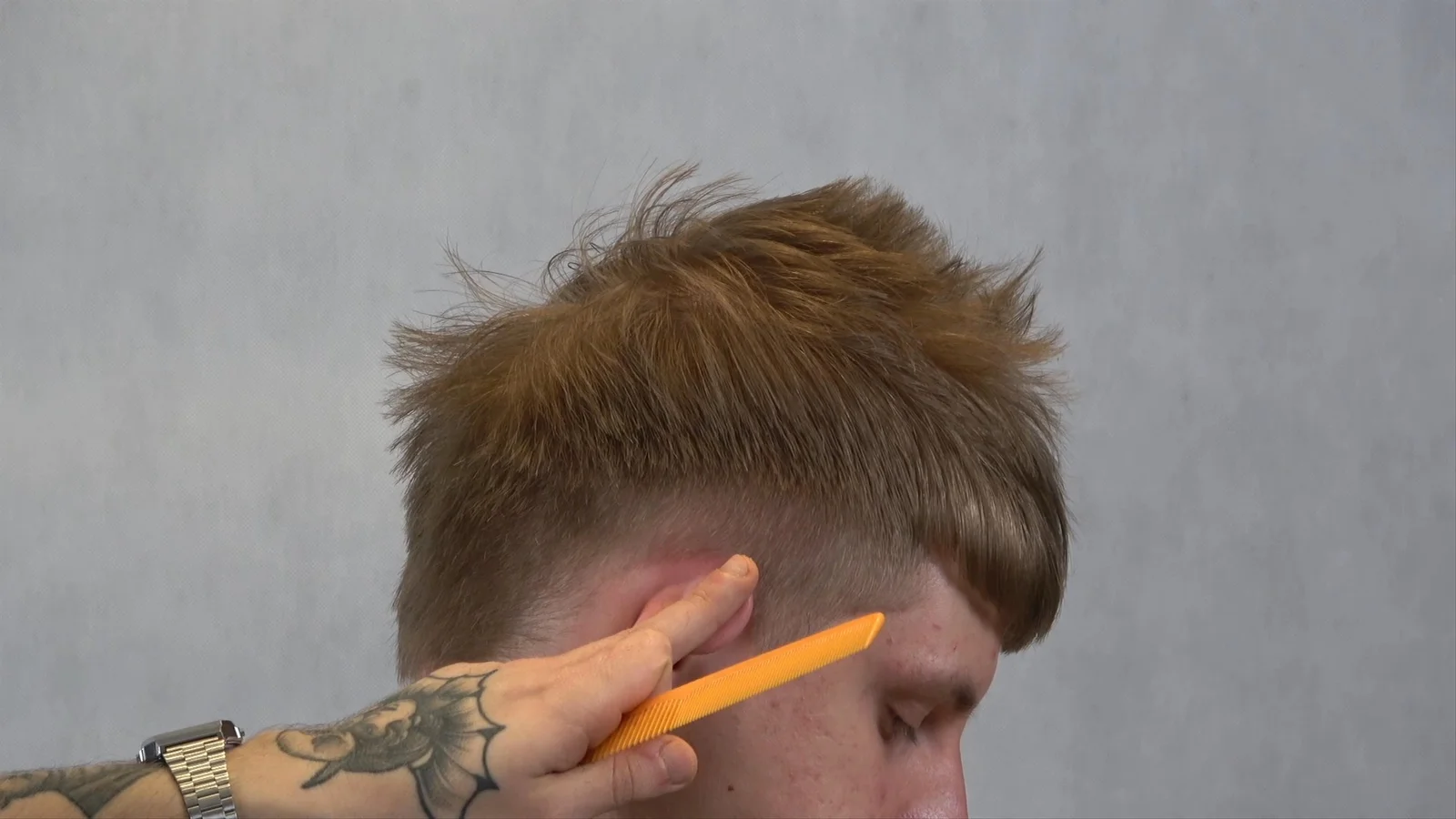
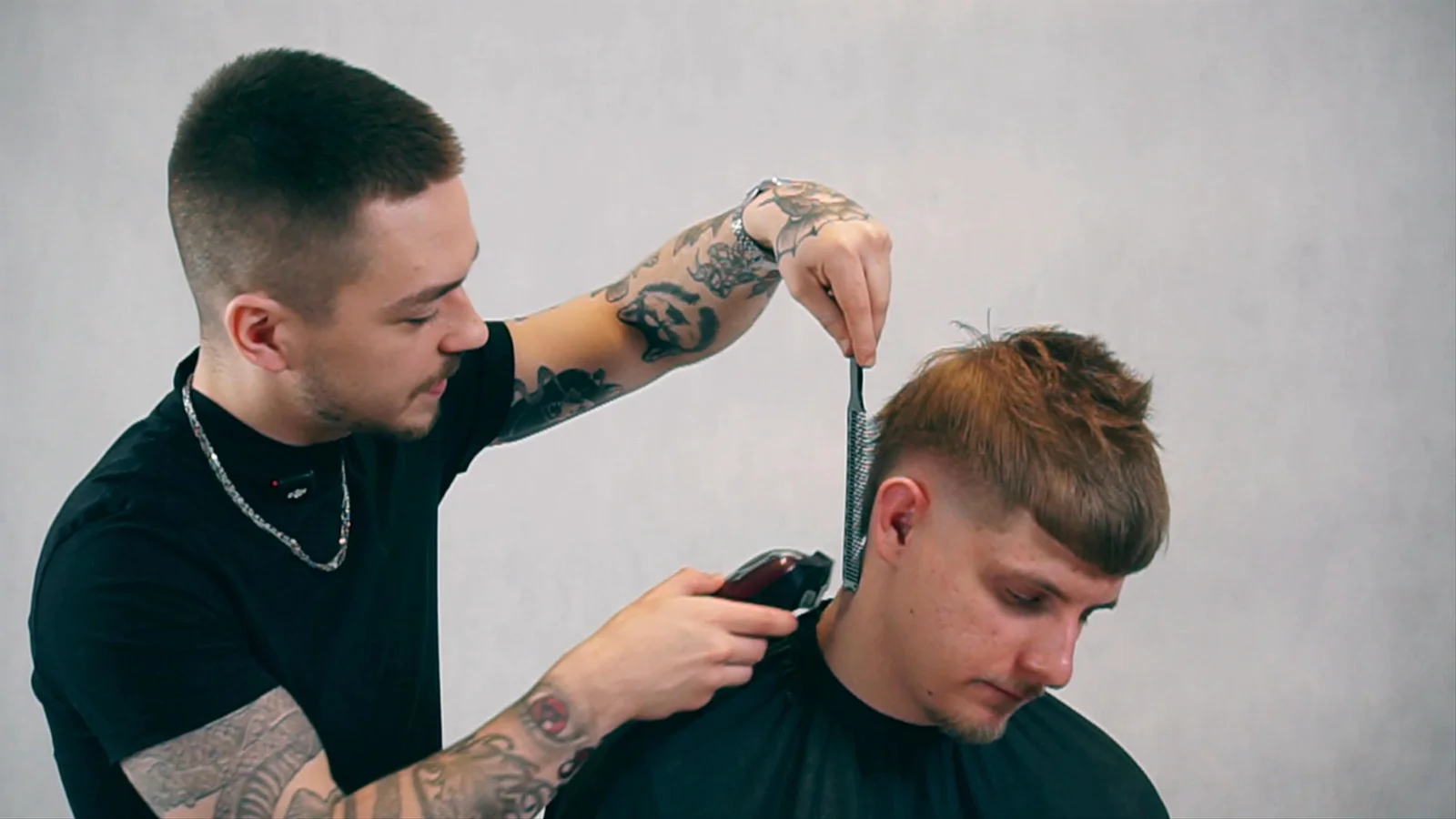
The starting point is the fringe, not the sides. He measures the rest of the haircut from there: he runs the weight line in a half-circle around the ear, tapers the back by connecting the dots, and cuts the top in a circle at the back and a square at the fringe to keep the front heavy. He starts the fading with the comb, then moves from the open guard to the closed one and consciously switches between the flick and the top-to-bottom technique. The recording with translation runs an hour, while the haircut itself fits into 30 to 40 minutes.
In this course, you'll see
- Why the haircut starts at the fringe, and how to turn it into the reference point for everything else
- How to add density to the fringe on fine hair, and a straight, square line that won't round out as it grows
- Locating the cowlick before the first cut, and working with the hair's natural fall instead of sections
- Running the weight line in a half-circle around the ear as the reference point for the line-up and the entire fade
- Cutting the back without vertical sections: a stationary guide, horizontal sections, and connecting the dots
- The top cut in a circle at the back and a square at the fringe, to shorten the crown without thinning out the forehead
- The fade base exposed with the comb, and working from the open guard to the closed one
- The choice between the flick and the top-to-bottom technique, and the entry movement without which the flick won't pick up the hair
- Working the guards from 6 mm down on light hair, so you don't lose the contrast with the weight line
What you will learn
- 01How to build the entire haircut around two reference points: the fringe when cutting the shape, and the ear when fading.
- 02How to work with the hair's natural fall instead of sectioning it off, since at this length the sections would connect anyway.
- 03How to add density to the fringe on fine hair and keep a straight line that grows out well.
- 04How to finish the back with horizontal sections by connecting the dots, instead of combing out vertical sections all around the head.
- 05How to move through the guards from open to closed, and why the half-open position is part of the transition, not an extra step.
- 06When to use the flick versus the top-to-bottom technique, and why the entry movement is what matters in the flick.
- 07How to keep a clear fade contrast on light hair, where it's easy to lose the dark color.
- 08How to fit a burst fade with a crop into 30 to 40 minutes of chair time, without cutting corners on the final result.
What's inside
Full access with the course 0:43
01Simple, quick, no faking it
today's haircut is going to be really simple, spelled out plainly-almost, I'd say, incorrect-but I really like simplifying everything I can in my work
 2:14
02Start from the most important point of the haircut
with short haircuts, I always recommend starting from the spot that's the most important point of that particular haircut
 3:25
03The fade should be visible on light hair too
I'll show you how to do this fade, even on light hair, in a way that keeps it visible
 10:03
04Burst fade isn't a difficult haircut
I very often come across the opinion that the burst fade is a difficult haircut to do
 11:24
05React to what's happening on the head
it's not like I just cut it however I decided and that's final
 12:19
06The ear is the reference point
the biggest lifehack I can give you when it comes to burst fades is to make the ear your reference point
 21:04
07The back is about connecting the dots
my favorite method is simply connecting the dots
 32:01
08Disconnection grows out badly
I don't like using disconnection in my work, because I think that in most cases it grows out badly and clients don't really like it
 35:20
09From the open guard to the closed one
I always work from the open guard to the closed one, never the other way around
 36:19
10Don't take the guards too high on blonde hair
especially with blonde hair, with light hair, we remember not to take the guards from the #6 down too high, because we'll lose the dark color that creates our contrast
 46:24
11We do these haircuts on a workday, not for a show
we do these haircuts in the salon, on a regular workday
 51:42
12In the flick, the entry is what matters
We very often think that in the flick the exit movement is what matters most, but the entry is just as important, because it's the entry that pulls in all the weight and the hair
 56:46
13The other hand is never free
if there are clippers in one hand, there's a comb or a fade brush in the other
FAQ
Who is this course for?
What tools do I need?
Can you do a burst fade without sectioning or parting?
How long does it take behind the chair?
How do you make a visible fade on light hair?
When should you use the flick, and when the top-to-bottom technique?
Why doesn't my flick pick up any hair?
Why isn't there any disconnection in this haircut?
Details
Educator
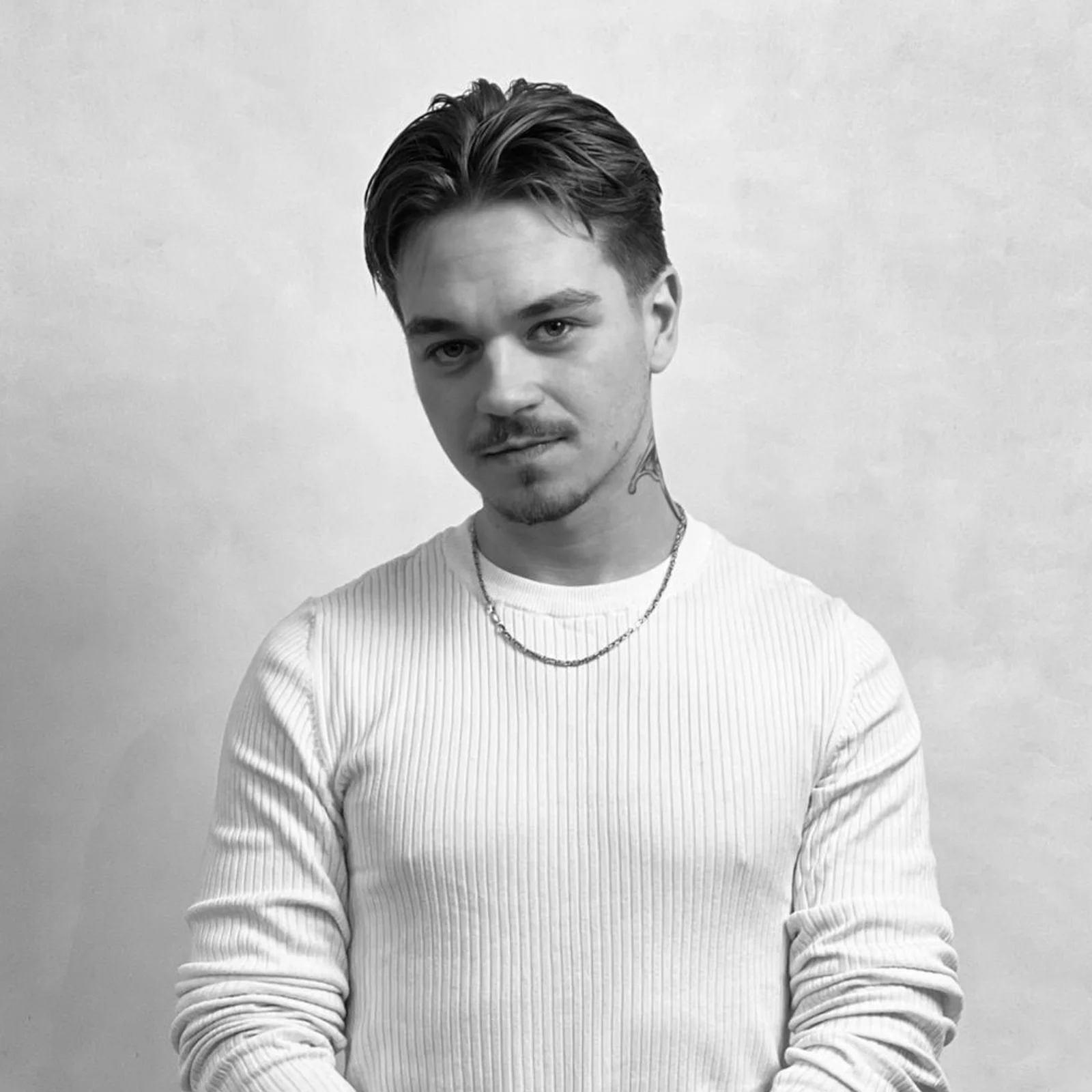
Wiktor Ossowski
Educator · 1 course
Wiktor Ossowski, known in the industry as Osa, has been in hairdressing since 2022 and works in Chorzów. He says openly that he's not a master of precision or a hairdressing guru, and that what's simple works best for him. He cuts every length, women and men, and instead of extensive sectioning and partings, he cuts on the hair's natural fall and builds the haircut around a single reference point. More important to him than surgical precision are aesthetics and keeping proportions, and he tests every simplification against chair time on a regular day at the salon. He avoids disconnection, because in his experience it grows back poorly and clients don't like it. In his teaching he shares simple frameworks that skip the most technical side of the work, yet still lead to creative haircuts. Since December 2025 he has been a BarberStore brand ambassador.
Ready for the next level
Unlock full access to the Connected Hair course library.
Join the Academy