
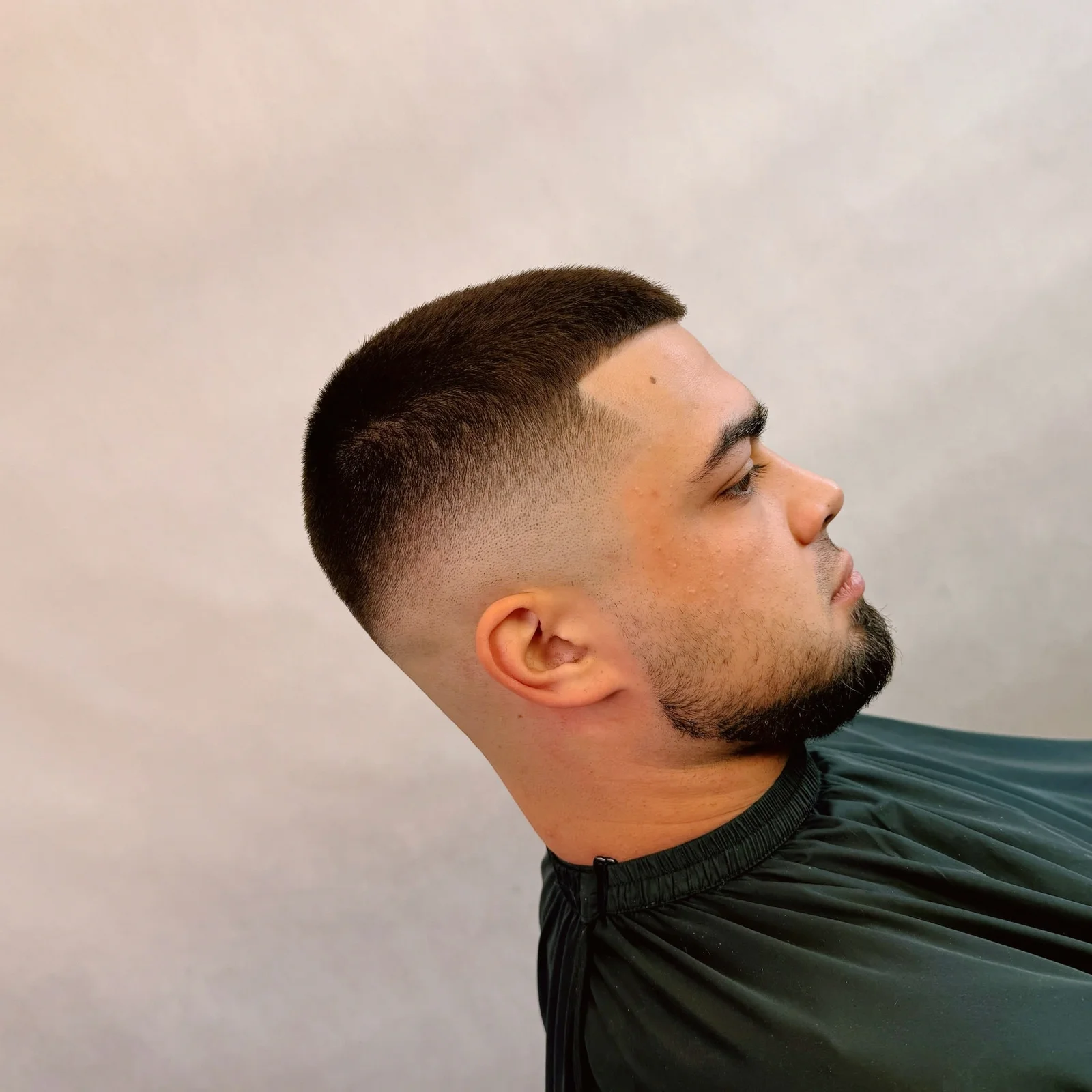
Buzz Cut with Hair Tattoo
A men's haircutting course in which Artur Głażewski creates a buzz cut finished with a hair tattoo design, commenting on every decision as he goes: a base with a 13 mm guard on a closed blade and length choices matched to head shape and face shape, the line-up as a clear boundary of the form, building segments with intention from one-and-a-half millimeters upward and transitions between open and closed blade, symmetry drawn from reference points on the face, corrections with the clippers held vertically and folded flat to the scalp, cutting with scissor tips along the hair's direction at thin spots, and finally the design cut dry and sharpened with a pencil.
Result and process
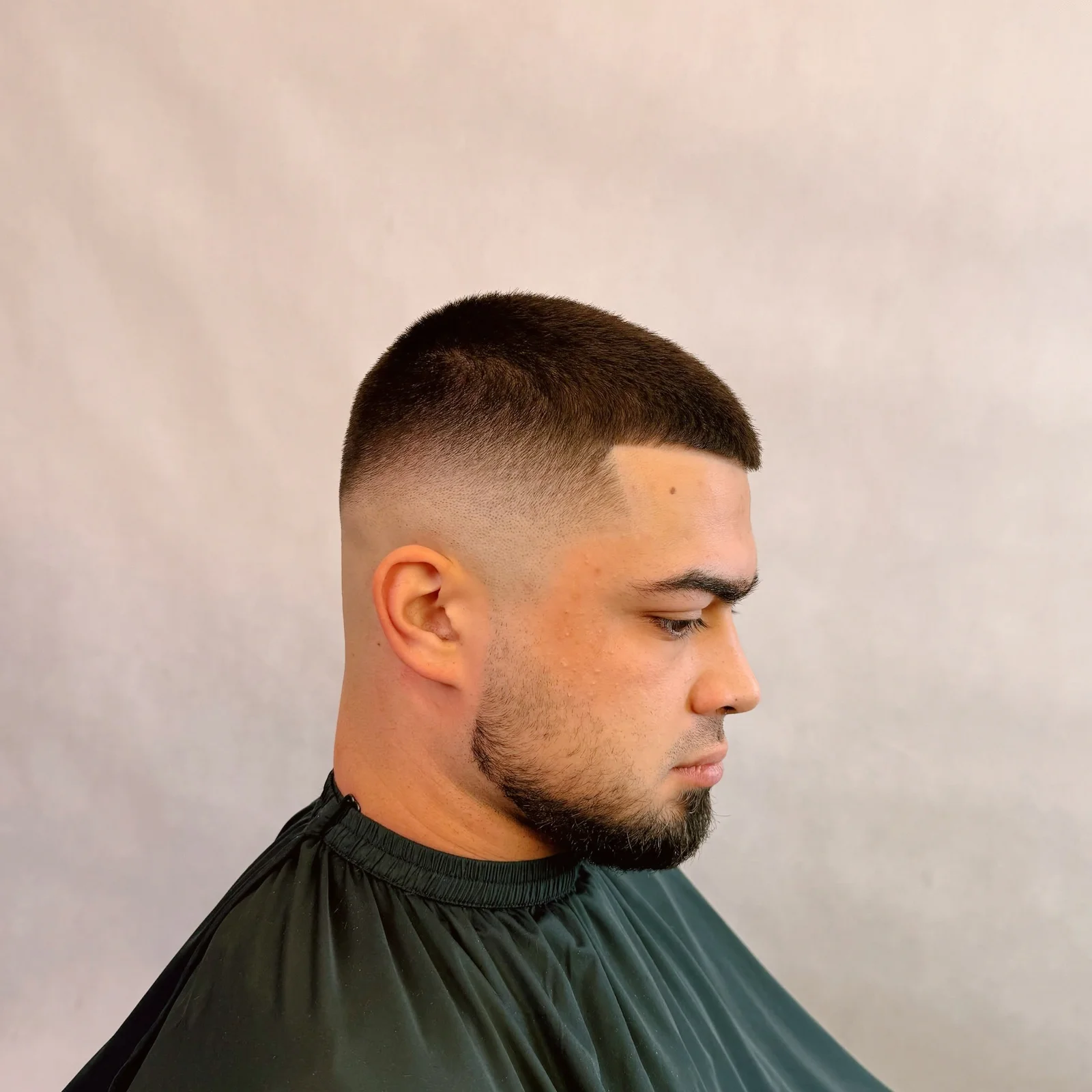
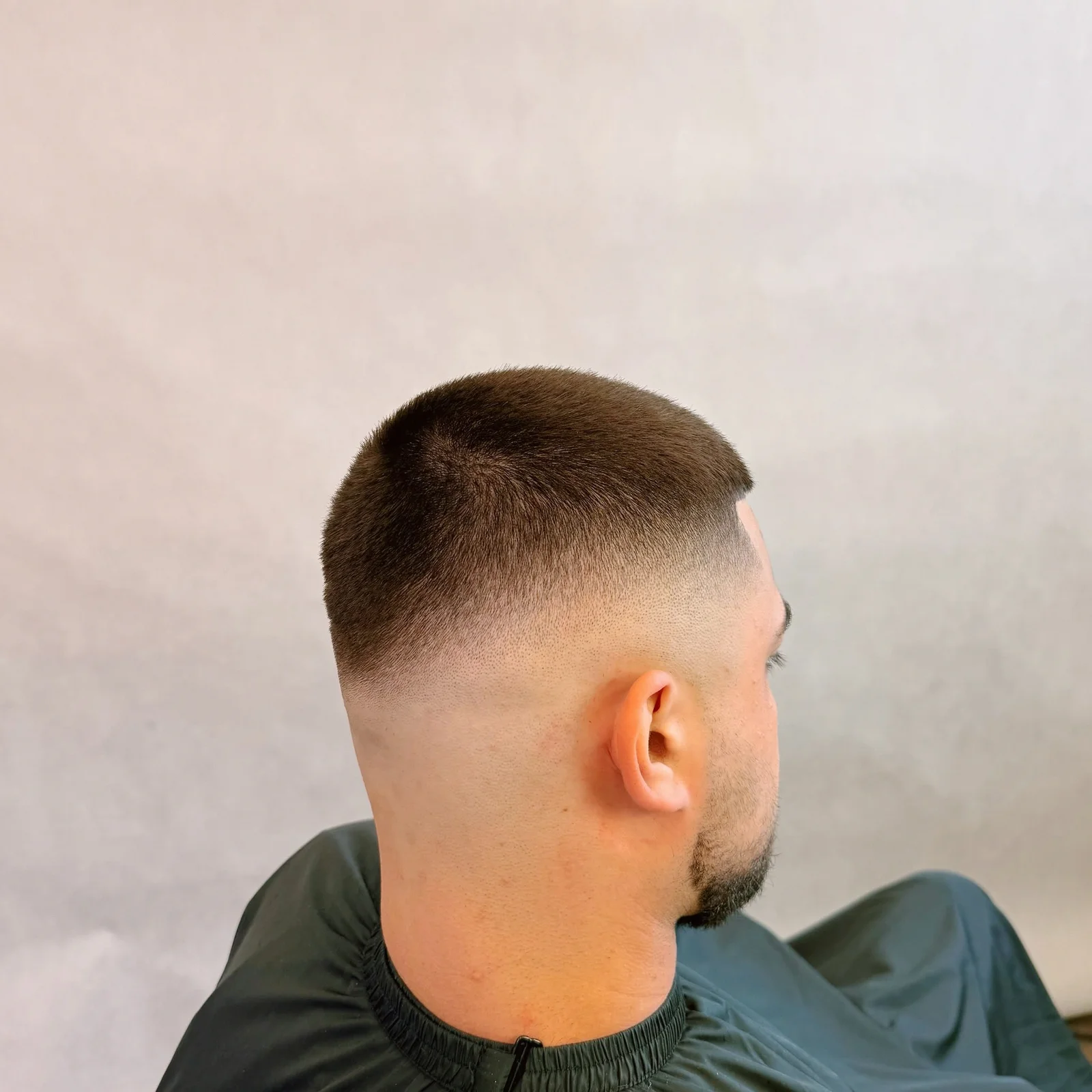
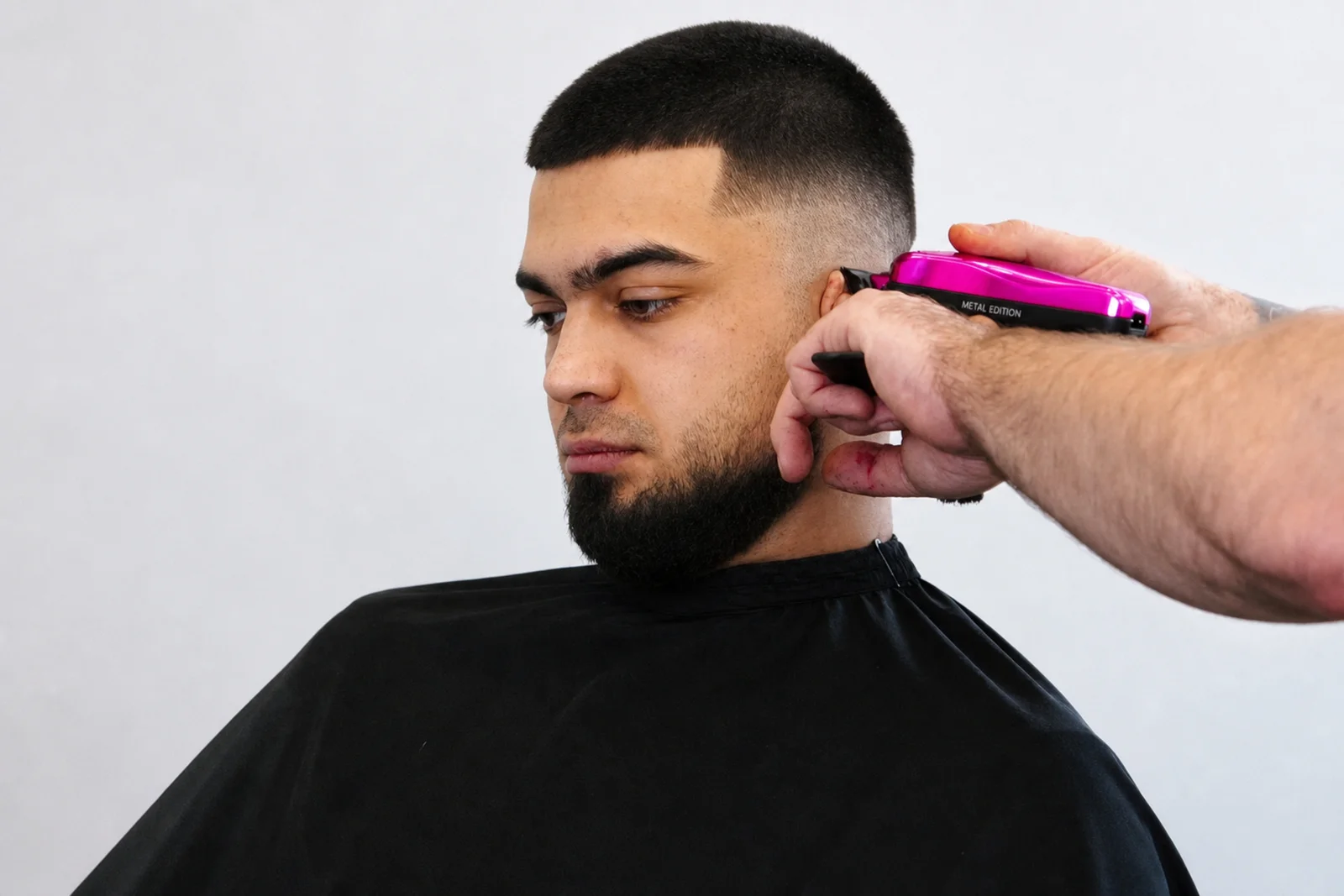
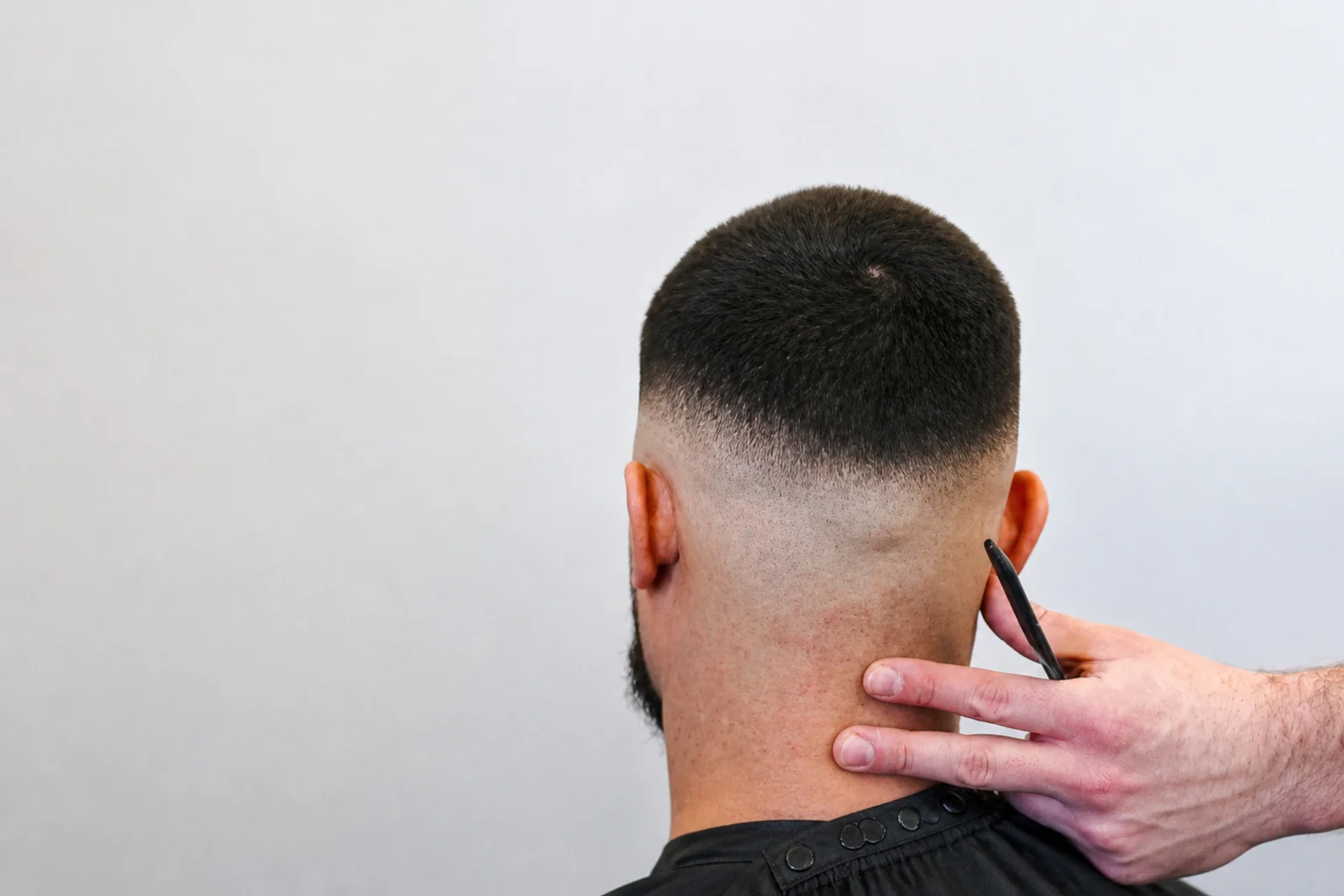
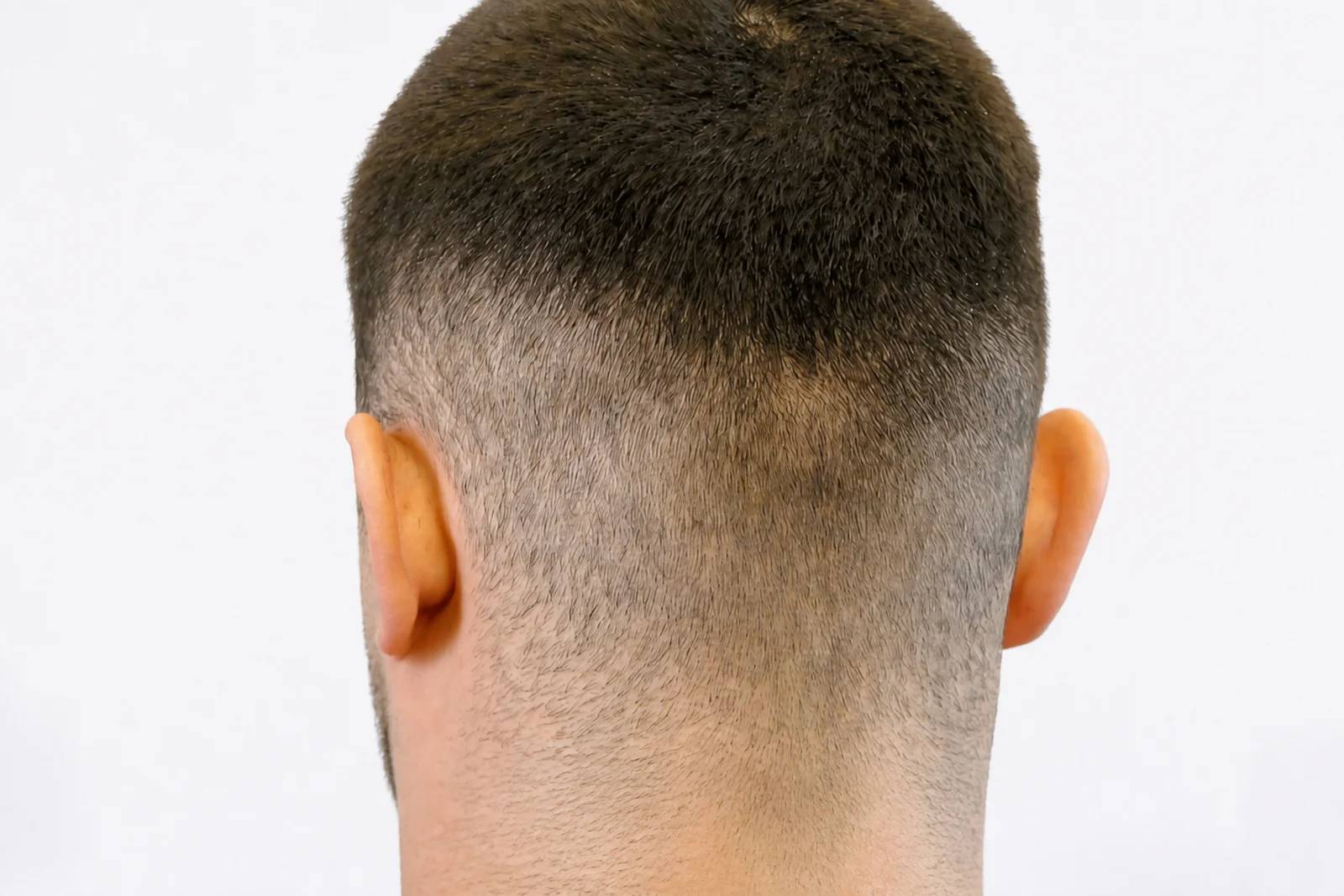
About the course
Buzz Cut with Hair Tattoo is nearly two hours of cutting in which Artur Głażewski explains out loud why he makes every move. He starts with a base using a #13 guard on a closed blade and immediately explains when to go shorter: a smaller guard for an oval or elongated head, a larger one for a square or round face, to elongate it.
The backbone of the course is segments. He builds them with intention, starting from one-and-a-half millimeters and working upward, and shows how to calculate the transitions between guards instead of guessing. He keeps coming back to one rule: you remove the line below and never cut into the segment above. When a dip is left behind, he holds the clippers vertically and cuts it out point by point, and for gaps in the growth pattern he cuts in with the scissor tips along the hair's direction, never across it.
He draws symmetry from reference points on the face - the eyebrows, the brow arch, and the corner of the eye - instead of eyeballing it. At the end, he cuts the hair tattoo design dry, without wetting the hair or using talc, working with part of the blade, and sharpens it with a pencil.
In this course you'll see
- Choosing the base guard for head shape and facial proportions
- The line-up as a clear boundary - without it, a buzz cut stops being a buzz cut
- The difference between a buzz cut and a flat top - what the square shape and vertical sides actually do
- Building segments from one-and-a-half millimeters and calculating transitions between guards
- Graduation from open to closed blade at every height
- How hair density and color affect the width of the first segments
- Removing the line without cutting into the segment above
- Holding the clippers vertically for dips, and flat to the scalp for collecting more hair
- Symmetry drawn from the eyebrows, brow arch, and corner of the eye
- Cutting in with the scissor tips along the hair's direction for thin spots and gaps
- The hair tattoo design cut dry and sharpened with a pencil
What you will learn
- 01How to choose the base guard for head shape and facial proportions, instead of always grabbing the same one.
- 02Why the line-up determines whether a haircut reads as a buzz cut.
- 03How to build segments with intention starting from one-and-a-half millimeters, and calculate transitions between guards.
- 04How to remove a line without cutting into the segment above.
- 05How hair density and color change the width of the first two segments.
- 06When to hold the clippers vertically, and when to fold them flat to the scalp.
- 07How to draw symmetry from the eyebrows, brow arch, and corner of the eye.
- 08How to cut in with the scissor tips along the hair's direction without creating a gap.
- 09How to cut and sharpen a hair tattoo design dry, without wetting the hair or using talc.
What's inside
Full access with the course 0:29
01The base guard depends on head shape
If someone has a head that's too oval, too elongated, more rectangular, then I'd use a smaller guard.
 1:11
02The guard follows the shape of the head
We need to remember to guide the clippers so that the guard follows the shape of the head.
 5:05
03Mental weight line
We cut down to our mental weight line - we have to picture the weight line.
 8:17
04Without a line-up, a buzz cut loses its character
In my opinion, a buzz cut without a nice line-up, without a clean hairline, without a defined line-up on the temples, loses its character.
 9:10
05Stabilizing your hand at the hairline
If it's hard for me to cut the line freehand this way, I rest one of my fingers against the forehead or nose, to get some stability and steady the clippers.
 16:18
06When it's no longer a buzz cut but a flat top
That would be a flat top, for example - the sides are cut vertically.
 20:17
07Zero line shape for head proportions
If someone has an elongated head, longer than it is wide, I'd suggest a rectangular-shaped zero line to visually widen the back of the head.
 32:03
08Hair density and color change the segments
If the hair is dense and dark, then the first two segments - the one-and-a-half millimeter segment and the three-millimeter segment - will definitely be a bit wider.
 46:40
09You remove the line below, not above
At this point I focus on removing that line below, not above.
 54:48
10The math of guards and blade
Yes, because a 1.5 mm guard combined with the open blade gives us 3 mm, and 3 mm on a closed blade would be 3 and 3.
 57:10
11Cutting out a dip with the clippers held vertically
If I see a dip, I hold the clippers vertically and cut out that dip point by point.
 1:28:50
12Scissors along the hair, never across it
We cut in with the scissor tips along the hair, not across it, because that way we might cut a gap.
FAQ
Who is this course for?
What guard for the base?
What tools do I need?
How does a buzz cut differ from a flat top?
Why is there a visible line left over?
How do you nail the symmetry?
Is the design cut wet?
How long does it take behind the chair?
Details
Educator
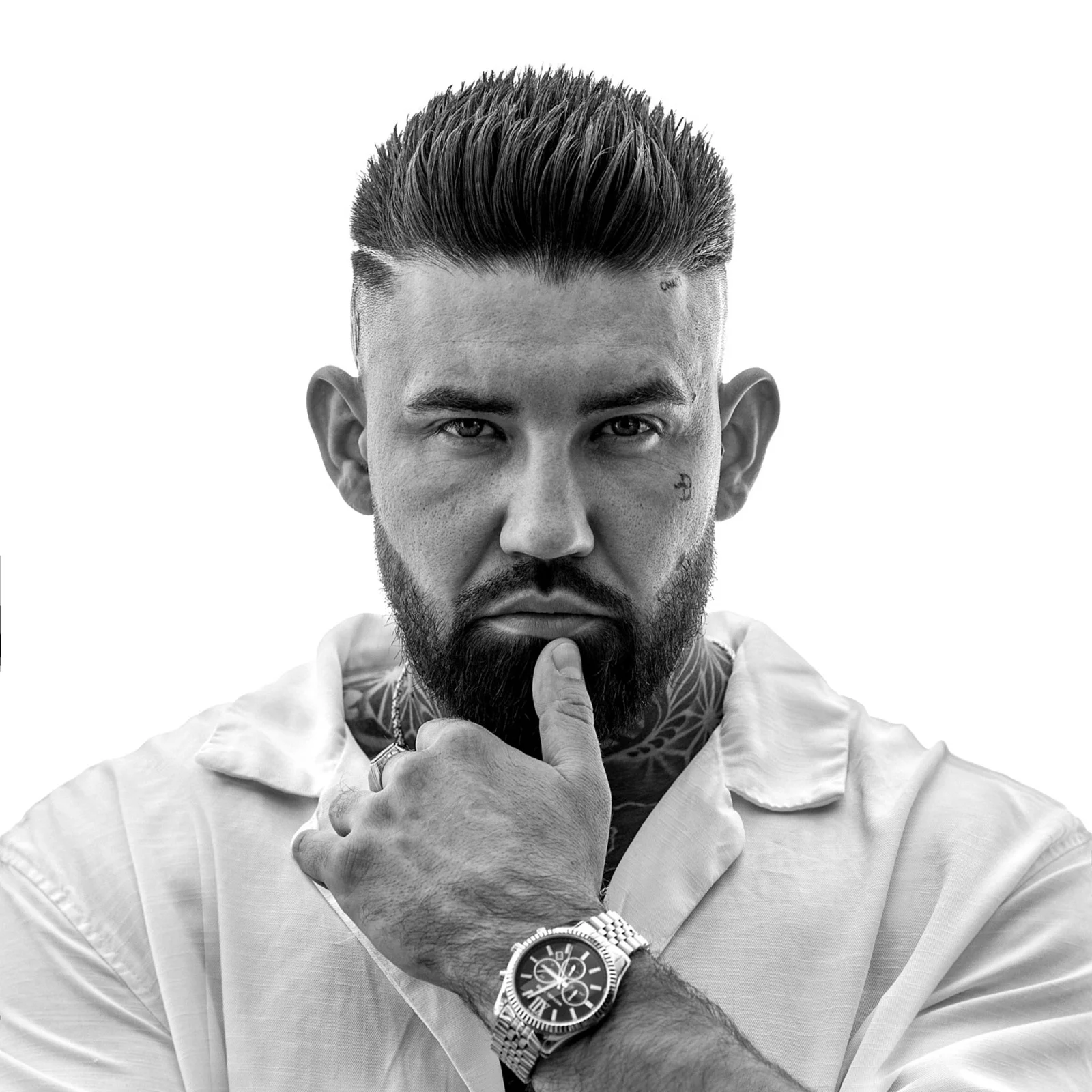
Artur Głażewski
Educator · 1 course
Artur Głażewski, known in the industry as Barberzyńca, has been cutting hair since the age of fourteen. He started out learning technique from videos, watching American barbers for hours a day, then trained across Europe, including under Nikolaj Generalov. He runs the Barberzyńca salon in Olsztyn and founded the Institute of Modern Barbering. He was part of the FIAM national hairdressing team, judged Barber Fest in Kraków, and sits on the BCU ZDZ Council. His competitive strength is hair tattoo: he holds Polish champion titles in this category, first-place wins in the Old-School and Razor Fade competitions in Rome, and the international hair tattoo competition in Albania, plus Combo Skinfade awards in Katowice. He runs the Fade Logic course on layering techniques, BarBeard on beard layering and geometry, and the from-scratch course From Zero to Barber. His approach is built on combining technique, geometry, observation, and practice.
Ready for the next level
Unlock full access to the Connected Hair course library.
Join the Academy