
Form and Texture
This course teaches the thought process behind cutting, not copying hairstyles. Paweł Rup shows how to build form and texture on long hair, creating lightness, volume, and natural movement.
Result and process



About the course
Form and Texture is a course that reveals the thought process behind cutting, not a ready-made template for a single hairstyle. Instead of copying a look from Instagram, you'll learn to make intentional decisions based on fundamental principles: form, which dictates everything; texture, which supports it; and gravity, which is your tool. The course shows how to build a hairstyle with lightness, volume, and natural movement from long, straight, heavy hair - one that works even without styling.
Paweł Rup guides you through the entire thought process and technique, from consultation to final styling. He explains his signature concept of "gravitational geometry," dividing the head into a weight-building zone (below the occipital bone) and a volume-building zone (above it). You'll see how this single division determines the choice of sectioning - radial at the back for smooth weight distribution, and square at the sides to preserve width around the face.
In this course, you'll see
- Head division according to "gravitational geometry" - why hair below the occipital bone builds weight, and hair above it builds volume
- Working with radial sectioning at the back and square sectioning at the sides - how to intentionally control the horizontal shape and its effect on the hairstyle
- Building a three-tier face framing (hime cut) in disconnection - from the fringe at the forehead, through the cheekbone line, to jaw height
- Cutting the fringe at a 90-degree projection from the forehead to create lightness and volume instead of a heavy "pancake" effect
- The principle of "react to the hair, don't stick to the plan" - how to make decisions while working, not just replicate steps
- The full styling process with a tunnel/vent brush - from sectioning, through building volume at different projections, to pinning hair while it cools
- The final hairstyle test - why the form must be legible and work even without product or styling
After this course, you'll stop searching for ready-made templates and start thinking about cutting through the lens of universal principles. You'll understand how form, texture, and gravity work together, giving you confidence when working with any hair length or type. This is material for hairdressers who want to create intentional, personalized hairstyles - not just replicate techniques.
What you will learn
- 01How to divide the head according to the occipital bone to intentionally build weight and volume.
- 02Why to use radial sectioning at the back and square sectioning at the sides.
- 03How to build a three-tier face framing (hime cut) in disconnection.
- 04How to cut a fringe at a 90-degree projection to give it lightness.
- 05How to work in layers on straight, heavy hair to add movement.
- 06How to style the cut with a round brush to emphasize its form and volume.
Before you start
This course assumes you already have:
What's inside
Full access with the course 1:09
1:0901Work plan - building volume in layers
To build this volume, we're going to work in layers.
 10:01
10:0102Choosing radial sectioning at the occipital area
Radial sectioning will distribute the weight of the hairstyle evenly and transfer the length perfectly.
 15:26
15:2603The logic of a horizontally round shape
I often work a lot with a horizontally round shape to preserve natural movement.
 28:31
28:3104The key principle of connecting sections
In hairdressing, you don't cut in mid-air - you cut to something.
 42:39
42:3905Applying disconnection in the fringe
Here we apply disconnection for the fringe section and all the others.
 50:29
50:2906Avoiding a 'heavy pancake' in the fringe
If we cut everything in a straight line, we'd build up weight - a kind of pancake effect.
 54:45
54:4507Preparing the hair for styling
I pre-dry the hair to about 80-90% dryness beforehand, so it's easier for me to curl.
 1:37:33
08Final setting of the hairstyle with a diffuser
I take a diffuser and dry on the lowest heat setting, to seal the hair cuticle.
FAQ
Is this course suitable for beginner hairdressers?
What hair type is the technique demonstrated on?
Does the hairstyle require complicated styling after this cut?
What is the "gravitational geometry" mentioned in the course?
Does Paweł explain how to create the trendy "hime cut"?
What sectioning is used in this haircut?
Details
Educator
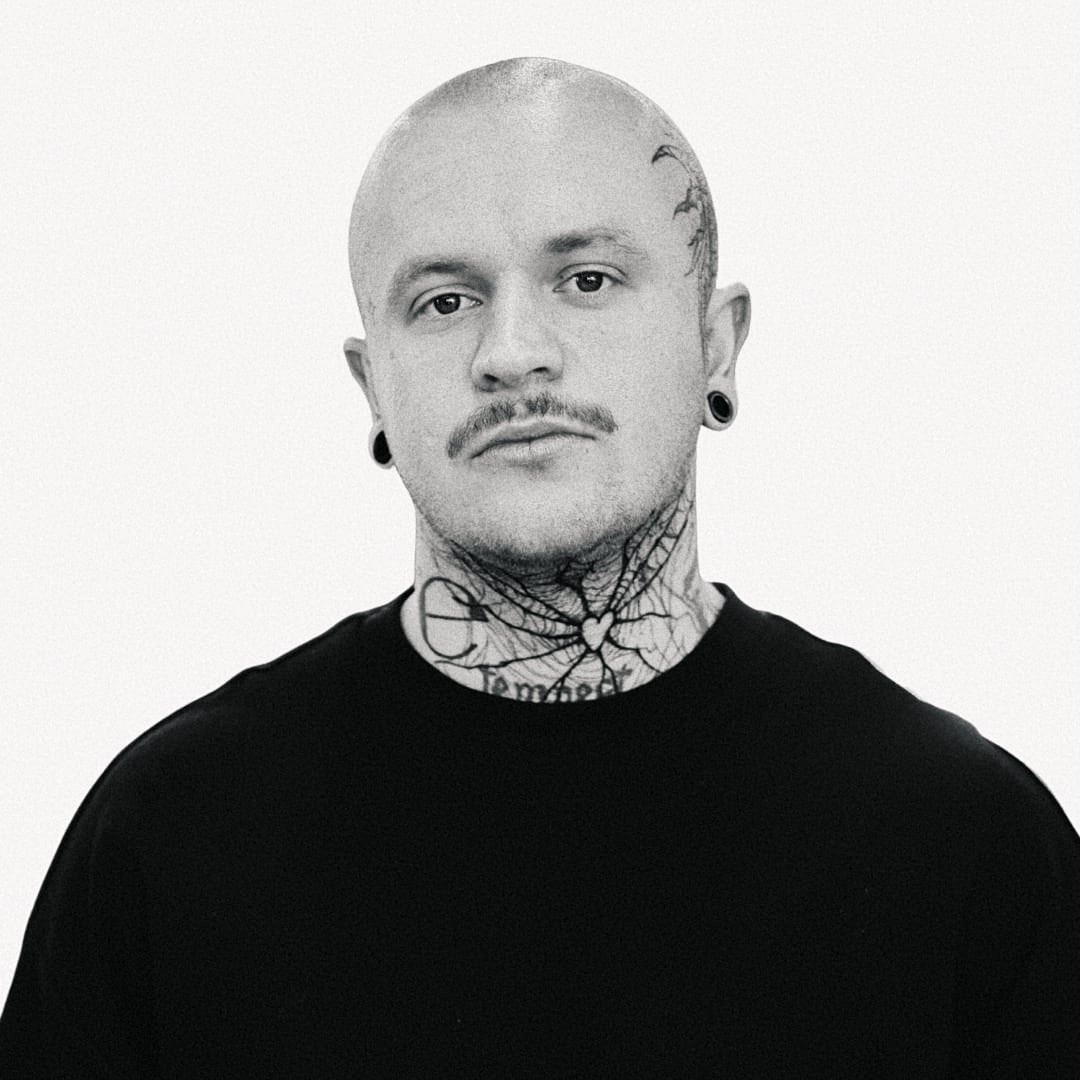
Paweł Rup
Educator · 2 courses
A hairdresser from Rzeszów who rejects the rigid divide between women's and men's hairdressing, focusing on intentional construction and functional cutting. In his courses, he shows how precise technique - from working with layers to his signature gravitational geometry - becomes a tool for creative thinking. He teaches how to create hairstyles tailored to the individual, rather than repeating templates.
Ready for the next level
Unlock full access to the Connected Hair course library.
Join the Academy