
Loose Middle Part with a Disconnected Taper
A men's haircutting course in which Marek Maziarz builds a loose middle part cut in a circular shape: radial sections with no redirection at the back, vertical sections with redirection on the sides, a line-up marked with a razor, a disconnected taper on two guards, and matte paste styling finished with diffuser drying that mimics natural air-drying.
Result and process
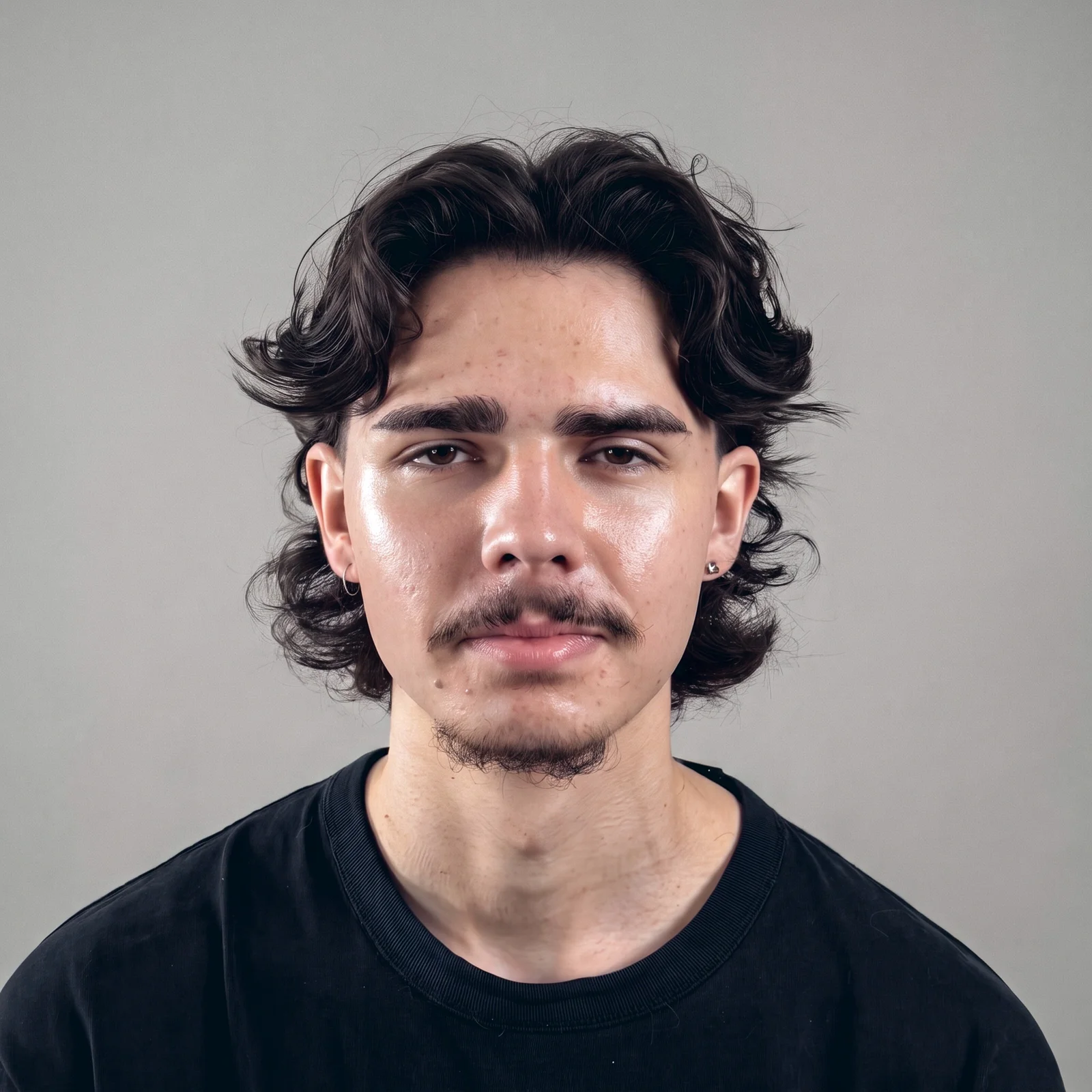
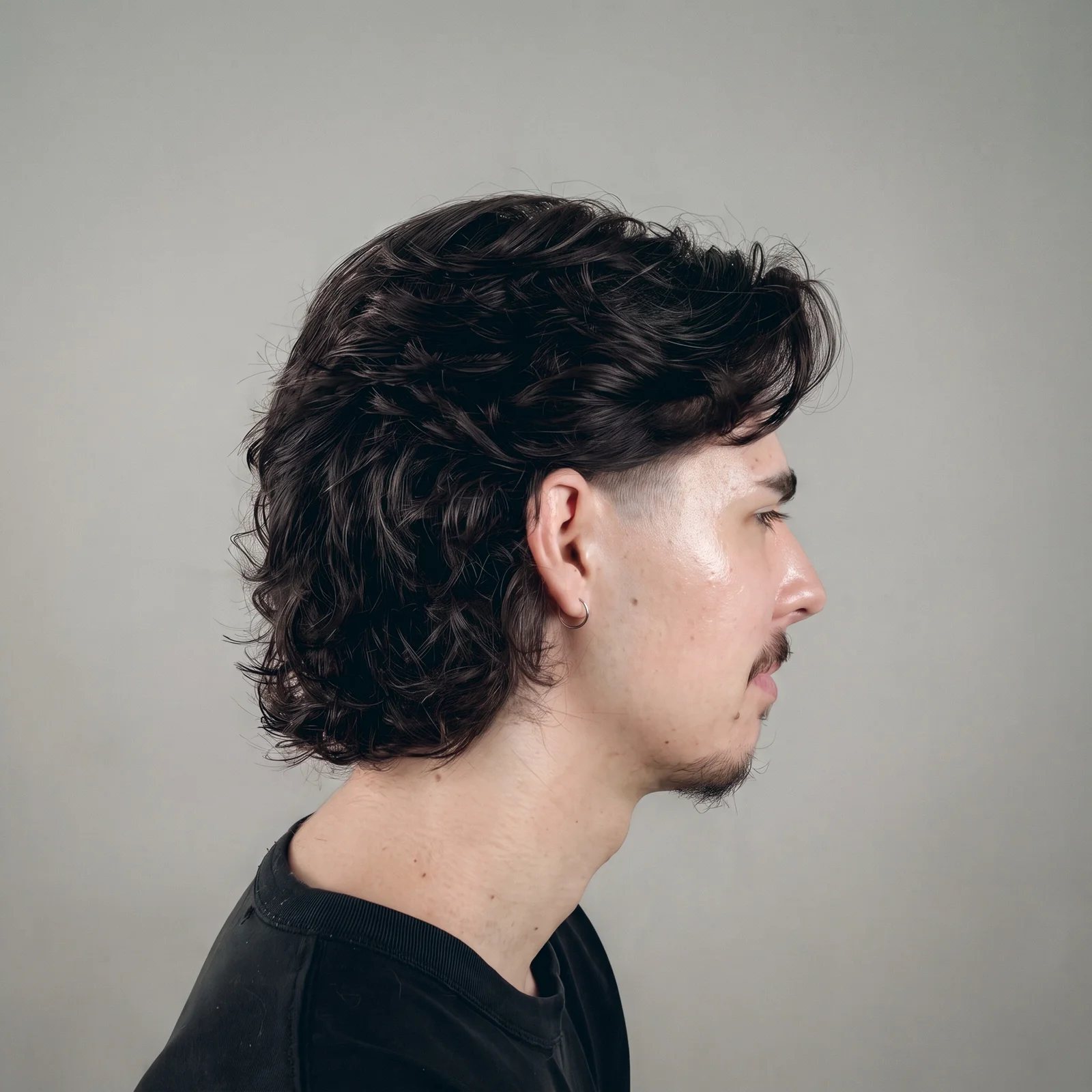
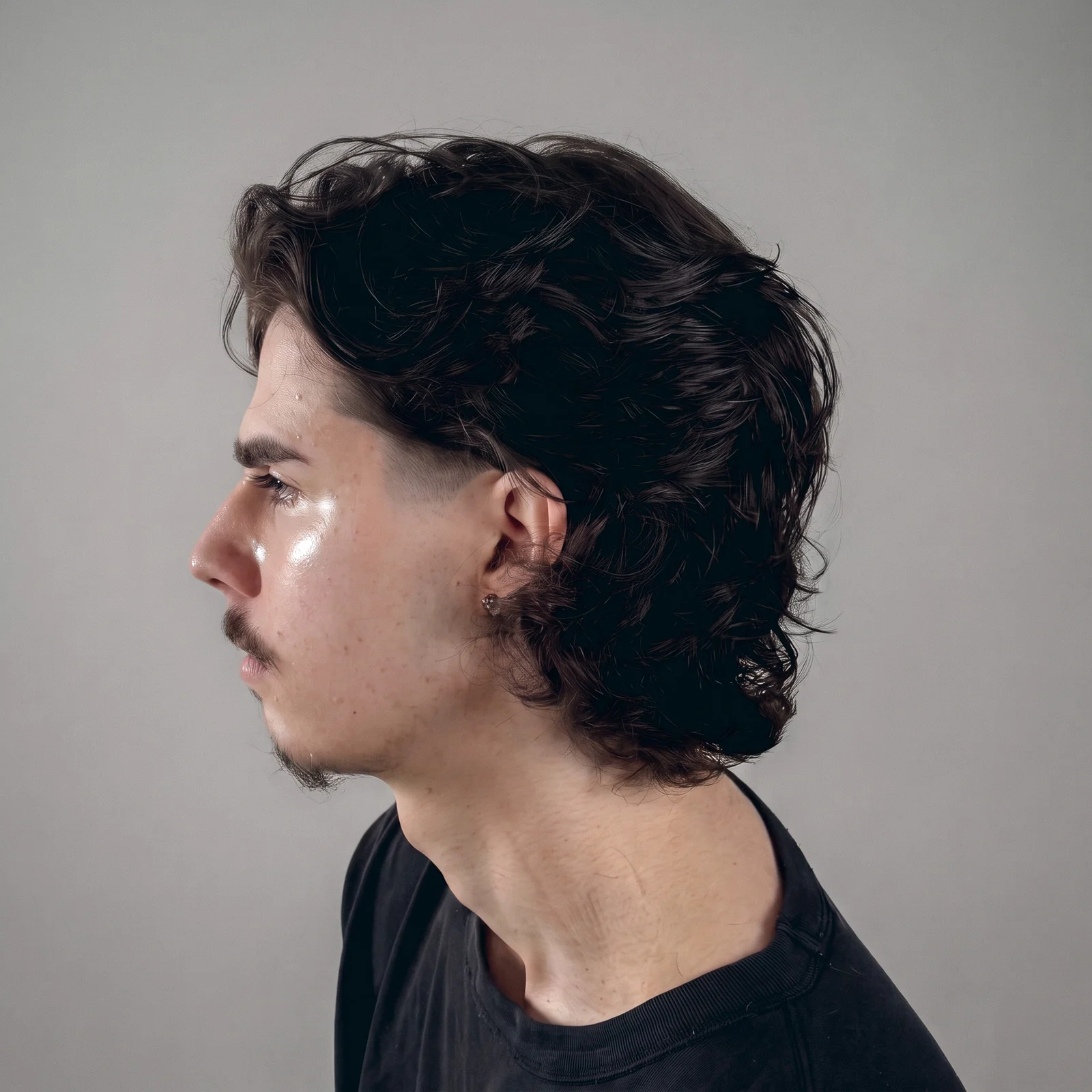
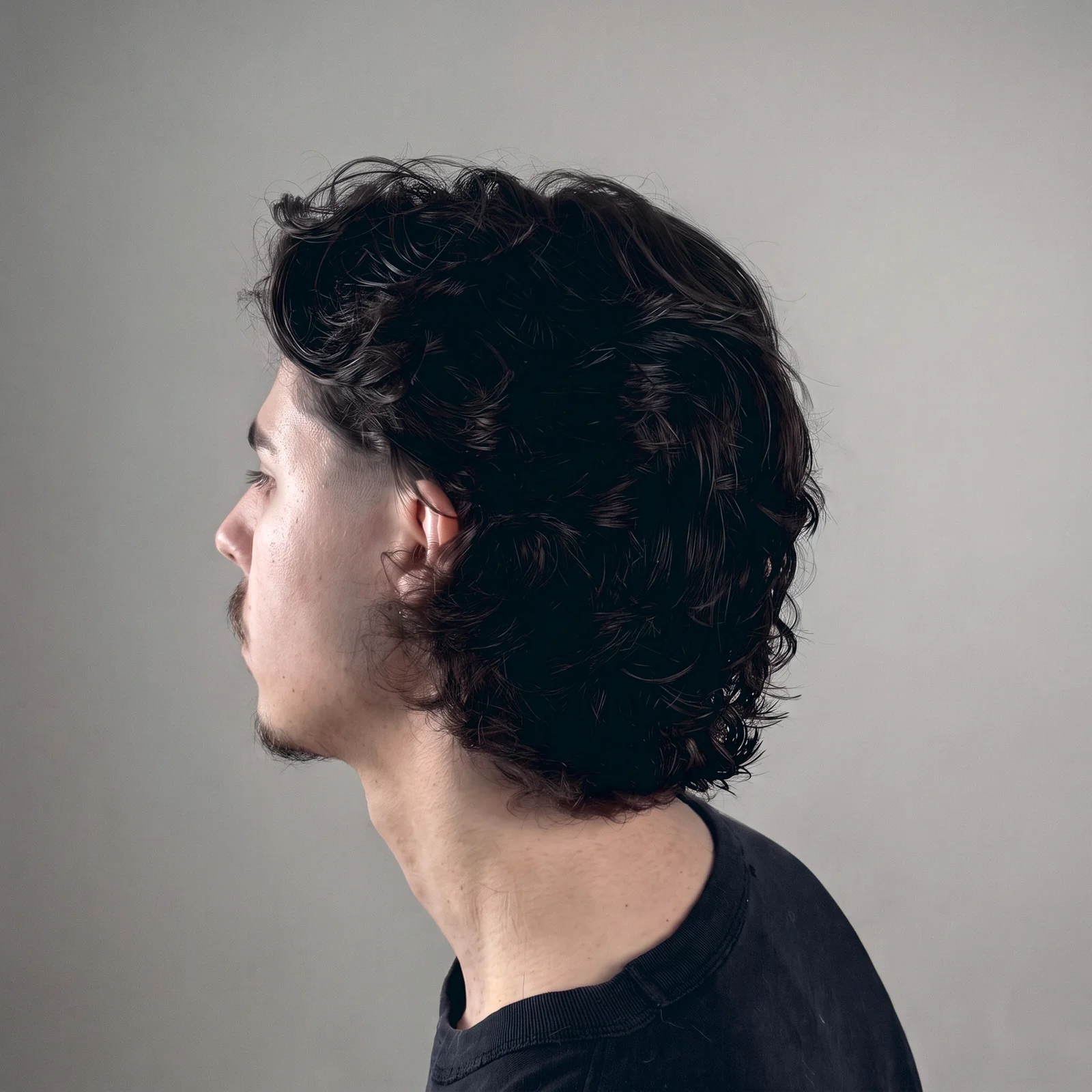
About the course
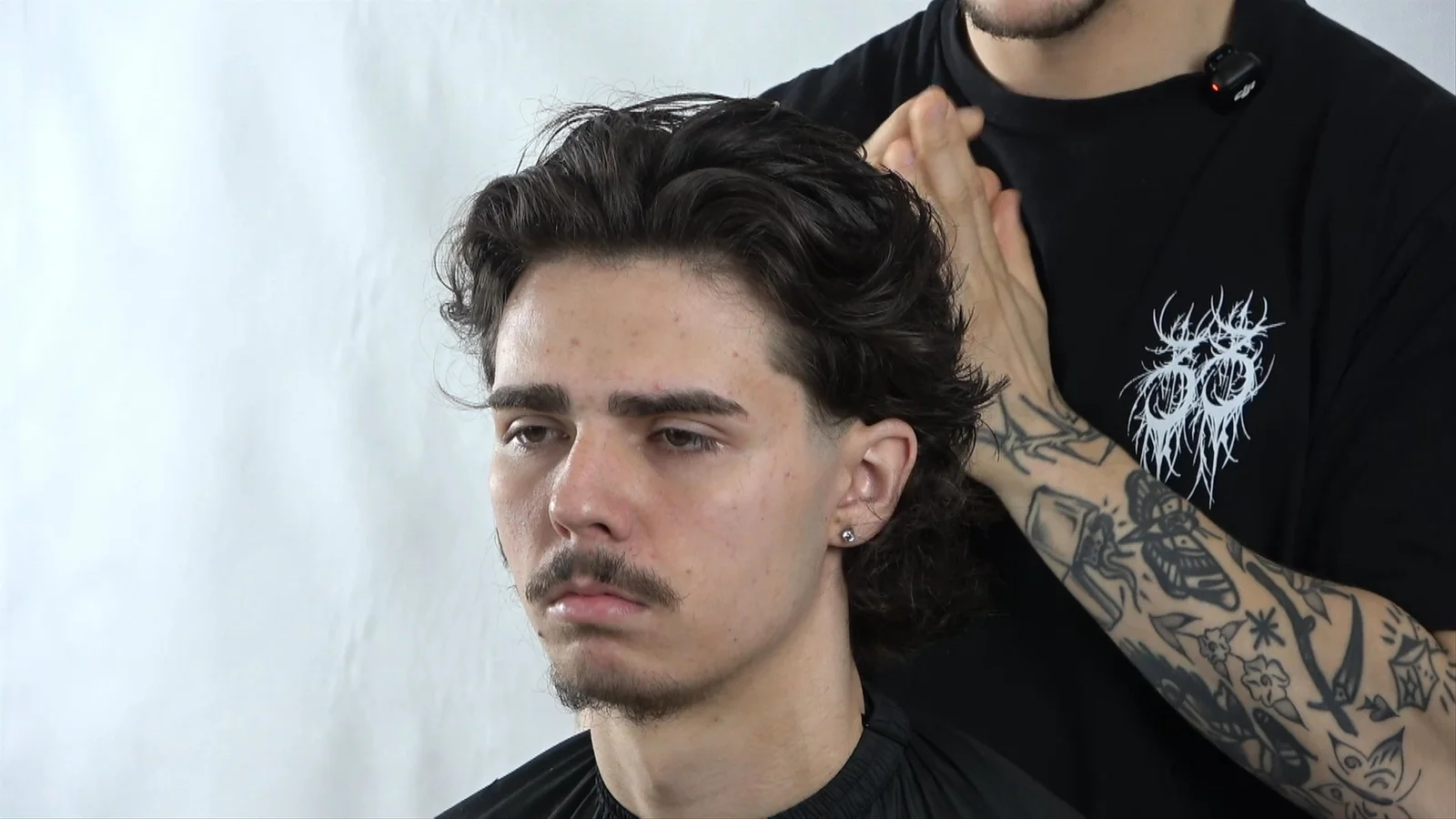
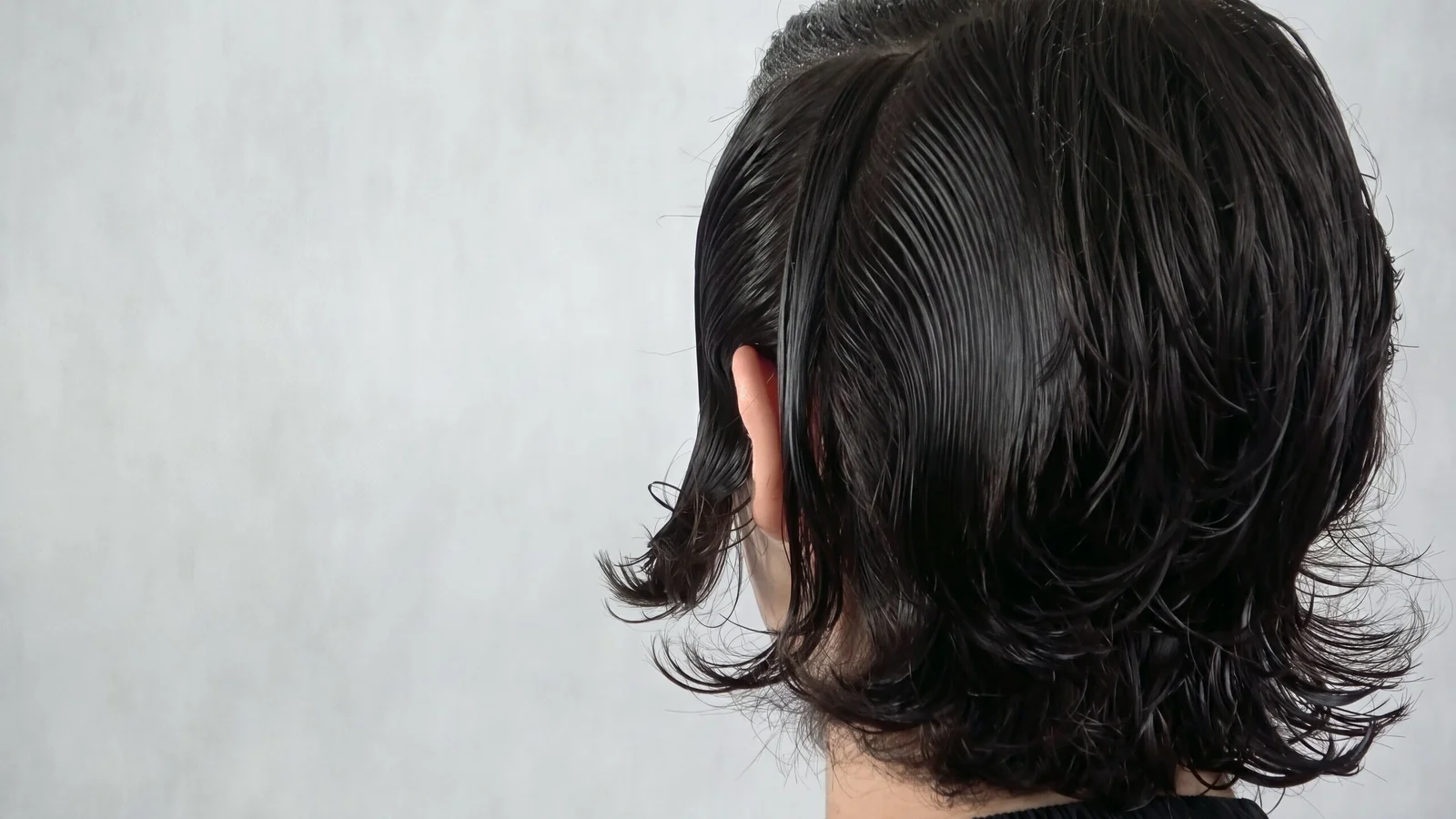
Loose Middle Part with a Disconnected Taper is a longer men's haircut in which Marek Maziarz deliberately builds a circular shape instead of one even length. The layers start from a guide strand at the occipital bone, the curls collect where the neck is narrowest, and the front of the sides is cut slightly shorter than the back so the hair converges toward the back.
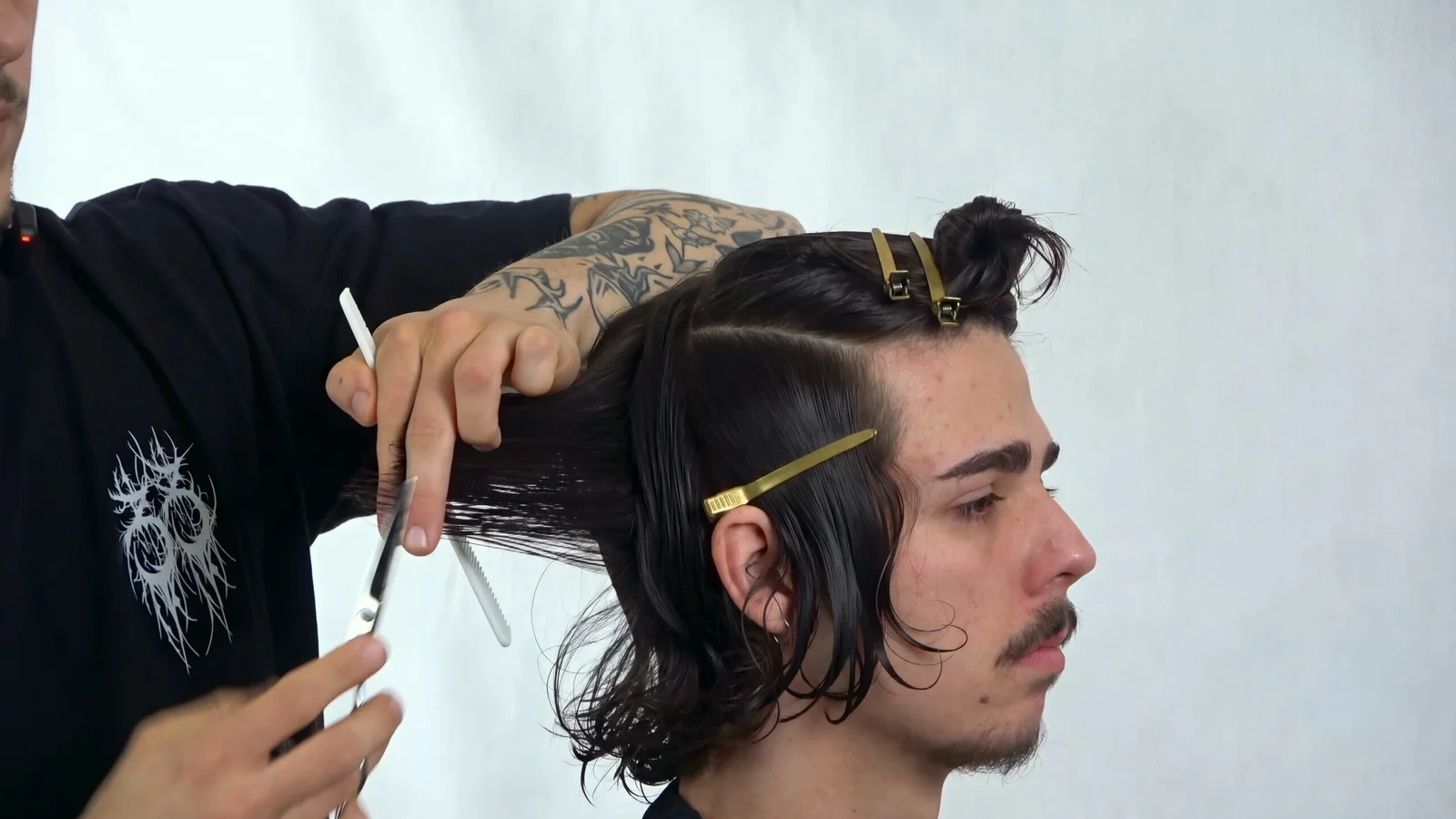
The course walks through the entire process step by step: from carefully planned partings and a line-up marked with a razor, through the back cut with radial sections with no redirection, the sides cut vertically with redirection, all the way to a fringe blended with the back, a herringbone technique connecting the top with the sides, a disconnected taper on guards 1.5 and 0.5, and finishing with matte paste and a diffuser. Marek Maziarz explains throughout why he makes each decision and how to control strand tension, skin stretch, and finger positioning.
In this course, you'll see
- Partings derived from the natural fall of the hair: the back starting where the hair naturally falls backward, the side separated where the head curves most
- An outer line-up marked with a razor using gentle strokes, without losing density at the nape
- The back cut with radial sections without redirection, with the guide strand released loosely down to the occipital bone
- The sides cut with vertical sections with redirection, so the front of the side ends up shorter than the back
- A disconnected taper on guards 1.5 and 0.5, working with the lever open and closed and blending out dark points
- Styling with matte paste applied in two passes from the roots, finished with diffuser drying that mimics natural air-drying
What you will learn
- 01How to plan partings derived from the natural fall of the hair and head shape before you cut the first section.
- 02How to mark the outer line-up with a razor without losing density at the nape.
- 03How to cut the back in a circle using radial sections without redirection, with the guide strand at the occipital bone.
- 04How to use redirection on the sides to shorten the front of the side so the hair converges toward the back.
- 05How to control tension: a loose guide strand, cutting across the first two knuckles of your fingers, and less force where the skin stretches a lot.
- 06How to refresh a disconnected taper on two guards and style the haircut so it looks naturally air-dried.
What's inside
Full access with the course 0:03
0:0301Preview: A Loose Middle Part
Today we're doing a loose middle part. We'll refresh the taper a bit, since braids were done before.
 0:37
0:3702Simple but Well-Thought-Out Partings
They're fairly simple, but very important, and it's good for them to be done thoughtfully.
 3:15
3:1503Barber and Client Like a Compass
I imagine that my client and I are a compass - he's one leg, and I'm the other leg.
 5:16
5:1604The Guide Strand Determines the Layers
The shorter that strand is, the more layers we'll create at the back.
 11:06
11:0605Cutting Across the First Two Knuckles
We only cut across the first two knuckles of our fingers, because above the second knuckle there's a gap between the fingers with no tension there.
 12:48
12:4806Fingers Parallel to the Section
A very common mistake is angling the fingertips toward each other.
 15:32
15:3207Skin Elasticity and Tension
If our skin stretches too much and we grip it and pull it too hard, we'll cut off too much hair.
 22:43
22:4308Hair Like Raindrops
Those small droplets always made their way toward the bigger droplet. Hair behaves exactly the same way.
 29:33
29:3309A Comb Can't Be Crooked
A comb can't be crooked. If we've chosen a straight section, our comb is straight too.
 50:21
50:2110Not a Mullet, a Long Trim
This isn't a mullet, it's more of a long trim.
 56:17
56:1711A Relaxed Wrist with the Clippers
With clippers, having a relaxed wrist is very important, along with how much force we use while working with them.
 1:07:55
12Tousling as Part of the Styling
The hairstyle should be natural, airy, so part of my styling will simply be tousling it.
FAQ
Who is this course for?
How is this haircut different from a mullet?
What tools do I need?
Why is the back cut without redirection while the sides are cut with redirection?
What should you do if the client's skin stretches a lot?
How do you style this haircut so it looks natural?
Details
Educator

Marek Maziarz
Educator · 1 course
Marek Maziarz has been cutting hair for 9 years, and for the past 5 has run Brothers' Barber Shop in Zabrze with his brother Filip, growing it into a nine-person team. He started out at a vocational hairdressing school, and built his craft over more than 4 years at Lucjan Wosek's salon. Behind the chair, he averages 300 clients a month, so every shortcut he teaches is proven in the salon's daily work. In his courses, he looks for the balance between repeatable commercial haircutting and an artistic approach to creating hairstyles.
Ready for the next level
Unlock full access to the Connected Hair course library.
Join the Academy