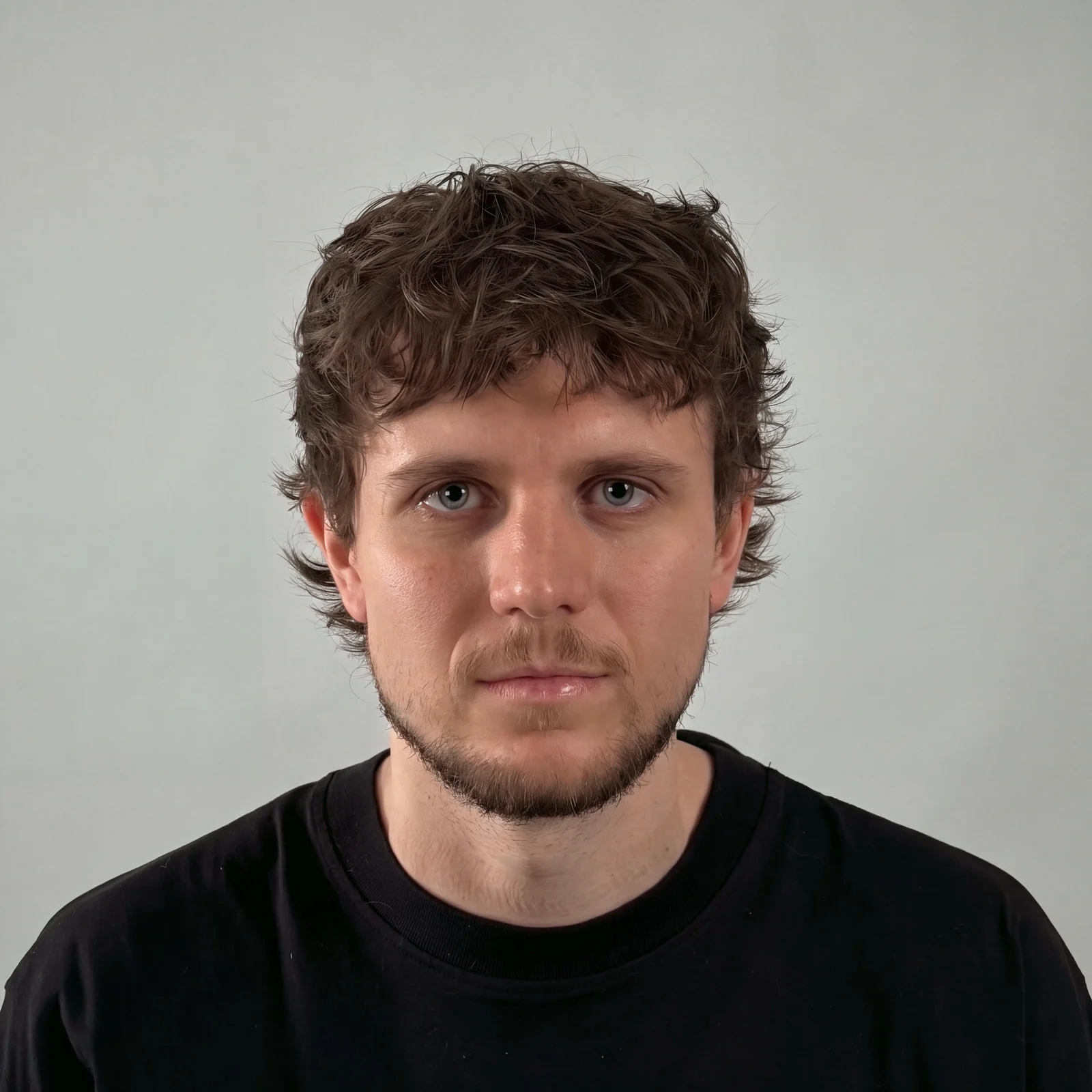
Mod Cut with a Disconnected Mullet
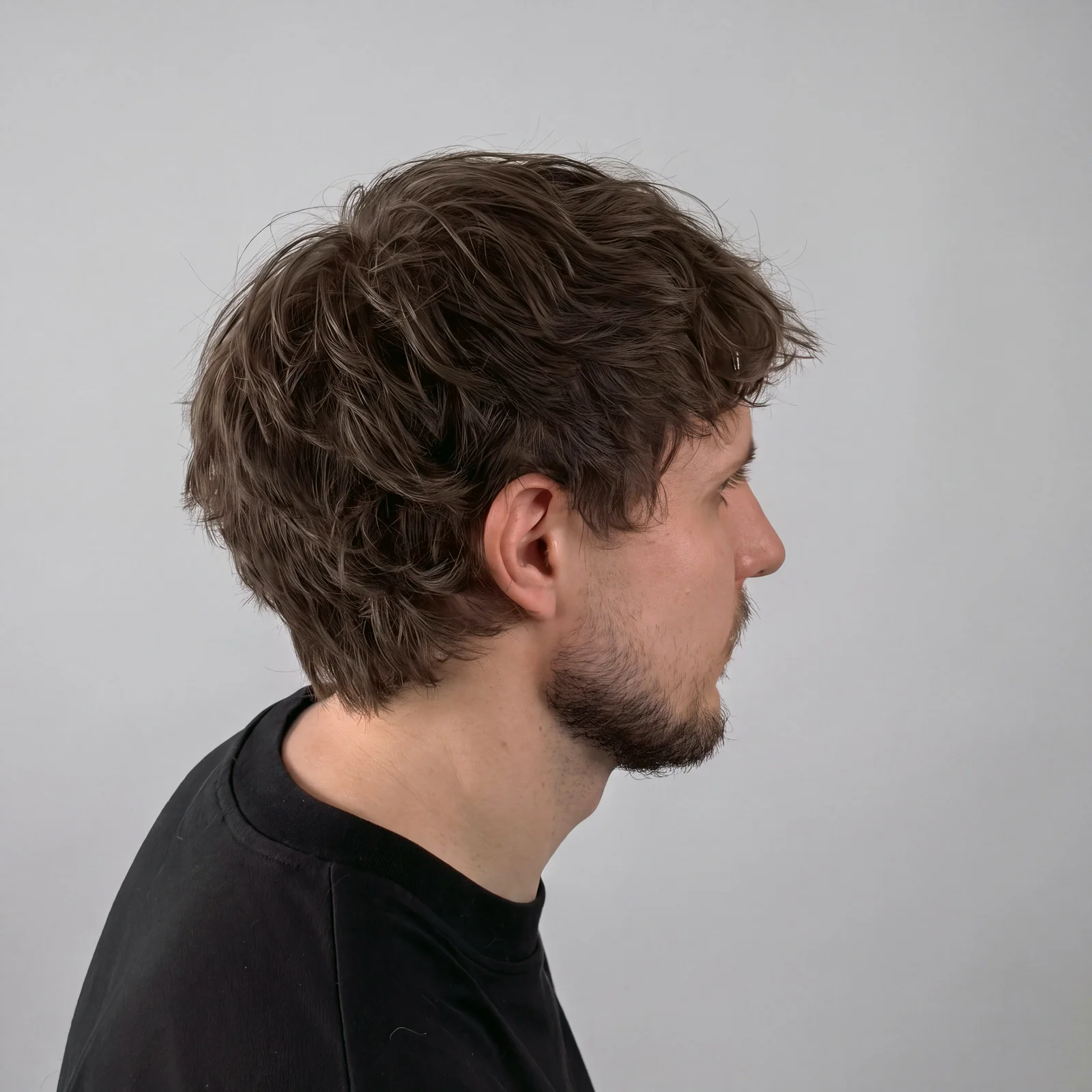
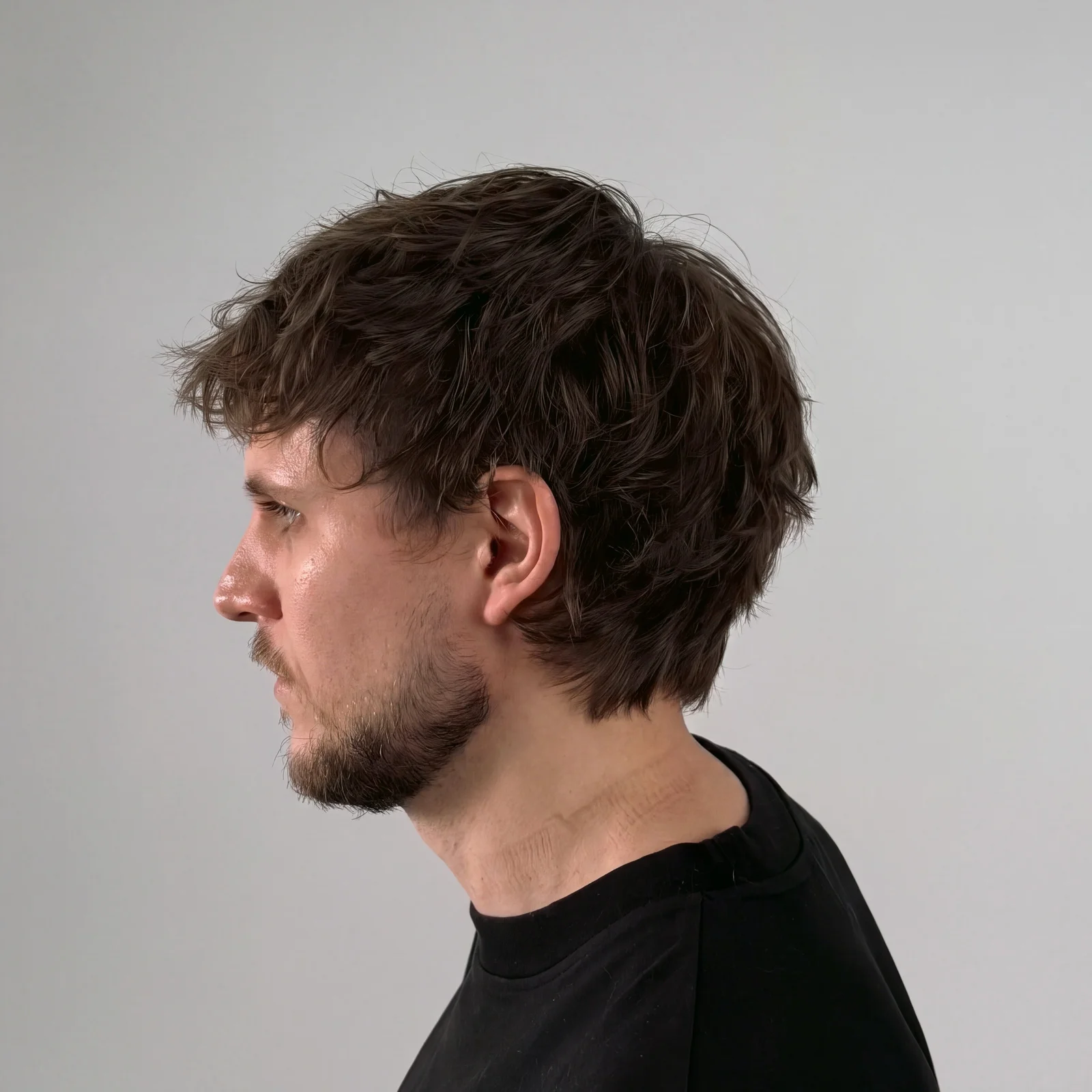
A men's haircutting course in which Marek Maziarz creates a cut between a mod cut and a mullet: a layered back cut with a feather razor and overdirected towards the face, sharp triangular sides in high graduation with a disconnection from the back, a fringe above the eyebrows connected with the top in a square shape, and styling with STMNT matte paste finished with diffuser drying.
Result and process
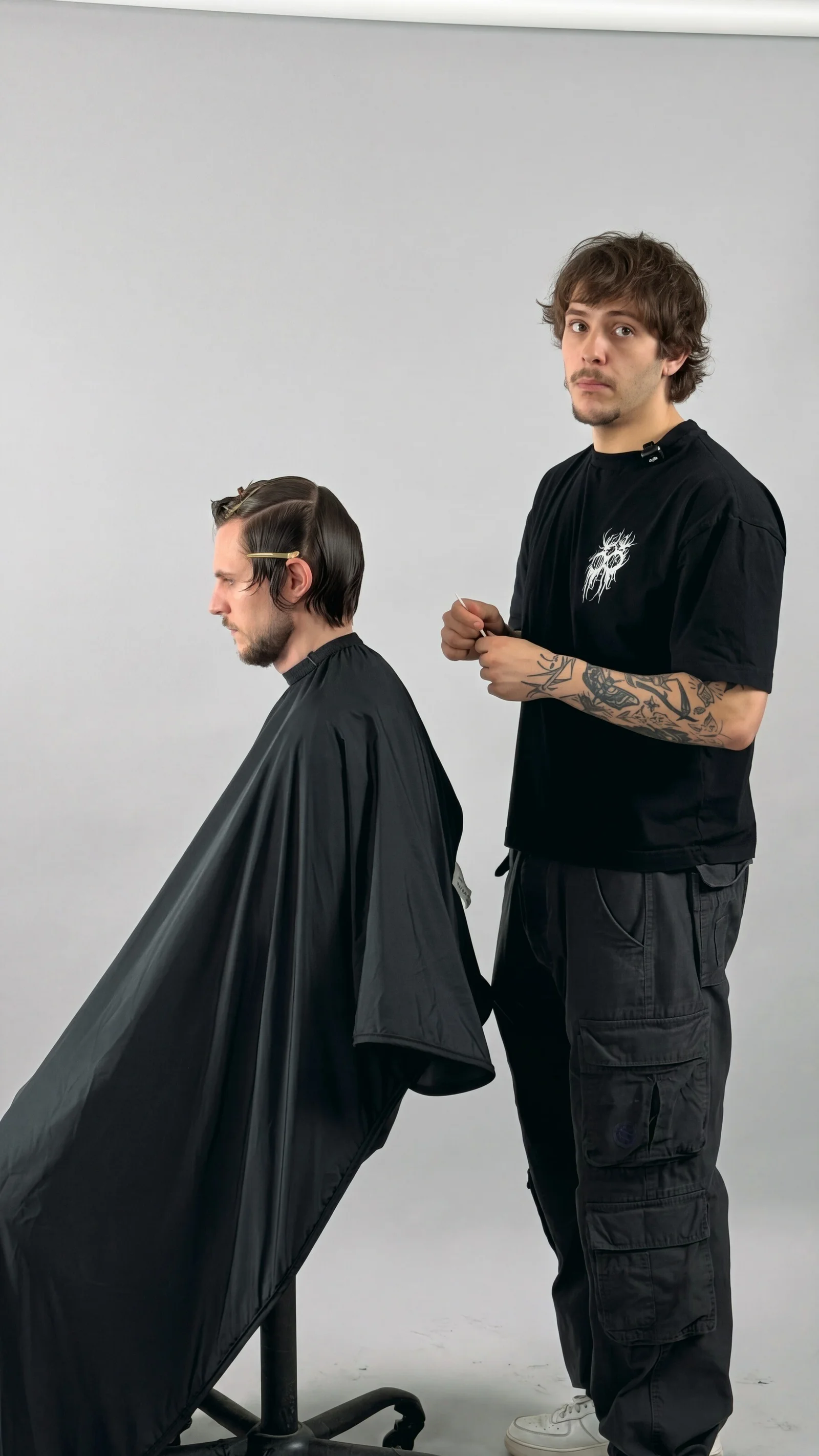
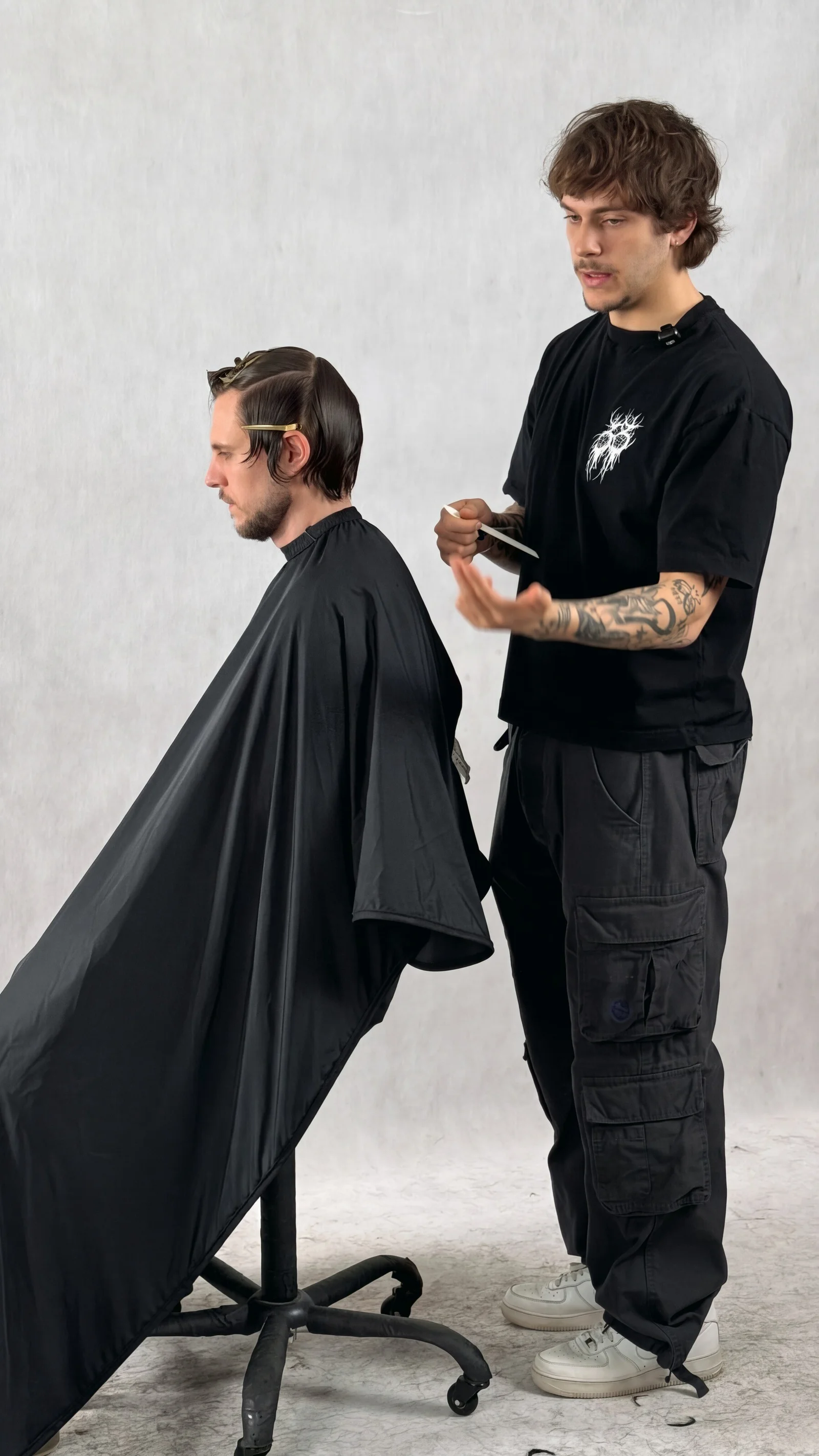
About the course
Mod Cut with a Disconnected Mullet is a men's cut in which Marek Maziarz creates something between a mod cut and a mullet, without the pronounced long back of a classic mullet. The back is in delicate layers to bring out the natural wave of the hair, the sides are shorter, sharp and triangular, and the disconnection appears only between the back and the side. The top joins both elements into a cohesive fringe above the eyebrows.
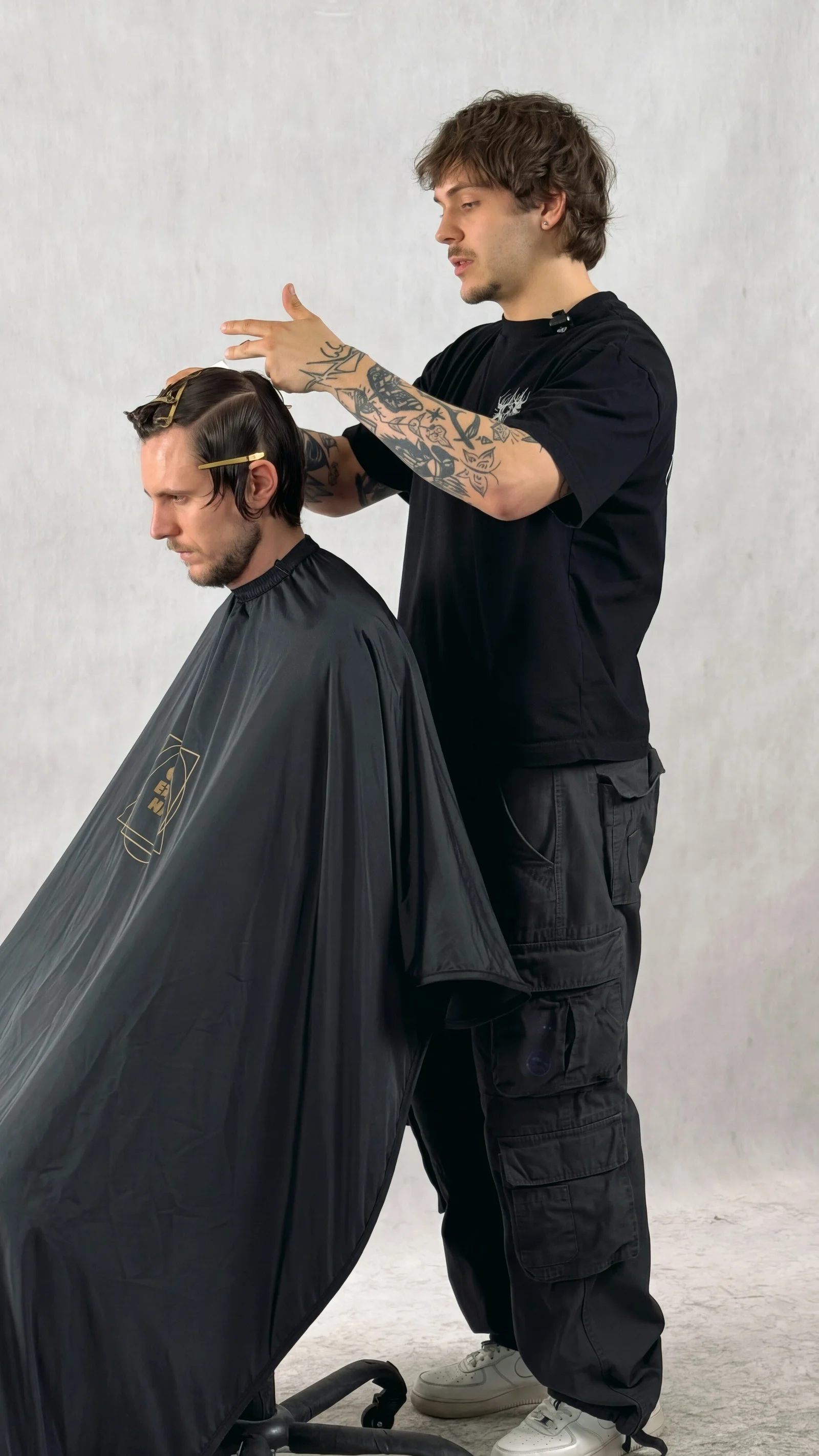
The course walks through the whole process step by step: from a division into four sections based on the natural direction of the hair, through the back contour marked with a feather razor 1.5 cm below the natural growth, the back cut with a feather razor in vertical partings overdirected towards the face, and the sides in high graduation with a square cutting line, to the fringe, the top cut into a square shape, compensating for a protruding bone, personalisation and styling. Marek Maziarz explains as he goes where he stands for each parting, how he controls the overdirection and why he leaves material for later correction.
In this course you will see
- The division into four sections: the top separated at the widest curve of the head, the back separated from the side to the ear
- The back cut with a feather razor in vertical partings, with the weight slightly above the occipital bone and an elongation towards the face
- The sides cut in horizontal partings in high graduation, with a square cutting line and a triangular silhouette
- A disconnection between the back and the side while the outer contour of the haircut still matches
- A fringe marked with a feather razor above the eyebrows and the top cut into a square shape, compensating for a protruding bone
- Styling with STMNT matte paste rubbed in from the roots, diffuser drying and a test of messing up the haircut
What you will learn
- 01How to plan a cut between a mod cut and a mullet, with a disconnection only between the back and the side.
- 02How to mark the back contour with a feather razor 1.5 cm below the natural growth so the bottom can flip out.
- 03How to cut the back with a feather razor in vertical partings with overdirection, and go from a circle to a triangle towards the face.
- 04How to build a sharp, triangular side in high graduation with a square cutting line and transfer the length to the other side with a comb.
- 05How to connect a fringe above the eyebrows with the top in a square shape and compensate for a protruding bone.
- 06How to style the cut with STMNT matte paste and a diffuser so it returns to form after the wind blows it around.
What's inside
Full access with the course 0:01
0:0101Between a mod cut and a mullet
On this model we will create something between a mod cut and a mullet. I wouldn't want it to look like a crude mullet, with some elongation at the back, some unnatural tail.
 0:34
0:3402Where the disconnection appears
However, a disconnection will appear between the back and the side.
 3:40
3:4003A back longer than the natural growth
Therefore my back will be about 1.5 centimeters longer than his natural growth.
 8:13
8:1304Weight above the occipital bone
I want it to be quite short, a bit above the occipital bone, which is the most prominent part of the occipital bone.
 12:34
12:3405From a circle to a triangle
So let us say we were making a circle for a while, and now I am making a triangle.
 21:20
21:2006High graduation on the sides
Each subsequent parting I will cut in high graduation, because I want a triangular silhouette, and in graduation it is always triangular.
 28:37
28:3707Scooping a strand like ice cream
When it comes to how to pick up this hair, I always explain it in trainings as if we were scooping ice cream with a spoon.
 39:49
39:4908First 1 over 2
So it goes like this: first I cut 1 over 2, and only later 2 over 3, 3 over 4.
 42:21
42:2109Working with your back to the mirror
In my salon I personally work with my back to the mirror.
 48:27
48:2710Top to the upper strand of the side
We cannot cut the top to the middle of the side, because then we will create a lot of weight.
 57:18
57:1811Long but well-groomed
It is supposed to be a long but well-groomed haircut.
 1:07:35
12Wind test
Because that is how life works, we go out in the wind, it blows our haircut around a bit and it still has to look good.
FAQ
Who is this course for?
How is this cut different from a classic mullet?
What tools do I need?
When can you use a feather razor on the back?
How do you get a visible disconnection between the back and the side?
How do you style this cut?
Details
Educator
Marek Maziarz
Educator · 2 courses
Marek Maziarz has been cutting hair for 9 years, and for the past 5 has run Brothers' Barber Shop in Zabrze with his brother Filip, growing it into a nine-person team. He started out at a vocational hairdressing school, and built his craft over more than 4 years at Lucjan Wosek's salon. Behind the chair, he averages 300 clients a month, so every shortcut he teaches is proven in the salon's daily work. In his courses, he looks for the balance between repeatable commercial haircutting and an artistic approach to creating hairstyles.
Ready for the next level
Unlock full access to the Connected Hair course library.
Join the Academy