
Perm Fundamentals
A course on the fundamentals of perming for hairdressers. Aneta Dąbrowska explains the chemistry behind the treatment and shows how to achieve a modern, natural curl that builds volume and enhances the haircut.
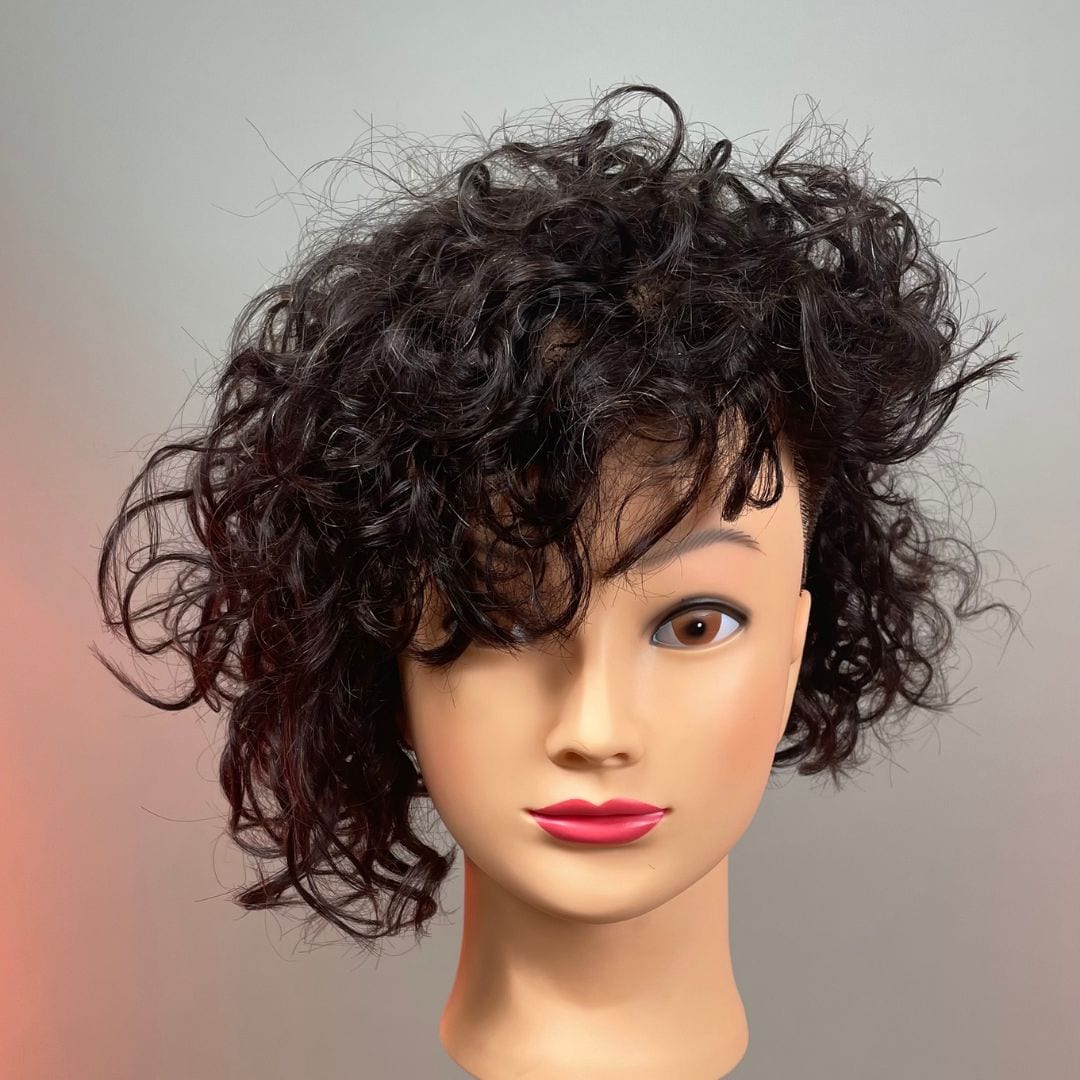
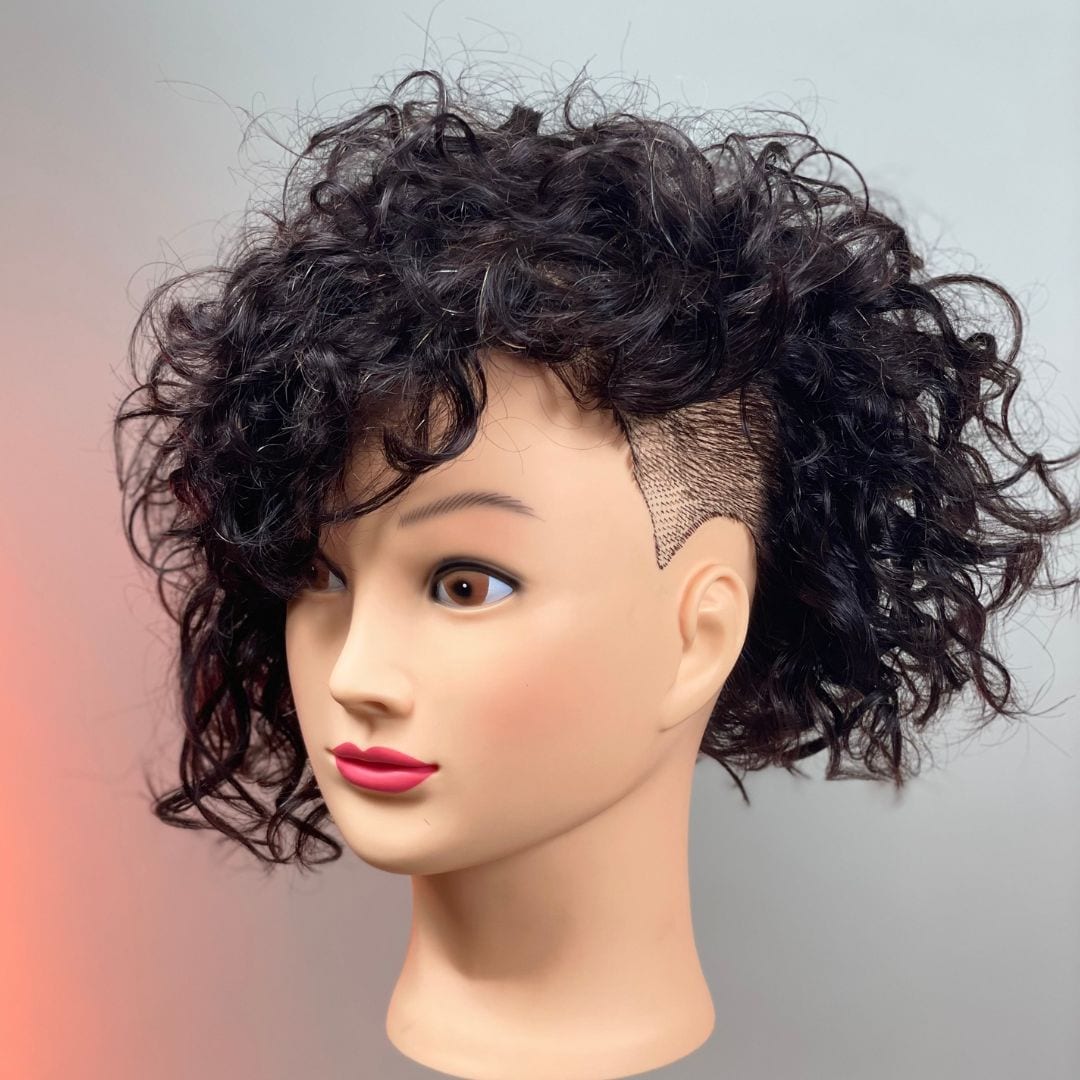
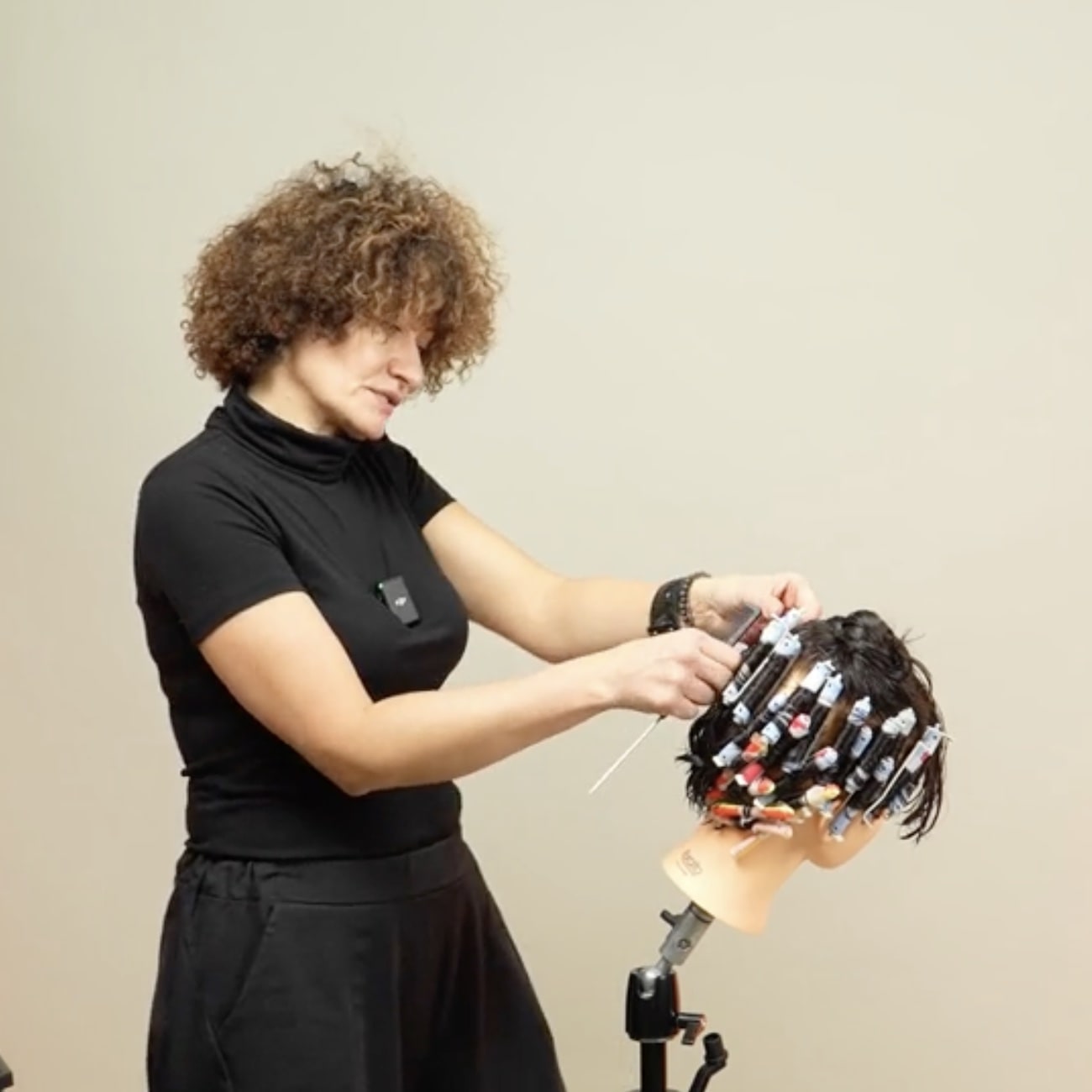
Result and process
About the course
Perm Fundamentals is a course that demystifies the chemistry and technique behind one of the most transformative treatments in the salon. This isn't a return to the tight 80s curls - it's a modern tool for building volume, adding texture, and holding shape for clients with straight, hard-to-style hair. The course shows how to work with intention through the chemistry to achieve a natural, dynamic curl that enhances the cutting line rather than overpowering it.
Aneta Dąbrowska guides you through the entire process step by step, starting with the fundamentals - hair chemistry and the role of disulfide bonds. On a model with a modern, asymmetric cut, she shows how hair diagnosis (thickness, porosity, colour history) dictates the choice of lotion and technique. You'll see how different rod directions and sizes build volume and movement exactly where the shape of the cut demands it, turning a flat hairstyle into a composition full of life and energy.
In the course you'll see
- Chemistry from the ground up - the role of disulfide bonds, amino acids, and lipids in the perming process, and why understanding them is key to predictable results
- Full pre-treatment hair diagnosis - how to assess coloured, lightened, and natural hair, and when to decline the service (e.g. after keratin straightening)
- Creative rod winding - how to mix sizes and directions (including the herringbone technique) to achieve a natural, dynamic curl tailored to a specific haircut
- The key role of the compress - why a 10-minute warm water rinse before neutralization is a critical step for both safety and curl quality
- Two-stage neutralization with hydrogen peroxide - application on the rods and after their removal for full fixation of the new hair structure
- Aftercare rules - why clients can't wash their hair for 48 hours and which products to use to keep curls bouncy and healthy
- Final styling on very wet hair with a diffuser - how to bring out maximum curl without frizz and show the client the real result of the treatment
After this course, you'll stop treating perming as a risky, outdated treatment and start using it as a creative tool for permanently changing hair texture. You'll learn to work with intention through the chemical process and choose winding techniques to give your clients hairstyles full of volume and movement that style themselves.
What you will learn
- 01How perm chemistry works and the role disulfide bonds play.
- 02How to correctly diagnose hair and recognize contraindications for the treatment.
- 03How to choose and mix rods to creatively build volume and movement.
- 04How to correctly perform the key stages: the compress, lotion application, and neutralization.
- 05Why you shouldn't be afraid to work on coloured hair, and how pigment behaves.
- 06How to advise clients on the right aftercare following a perm.
Before you start
This course assumes you already have:
What's inside
Full access with the course 0:58
0:5801The chemical basis of the treatment
Hair is made up of amino acid chains that connect through disulfide bonds.
 4:09
4:0902Watch out for heavy metals in the hair
If a girl comes in with green hair, we don't perform the treatment on that hair.
 12:40
12:4003Key point - even section tension
The hair tension must stay even the whole time. Everything must be combed out evenly.
 21:44
21:4404Mixing rods for a natural effect
We don't wind all the hair with the same rod size. That's simply not an option.
 26:09
26:0905Does a perm wash out colour?
Once the fixer is applied, everything goes back to normal - the pigments bind back into the hair.
 50:09
50:0906Two-stage neutralizer application
We apply it to the rods twice - after five minutes we remove the rods and add more product.
 55:37
55:3707Perming after keratin straightening
I wouldn't perform a perm on hair that's had a keratin straightening treatment.
 58:49
58:4908Correctly drying curly hair
Before drying, the hair needs to be very wet, dripping - we don't rub it with a towel.
FAQ
Which clients and hair types is the technique shown in this course suited for?
Does the course cover contraindications for perming?
Is this technique safe for coloured hair, and will the colour change?
What rods and tools are needed for this technique?
Does the course teach modern waves or tight, strong curls?
Will I learn how to advise clients on hair care after the treatment?
How long is the full video?
Details
Educator
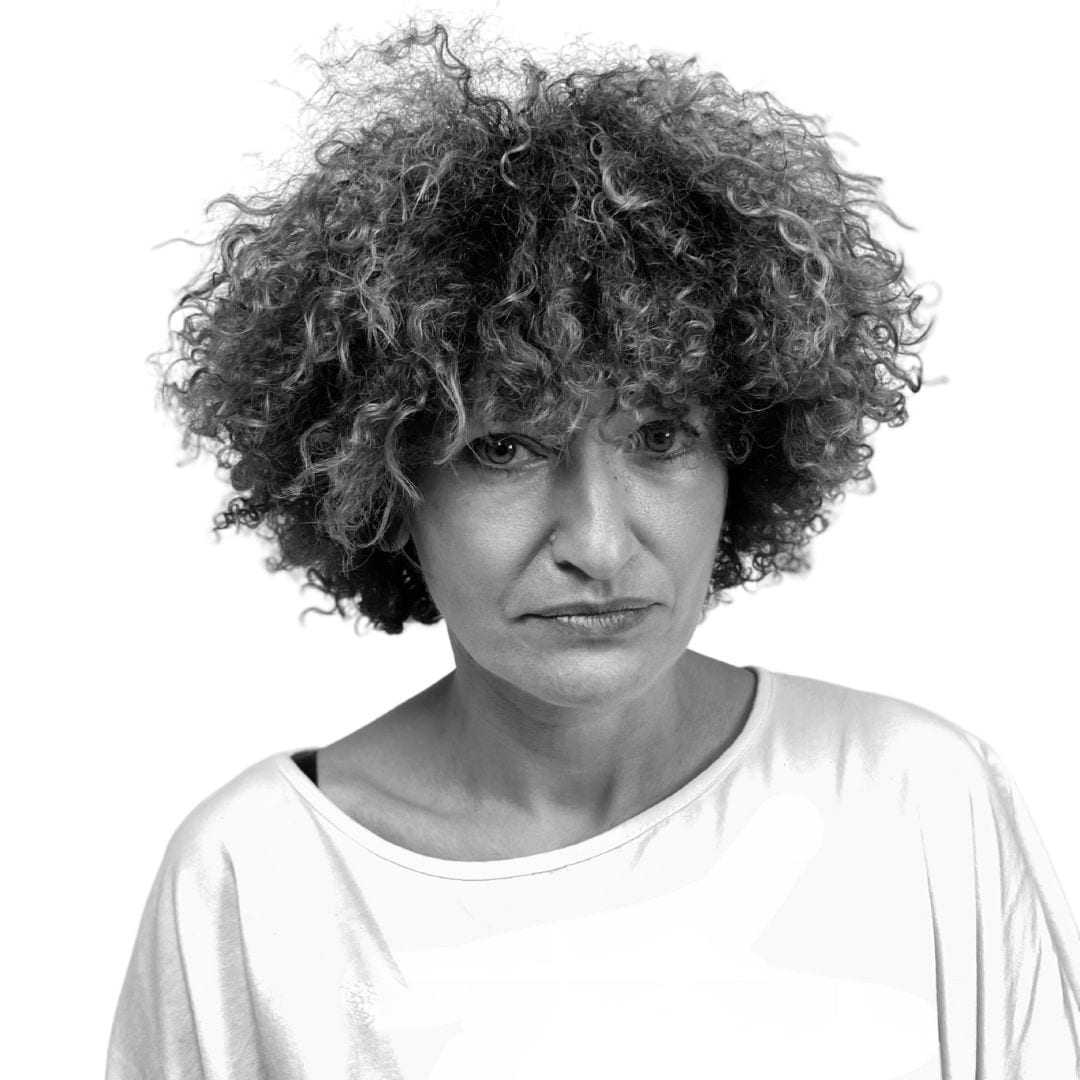
Aneta Dąbrowska
Educator · 2 courses
An educator who believes that the more you know, the more questions you have. Aneta Dąbrowska continuously develops her skills at leading academies and international courses. In her courses, she focuses on a fundamental understanding of chemical processes and hair structure, teaching how to translate that knowledge into precise cutting and coloring techniques, from perm waving to modern haircuts.
Ready for the next level
Unlock full access to the Connected Hair course library.
Join the Academy