
Square with Separation
Learn a men's square haircut on longer hair using a diagonal separation technique. Achieve a balanced shape faster and without double-cutting the hair.
Result and process
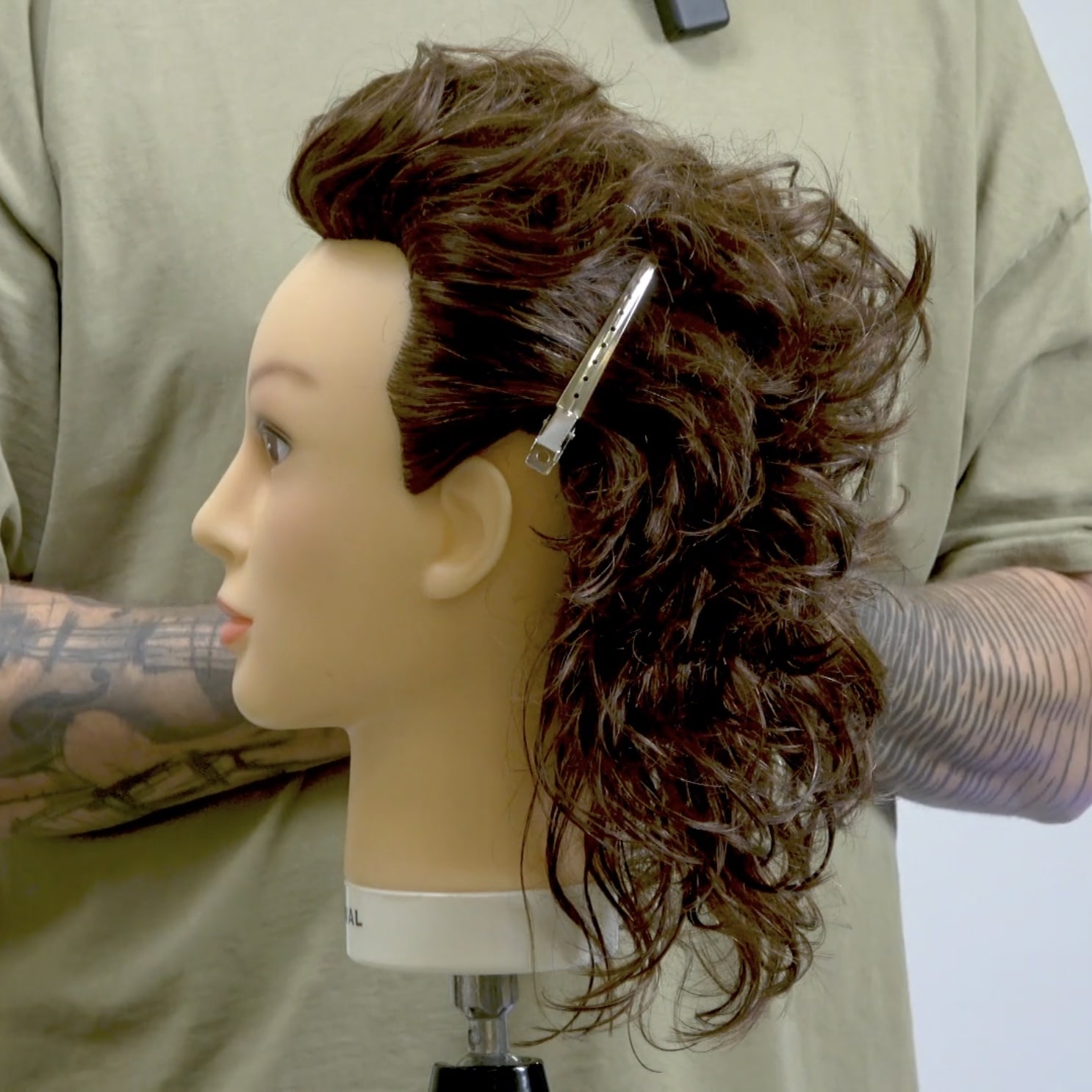
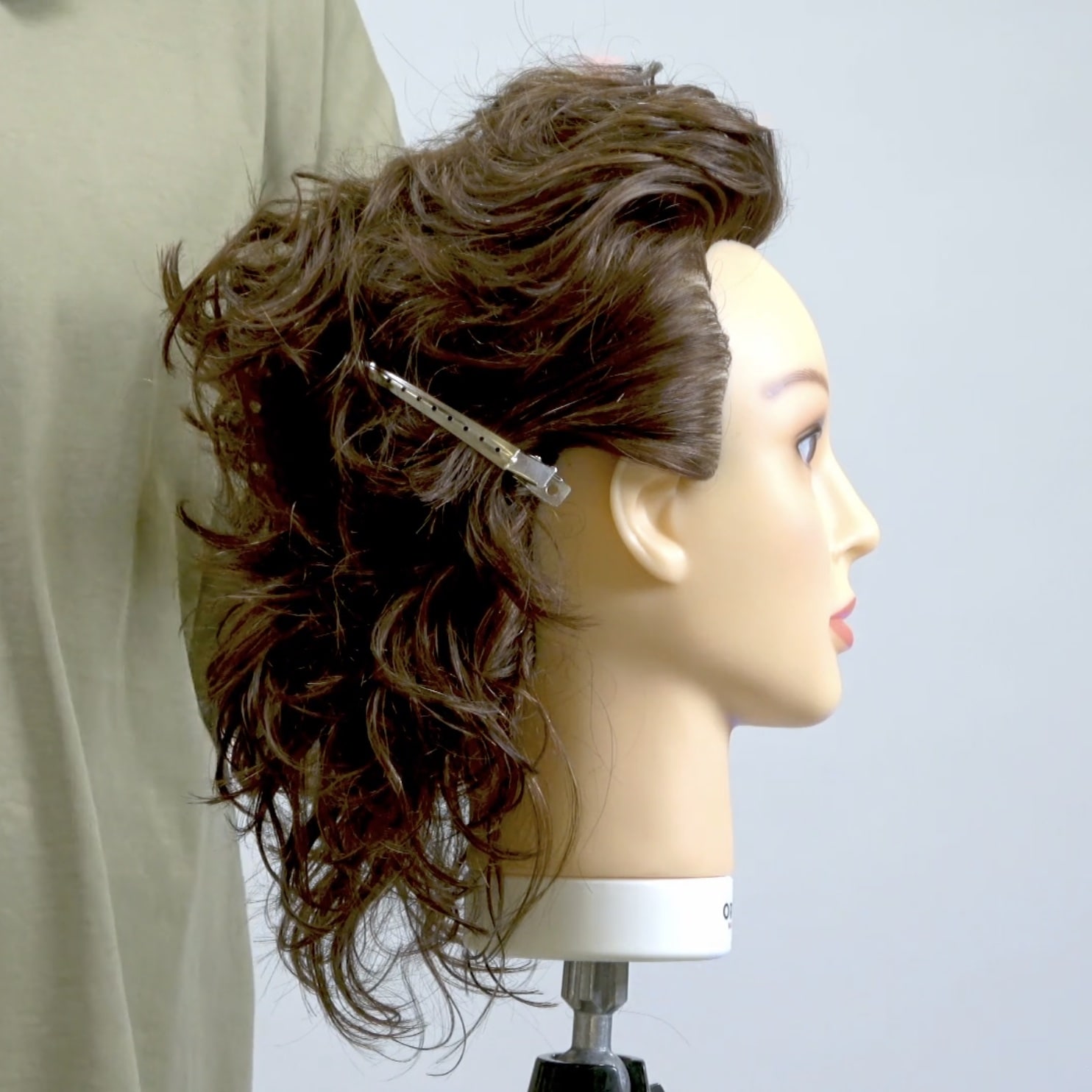
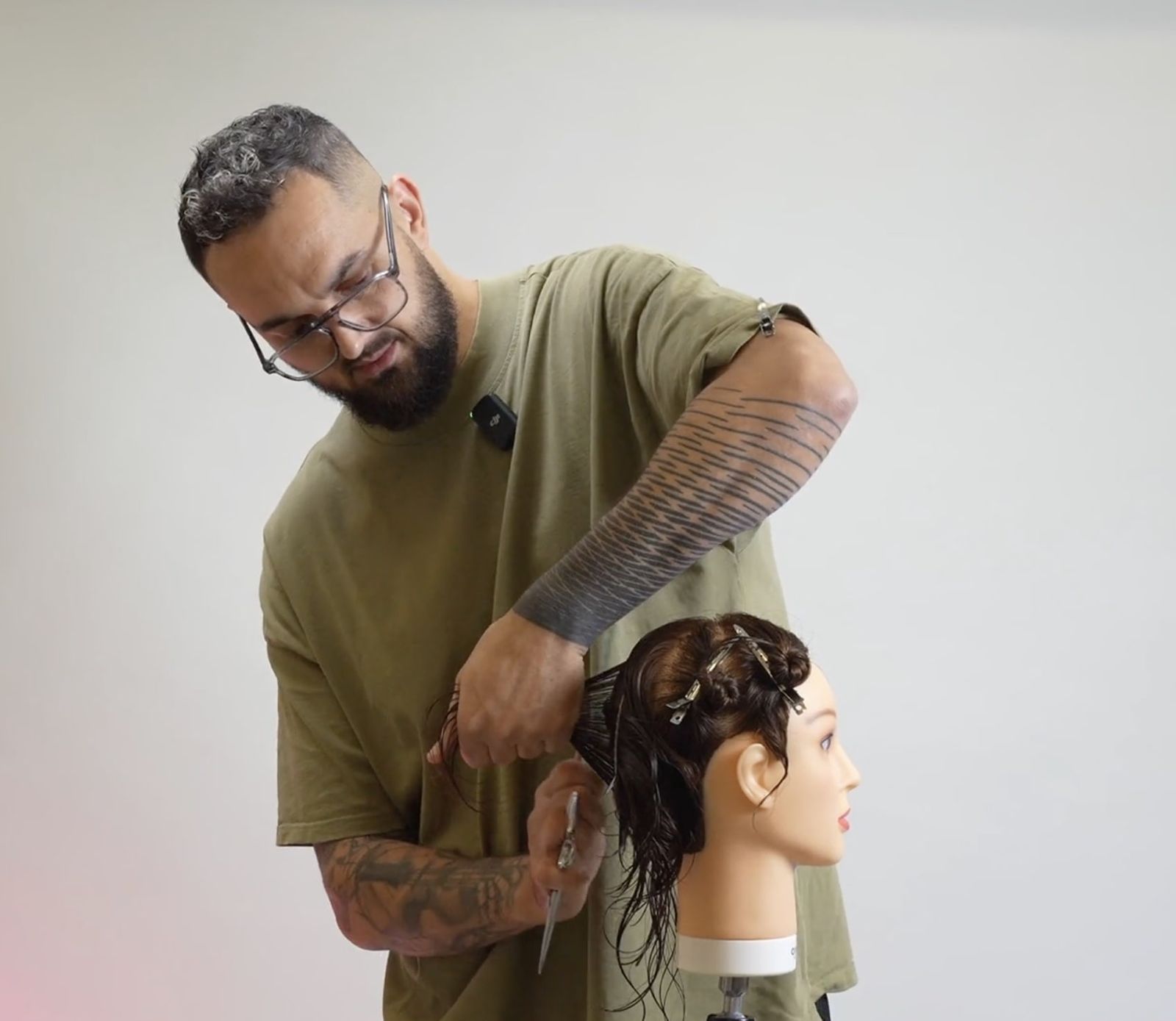
About the course
The square haircut with the separation technique is a classic men's shape for longer hair, built on an unconventional sectioning system. Instead of the standard approach of working across the entire back plane, this course shows you how to map out four squares on the head and work along their diagonals (bisectors). The result: the same balanced shape, but achieved faster and without double-cutting hair in the transition zone between the back and sides.
Jakub Ciężadlik guides you through the entire process step by step-from mapping the head and dividing it into four equal squares, through establishing the central diagonal separation (bisector), to transferring the memory panel from the back to the sides. The technique relies on precisely redirecting each panel to the previous one (2 to 1, 3 to 2), which allows you to maintain a perfectly flat plane and build clean, technical corners in the haircut.
In this course, you'll see
- Head mapping and dividing it into four squares as the foundation of the entire shape
- How to establish the bisector-the central diagonal separation that becomes the main working line at the back of the head
- The "two to one" and "three to two" panel redirection technique for building a perfectly flat, square wall
- Transferring the memory panel from the crown to the sides to seamlessly connect the entire haircut without losing shape
- Why spending more time on precise separations shortens the final cutting time and eliminates mistakes
- Systematic check-cross on small panels-why checking the entire plane at once doesn't make sense
- Full styling with a diffuser and curl stimulator to bring out natural wave and give the haircut volume and movement
After this course, you'll start seeing the head as a geometric shape, and working with separations will become a tool you use with intention to optimize your cutting time. You'll be able to offer clients with longer, even wavy hair, a balanced haircut that's easy to style day-to-day, built on a clean, technical foundation.
What you will learn
- 01How to map the head by dividing the back section into four squares.
- 02How to establish the bisector (diagonal) as the main working line.
- 03How to redirect panels using the "two to one" technique for a flat plane.
- 04How to transfer the memory panel from the crown to the sides.
- 05Why working on diagonals shortens cutting time and is more efficient.
- 06How this shape works on wavy and curly hair.
Before you start
This course assumes you already have:
What's inside
Full access with the course 0:01
0:0101A different approach to working with separations
I wanted to work a bit differently with separations, to show you a slightly different method.
 11:33
11:3302The concept of the head as a square box
We can imagine that the head is like a box-let's say, a square box.
 24:25
24:2503The two-to-one redirection direction
I'll be working in a square shape, where the redirection direction is the memory section, two to one.
 35:59
35:5904How to properly do the check cross
It's also good to do the check cross in segments, because otherwise the check cross won't give you anything.
 45:13
45:1305Section correction-take a step back
Sometimes it's better to take half a step back, so you don't run into problems with the shape later.
 50:41
50:4106Advantage of the technique-avoiding double-cutting
I'm not going to touch this hair, because I don't need to trim it. It's already cut.
 1:02:19
07Verification-forming the corner of the square
If I comb this hair out, a corner should appear right at this angle.
 1:29:42
08Adapting the square to the client's needs
You can really work with this square in different ways. This is just the basic starting form.
FAQ
How does this technique differ from a classic square haircut?
Is this course for beginners or experienced barbers?
Will this technique work on curly or wavy hair?
Will the client be able to tie their hair into a ponytail after this haircut?
Does the course also cover styling the finished haircut?
What tools are needed to do this haircut?
How long is the full video course?
Details
Educator

Jakub Ciężadlik
Educator · 1 course
Jakub Ciężadlik, owner of Barber Lot, is a men's hairdresser with over 10 years of experience. He specializes in modern coloring techniques, particularly on short men's hair, and in creating unique patterns. As the creator of the proprietary POLOT program, his teaching focuses on a methodical approach and workflow optimization, showing how to achieve better results in less time.
Ready for the next level
Unlock full access to the Connected Hair course library.
Join the Academy