Burst Fade Crop
 The result and the process
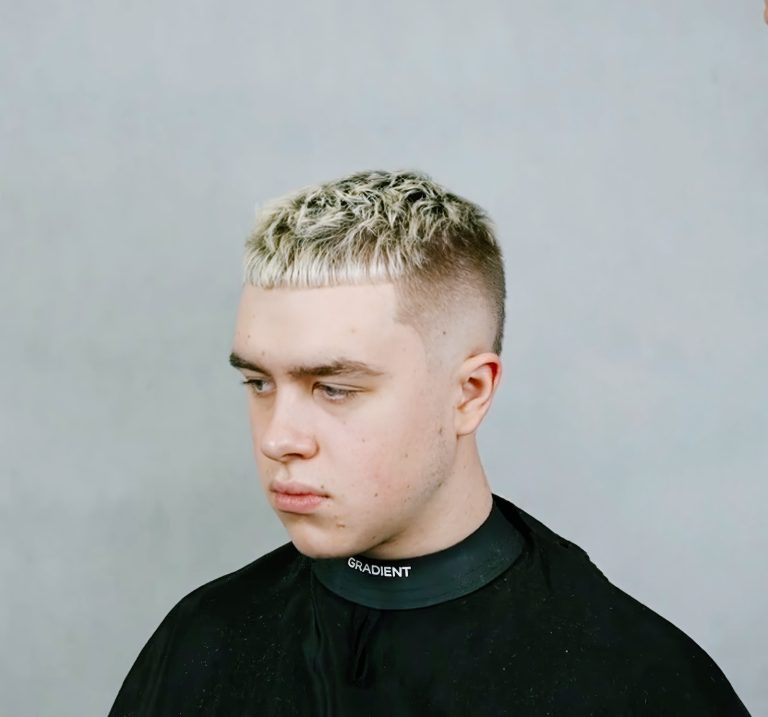
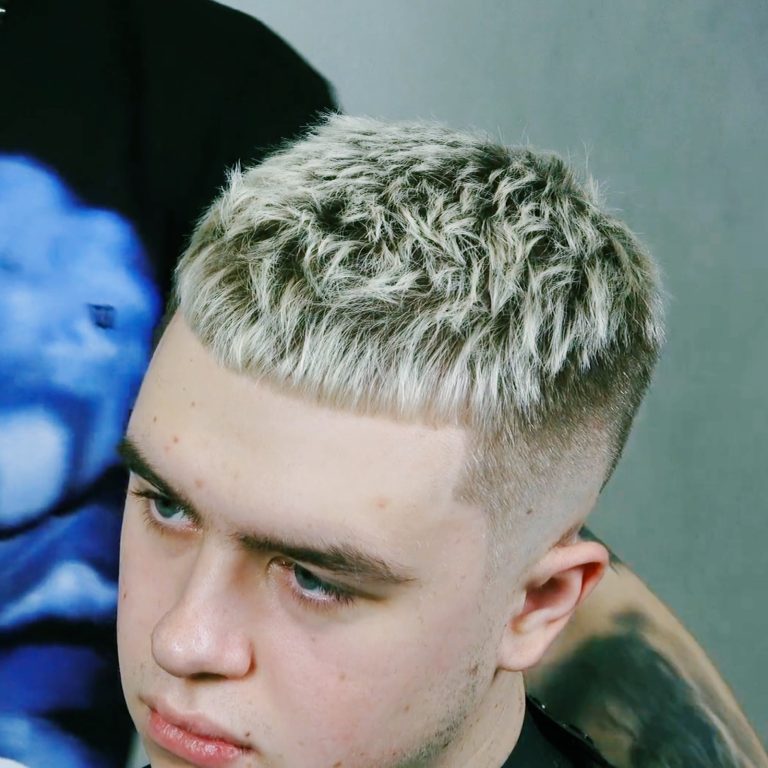
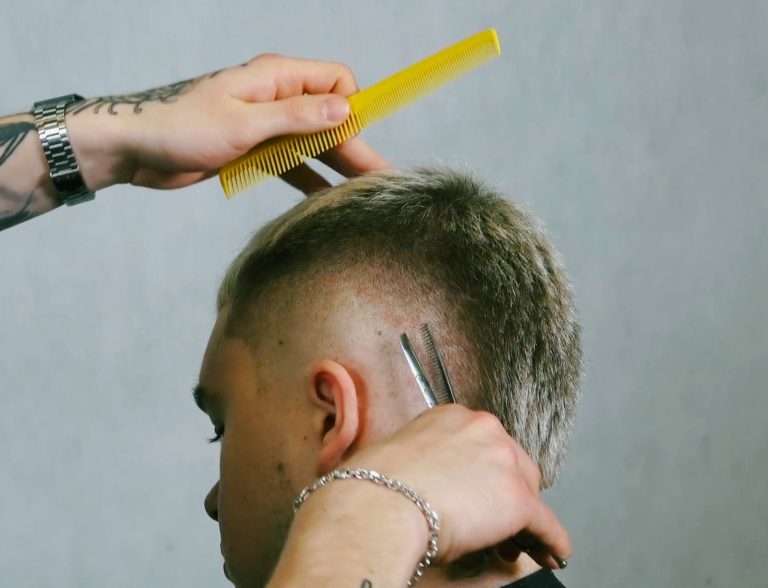
 What you'll learn
 What you'll learn
How to analyze the anatomy of the head in order to choose the right hairstyle.
How to determine the zero line based on natural skin creases.
How to build up shading methodically in three areas: highlights, midtones, and shadows.
How to use scissors at the top, employing radial and horizontal cuts.
How to clean corners precisely using the corner of the trimmer and different speed settings.
How to seamlessly blend a fade with the top using thinning shears.
The Burst Fade Crop is a modern men’s haircut that combines a radiant, dynamic fade around the ear with heavily textured crop-style bangs. The course demonstrates how to build this popular style from the ground up, basing the approach on a conscious analysis of head anatomy—in this case, a prominent occipital region and a narrow neck—so that the final result is tailored and cohesive, rather than haphazard.
Kacper Orzechowski guides you step by step through the entire process: from analyzing the shape of the head and building the foundation of the haircut with scissors, through working with radial sections resembling “pizza slices,” all the way to the crucial moment—determining the zero line based on natural gaps (“spots”) on the scalp. The entire fade is methodically built in three sectors (light, semi-shadow, shadow), which allows for full control over the transition and helps avoid mistakes.
In this course, you'll learn:
- How to use natural gaps ("bald spots") on the scalp to determine the perfect zero line, instead of doing it blindly
- Creating a fade in three distinct sections (3 mm, 6 mm, 10 mm) for complete control over shades and the smoothness of the transition
- Scissor cuts on top—from radial separation at the back for lightness to horizontal cuts at the front to add weight to the crop
- Precise cleaning of the lines using different speed settings on the shaver (5 → 3 → 2) and working with the corner attachment to remove even the smallest stains
- Combining a fade with a shape using thinning shears – how to work on just the ends to soften the transition without losing the shape
- The technique for cutting a crop fringe along the natural hairline, without pulling the hair taut, while taking into account natural waves
- Finish the style using dry paste to achieve maximum texture and a "messy" look
After completing this course, you’ll begin to approach fade cuts with a more thoughtful approach, basing their shape on the client’s head anatomy rather than a memorized template. You’ll understand how to control every millimeter of the transition by working in sections, and your Burst Fade Crop cuts will gain in precision, dynamism, and personalized fit.
What's inside
Full access to the course
 What's inside

Analysis of the occipital region and surgical plan
"I'll want to trim the top to give it a more square shape."

Change in weight distribution
"I'm switching from diagonal splits to horizontal ones, which, unlike the back splits, provide more stability."

Setting the top line of the 13mm fade
"I'm going to use a 13-millimeter attachment now and mark the top line of my fade."

The key principle of zero-line placement
"We'll use the spot as a reference point, and below that spot we'll be working with the zero line."

Working in different sectors - a touch of light
"It will be a three-millimeter section that I will mark out and divide into one-third of the area."

Technique for joining two areas
"And in the second step, I will connect the two areas."

Correcting dark spots with a smaller attachment
"Where there's still a dark spot, I shift down a gear."

Refining the shades with the edge of the blending brush
"Wherever there's a clump of hair—which is what causes the dark color—that's exactly where I dig in with the edge of the thinning shears."
 Frequently Asked Questions