Curly messy
 The result and the process
 What you'll learn
 What you'll learn
How to create a square shape by pulling strands of hair toward each other at a right angle.
Why you should start your haircut by trimming heavy, crop-style bangs.
How to use a Chinese knife to soften the sides and blend them into the bangs.
Why use scissors instead of thinning shears for reducing volume and texturizing?
How to use the dry cutting technique with a point-by-point and sliding motion to give your hairstyle a light, airy look.
How to assess the situation and properly divide the head into working sections.
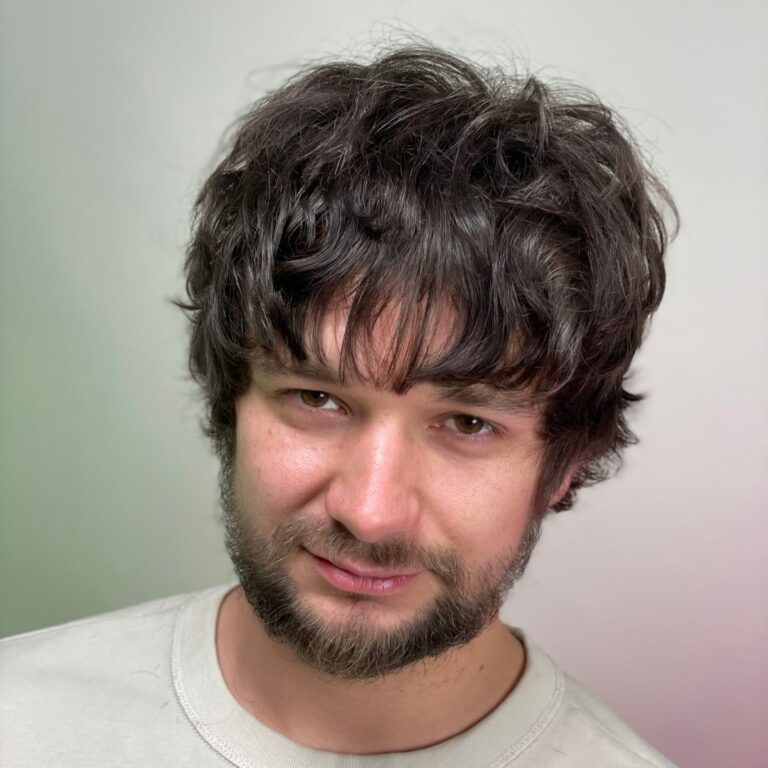
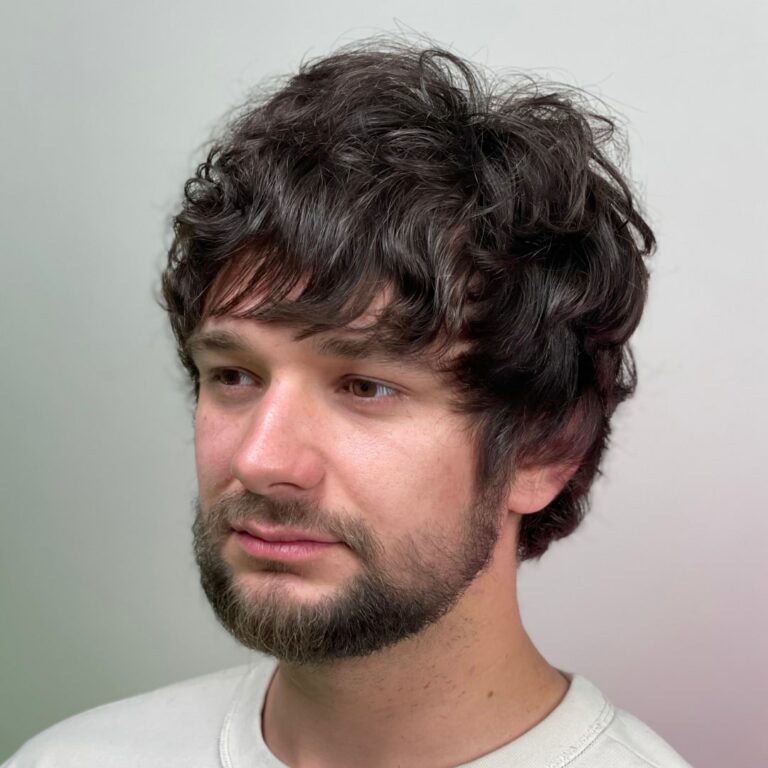
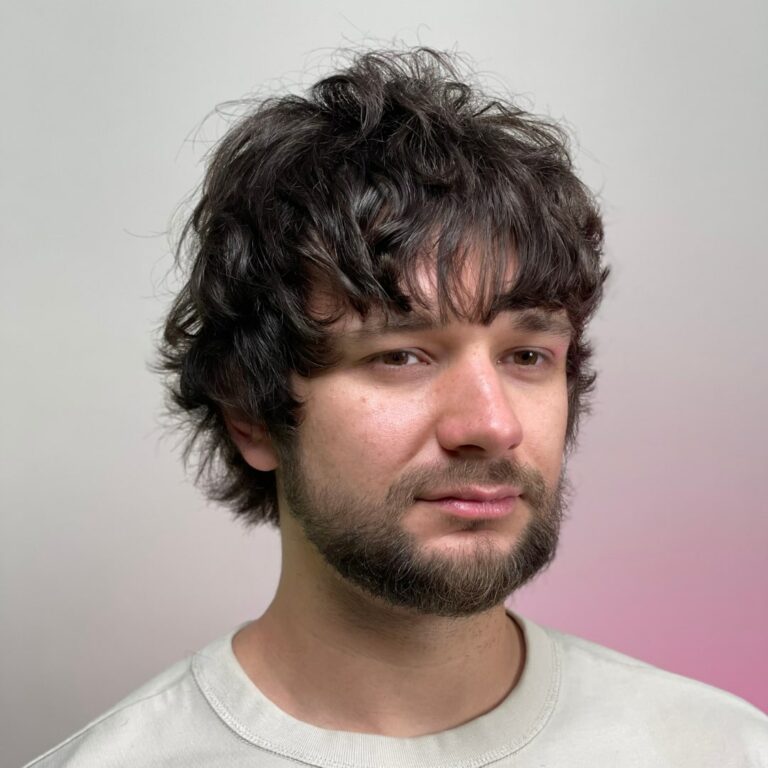
The "Curly Messy " is a men's haircut designed for clients with naturally curly hair, which often creates an overly wide, unruly shape around the head. The course demonstrates how to create a deliberate, square shape that visually narrows the sides while preserving the freedom and natural character of the curls. The key element is a heavy, crop-style fringe, which serves as the focal point of the entire look.
Damian Zakrzewski guides you through the entire haircut process, starting with an assessment of the head’s shape and identifying the highest point as the basis for dividing the hair into sections. Step by step, he demonstrates how to create a square shape at the back of the head by pulling strands toward each other at a right angle to conceal its curves. He then moves on to cutting heavy bangs, which serve as a reference point for blending with the top and sides of the hairstyle.
In this course, you'll learn:
- Creating a square shape at the back of the head by pulling strands toward each other—a technique that hides roundness and visually slims the silhouette.
- Cutting heavy, cropped bangs is the first step, which defines the character of the entire hairstyle and serves as a reference point for the rest of the cut.
- Use a Chinese blade to soften the sides and blend them smoothly into the bangs without losing volume on top.
- Why does Damian use only scissors (for precision cuts and gliding) for thinning and dry texturizing, and avoid thinning shears?
- A comprehensive analysis of the model’s head—how to assess its shape, identify areas of volume and a protruding occipital bone, in order to plan the haircut effectively.
- A practical division of the head into sections, starting from its highest point, as the foundation for predictable and precise work.
After this course, you’ll stop seeing curly hair as a challenge and start recognizing its potential for creating bold, masculine styles. You’ll learn how to impose the geometric discipline of a square cut without sacrificing its natural texture and movement, creating a hairstyle with character that is both controlled and full of life.
What's inside
Full access to the course
 What's inside

Diagnosis and haircut plan
"We're going to make Damian's head a little smaller because it's a bit too wide."

Working with a protruding occiput
"The back of the head sticks out quite a bit; we need to maintain the square shape."

The technique for constructing a square
"We're building a square shape to hide the curves in the head."

Joining the sides to the back
"Let's connect these sides a little bit with the back now."

Creating thick bangs
"We'll start cutting your bangs because we're going to make them a little thicker."

Tenderizing the sides with a Chinese knife
"We'll soften the sides with a Chinese razor and gently blend them into the fringe."

Dry styling
"After drying, we can always trim the hair further—don't worry about that."

Why I don't use thinning shears
"I never use thinning shears to reduce volume; I prefer to do it with regular scissors."
 Frequently Asked Questions