Square with separation
 The result and the process
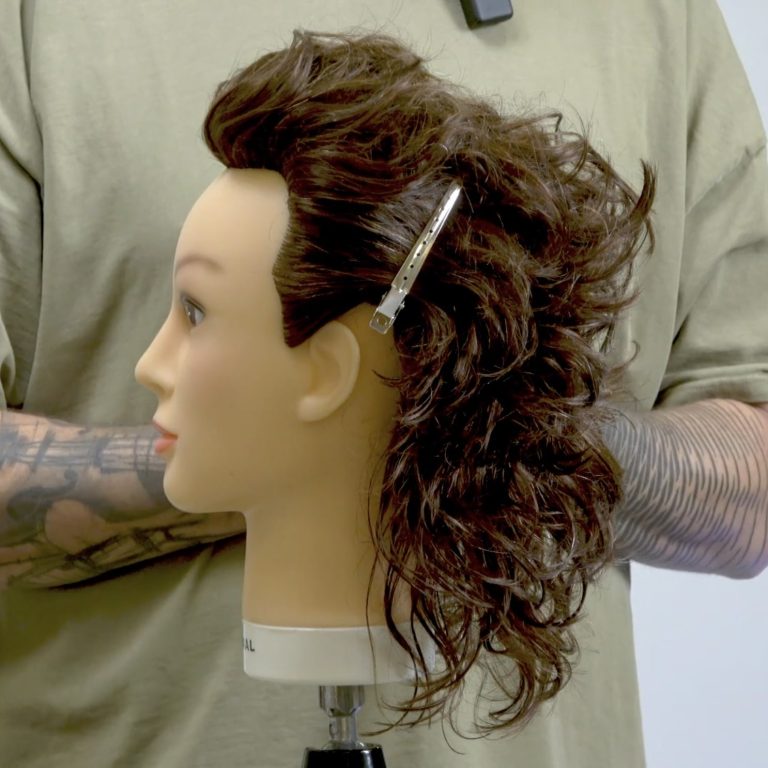
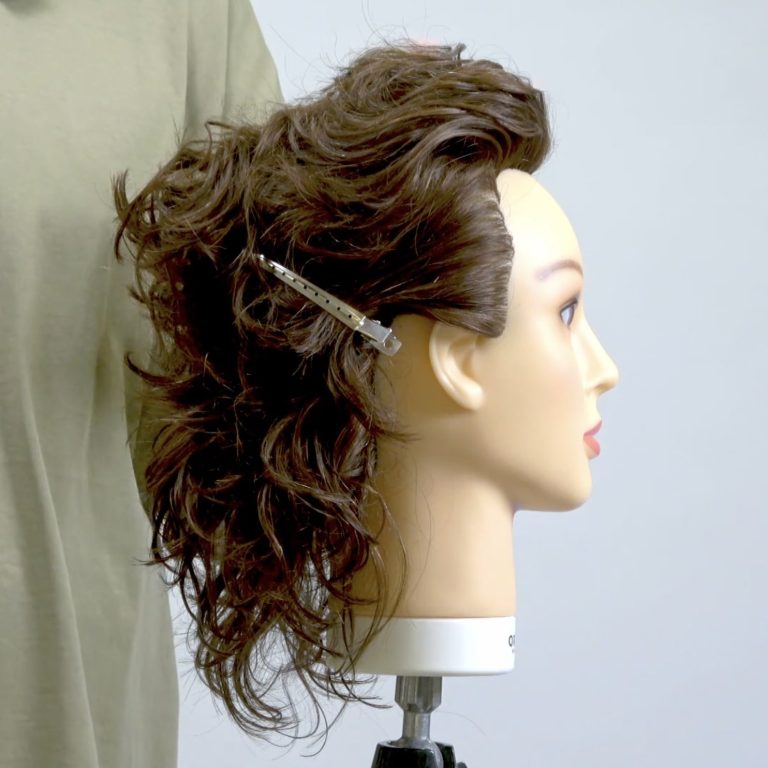
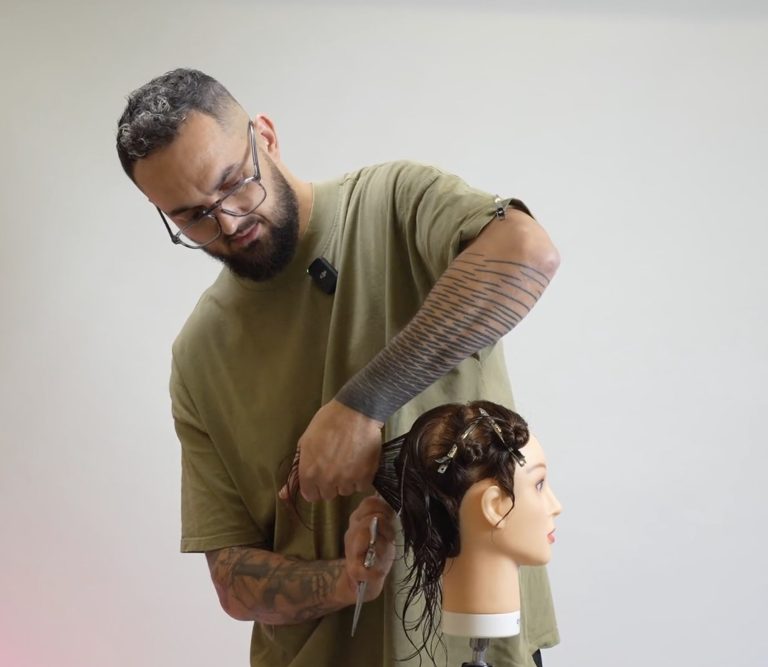
 What you'll learn
 What you'll learn
How to map the head by dividing the back section into four squares.
How to designate a bisector (diagonal) as the main line of work.
How to redirect beams using the "two-to-one" technique for a flat surface.
How to move a section of hair from the top of the head to the sides.
Why cutting along the diagonals reduces cutting time and is more efficient.
How does this style work on wavy and curly hair?
The square haircut using the separation technique is a classic men’s style for longer hair, based on an unconventional sectioning system. Instead of the standard approach across the entire back section, the course demonstrates how to mark four squares on the head and work along their diagonals (bisectors). The result: the same balanced shape, but achieved more quickly and without double-cutting the hair in the transition zone between the back and the side.
Jakub Ciężadlik guides you through the entire process step by step, from mapping the head and dividing it into four equal squares, through marking the central parting along the diagonal (bisector), to transferring the memory section from the back to the sides. The technique involves precisely redirecting successive sections to the previous ones (2 to 1, 3 to 2), which allows you to maintain a perfectly flat surface and create clean, technical corners in the hairstyle.
In this course, you'll learn:
- Mapping the head and dividing it into four squares as the foundation of the entire form
- How to draw a bisector—a central line dividing the diagonal, which becomes the main line of work at the back of the head
- The "two-to-one" and "three-to-two" band-folding technique for building a perfectly flat, square wall
- Transferring the section of hair from the top of the head to the sides to seamlessly blend the entire hairstyle without losing its shape
- Why does spending more time on precise separations reduce the final cutting time and eliminate errors?
- Systematic cross-checking on small panels – why checking the entire surface at once doesn't make sense
- Style your hair using a diffuser and a curling iron to bring out its natural waves and add volume and movement
After this course, you’ll start viewing the head as a geometric shape, and working with sections will become a deliberate tool for optimizing cutting time. You’ll be able to offer your clients with longer, even wavy hair, a balanced hairstyle that’s easy to style every day, built on a clean, technical foundation.
What's inside
Full access to the course
 What's inside

Another method for working with separations
"I wanted to try a slightly different approach to separations to show you a different method."

The concept of the head as a square box
"We can imagine the head as a box—a square box, so to speak."

Two-to-one redirect
"I will work in a square shape, where the redirection direction is a two-to-one memory section."

How to perform a cross-check correctly
"It's also a good idea to do the check cross in segments, otherwise it won't do you any good."

Section review - take a step back
"Sometimes it's better to take a half-step back so you don't run into problems with the shape later on."

Advantage of the technique: avoiding double cutting
"I'm not going to touch that hair, because I don't need to cut it. It's already been cut."

Verification - creating a corner of a square
"If I comb this hair, a horn should appear on us right at this angle."

Customizing the square to meet the client's needs
"You can actually work with this square in various ways. It's basically a starting point."
 Frequently Asked Questions