Straight haircut
 The result and the process

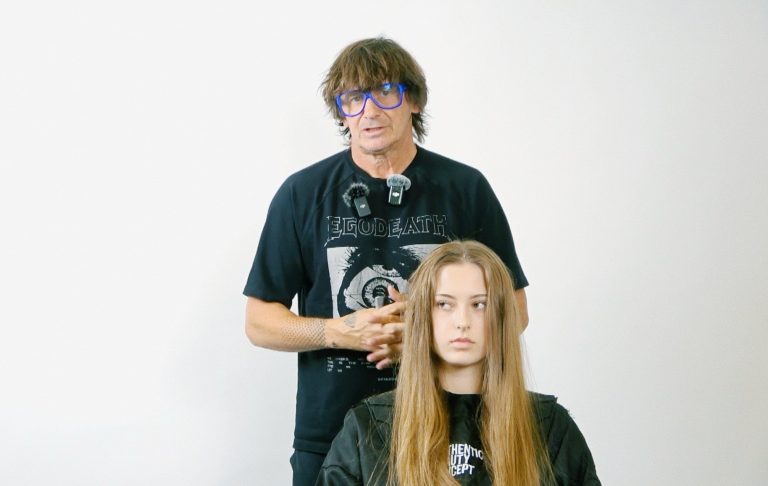
 What you'll learn
 What you'll learn
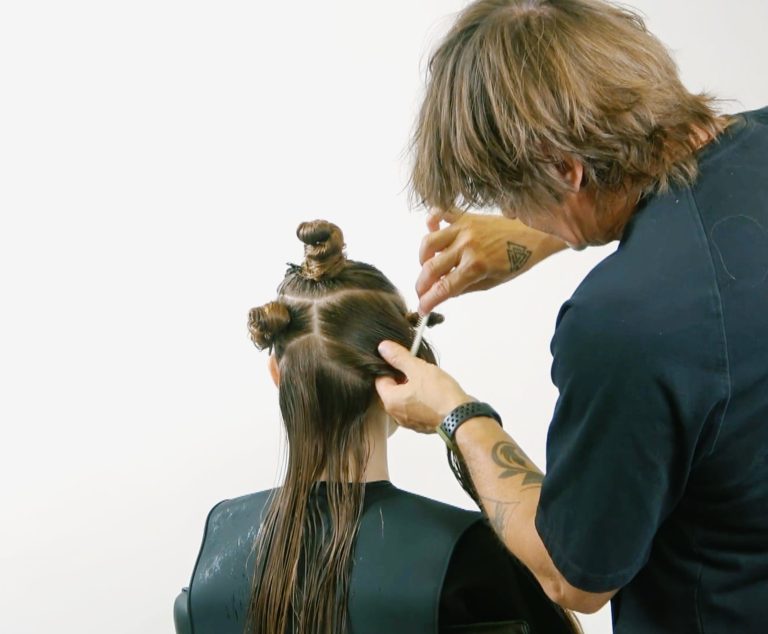
How to divide the head into five key sections for complete control.
How to use your body position and the stool to maintain perfect cutting symmetry.
How to create the first section as an unbroken strip of hair for the entire hairstyle.
Why should each subsequent gap be 2–3 mm longer?
How to control the cut line when cutting wet and refine it perfectly when cutting dry.
Why use scissors for this cut and avoid a razor?
A straight-line cut is a fundamental test of precision and symmetry that demonstrates the clarity of the sections and the stylist’s control. The course demonstrates how to create a perfectly even, heavy line on long, straight hair that looks healthy and well-groomed, without resorting to layering. It is a technique that transforms a seemingly simple cut into a deliberate process of building a clean, commercial style.
Kamil Cesarski guides you step by step through the entire process: from mapping the head into five key sections, to establishing the first section as an inviolable memory zone, all the way to controlling the wet cut and the final dry refinement of the lines. You’ll see how body position—including how you work on the barber’s stool—directly affects the cleanliness of the lines, and how minimal tension on the section is key to avoiding mistakes as the hair falls naturally.
In this course, you'll learn:
- A comprehensive five-section head mapping—crown, sides, and back—serves as the foundation for order and control during the haircut.
- Consciously adjust your body position and the chair so that you are always perfectly aligned with the strand being cut and can maintain symmetry.
- Establishing the first part as an unbreakable strip of hair that defines the entire length of the hairstyle.
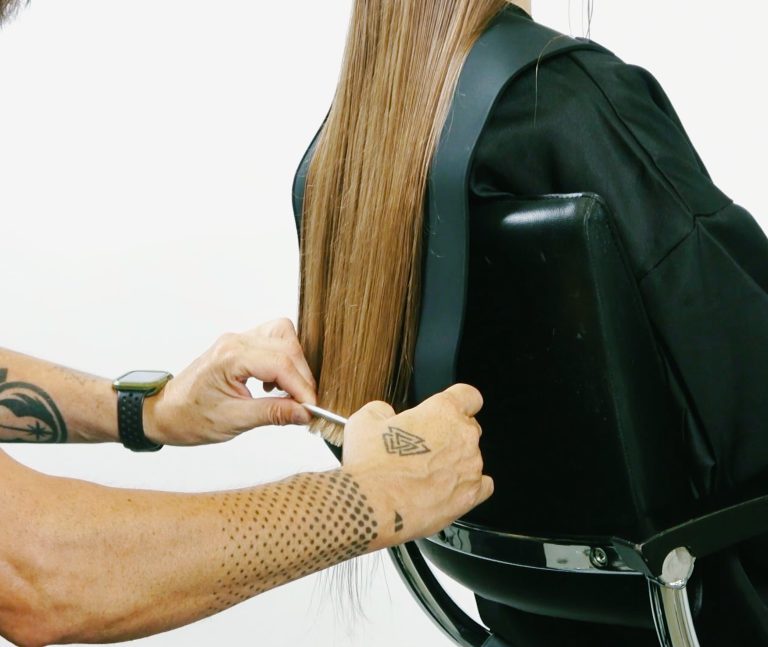
- The rule is to make each subsequent section 2–3 mm longer to create a perfectly straight line once dry, compensating for the hair’s natural lift.
- The "reverse scissor motion" technique, which prevents hair from being pushed and ensures a perfectly clean cut without any "jagged edges."
- Why cutting long hair with a clipper is a mistake, and how scissors protect the hair structure from splitting.
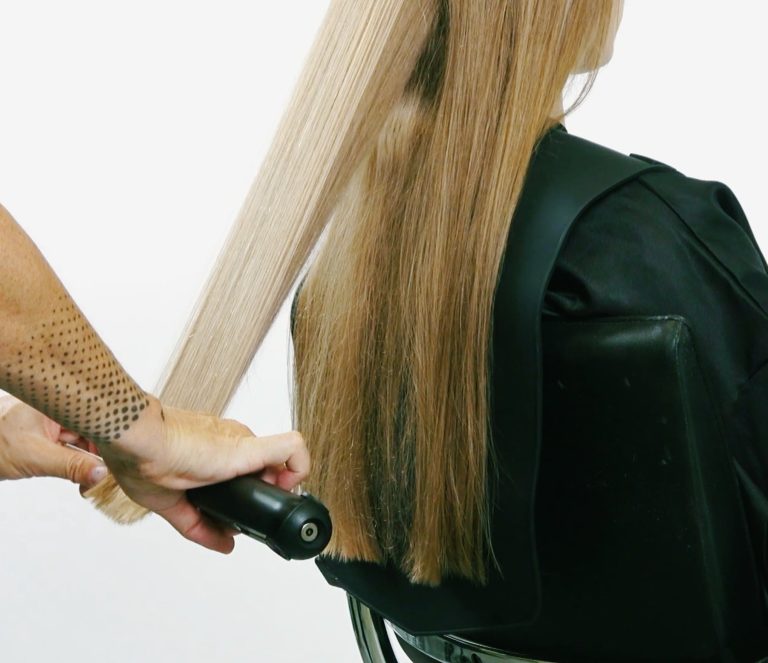
- Wet line inspection followed by final dry finishing to achieve a perfect, consistent result.
After this course, you’ll start to view the straight cut not as a simple service, but as a masterful display of control and precision. You’ll gain confidence in working with long hair and learn how to create a perfectly clean, defined line—the foundation of a healthy-looking and commercially successful hairstyle.
What's inside
Full access to the course
 What's inside

Decision not to shade
"I also really tried to convince her not to get her hair layered, because I think it looks beautiful."

The Crucial Importance of the First Separation
"This is our first separation; it is extremely important because it determines the overall lengths."

Movement on a stool in a straight line
"If we sit down and start on one side, we move in a straight line."

Why are scissors the best tool?
"Cutting with scissors is the best method and gives us the most control over what we're doing."

How to Create a Clear Technical Drawing
“Draw as if you were showing it to yourself, and make sure it makes sense to you.”

Air-drying before personalization
"Always try to let your hair dry naturally rather than styling it artificially."

The problem with dull scissors
"Remember that dull scissors will just pull the hair instead of cutting it."

Final inspection of the cutting line
"We tilt our head forward, and then the ends of the hair naturally come out from underneath, and we trim them."
 Frequently Asked Questions