Color wheel
 The result and the process


 What you'll learn
 What you'll learn
How does the color wheel work, and what are the relationships between the primary colors?
How to effectively neutralize unwanted tones, such as yellow in blonde hair, using purple.
Why do contrasting colors placed side by side enhance each other?
Where do warm undertones come from when lightening hair?
What is the difference between permanent, demipermanent, and semipermanent hair coloring?
How hair is structured and where natural and artificial pigments are located.
The color wheel is a fundamental tool in hair coloring that turns guesswork into a skilled craft. This course isn’t just dry theory—it’s a practical guide to the principles that govern every dye mixture and every neutralization. You’ll understand why blonde hair turns yellow, how to effectively neutralize brassy tones, and how to predict the final result instead of leaving it to chance.
Bartłomiej Lacz guides you step by step through the world of color theory, starting with the absolute basics—primary colors, secondary colors, and their relationships. He explains how the principles of color neutralization and enhancement directly translate to salon work: from neutralizing unwanted yellow tones in blonde hair to avoiding green undertones when darkening hair. The course combines universal knowledge of color with hair anatomy, showing where pigments are naturally located and how they interact with hair dye.
In this course, you'll learn:
- Primary, secondary, and complementary colors—how their interrelationships form the foundation of any successful color application and neutralization
- The principle of color enhancement – why cool highlights on a warm base make blonde hair look blue and the base look orange
- The natural pigments in hair—eumelanin and pheomelanin—and why hair always reveals warm undertones when lightened
- The differences between permanent, demi-permanent, and semi-permanent hair coloring – exactly where the pigment settles and why semi-permanent coloring acts like a magnet on a refrigerator
- Practical applications of color neutralization: purple for yellow, blue for copper, and green for red—when and how to use complementary colors
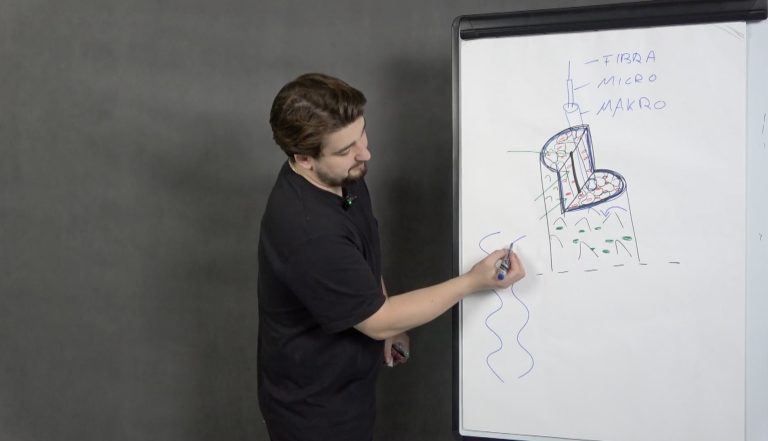
- The structure of the hair from a colorist’s perspective: the role of the cuticle, cortex, and medulla in the coloring process, and why porosity is crucial
After this course, you’ll stop viewing the color palette as a collection of predefined numbers and start seeing it as a system of interconnected elements. You’ll gain confidence in color balancing, consciously avoid color mishaps, and begin creating clean, predictable colors that stem from an understanding of fundamental principles rather than chance.
What's inside
Full access to the course
 What's inside

The color wheel—a basic tool
"One of the fundamental tools for color theory is the so-called color wheel."

The principle of neutralizing complementary colors
"Complementary colors will always cancel each other out."

Emphasizing colors through contrast
"Complementary colors placed side by side will highlight and enhance each other."

Where do hair undertones come from?
"But where do these undertones I'm talking about come from? Where do these tones actually come from in the hair?"

The challenge of lightening warm pigments
"We also have red, orange, and yellow, which aren't quite as easy to lighten."

The structure of a hair – a drawing on a flip chart
"To do that, I need to draw a strand of hair, and I'll draw it on the whiteboard."

Three categories of hair coloring
"Hair coloring can be divided into three categories: permanent, demipermanent, and semipermanent."

Pigment attraction mechanism
"Pigments are positively charged, while our hair is negatively charged."
 Frequently Asked Questions