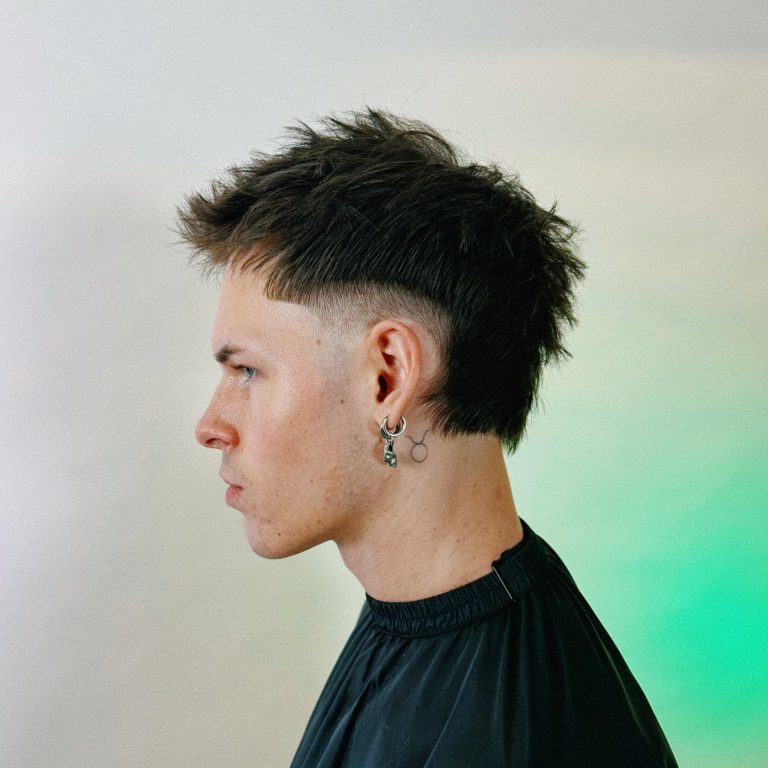
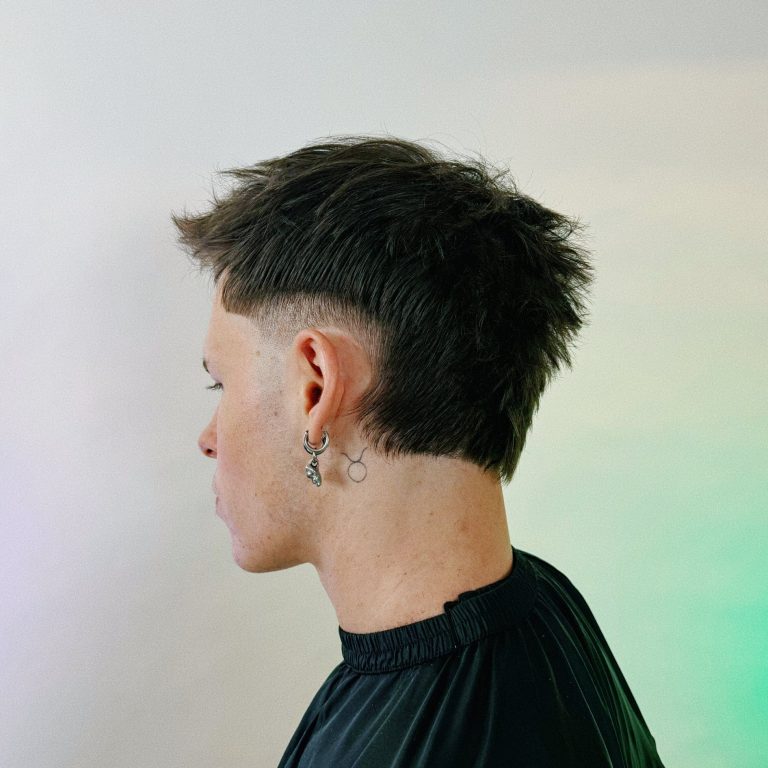
Messy taper
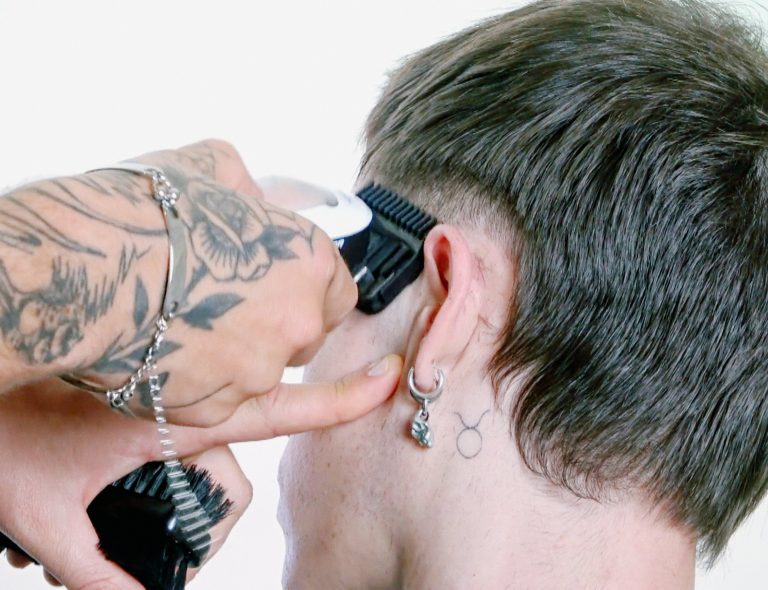
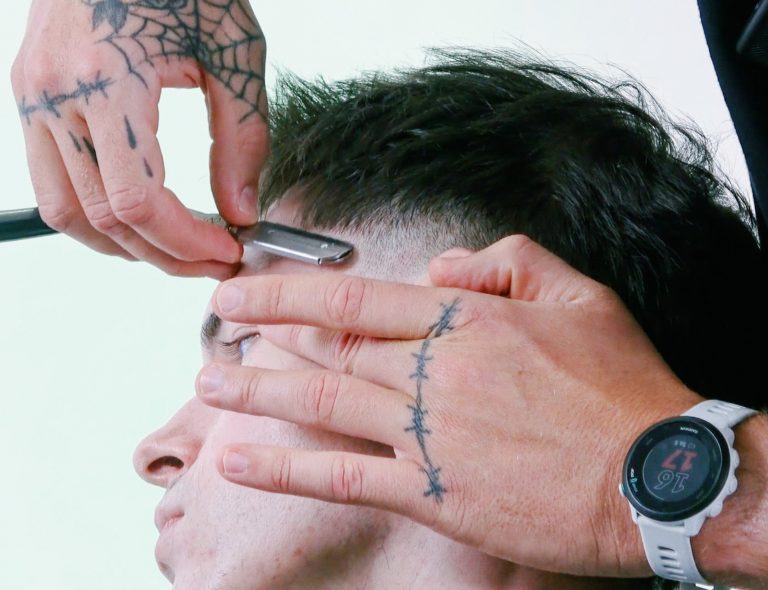
 The result and the process

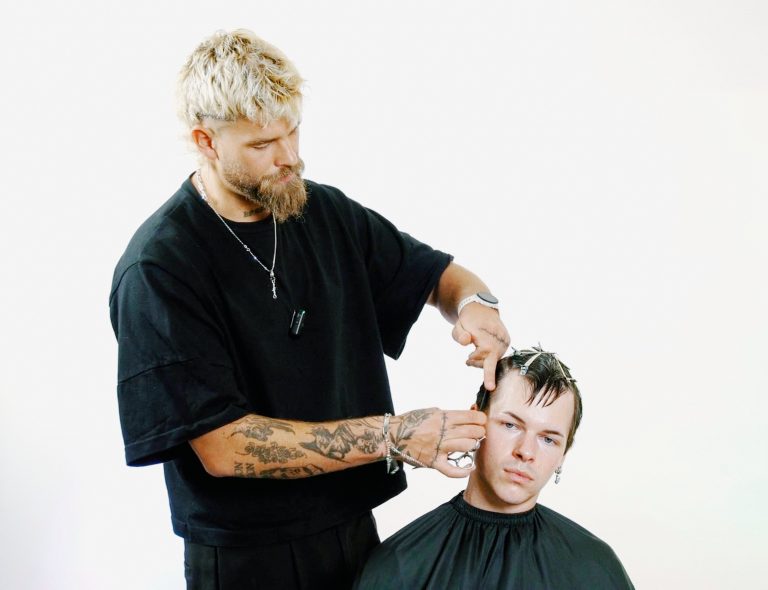
 What you'll learn
 What you'll learn
How to build an aggressive taper step by step, from a 6 mm ferrule to zero.
How to consciously divide the head into two areas: the top, and the sides and back.
How to add texture and volume to fine hair using deep layering.
How to work in diagonal sections around the head to perfectly match the color gradation to the head.
Why a tapper's center of gravity is crucial, and how not to exceed it.
How to create a deliberate contrast between the heavily textured top and the sides.
The messy taper is a creative men’s haircut built around three visual elements: an aggressive taper line, a disconnect between the sides and the top, and a heavily textured square on top with an elongated back in the style of a short mullet. The course demonstrates how to take fine, straight hair—which the client cannot style on their own—and create a hairstyle with dynamism, movement, and a distinct, punk-skate vibe for everyday wear.
Mateusz Banaszek guides you through the entire process step by step: from the consultation and assessment of the head’s internal structure, through the deliberate simplification of the division into two areas (top + side and back), all the way to selecting the length of the memory section at the top. Work on the side is done using diagonal sections in a circular pattern, where one section connects the temple to the back, with varying lift and finger angle within the same movement, creating a circular gradation perfectly tailored to the shape of the head.
In this course, you'll learn:
- A complete step-by-step guide to building a tapper: 6 mm → 4.5 mm → 3 mm → 1.5 mm, plus a shaver for a clean zero line
- Consciously dividing the head into two areas (top + side and back) and when simplification is a choice, not a shortcut
- The "Holy Grail" rule—the single centerline of the tapper that must not be crossed without reworking the effect from scratch
- Deep quilting 2 cm deep and triangular slits to create a framework that lifts fine, straight hair
- Working with the wrist while the elbow and shoulder are locked – why this is essential for a taper to be a taper, rather than a flawed fade
- Building the mountain as a separate panel—a square horizontally and a circle vertically to create mass and dynamism
- The complete finishing touch: use a heat diffuser, matte pomade, and your fingers to tousle the hair and lock in the texture from the cut
After completing this course, you’ll be able to consciously control the tapper’s center of gravity without having to redo it, use disconnection as a compositional tool, and turn deep texturing into a technical skill on fine, straight hair—the kind clients usually consider “unmanageable.”
What's inside
Full access to the course
 What's inside

Hairstyle idea - sharp taper
"I'm going to use a clipper to create a sharp, defined taper that really stands out."

Creating a light, airy feel at the back with a high lift
"It lets me keep my hair light while shortening the inner length. That's very important."

Cross-check - verification of the grading triangle
"A straight cut line, with a gentle triangle forming at the top—in other words, there's a gradient."

Shaving technique - diagonal stroke
"If I drive in horizontally, it'll come out square, but I want it to be semicircular."

A creative choice to omit the outline
"There won't be any outline on this side at all; there will only be an outline above the ear."

Preserving the center of gravity during shading
"We don't cross that line. It's sacred to us."

Deep quilting that forms a grid pattern
"Small triangles will, to put it simply, give your hair some structure."

Final adjustment in the natural position
"Remember to check that your head is facing straight ahead, in a natural position, just as it is when you walk around every day."
 Frequently Asked Questions