Middle Part
 The result and the process

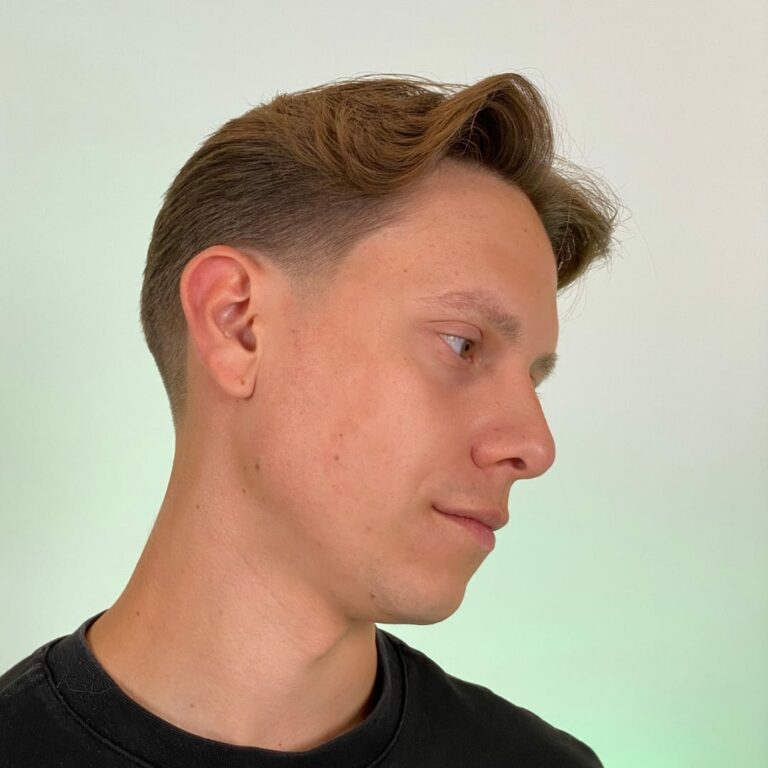
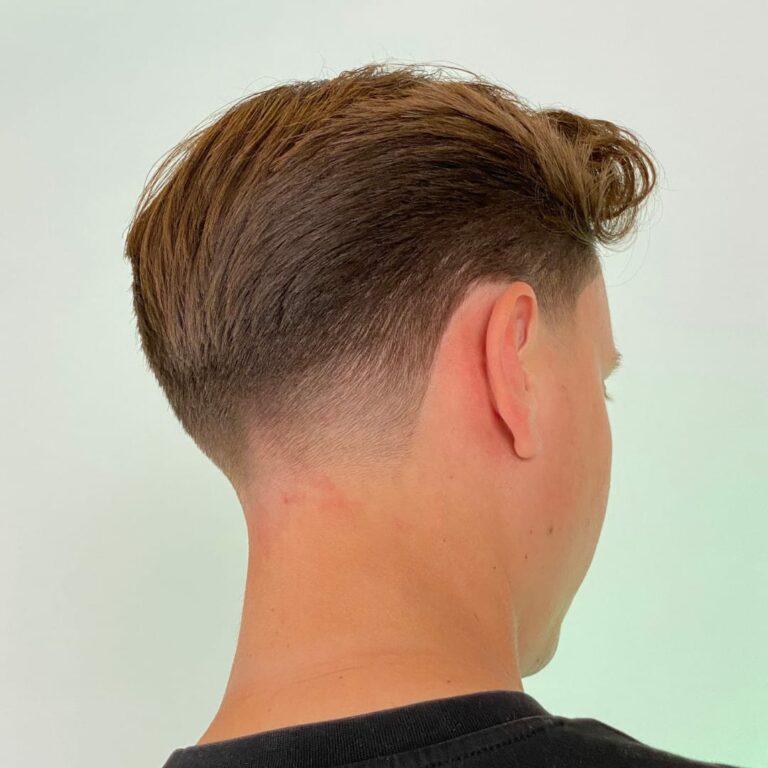
 What you'll learn
 What you'll learn
How to consciously build volume by layering above the head's outline.
How to create square layers at the top to add volume to your hairstyle.
How to prepare your hair with scissors for a smooth transition into a taper fade.
Why your posture is key to maintaining your hairstyle.
How to create a taper fade step by step, from a 13 mm attachment to a shaver.
How to create sections and a natural part while taking hair growth into account.
The Middle Part is a classic men’s haircut based on a tapered cut on the sides and back, combined with square layers on top for lightness and movement. This course demonstrates how to skillfully shape the hair with scissors to perfectly prepare it for a taper fade, creating a cohesive style that’s easy to style daily, featuring a natural center part.
Marek Krzyminski guides you step by step through the entire process: from dividing the head into rectangular sections (box sections) while taking the natural hair growth pattern into account, through building circular layers on the sides and back, to creating square layers on top. A key element of the course is learning how to consciously build and reduce hair volume—above the head’s contour for volume, and below for a seamless transition to subsequent clipper work.
In this course, you'll learn:
- The complete process of creating a taper fade from a 13 mm (No. 4) attachment to a shaver, as a logical complement to scissor work
- Carefully building volume above the head’s contour and reducing it below—the key to a smooth transition from scissors to clippers
- The technique of creating square layers at the top as a way to lighten the hairstyle and give it a sense of airiness in everyday styling
- The principle of body positioning – why your chest must always be perpendicular to the cutting line in order to fully control the shape
- Combining two different techniques (gradation and layering) into a single cohesive whole using diagonal separations
- The key moment of the haircut – how to prepare the area around the occipital bone so that the clipper perfectly follows the shape created by the scissors
After completing this course, you’ll start to view scissor work not as a separate step, but as a deliberate foundation for the taper fade. You’ll learn to control weight and volume based on the shape of the head, allowing you to create classic yet light and modern hairstyles that clients can easily style at home every day.
What's inside
Full access to the course
 What's inside

Accounting for wind in the sections
"I'll make the most of the breeze for this very purpose. Notice how the hair falls."

Building muscle mass above the head
"At this point, let me reiterate: we want to build more mass."

Proper posture when cutting hair
"Your chest should always be facing forward, that is, perpendicular to the cutting line we are creating."

Selecting the layering technique at the top
"I'll use a layering technique to lighten up the whole style a bit, so the hair will fall smoothly."

Two factors that determine shape
"Two factors—the cutting line and the rotational movement—will determine the shapes in both planes."

Using a Chinese knife on bangs
"I want these bangs to be fairly heavy so that they kind of frame my face."

The two-finger rule for tapering
"The minimum distance between the weight line and the zero line is at least two fingers."

Smoothing the gradation curve
"I can see that it's too thick here. I'll run the comb through the hair parallel to the strands to loosen it up."
 Frequently Asked Questions