Taper Long Trim
 The result and the process
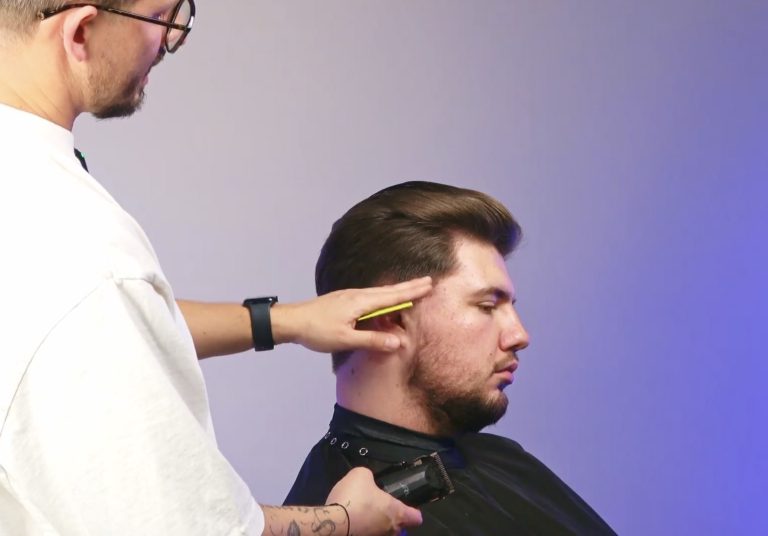
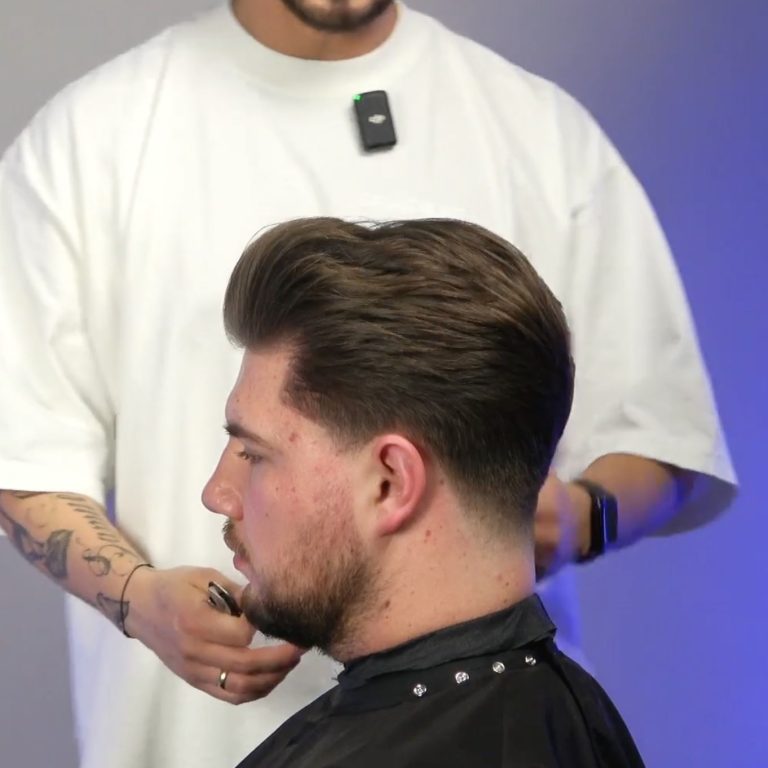
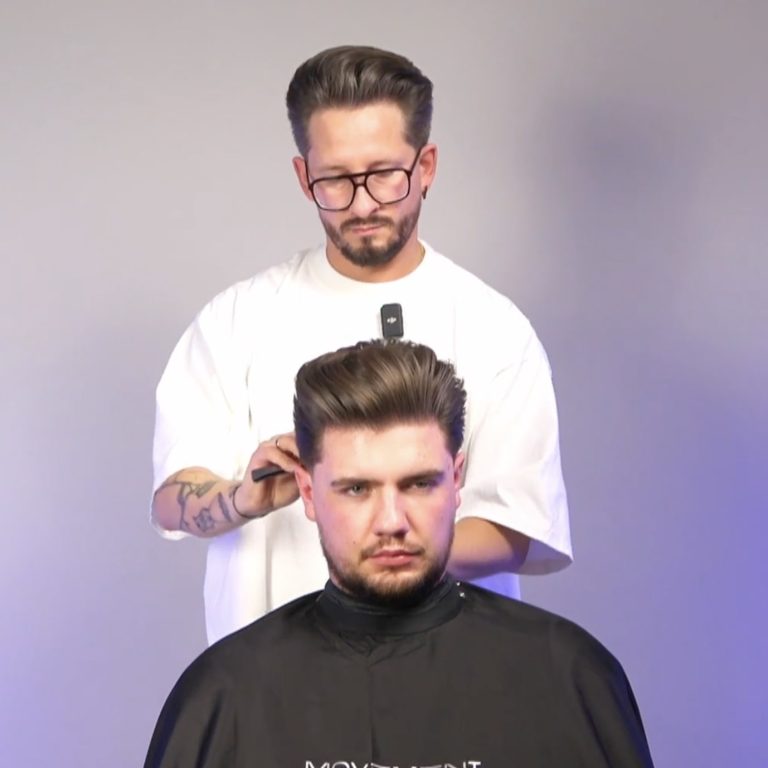
 What you'll learn
 What you'll learn
How to create a square section (box) at the top for versatile styling.
How to create a triangular shape at the back to visually fill out a flat nape.
How to work on diagonal splits to control the weight on the sides.
How to create a precise taper using the "inward technique" starting from the shortest length.
How to seamlessly combine scissor work with clipper work into a cohesive whole.
Why does a symmetrical mountain shape give customers more styling options?
The taper long trim is a versatile, practical men’s haircut that combines a longer, relaxed top with a precise, low-set taper. This course demonstrates how to create a cohesive shape on fine but dense hair, offering a variety of styling options—from a loose slicked-back look, through a middle part, to a controlled pompadour. It’s a versatile cut that meets the needs of clients seeking a modern yet easy-to-style everyday hairstyle.
Miłosz Mikołajczak guides you through the entire process, emphasizing the conscious shaping of the hair with scissors before the clippers even touch it. You’ll see how a thoughtful division of the head into panels and working with diagonal sections create the foundation, with the taper serving merely as the finishing touch. The course teaches you to think of a hairstyle as a whole, where scissor and clipper work complement each other, rather than merely existing side by side.
In this course, you'll learn:
- Creating a square section at the top of the head (box cut) – why this style offers the client more styling options than the classic horseshoe cut
- Creating a triangular shape at the back of the head to visually fill out a flat nape and add volume to the hairstyle in a key area
- Work on diagonal sections and the layering technique, which allows you to control the volume on the sides and blend them seamlessly into the back
- The complete process of creating a taper using the "inward technique"—starting from the shortest length and gradually working up to longer lengths
- Using thinning shears not for texturizing, but for softening the transition between the work done with scissors and the clippers
- A step-by-step guide to the final styling—from pre-styling, to building volume with a brush and blow dryer, to setting the look with a lightweight product for natural movement
After this course, you’ll begin to approach long trim haircuts in a more methodical way, consciously tailoring the shape to the client’s head shape. You’ll learn to create hairstyles that not only look great right after leaving the salon, but that the client can style themselves in many different ways at home—which guarantees they’ll come back for more.
What's inside
Full access to the course
 What's inside

Adjusting the section to the shape of the hairstyle
"I divide it into a horseshoe shape when I draw circles. I divide our delta into a triangle when I draw a triangle."

Weight control via diagonal divisions
"Diagonal division is great because it lets us decide where to add weights."

Correction of a flat occiput using a triangle
"The way to fill in that indentation with hair is to create a triangular shape."

A common mistake when cutting a quiff
"A common mistake is cutting the quiff into a triangle. That makes it a mohawk, not a quiff."

Why It's Important to Style Your Client Well
"The customer should leave looking so stylish that they feel special and realize they can't achieve that look at home."

Safety precautions for the entry technique
"When using an incoming technique, I always try to start with an open edge to protect myself from making a mistake."

Warning about an artificial contour line
"Once you create that line artificially, it will only look good for two or three days."

Advantages of the clipper-over-comb technique
"Working with a comb is old-school, but we can do some things better than with comb attachments."
 Frequently Asked Questions