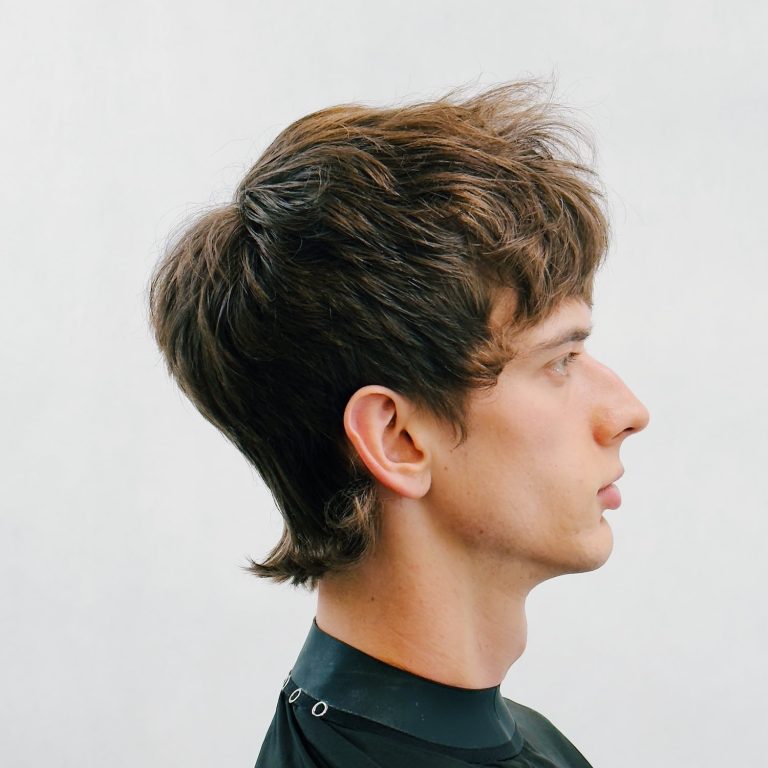
Mod Cut with Chinese knife
 The result and the process


 What you'll learn
 What you'll learn
How to trim the entire rear panel in one go using a redirect.
How to use two cutting techniques: gliding and cutting into the strand.
How to use pivot separations (“mandarin”) to create a rounded shape.
How to create a choppy base for a hairstyle using the nape-line technique.
How to choose a haircut for an oblong face that balances its proportions.
How to complete a full haircut at a salon in about 35 minutes.
The Mod Cut with a Chinese razor is a modern, textured men’s haircut for medium-length hair that owes its entire form and versatility to a single tool—the Chinese razor. This course shows you how to create a dynamic hairstyle in 35 minutes that intentionally balances the proportions of a client’s long face and offers him plenty of everyday styling options.
Miłosz Mikołajczak guides you through the entire process, starting with a consultation and a haircut plan tailored to the anatomy of an oblong face. Step by step, he demonstrates how to combine the nape line technique with flat layers on the sides and pivot sections at the top. You’ll see his signature method of cutting the entire back section in a single motion with a redirect, which builds shape and saves time in the salon.
In this course, you'll learn:
- Cutting the entire back panel in a single stroke with a 90-degree turn—a technique that creates a triangular shape and an internal texture
- Two basic cutting techniques: gliding along the surface of the hair for a light look, and cutting into the strand to reduce volume
- Strategic sectioning, including pivot cuts (“mandarin”) for even weight distribution and a rounded shape
- The technique of cutting the back of the neck at a 0-degree angle, which adds volume and creates a solid, yet textured foundation for the hairstyle
- Deliberately styling an asymmetrical fringe and sweeping hair across the forehead to visually narrow the client’s long face
- How to accurately measure the length on the other side of your head using a comb as a ruler—without guessing
- A complete styling routine using a diffuser and clips to secure the bangs, highlighting the natural curl and texture
After this course, the Chinese razor will become your tool for quickly creating sculpted, textured hairstyles. You’ll learn to control disconnections and layers to consciously sculpt a shape tailored to the client’s anatomy, and your portfolio will be enriched with a modern cut that the client can style in many ways—from a polished look to controlled dishevelment.
What's inside
Full access to the course
 What's inside

The purpose of the haircut: to slim the face
"We're going to go in that direction to make it a little more compact, which means sweeping his hair over his forehead."

Priority: front view
"Even if the back ends up being flat, the front is supposed to be really good."

Line technique - head tilt
"Tilting my head forward will help me achieve that zero-degree angle."

Cutting the entire panel in a single motion
"Without moving this hand, I'll stab myself with a Chinese knife and cut off everything I have here in one swift motion."

The key to the flat layer on the sides
"The key to my success will be making sure my hair is pulled back parallel to the floor."

The principle of texturing with a Chinese knife
"You have to make sure not to cut past the midpoint of the hair with the Chinese scissors."

Working with the direction of hair growth
"We shouldn't work against the grain; in other words, at this point, we need to read the grain."

Controlling your bangs when styling your hair
"I don't want it to have too much volume. I want these bangs to lie nicely on our client's forehead."
 Frequently Asked Questions