Volume and shape modeling
 The result and the process
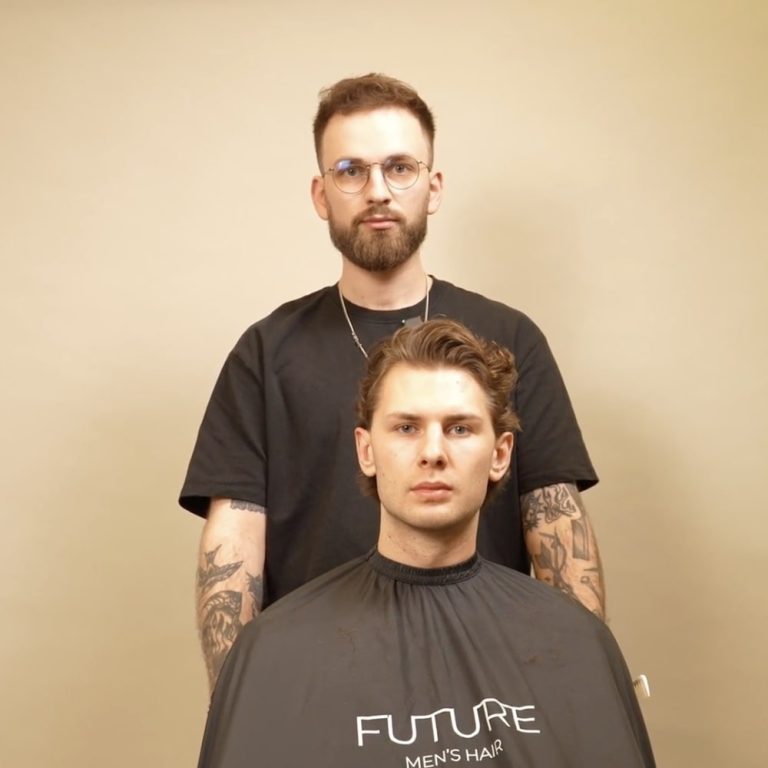
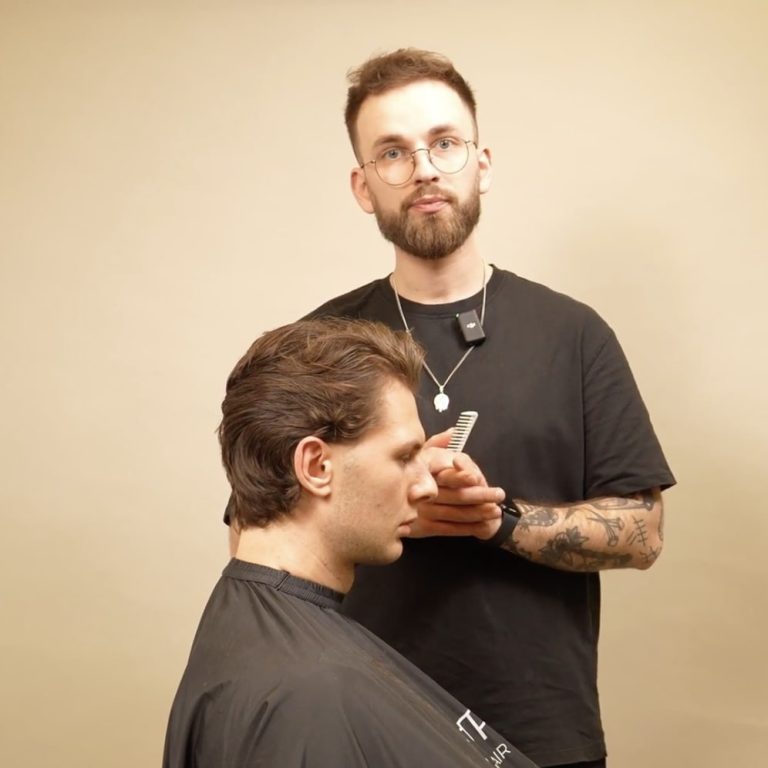
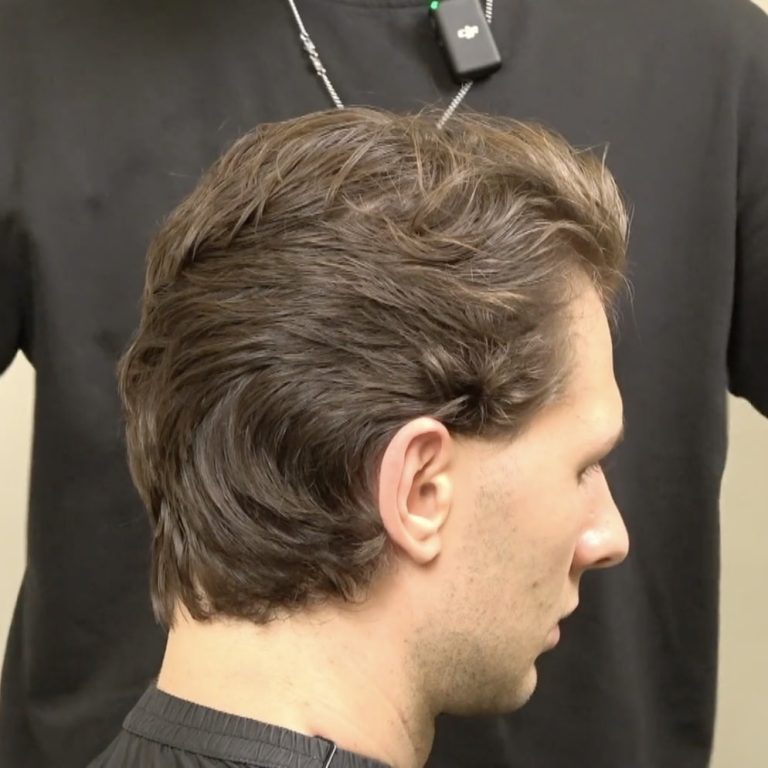
 What you'll learn
 What you'll learn
How to combine square and round shapes to create a slimming effect.
How to accurately divide a head into sections using bisectors.
How to use a Chinese knife to create a soft, jagged neckline.
How to work with your natural hair texture and waves to make styling easier.
How to create a square shape on the sides while leaving the hair longer at the temples.
How to style your hair with a diffuser to highlight its natural texture.
Volume and shape sculpting is a cutting technique for men’s medium-length hair that demonstrates how to intentionally reduce excess bulk and weight without shortening the entire hairstyle. The course addresses a common issue faced by clients with thick hair that loses its shape and is difficult to style on a daily basis. The key here is to precisely switch between square and round shapes across different planes, allowing you to sculpt the form and control where volume is added and where it is removed.
Marek Krzyminski guides you through the entire process, starting with a consultation and analysis of the natural hair growth pattern, including the cowlicks that dictate the direction of the style. Step by step, he shows how to plan the cut by consciously dividing the head into sections based on its curves and bisectors. You’ll see how to combine a vertically square shape (volume reduction) with a horizontally round shape (no volume build-up) at the back of the head, and then transition to a square shape on the sides to intentionally leave longer length at the temples.
In this course, you'll learn:
- Using a feather razor to create a soft, jagged outline on the nape of the neck
- A combination of a vertically square shape and a horizontally round shape to reduce the mass on the occipital bone while reflecting the curvature of the head
- Division of the head based on the angle bisectors between planes – how to precisely define the working zones
- Creating a square shape at the sides to maintain length at the temples—key to visually balancing the face and allowing the hair to be swept behind the ear
- Using a triangular shape at the top to intentionally lengthen the bangs and make it easier to style them back
- The Six Components of Kinetics in Practice – How Body Position, Rotational Movement, and Projection Angle Affect the Final Shape
- A complete styling routine using a matte paste as a pre-styler and a diffuser to enhance the hair’s natural texture without smoothing it out
After this course, you’ll stop struggling with excess volume and start managing it intentionally. You’ll learn to use various geometric shapes as tools for sculpting form, allowing you to transform unruly, thick hair into light and dynamic hairstyles that clients can easily recreate at home. This is a haircut where scissors and a Chinese razor replace the clippers, and an understanding of head anatomy becomes the key to a perfect, natural shape.
What's inside
Full access to the course
 What's inside

Diagnosis: Reduction of excess volume
"The first issue is the excessive volume of hair in this section—there's definitely too much of it."

Deliberately creating volume through sections
"This division allows me to consciously add or remove volume on the head."

Three Hairdressing Techniques and Their Role
"The technique that removes mass is precisely the technique of layering, or shading."

Body Position and Creating a Round Shape
"Since I'm creating a circular shape, I'm standing slightly to the right."

Key Concept: Kinetics in Shearing
"All of this is exactly what we in the hairdressing industry call kinetics—that is, movement."

A square on the sides for temporal contouring
"I want the hair at the temples to be slightly longer than the rest."

Adaptation of the plan: Triangle on the fringe
"I'll cut this section into a triangular shape to lengthen the bangs."

Critical error during product application
"A big mistake is that hairdressers apply the product to wet hair only superficially."
 Frequently Asked Questions