Dynamic Shag-Mullet
 The result and the process
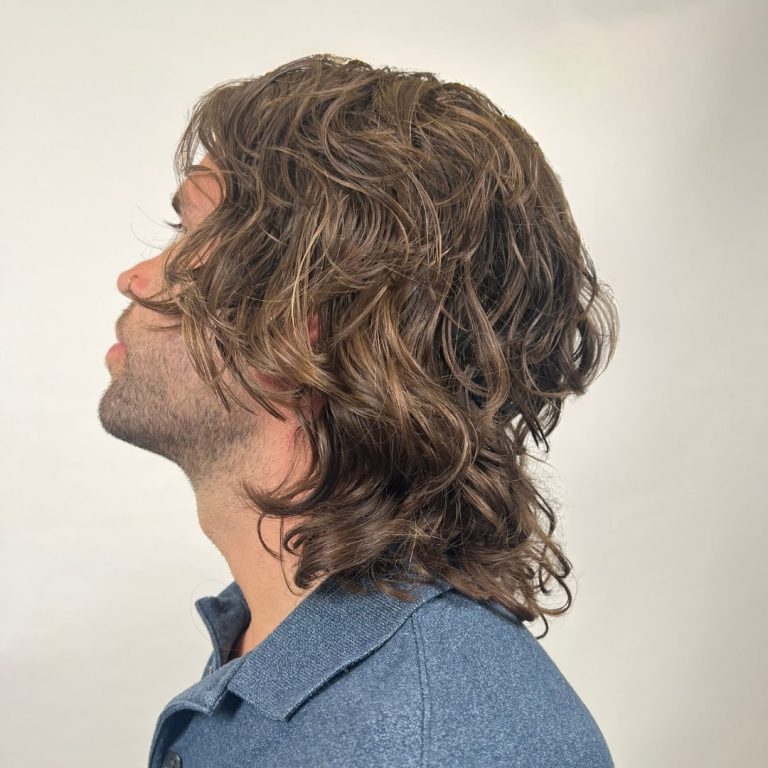
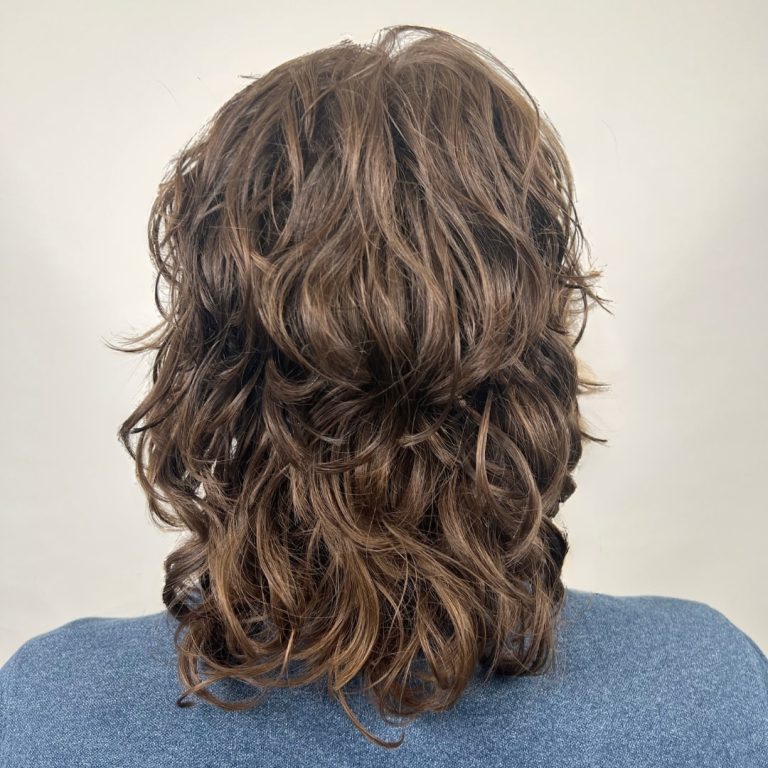
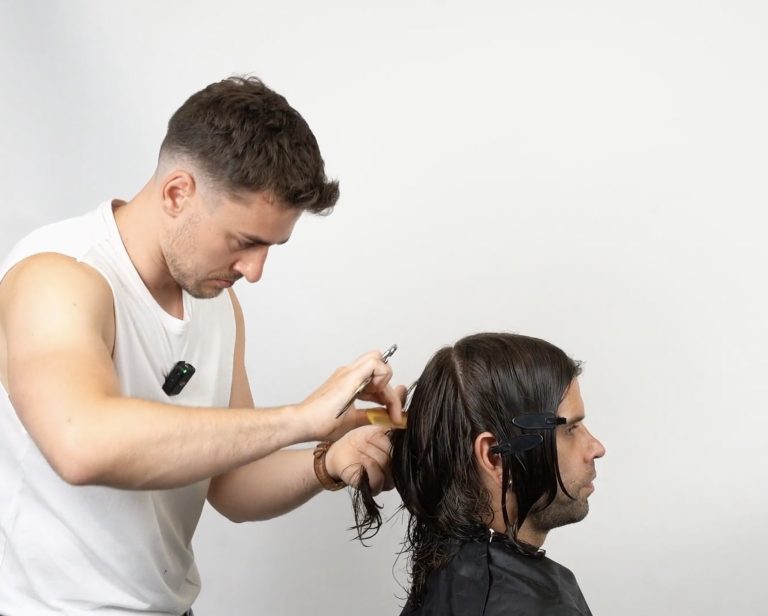
 What you'll learn
 What you'll learn
How to work in a circular motion on the back of the head to create a square shape and a light, airy look.
How to use an irregular, zigzag layout to seamlessly blend zones.
When to adjust the square to accommodate anatomical recesses in order to maintain control.
How to create a rounded shape at the top to reduce the volume of your hair.
How to create softness at the nape while maintaining length with a high volume.
How to style your hair using hair clips to highlight its shape.
The Dynamic Shag-Mullet is a modern men’s haircut for longer hair that combines the lightness of a shag, the character of a mullet, and layers inspired by the wolf cut. This course demonstrates how to transform thick, heavy, and often shapeless hair into a style full of movement, texture, and dynamism that accentuates natural curl and is practical for everyday wear. This cut is built on a deliberate approach to geometry, where every section and angle serves a specific purpose—from reducing bulk to building volume in key areas.
Piotr Adaszkiewicz guides you through the entire process step by step, starting with the precise division of the head into zones using the bisector. The work begins at the nape of the neck, where a square shape is built using a rotational movement from 90 to 120 degrees to create lightness without losing control. The course then demonstrates how to work with the nape area, maintaining length while adding softness through high projection, and how to create a rounded shape at the crown that reduces bulk and highlights the hair’s natural texture.
In this course, you'll learn:
- Rotational work on the occipital region in a square – how to transition from 90° to 120° to achieve lightness and movement
- An irregular, zigzag part between the back of the head and the nape of the neck as a way to create a smooth, natural transition
- The square correction rule for anatomical recesses – when to pull the last strand to separation #2 instead of #3 to avoid rounding the shape
- The difference between how the right and left hemispheres work – why we pull in on one side of the band and push out on the other to maintain perfect balance
- The 140° neck-cutting technique – how to soften the hair and create a "frame" that supports volume at the back of the head without shortening the length
- Creating a rounded shape on top and the sides (180° to 90°) using a layering cut for maximum volume reduction and texturization
- A complete styling routine using clips to control volume—how to flatten the sides and lift the back of the head while blow-drying with a diffuser
After completing this course, you’ll begin to consciously use geometry not as a rigid formula, but as a tool for sculpting shape in long hair. You’ll learn to control mass and volume, creating light, dynamic hairstyles that highlight the client’s individual features and natural hair texture. This is the perfect resource for hairstylists and barbers who want to expand their repertoire with modern, commercial men’s haircuts that go beyond classic, short styles.
What's inside
Full access to the course
 What's inside

Haircut plan for the back of the head
"We'll start with the back of the head, which will be cut at a ninety-degree angle."

Calculating separations to maintain balance
"If you make one more separation on a given page, it could throw off the balance."

Change in the direction of activity in the left hemisphere
"Now I'm changing this setting and will boost the bands—that is, I'm boosting the two bands to level one."

Choosing the right tool for your hair type
"Let’s remember that we also choose the right tool based on hair type."

Introduction to the undercut
"This allows us to shorten the length while simultaneously reducing the amount of hair at the ends."

Body position in the left hemisphere
"The right hemisphere is behind the client, while the left hemisphere is often simply in front of the client."

Connecting the side panels to the back
"I'd like to show you how to join the side panels to the back panel."

Styling with hair clips
"It's become very trendy to hang your hair to dry using special clips that are supposed to give you more control."
 Frequently Asked Questions