Permanent wave
 The result and the process
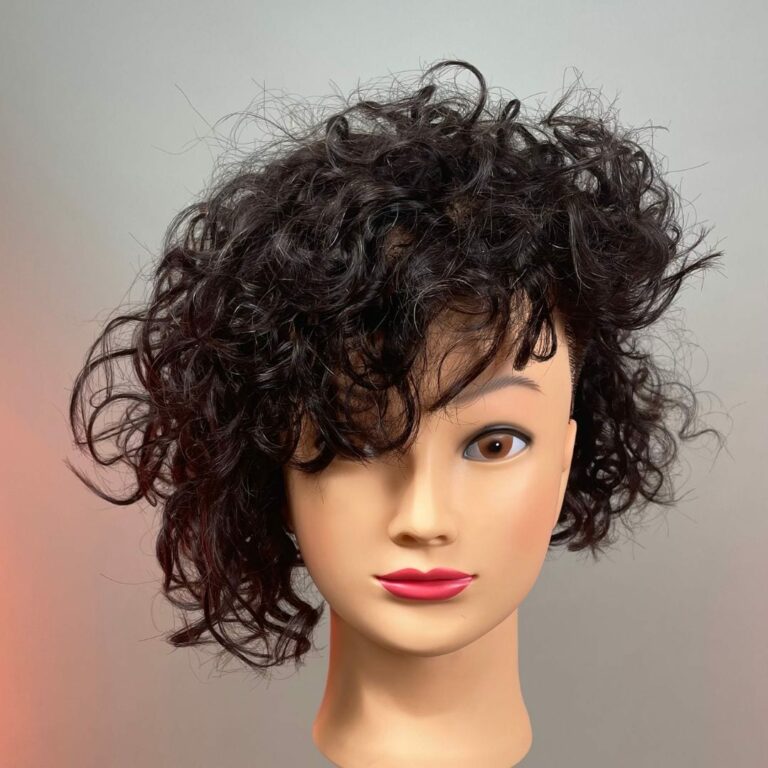
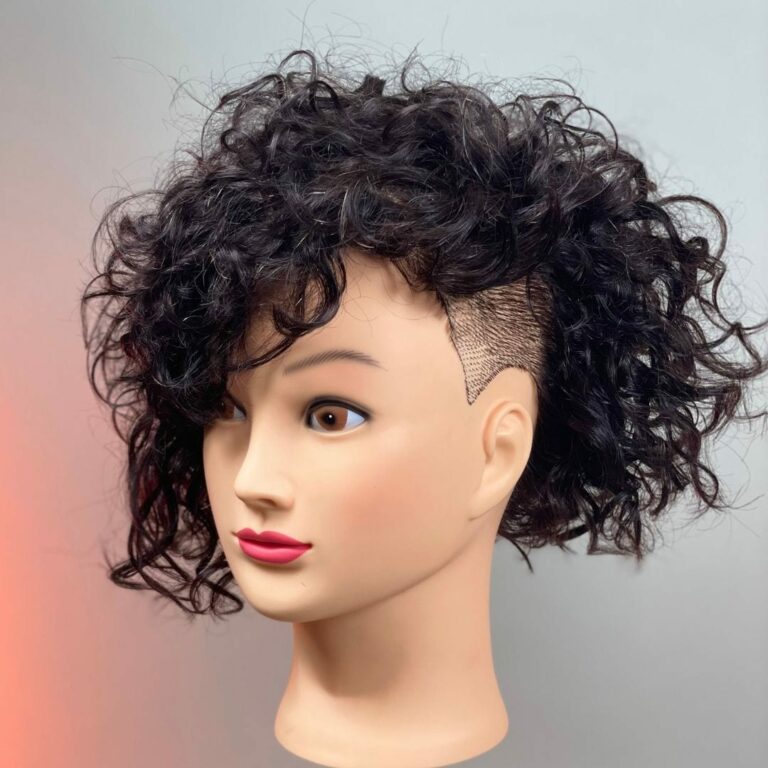
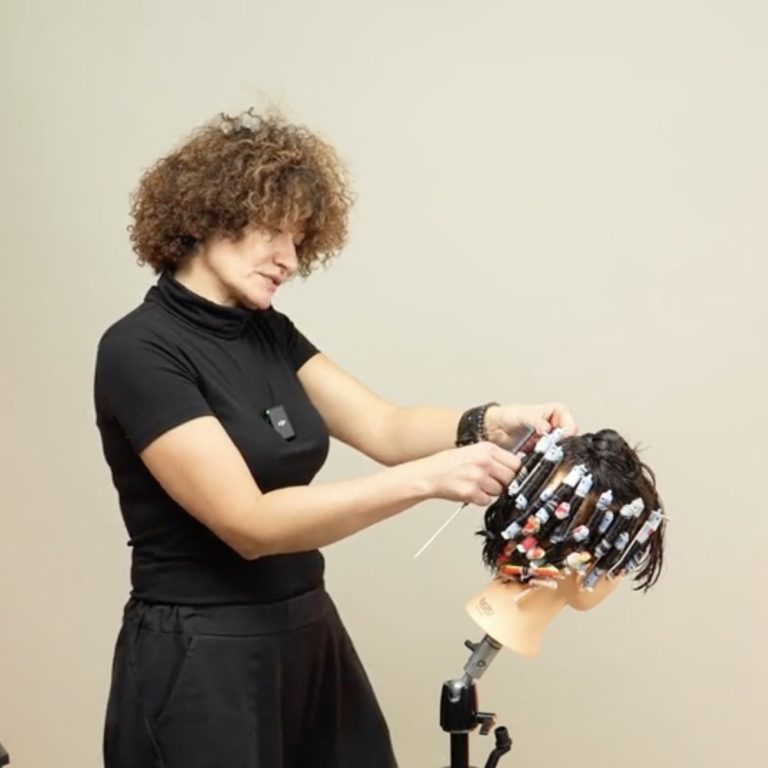
 What you'll learn
 What you'll learn
How does the chemistry of a perm work, and what role do disulfide bonds play?
How to properly assess your hair and identify any contraindications for the procedure.
How to choose and combine rollers to creatively build volume and movement.
How to properly perform the key steps: compression, liquid application, and neutralization.
Why you shouldn't be afraid to work on colored hair, and how the pigment behaves.
How to advise a client on proper hair care after a perm.
"The Basics of Perms " is a course that demystifies the chemistry and technique behind one of the most transformative salon treatments. This isn’t a throwback to the tight curls of the 1980s, but a modern tool for building volume, adding texture, and setting the shape of hairstyles for clients with straight, hard-to-style hair. The course demonstrates how to work with chemicals effectively to achieve a natural, dynamic curl that complements the haircut’s lines rather than overpowering them.
Aneta Dąbrowska guides you through the entire process step by step, starting with the basics—hair chemistry and the role of disulfide bonds. Using a model with a modern, asymmetrical cut, she demonstrates how a hair assessment (its thickness, porosity, and coloring history) dictates the choice of product and technique. You’ll see how different directions and thicknesses of rollers create volume and movement exactly where the haircut’s shape requires it, transforming a flat hairstyle into a composition full of life and energy.
In this course, you'll learn:
- Chemistry from the Ground Up – The Role of Disulfide Bonds, Amino Acids, and Lipids in the Perming Process, and Why Understanding Them Is Key to Predictable Results
- A comprehensive pre-treatment hair assessment – how to evaluate dyed, bleached, and natural hair, and when to refuse service (e.g., after a keratin straightening treatment)
- Creative curling techniques – how to mix sizes and directions (including the herringbone technique) to achieve a natural, dynamic curl tailored to a specific haircut
- The key role of the rinse – why rinsing the hair with warm water for 10 minutes before neutralization is a critical step for the safety and quality of the curl
- Two-step hydrogen peroxide neutralization—applied while the rollers are in place and again after they are removed to fully set the new hair structure
- Post-treatment care instructions – why clients shouldn’t wash their hair for 48 hours and what products to use to keep curls bouncy and healthy
- Final styling on very wet hair using a diffuser – how to maximize curl definition without frizz and show the client the actual results of the treatment
After this course, you’ll stop viewing perms as a risky and outdated treatment and start using them as a creative tool for permanently changing hair texture. You’ll learn to consciously control the chemical process and choose the right wrapping techniques to give your clients hairstyles full of volume and movement that practically style themselves.
What's inside
Full access to the course
 What's inside

The chemical basis of the treatment
"Hair is made up of chains of amino acids that are linked by disulfide bonds."

Watch out for heavy metals in your hair
"If a girl with green hair comes in, we don't perform the treatment on that kind of hair."

Key point: uniform belt tension
"The hair must be kept taut at all times. Everything must be combed out evenly."

Blending rollers for a natural look
"We don't curl all our hair using rollers of the same size. That's just not an option."

Does the permanent dye fade?
"After applying the fixative, everything returns to normal, and the pigments re-bond to the hair."

Two-step application of the neutralizer
"Apply the product to the rollers twice; after five minutes, remove the rollers and apply more product."

Lasting after a keratin straightening treatment
"I wouldn't get a perm after a keratin straightening treatment."

The Right Way to Dry Curly Hair
"Your hair must be very wet, dripping with water, before you blow-dry it. Do not rub it with a towel."
 Frequently Asked Questions