Queens Pompadour
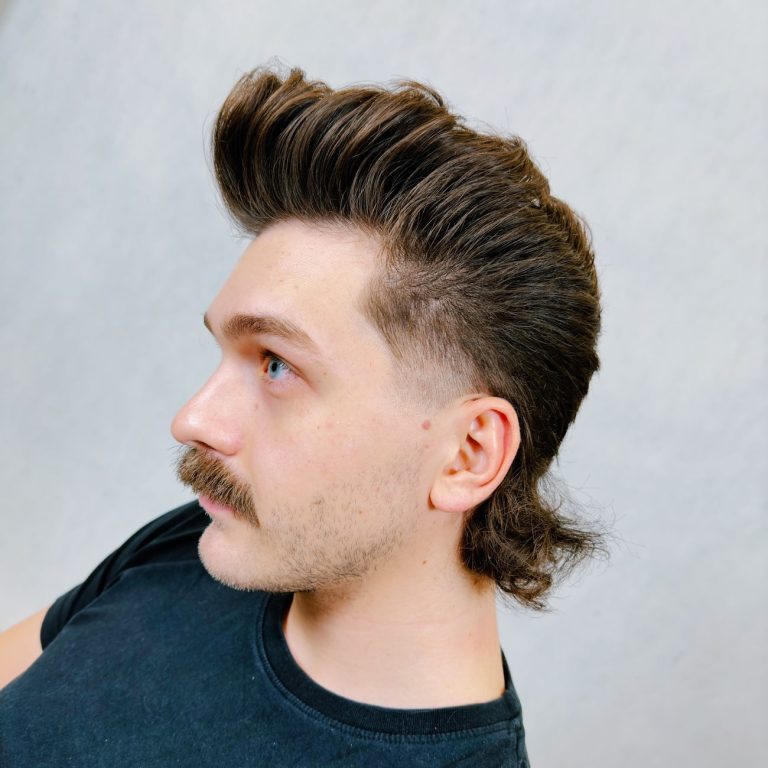
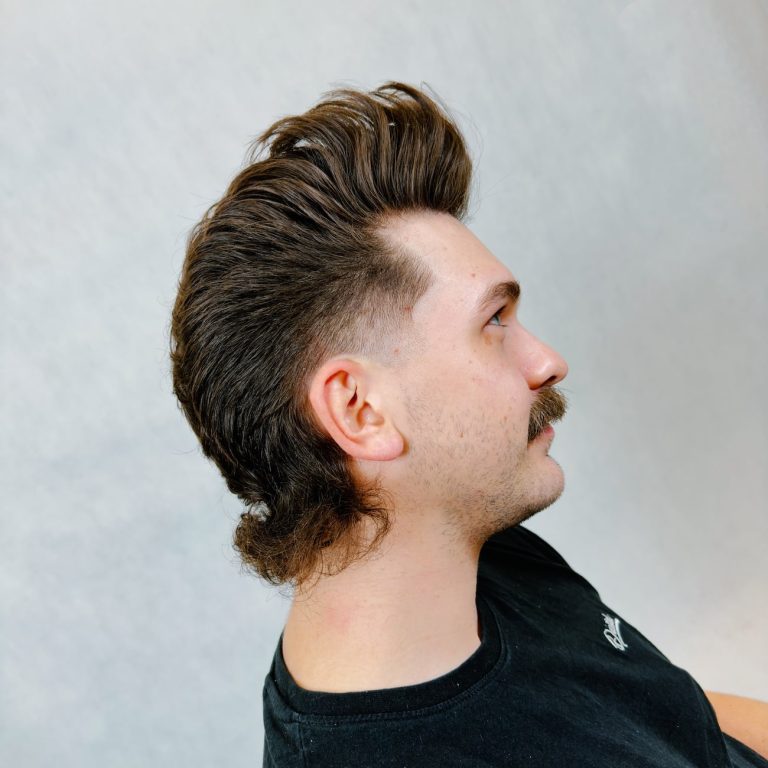
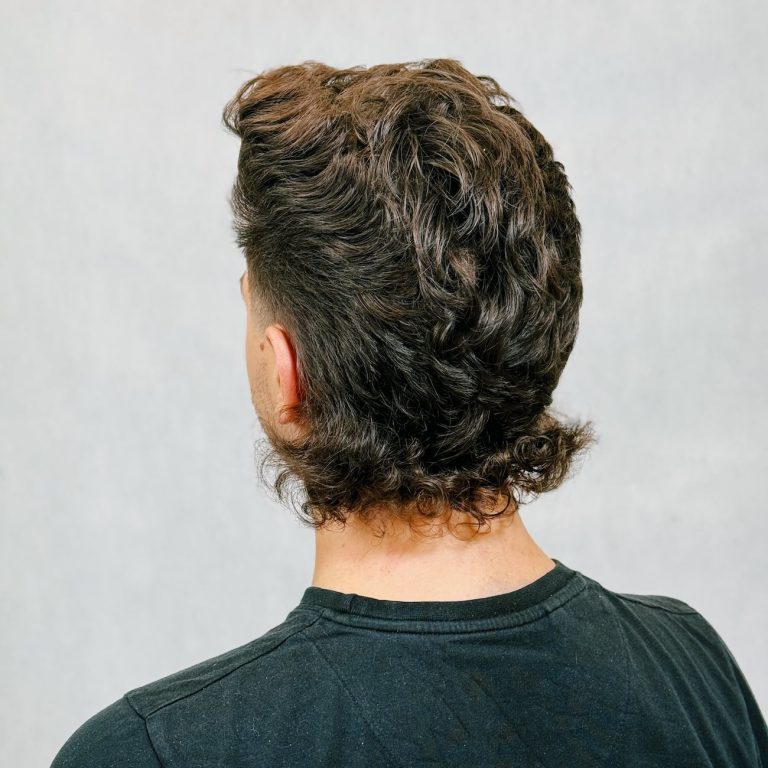
 The result and the process
 What you'll learn
 What you'll learn
How to create a hairstyle using geometric shapes: triangles and squares.
How to use your own body as a reference point when creating shapes.
How to work at the top by redirecting data streams to the central memory section.
How to create a precise taper fade by using different clipper attachments.
How to make the most of your hair’s natural curls and waves when styling with a diffuser.
How to section the hair vertically while maintaining the length at the nape of the neck.
Queens Pompadour is a proprietary men’s haircut technique that combines precise geometry with the natural movement and curl of the hair. The course demonstrates how to create a distinctive style on wavy, hard-to-manage hair using deliberate transitions between shapes: from a triangle at the nape, through a square at the back of the head, to a triangular cut at the front. The look is finished with a dynamic Taper Fade, which gives the hairstyle a modern, clean outline.
Paweł Pollheimer guides you step by step through the entire styling process: from analyzing the shape of the head and defining the circular horseshoe shape at the crown, through building the horizontal shape with volume—featuring a square at the nape and a triangle at the fringe—to vertically blending the sections and precisely executing the Taper Fade. The course emphasizes working with the hair’s natural curl, using it as an asset rather than an obstacle.
In this course, you'll learn:
- The overall shape is built around a sequence of geometric forms: from a triangle at the nape of the neck, through a square at the back of the head, to a triangular shape at the front.
- The technique of working in suspension using the body as a reference point—when to direct the comb toward the chest (square) and when toward the abdomen (triangle).
- Work the top section by redirecting all strands into a single, central section of the hair to add volume and maintain length on the sides.
- The complete process of creating a taper fade with clippers—from cutting the zero line, to using attachments, to finishing the outline with a trimmer.
- Deliberately leaving volume and texture behind the ear to accentuate the natural curl of wavy hair.
- Final styling tip: brush out the bangs and sides for a smooth finish, and use a diffuser on the crown and back of the head to enhance the natural curl.
After completing this course, you’ll start consciously using geometry to create personalized shapes, and working with wavy hair will go from being a challenge to a creative tool. You’ll learn how to combine precise scissor techniques with clean clipper layering to create hairstyles with a distinct character that clients can easily recreate at home, working with their hair’s natural texture.
What's inside
Full access to the course
 What's inside

Planning the overall style of the hairstyle
"The shapes will range from triangular to rounded, square, and triangular."

Change in shape at the temporal region
"Starting from where the head curves, we'll make the shape more triangular."

The Effect of Posture on the Shape of the Cut
"If we want to form a square, we point the comb toward the chest or the sternum."

Peak bandpass filter technique
"I'll work in bands, redirecting them to this central band."

Creating a deliberate disconnection
"Leave this part out for now; if it ends up being too long, we can shorten it later."

Choosing styling products
"Apply curl cream to the top section of your hair and the back to gently enhance the curl."

Shading using the descending technique
"We can also use the descending technique, which means starting with the four-tooth tip, and now the three-and-a-half."

Be careful when closing the razor
"I don't want to close it anymore, because there's a risk that I'll just end up creating another line for myself."
 Frequently Asked Questions