Shaggy Wolfcut
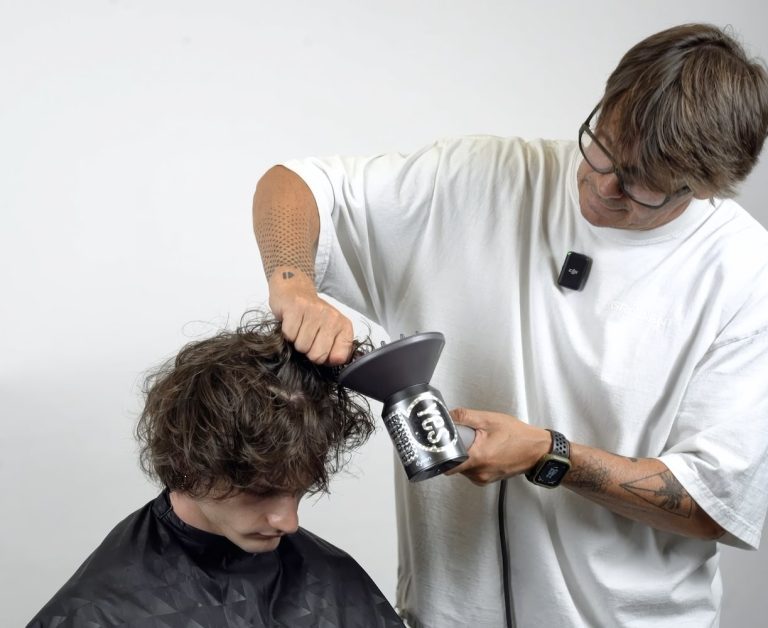
 The result and the process
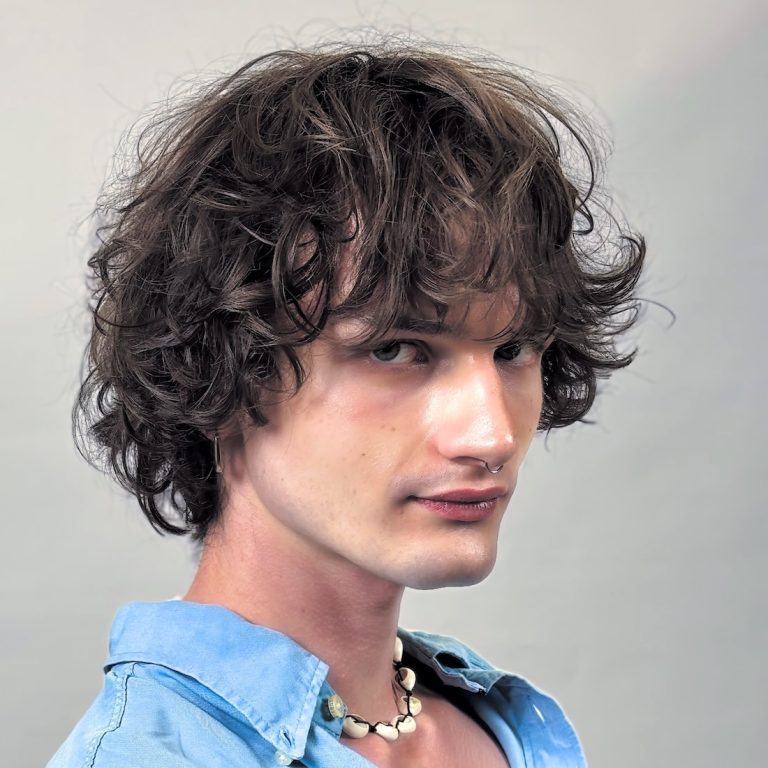
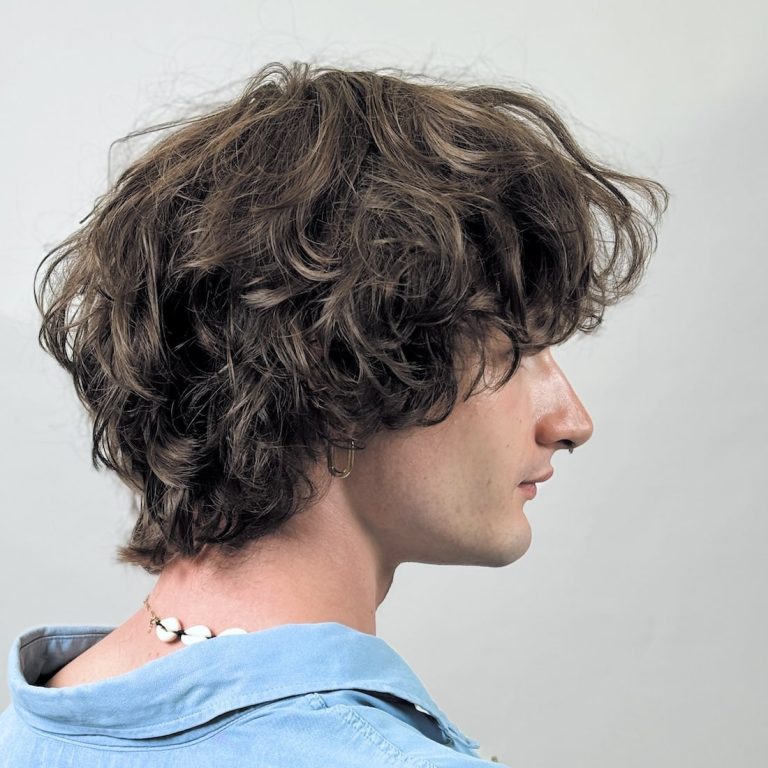
 What you'll learn
 What you'll learn
How to build the entire haircut shape using square sections.
How to use the "one-step-back" redirection technique to build momentum.
Why a straight cut best defines the curl in fine hair.
How to work with a memory strip as the foundation of the entire design.
How to analyze the structure of the skull in order to design divisions with precision.
How to style your hair with a diffuser to maximize texture.
The Shaggy Wolfcut is a modern haircut for medium-length hair that combines layers and texture into a controlled, dynamic shape. This tutorial shows how to create volume and movement in fine but dense hair with a natural tendency to wave or curl, while avoiding a frizzy look. The key is to work with square sections and a straight cut that defines the curl rather than breaking it up.
Kamil Cesarski provides a step-by-step guide through the entire hair styling process: from analyzing the skull’s structure and designing partings, through building shape using a system of square sections at the back, sides, and top, all the way to the final styling with a diffuser. The course demonstrates how consistently redirecting strands “one back” builds volume on the curves of the head and how to work with minimal tension to emphasize the hair’s natural curl.
In this course, you'll learn:
- Constructing the entire form based on a system of square sections—both horizontally and vertically—to build volume over the natural curves of the head
- The "one-step-back" redirect technique (two over one, three over two) as a tool for building weight and a square shape
- Why a simple cut without texturizing is the best way to define the curl and avoid frizz in fine hair
- Working with sections of hair on wet hair as the foundation of the entire style, which determines the length and consistency of the cut
- The complete styling process using a diffuser—from applying curl cream and pre-styling to drying on a medium heat setting for maximum definition
- A straight-across bang cut, without lifting, that falls naturally over the forehead to maintain volume and control
- How to analyze the structure of the skull, including the mastoid processes, during the design phase in order to precisely plan the divisions and lengths
After this course, you’ll learn to use square shapes effectively to create volume and master a technique that brings out and defines natural curls without making the hair look puffy. You’ll be able to offer your clients with wavy or curly hair a modern, textured hairstyle that’s right on trend.
What's inside
Full access to the course
 What's inside

The square haircut concept
"I'm going to stick firmly to the square shape; there will definitely be a horizontal square everywhere."

Cutting the neckline without tension
"I cut the strand as it falls naturally, without pulling it taut with my fingers, but simply holding it in place."

A simple cut to accentuate the curl
“I cut with a straight cut, without adding texture. I want the curl to stand out.”

Working with the natural bandwidth
"I try not to pull this hair too tight. I work with a very natural tension."

Note the change in shape near the ear
"I often notice that hairdressers forget that the ear changes shape."

Filling in the curves of the head with a square
"It's still a square. So all the curves of the skull are filled with volume."

Natural hair loss at the hairline
"Finally, let's brush our hair down so it falls naturally."

Product activation using heat from a hair dryer
"Most modern styling products need heat to activate."
 Frequently Asked Questions