Trimming a long beard
 The result and the process

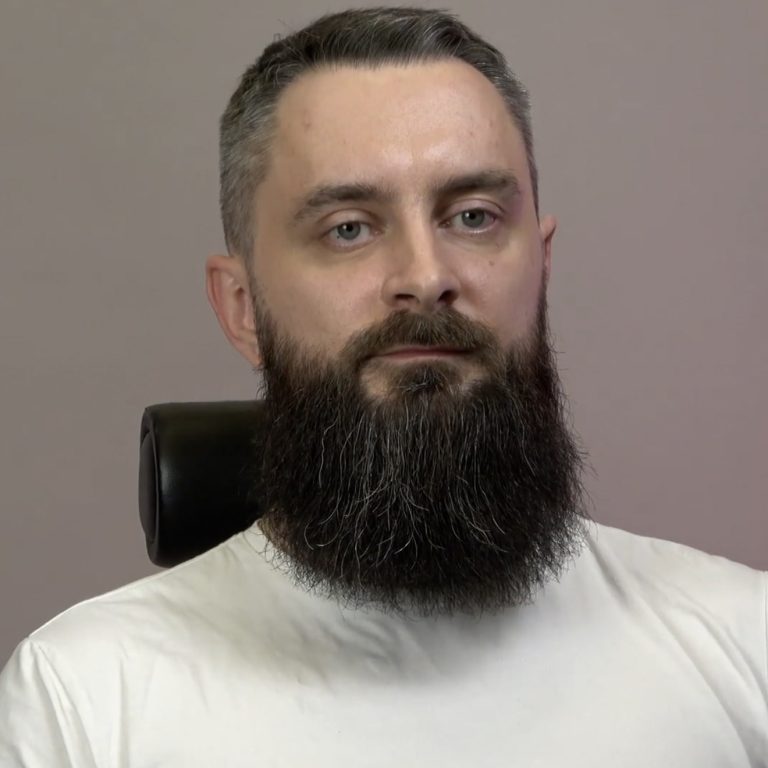
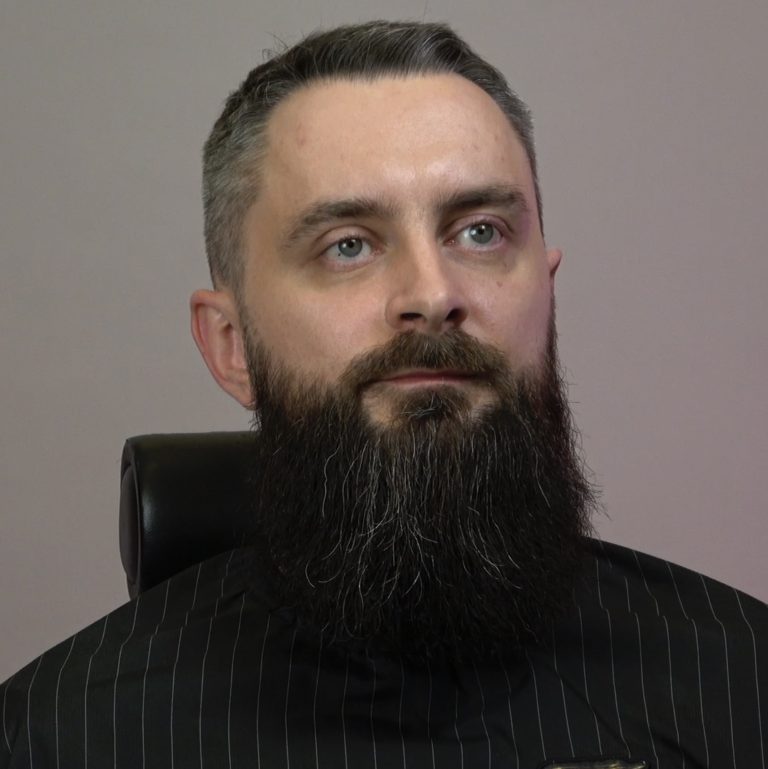
 What you'll learn
 What you'll learn
How to use the hair on the back of your neck to add density and fullness to your beard.
How to use an electric razor using the freehand method, starting from the center for perfect symmetry.
How to precisely trim your mustache with a comb and trimmer without using a comb attachment.
How to apply blush to your cheeks so that it complements your face.
How to seamlessly blend the sideburns into the beard using the comb-over technique.
How to trim and shape your beard using scissors.
Cutting and trimming a long beard is a process of sculpting its shape, not just shortening its length. This course shows you how to address the most common issue when working with long facial hair: the client wants to keep the length, but the beard has lost its shape and density. It’s a workshop on building a solid, full beard from the ground up, using the underlying hair as a framework for the entire shape, rather than weakening it by shaving it off.
Mateusz Poznański walks you through the entire process step by step, from prepping the beard with an afro pick, to shaping it freehand with clippers, all the way to the final touch-up with scissors. You’ll see how to start from the center to ensure symmetry, and how to intentionally use the hair at the nape of the neck to create a “curtain”—the foundation that gives the beard fullness and prevents thin spots.
In this course, you'll learn:
- The "curtain" technique – why you shouldn't shave the hair on your neck if you have a long beard, and how to use it to create thickness and fullness
- Creating a shape from scratch using the freehand method on a clipper – how to start from the center to ensure symmetry and maintain length
- Trimming your mustache without an attachment – how to use a comb and trimmer to achieve better control, improved regrowth, and a clean line above your lips
- The cheekbone rule – how their height affects the perception of facial shape, and how a simple trick involving pulling the skin creates a natural arch
- Blending the sideburns into the beard using the clipper-on-comb technique for a smooth, natural transition without using comb attachments
- The final "trimming" of the beard with scissors—a finishing technique that removes stray hairs and gives the beard its final shape
- Properly dry and comb the beard with a boar-bristle brush to reveal any imperfections in the shape before the final cut
After this course, you’ll stop seeing a long beard as a challenge and start viewing it as material to be sculpted. You’ll gain a consistent system that will allow you to confidently shape and thicken the beard without unnecessary trimming, transforming neglected facial hair into a deliberately styled element of your client’s look.
What's inside
Full access to the course
 What's inside

Why not shave the hair under your chin?
"With long bangs, we hardly ever style the hair underneath at all."

The first freehand cut
"What we want to do is simply blend all those stray, broken hairs into the rest of the beard."

Shaping the chin from the inside
"I always prefer to start by inserting this shape from the inside."

Applying a shape as if to a hedge
"Basically, trimming a beard is a bit like trimming a hedge. We apply that shape to the beard."

Connecting tanks without using adapters
"Don't use hair extensions because I want it to blend naturally with my hair."

How to Trim Your Mustache Properly with a Trimmer
"We never just use the clippers straight across. We place the tip of the trimmer blade along the lip line."

The rule for drawing lines on the cheeks
"The lower that line is on the cheeks, the more visible the dimples will be."

The Scissor-Shaping Technique for Beards
"In my case, this is what's known as 'polishing' the beard. It's a technique borrowed from hair styling."
 Frequently Asked Questions