Layer technique
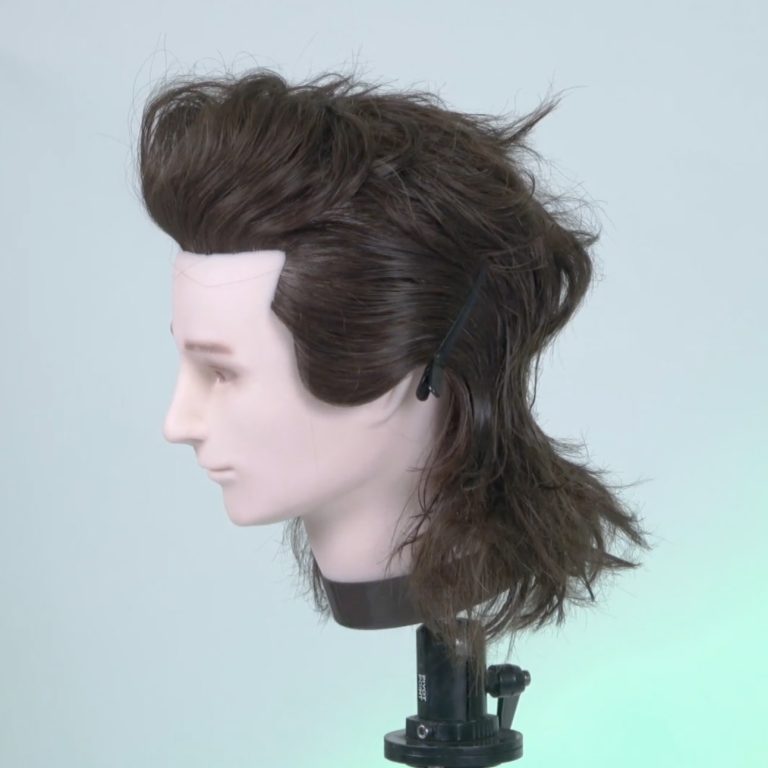
 The result and the process
 What you'll learn
 What you'll learn
How to define sections based on the bisectors of the head angles.
How to use the "two-to-one, three-to-two" rotational separation system.
How to maintain a constant 90-degree angle to achieve a square shape.
How to check the correctness of the rotation by observing the "triangle" and the sharpness of the cut line.
How to lighten the weight of long hair without cutting it short.
How to adjust the separation rotation for flat and round head sections.
The square-layer technique is a precise layering method designed to remove excess weight and bulk from the hair without shortening its length. The course demonstrates how to create a shape based on square geometry on long, thick hair—forming five deliberate corners at the head’s curves. The result is a hairstyle that retains its length but gains lightness, movement, and dynamism, solving the problem of a “heavy nape.”
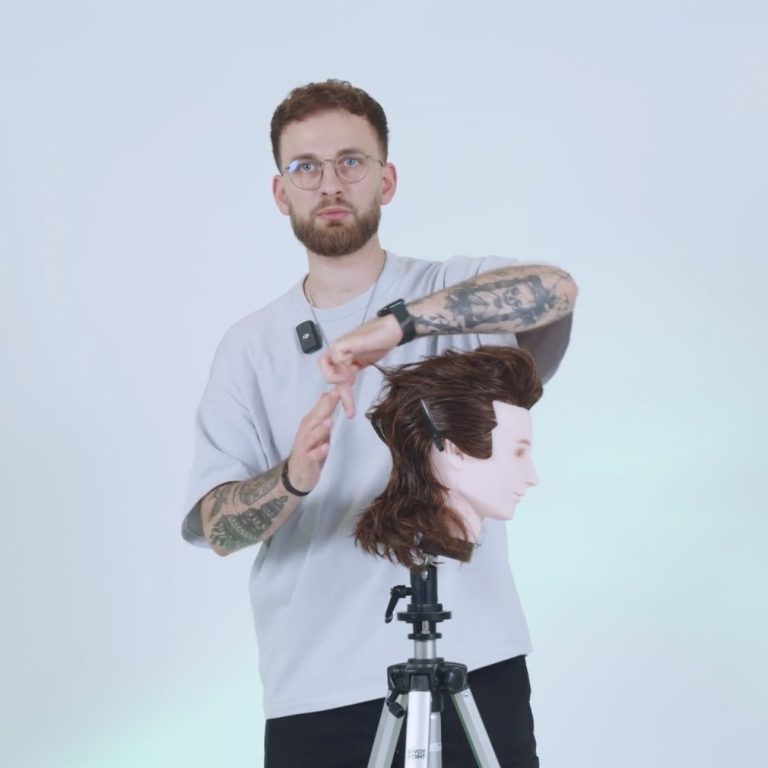
Marek Krzyminski guides you through the entire process, starting with the fundamental principle of dividing the head along angle bisectors—precise lines that determine the position of each of the five corners of the hairstyle. Step by step, he demonstrates how to maintain a consistent 90-degree angle and control the shape in two planes: vertically using the cutting line and horizontally through the “two-to-one, three-to-two” rotational separation system. This is a workshop on consciously working with the geometry of the head, not merely replicating movements.
In this course, you'll learn:
- Dividing the head based on angle bisectors – how to find the points where the skull curves and determine the sections where the corners will form
- A "two-to-one, three-to-two" sectioning rotation system for creating a flat shape on the round surface of the head
- How to check the correctness of the rotation by observing the "triangle" under your hand and the sharpness of the cut line in the mirror
- Why a 90-degree projection is crucial for a square—and how to avoid accidentally adding bulk (gradation) or cutting too much weight (circular shape)
- Working on the outer side of the hand and keeping the chest perpendicular to the cutting line are essential for proper technique
- A complete styling routine using a diffuser and hair clips to shape, restyle, and mimic the natural drying process of the hair
- Finish the outer line with a Chinese knife to maintain a balance between the internal movement and a cohesive line at the neck
After this course, you’ll start consciously using the head’s geometry to create predictable shapes and angles. The square-layer technique will allow you to offer clients with long, heavy hair a solution that preserves their favorite length while adding lightness, volume, and movement to the style. Instead of randomly “layering,” you’ll begin to sculpt the form with full control over the hair’s weight and movement.
What's inside
Full access to the course
 What's inside

The purpose of the layering technique is to reduce bulk
"Its purpose is to remove excess mass and weight from the outer sections."

Adjusting allocations—the key to success
"If you spot a mistake while sorting, don't hesitate to correct it right away."

Shape control via rotational motion
"The shape in the horizontal plane will be controlled by the rotational movement of the separation."

The technique of pushing the separator to the other side
"I'm not going to tighten the two-to-one gap now; instead, I'm going to widen it."

Transferring length from the back to the sides
"I'm taking a section from the back parting, which I'll use to distribute the length to the sides."

Retrieving the length of a vertex section
"From the point where my bisector passed, to create a division, I take the length."

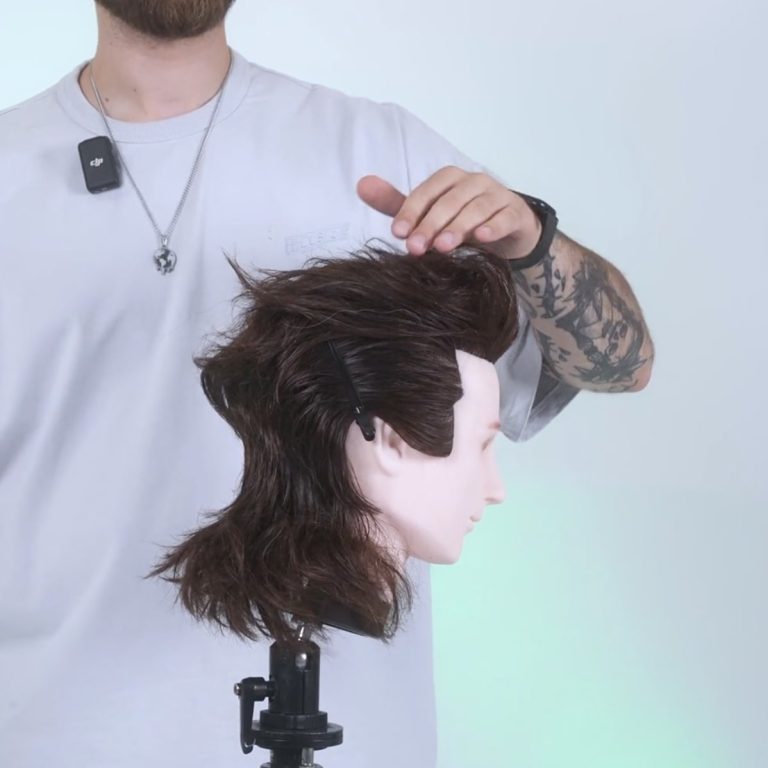
An unusual way to check the shape of a hairstyle
"Take the head off the tripod and examine the shape upside down."

How does a diffuser work when styling hair?
"The diffuser is designed to diffuse the airflow and provide the hair with gentle heat."
 Frequently Asked Questions