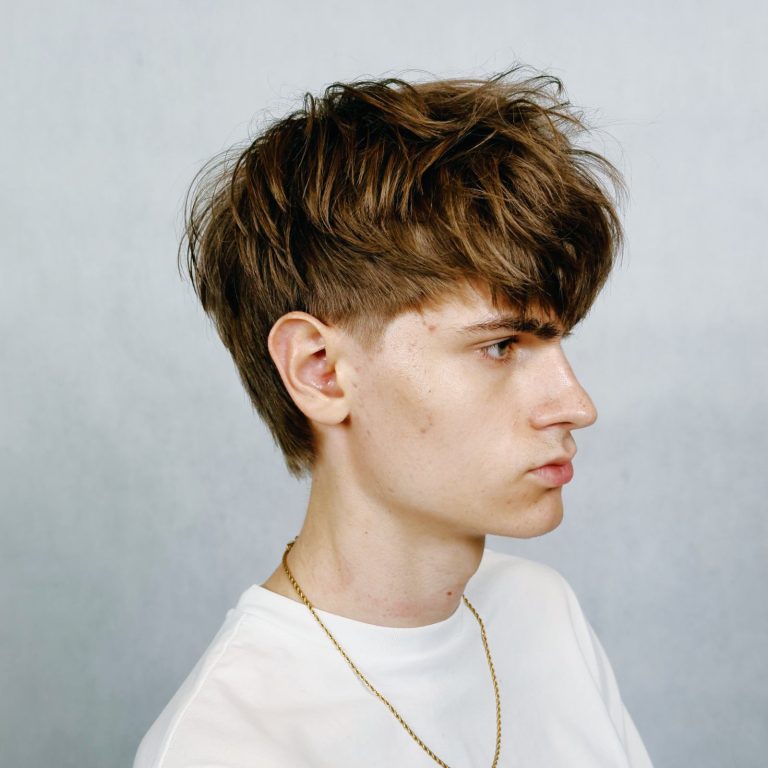
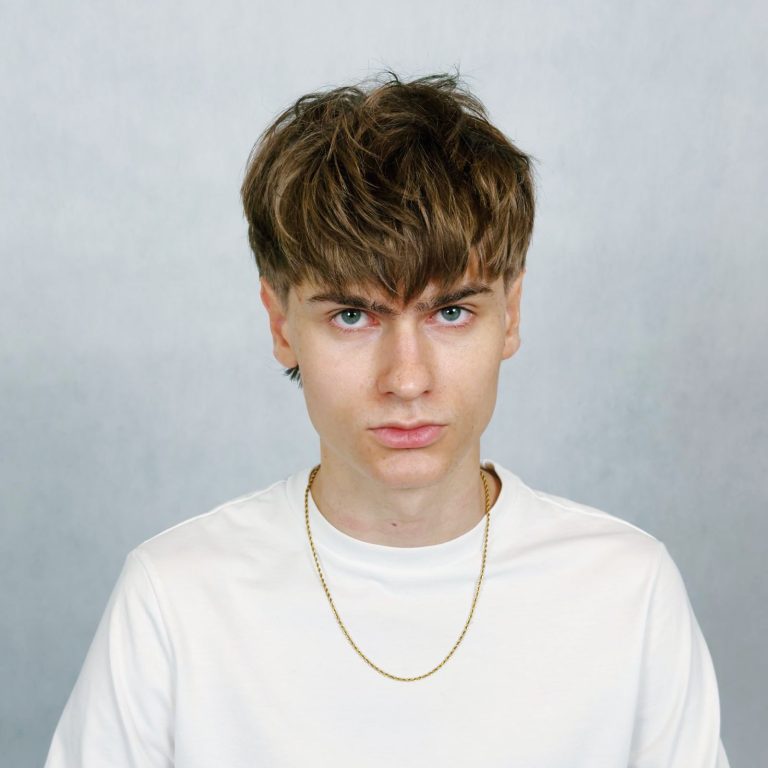
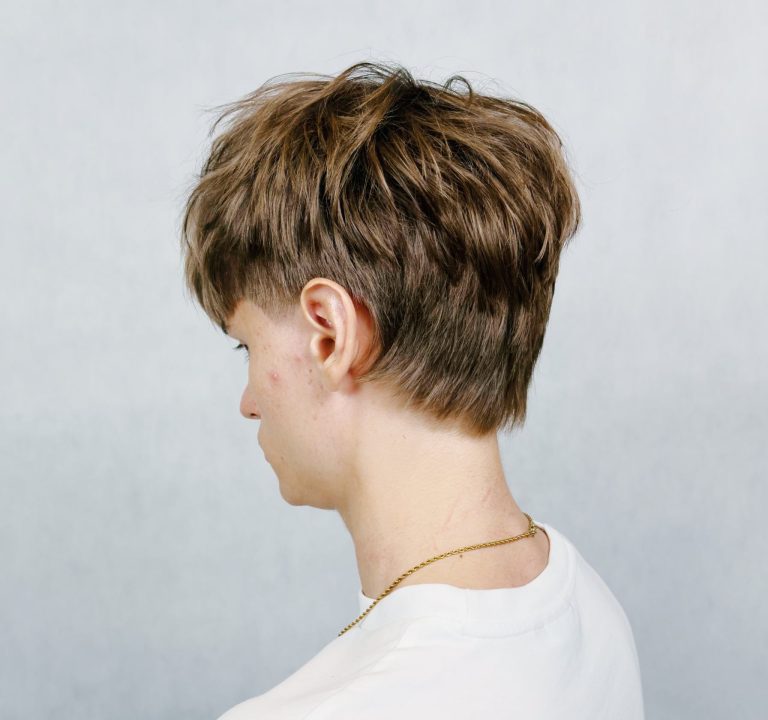
Textured mullet with gradation
 The result and the process
 What you'll learn
 What you'll learn
How to build volume at the back of the head using the circular layering technique.
How to use a Chinese knife to create a light texture and outline.
How to intentionally combine circular and square shapes at the top of a hairstyle.
Why the triangular cross-section at the crown is crucial for building muscle mass.
How to create a subtle, natural taper at the temples using a clipper over a comb.
How to style a mullet with a diffuser to bring out its natural texture.
The textured mullet with layering is a modern take on a classic cut that addresses the issue of flat, straight hair. This course demonstrates how to use circular layering techniques to intentionally build volume at the back of the head while creating a light, dynamic texture on top and throughout the style using a Chinese razor.
Anastasiia Verbitskaya guides you through the entire process step by step: from precise sectioning with a triangular section at the crown, through building the shape with a circular gradient and a one-step redirect, all the way to working on the top in two planes—a circular one for movement and a square one in profile to maintain a voluminous fringe. Wet techniques with scissors smoothly transition into dry work with a clipper and a Chinese razor for the final texture refinement.
In this course, you'll learn:
- Creating volume at the back of the head using the circular layering technique with a one-section back-combing
- Using a Chinese razor to create light, textured bangs and a clean, natural contour at the nape of the neck
- A deliberate combination of two shapes at the top: a circle to create movement and a square in profile to maintain a voluminous fringe
- The key role of the triangular section at the crown of the head in the process of building up volume at the back
- Dry styling – how to create a light, natural taper at the temples using a clipper over a comb
- Finishing touches using a diffuser to bring out maximum texture in straight hair
- How to eliminate the disconnect between the top and the sides using the slicing technique
After this course, you’ll start consciously using circular cutting techniques to add volume where it’s lacking, and the Chinese razor will become your go-to tool for adding lightness and character to straight hair. You’ll be able to offer your clients a modern, textured mullet that’s both technically sophisticated and easy to style on a daily basis.
What's inside
Full access to the course
 What's inside

Triangular cross-section for mass
"I've carved out a triangle that will help me build more volume here at the back of the head."

Redirecting traffic to the previous one
"Each subsequent band will now be offset by one from the previous one."

Connecting the triangular section to the bottom
"This entire triangular section will be pulled down to make the back of the head more prominent."

Lengthening the section at the bangs
"Now I'm going to pull these two sections to the length I just cut."

The "Cut the Top" Strategy: Square and Circle
"We'll work on the square in the profile, and use a circular redirect."

The crucial role of combing
"Even the direction in which I comb a strand of hair will give me the redirect I need."

Using a Chinese blade to create texture
"The rest of the haircut will be done with a Chinese blade to create a lighter texture."

Connecting the weight lines to the tail
"Right now, I'd like the hairline to blend in with the bangs."