Layered Middle Part
 The result and the process
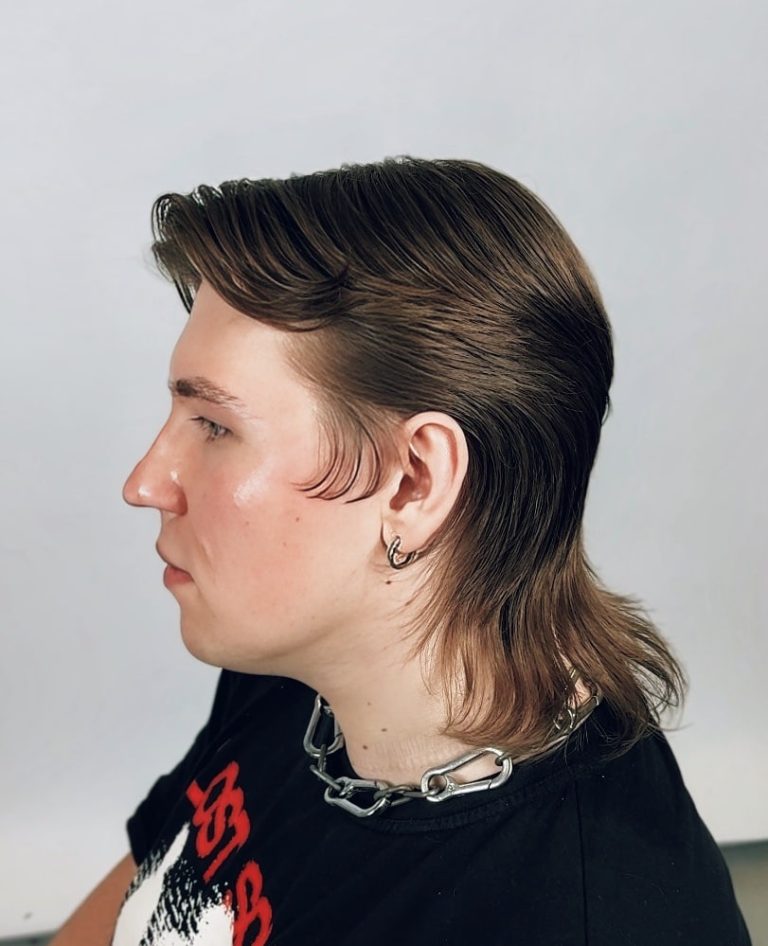
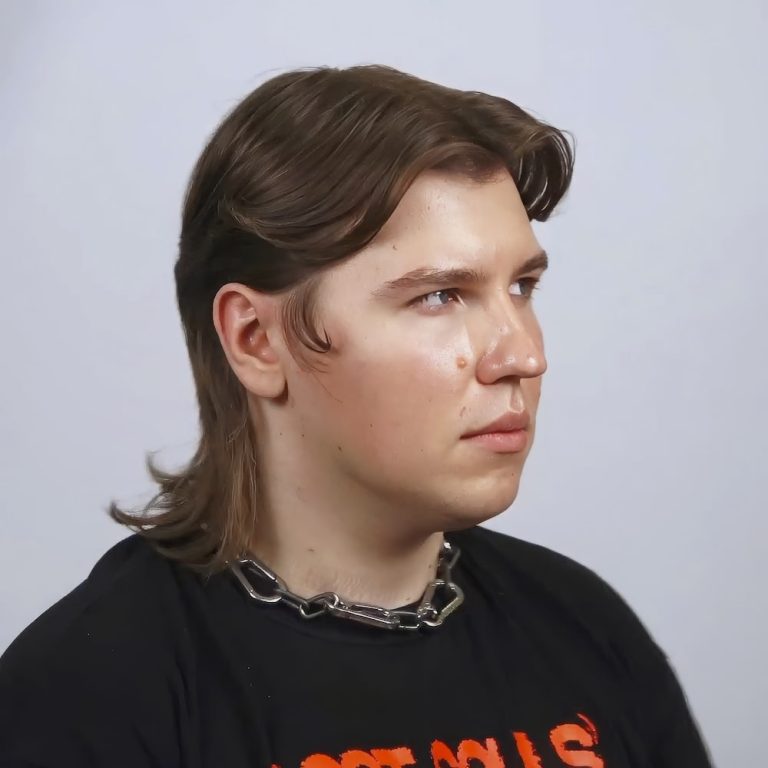
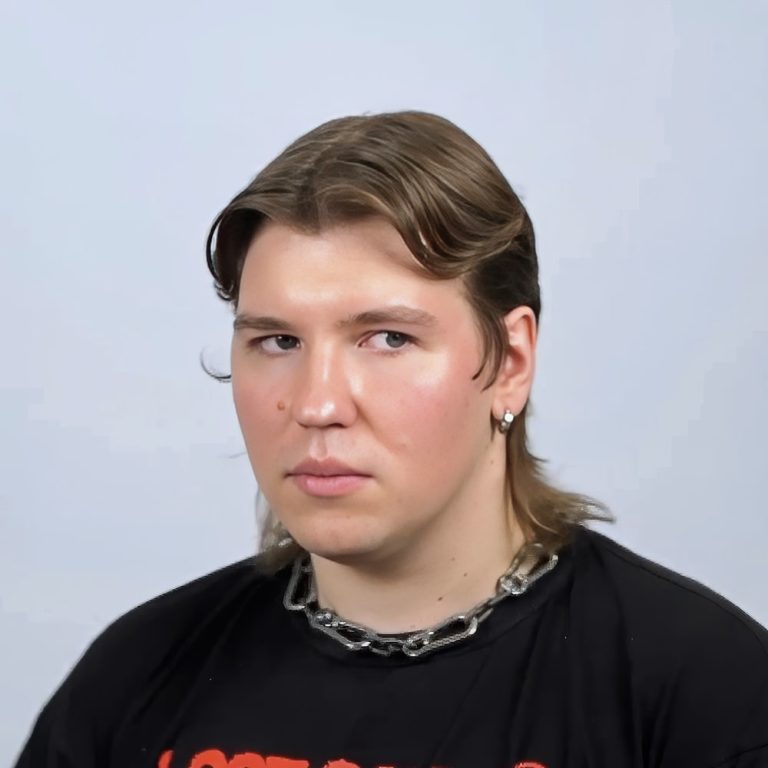
 What you'll learn
 What you'll learn
How to create a sense of lightness at the back using the high-projection layering technique.
How to use fine layering to make your hair fall naturally behind your ear.
How to create a triangular shape at the top to achieve a natural part.
How to section off and trim layered bangs for versatile styling.
How to analyze the anatomy of the head and hair in order to choose the right techniques.
How to seamlessly blend the back, side, and top sections into a cohesive form.
The Layered Middle Part is a modern men’s hairstyle with a center part that combines the lightness of layers at the back with the weight of layering on the sides. This course demonstrates how to transform a classic style into a dynamic, versatile look that the client can wear naturally tousled or smoothly swept behind the ear. It’s a technique perfect for visually slimming the face and adding movement to the hair that works well for the client’s everyday life.
Kacper Trzaskowski guides you through the entire process, starting with an analysis of the head’s anatomy and the hair’s natural fall, which determines the choice of techniques. You’ll see how he divides the head into four simple sections—the back, two sides, and the top—and then deliberately builds the shape using high-projection layers at the back, weight-grading that accumulates volume behind the ears on the sides, and a triangular cut at the top that creates a naturally falling part.
In this course, you'll learn:
- The high-angle layering technique (130–150 degrees) and the inverted triangle shape—how to create lightness and shape without thinning the nape
- A technique that creates a high volume on the sides, deliberately concentrating the weight behind the ear so that the hair naturally falls into place there
- Creating a triangle at the top from the parting – how to make the weight fall naturally to the sides, creating a heavy, smooth wave
- Parting and trimming the bangs while leaving them slightly longer to give the client styling versatility—from a sleek, swept-back look to a loose, flowing style
- Visually trimming the longer sideburns to balance them with the neckline and give the hairstyle a relaxed, modern look
- A simple division into four sections (top, back, two sides) and the logic behind the placement of the dividing lines relative to the mastoid process
- A complete styling routine from scratch—from applying the product to wet hair, through blow-drying with a brush, to the final touch with a diffuser and hairspray for natural movement
After this course, you’ll be able to consciously manage weight distribution in parted hairstyles, combining layering and texturizing techniques into a single, cohesive style. You’ll understand how simple geometric shapes—circles, triangles—translate into movement and natural hair flow. This training is for hairstylists who want to offer clients modern, longer styles that provide a wide range of styling options—from everyday nonchalance to more classic elegance.
What's inside
Full access to the course
 What's inside

Neck analysis and potential risks
"I'm afraid I might break my neck if I go too fast."

Proper posture while sitting in a chair
"We need to keep a very neutral posture so we don't end up all tense."

Applications and Advantages of the Layering Technique
"It's perfect when you don't want to cut much length but want to add shape and texture."

Head tilt in the gradation technique
"I tilt the client's head away from me and pull the hair out at a ninety-degree angle."

Visual trimming of the barrel
"Only now will I use scissors to trim off just a little bit of that protruding sideburn."

Tips for cutting the tricky side
"My best advice on how to do this properly is to start by thoroughly wetting your hair."

Creating a triangle at the top of the head
"I'll extend all the separations to the first one, because that's how we'll create a triangular shape."

The logic behind applying styling products
"I always apply the product in varying amounts—more where I want more."
 Frequently Asked Questions