Circular cutting
 The result and the process

 What you'll learn
 What you'll learn
How to work with vertical sections to reduce volume.
How to create volume at the crown using radial sections.
How to cut bangs into a square shape to create a deliberate contrast.
When to use the palm of your hand to take the weight off your hair.
Why you should avoid thinning shears on curly hair to prevent frizz.
How to style and customize your hairstyle on dry hair after a haircut.
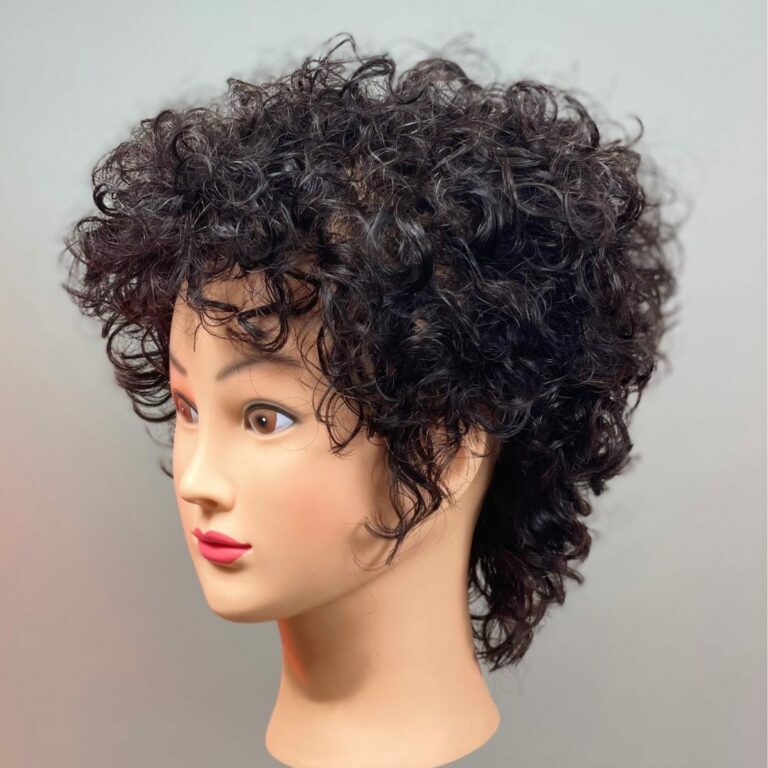
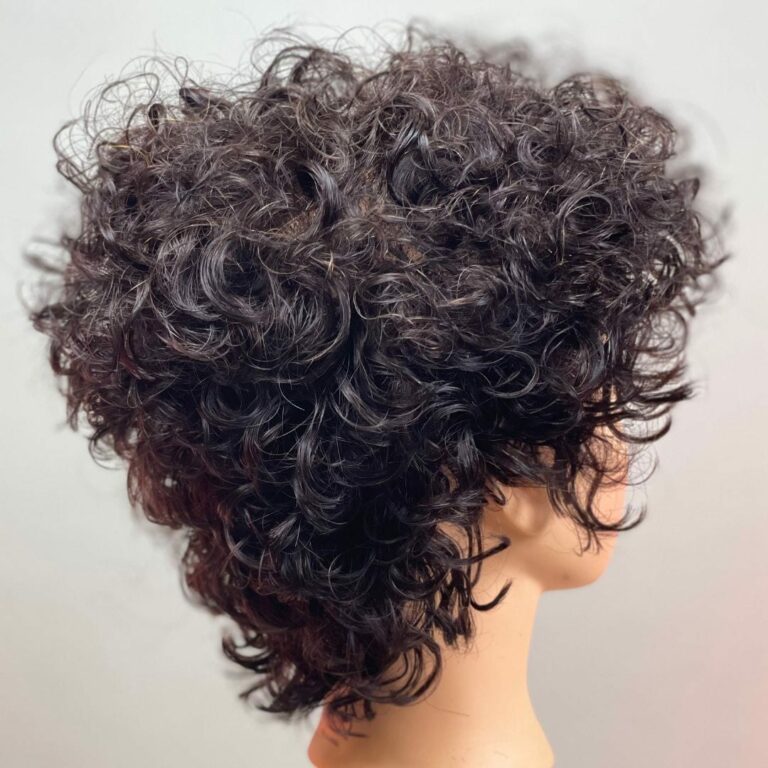
Creating curl definition using circular cutting is a technique for cutting curly hair that deliberately divides the head into two zones: removing volume at the bottom and building it up at the top. The course demonstrates how to use simple sections and circular cutting on the lower sections, along with radial separations at the crown, to give the hairstyle a dynamic shape and character, while avoiding tools that cause frizz, such as thinning shears.
Aneta Dąbrowska walks you through the entire haircut process step by step, starting with a simplified division into three sections—the bottom, the top, and the bangs. She demonstrates how to work in a circular motion with vertical sections to precisely remove weight from the sides and back, and then, with the head tilted, build volume at the crown using radial sections. The key element is working with the inner and outer sides of the hand to consciously control the lightness of the hairstyle.
In this course, you'll learn:
- Full circular cutting process on the lower sections – working with vertical sections for even length and controlled volume reduction.
- Building volume at the crown using a radial parting (“mandarin” style) and working with the head tilted back, which automatically elongates the strands.
- Consciously using the inside of the hand to relieve pressure versus the outside of the hand to create lightness and rounded lines.
- The technique of cutting bangs in a square shape to create a deliberate disconnection and volume at the center of the hairstyle.
- Why should you avoid thinning shears on curly hair, and how can you replace them with a precise scissor cut to prevent frizz?
- Final dry shaping using precision cutting and styling that accentuates the natural curl without excessive scrunching.
After this course, you’ll feel confident working with curly hair, treating it as a canvas for sculpting shape rather than a problem to be tamed. You’ll learn to manage volume intentionally—removing it where it’s unnecessary and building it where it adds character. Your clients with curly hair will get a well-defined hairstyle that highlights their natural curl and is easy to style every day.
What's inside
Full access to the course
 What's inside

Division of the section above the brow ridge
"I don't want to take too much volume off the entire side, so that the triangle doesn't end up too high."

The Effect of Body Position on Cutting
"When I don't change my position, my hair naturally falls in a different direction."

Use a razor with caution on curls
"A razor cuts the hair too short, so it frizzes later."

Building lightness on the back of the hand
"Now we're cutting along the top of the hand because we're creating a sense of lightness. Our elbow drops."

Adjusting the cut to the shape of the head
"The depressions are in the temporal region, and the protrusions are in the occipital region."

How to check the cut properly
"If we cut at this height, we'll comb it out at this height so as not to ruin the work."

Cutting a bob
"We won't follow a circle; instead, we'll draw a straight line within a square."

Why let your hair air dry?
"After blow-drying with a diffuser, we don't know how the hair falls naturally or which way the strands go."