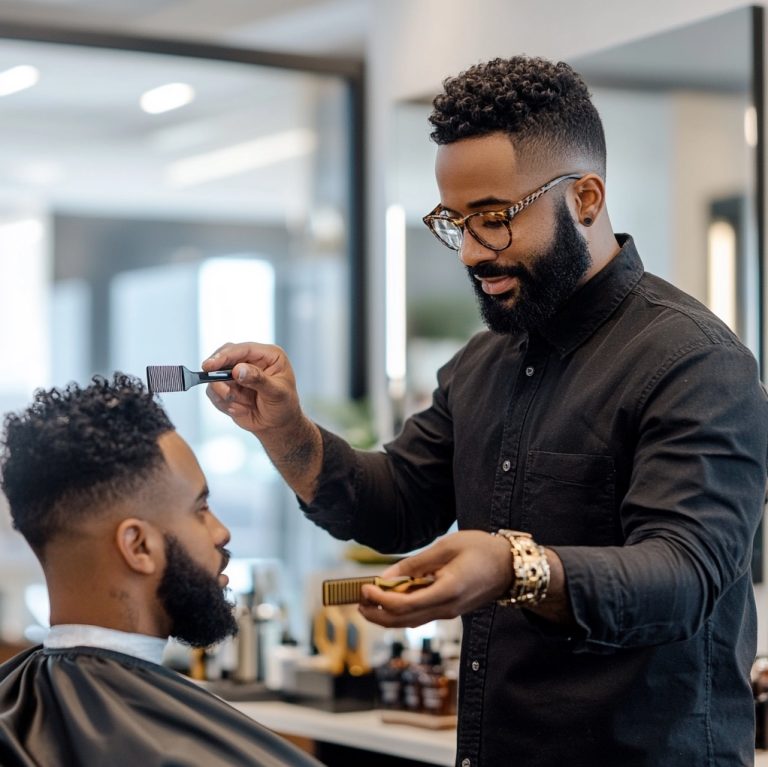
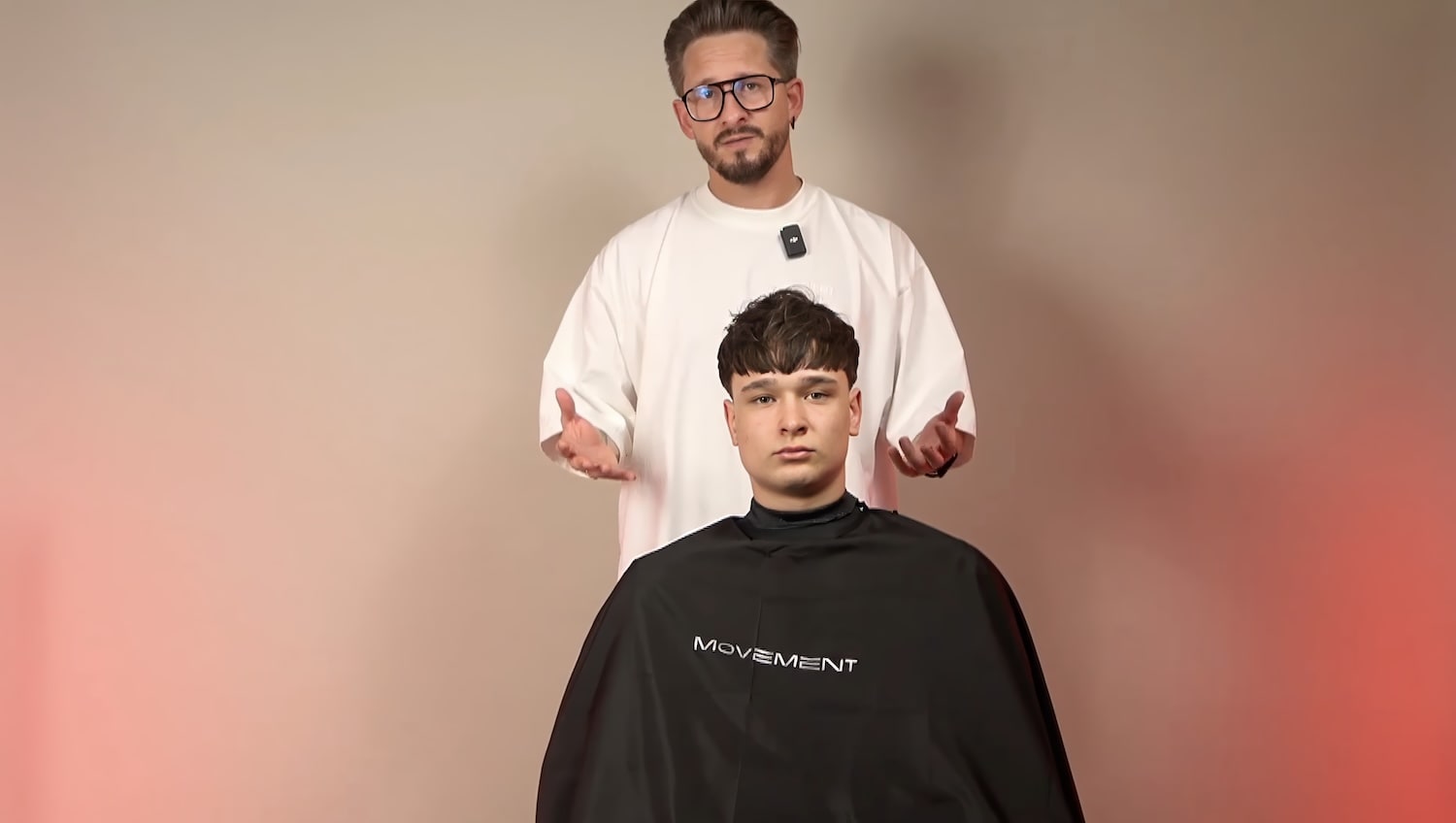
Thick men's hair is both a challenge and an opportunity for creative hairdressers. In this comprehensive guide, we will present the most effective techniques for cutting thick men's hair, which will help you achieve spectacular results.
Characteristics of thick male hair
Thick men's hair is a type of hair that requires a special approach. It is characterized by:
- A larger diameter of individual hairs, giving them a unique texture
- A tendency to rapidly increase in volume, which can be both an advantage and a challenge
- Resistance to damage, which makes them more durable
- Difficult to lay and control, especially in high humidity conditions
Understanding these characteristics is key to choosing the right cutting techniques. Thick hair offers many styling possibilities, but it also requires a specific approach to avoid the "helmet" effect or excessive frizziness.
Preparing for a haircut
Proper preparation is the key to successfully cutting thick men's hair. Here are the key steps:
- Consultation with the client:
- Discuss the customer's expectations regarding their hairstyle.
- Pay attention to his lifestyle and daily care routines.
- Discuss realistic possibilities, taking into account the client's hair structure.
- Hair analysis:
- Assess the thickness, texture, and density of the hair.
- Pay attention to natural growth directions, especially any cowlicks.
- Check the overall condition of your hair and scalp
- Hair preparation:
- Wash your hair with shampoo suitable for thick hair.
- Use conditioner to make combing easier.
- Dry your hair, paying attention to its natural behavior.
- Selection of tools:
- Prepare sharp hairdressing scissors and thinning scissors.
- Select the appropriate attachments for your machine
- Keep different types of combs and brushes handy.
Remember that thorough preparation is half the battle. It allows you to plan the haircut better and avoid surprises while working.
Basic haircutting techniques
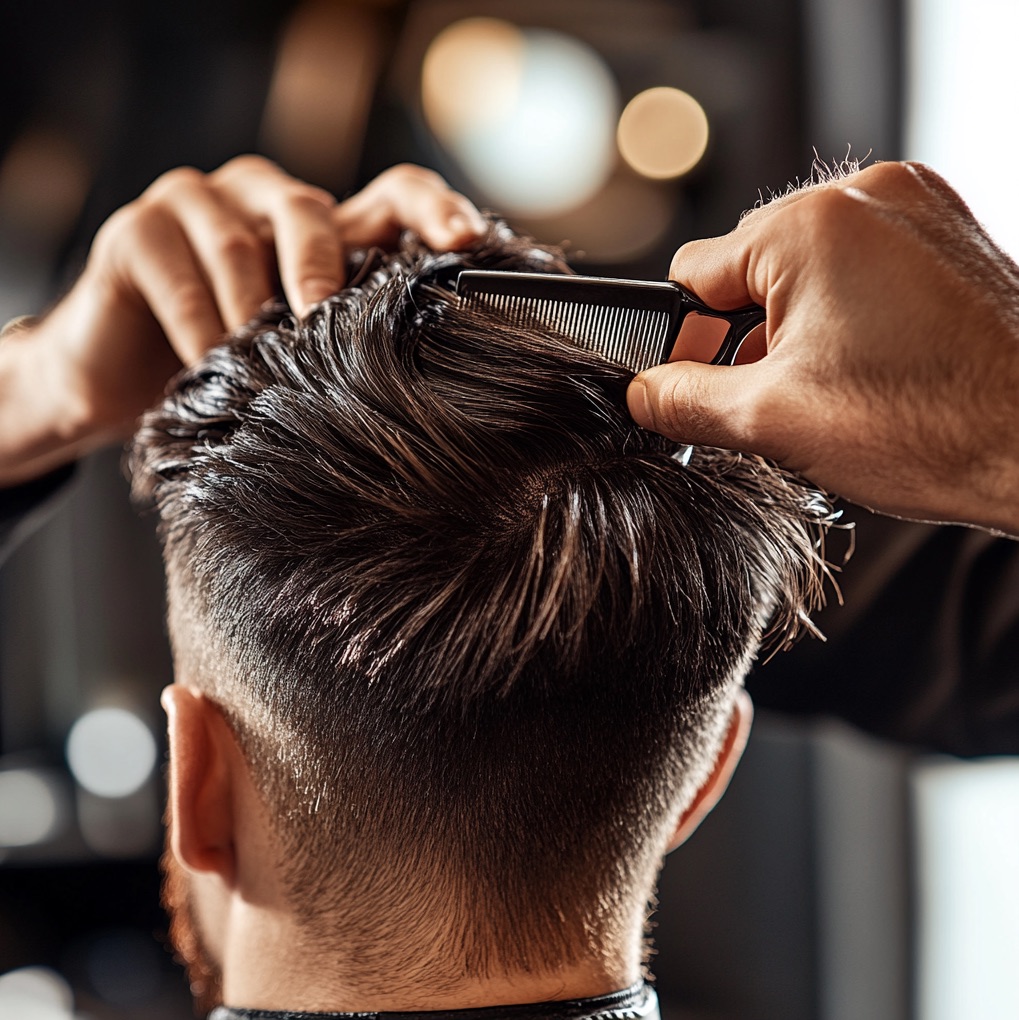
When cutting thick men's hair, it is essential to master a few basic techniques:
- Shading with scissors:
- The point cutting technique is ideal for reducing volume. It involves cutting the ends of the hair at an angle, which creates soft, natural lines.
- The slide cutting method allows for smooth transitions between lengths. The scissors "slide" through the hair, gently trimming it.
- Shading with a razor blade:
- Perfect for shorter hairstyles and precise styling of the sides.
- The "fading" technique allows you to create smooth transitions from very short hair to longer hair.
- Layered haircut:
- Helps reduce volume and add movement to hair.
- It involves cutting the hair at different levels, which creates a dynamic structure for the hairstyle.
- The "choppy cutting" technique:
- It involves cutting the ends irregularly, which adds texture and reduces volume.
- It works great for men's hairstyles with a casual, slightly "messy" look.
Mastering these basic techniques is the foundation for more advanced methods of cutting thick men's hair.
Advanced techniques for thick hair
For best results with thick hair, it is worth using more advanced techniques:
- The chunking technique:
- It involves cutting larger "pieces" of hair.
- Ideal for significantly reducing volume without losing overall length.
- It requires precision and experience to avoid visible "holes" in the hair.
- Razor cutting:
- Use a razor to add texture and reduce volume.
- Allows you to create very soft, natural lines.
- It takes practice, but it works great on thick hair.
- Channel cutting technique:
- Creating "channels" in the hair structure.
- Helps control the direction of hair styling.
- Particularly effective on hair that tends to "stand up."
- Deep shading:
- Intensive shading of the inner layers of hair.
- It allows you to maintain length while significantly reducing volume.
- Requires a good understanding of hair structure and experience.
- The "disconnection" technique:
- Creating a clear contrast between different sections of hair.
- It allows for creative hairstyles that combine different lengths and textures.
- It requires good planning and a vision of the final result.
Using these advanced techniques requires practice and experience. It is worth considering participating in specialized training courses, such as those offered by Connected Hair, to improve your skills in this area.
Popular hairstyles for thick hair
Thick hair offers many styling possibilities. Here are some popular hairstyles that work well with this type of hair:
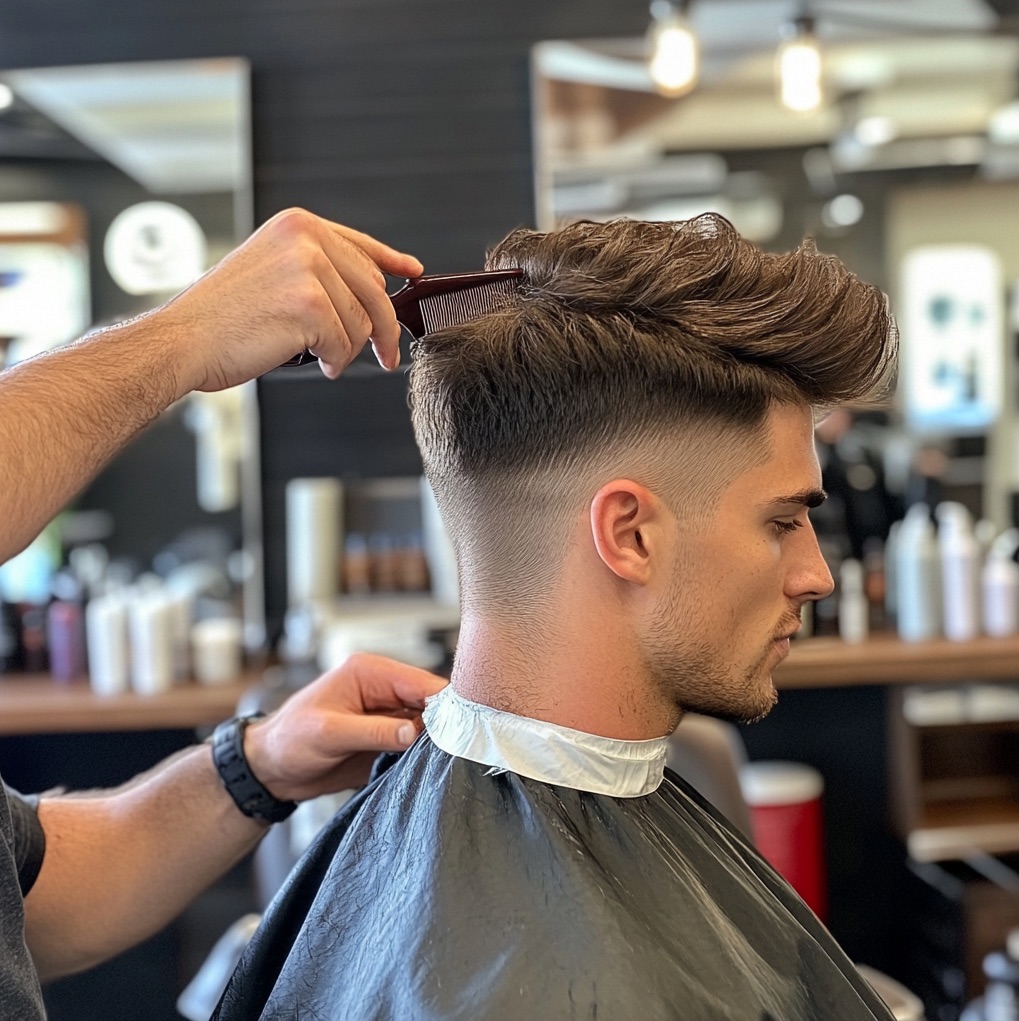
- Classic undercut:
- Short sides and back, longer top
- Allows you to control the volume on the sides
- Requires regular trimming to maintain shape
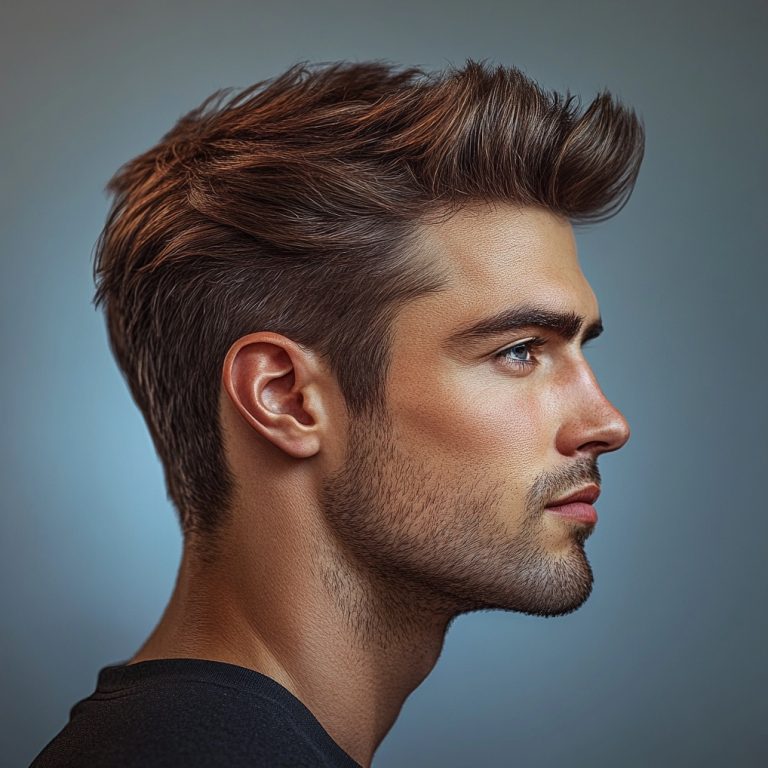
- Textured quiff:
- Adds height and movement
- Requires proper texturing on top
- It goes well with masculine, expressive facial features.
- Side parting:
- An elegant option for thick hair
- Requires precise shading to achieve smooth transitions
- Perfect for formal occasions
- Short textured crop:
- Easy to maintain
- Excellent volume control
- Adds character and emphasizes hair texture
- Medium length with layers:
- Adds movement and reduces volume
- Requires skillful layering
- Offers versatility in styling
When choosing a hairstyle for a client with thick hair, always consider the shape of their face, lifestyle, and everyday styling skills.
You can find more inspiration in our article on the most popular men's hairstyles.
Tools and products
The right tools and products are key to effectively cutting and styling thick men's hair:
Tools:
- Sharp hairdressing scissors: An essential tool for precise cutting
- Thinning scissors: Essential for reducing volume and creating texture
- Clip-on trimmer with various attachments: For precise shading and creating fades
- Barber razor: For advanced texturizing techniques
- Combs with varying tooth density: For detangling and control during haircuts
- Brushes: For styling and controlling hair during drying
Styling products:
- Mattifying pastes: For volume control and texture
- Styling creams: For a smooth finish and frizz control
- Texturizing sprays: To add texture and volume
- Pomades: For classic, slicked-back hairstyles
- Gels: For strong hold on very thick, difficult-to-style hair
When choosing styling products, always consider the individual needs of the customer and the characteristics of their hair. What works for one person may not work for another.
Styling and care
Proper styling and care are key to maintaining a good-looking hairstyle with thick hair. Here are some tips you can pass on to your clients:
Styling:
- Drying: Use a diffuser attachment to control volume. Dry your hair by directing the airflow from the roots to the ends.
- Products: Apply products to damp hair, starting at the ends and working toward the roots.
- Texturizing: Use your fingers or a wide-tooth comb to create texture, avoiding brushes that can increase frizz.
- Finishing: Use a light hair spray to hold the style in place without weighing down your hair.
Care:
- Washing: Use shampoos designed for thick hair, washing your hair 2-3 times a week.
- Nutrition: Use deeply moisturizing masks once a week to keep your hair in good condition.
- Protection: Use heat protection products before heat styling.
- Trimming: Regular trimming of the ends every 4-6 weeks will help maintain the shape of the hairstyle and keep the hair looking healthy.
For more care tips, see our complete care guide.
Advice for hairdressers
As a professional hairdresser working with thick male hair, keep the following rules in mind:
- Pre-cut analysis: Carefully assess the hair structure, growth direction, and density before starting work.
- Communication with the client: Ensure that you fully understand the client's expectations and explain to them what results are realistic for their hair type.
- Continuous improvement: Regularly update your knowledge of new techniques and trends in men's hairstyles.
- Individual approach: Remember that every customer is different—what works for one may not work for another.
- Customer education: Take the time to explain to the customer how to care for and style their new hairstyle at home.
- Experimentation: Don't be afraid to try new techniques and tools, but always with caution and with the client's consent.
- Precision: With thick hair, every cut is visible, so pay attention to detail and work with precision.
- Patience: Cutting thick hair may take longer—take your time to achieve the best results.
9. The most common mistakes when cutting thick hair
Avoiding common mistakes is key to achieving the best results:
Overly aggressive shading:
- Problem: May lead to loss of structure and natural appearance of hair.
- Solution: Use the gradual shading technique, checking the effect regularly.
Ignoring the natural direction of hair growth:
- Problem: May result in uneven styling.
- Solution: Always analyze and consider the natural direction of growth when planning your cut.
Inappropriate choice of hairstyle for the shape of the face:
- Problem: Even the best hairstyle may not suit the customer's facial features.
- Solution: Always consider the shape of the customer's face when choosing a hairstyle.
Insufficient use of texturing techniques:
- Problem: May lead to a "helmet" effect or excessive fluffiness.
- Solution: Regularly use texturizing techniques such as point cutting or razor cutting.
Insufficient customer education in styling:
- Problem: The customer may have difficulty recreating the hairstyle at home.
- Solution: Take the time to thoroughly explain styling techniques and recommend appropriate products.
Cutting hair too short:
- Problem: Thick hair that has been cut too short can "stand up" and be difficult to style.
- Solution: Shorten gradually, checking the effect regularly.
Not taking the customer's lifestyle into account:
- Problem: The hairstyle may be difficult for the customer to maintain on a daily basis.
- Solution: Always ask about lifestyle and preferences regarding daily care.
Over-reliance on styling products:
- Problem: Can weigh hair down and make it look unnatural.
- Solution: Focus on a good cut that requires minimal styling products.
Avoiding these mistakes will help you create hairstyles that not only look great in the salon, but are also easy for the client to maintain on a daily basis.
10. Summary
Cutting thick men's hair is an art that requires not only technical proficiency, but also creativity and an understanding of the individual needs of the client. Key points to remember:
- Always start with a thorough analysis of the hair and consultation with the client.
- Use a variety of cutting techniques, from basic to advanced, to achieve the desired effect.
- Choose hairstyles that suit the client's hair type, face shape, and lifestyle.
- Use the right tools and products for cutting and styling thick hair.
- Educate customers on home care and styling.
- Avoid common mistakes that can negatively affect the final result.
- Continue to develop your skills and stay up to date with the latest trends in men's hairdressing.
Remember that every haircut is an opportunity to learn and improve your skills. Approach each client with passion and creativity, and your skills in cutting thick men's hair will continue to develop.
We encourage you to expand your knowledge through our online hairdressing training courses, where you will find detailed courses on various cutting and styling techniques.
Remember that in the world of hairdressing, learning never ends. Be open to new techniques, experiment, and don't be afraid of challenges. With the right approach and continuous improvement of your skills, you will become a master at cutting thick men's hair, creating hairstyles that not only look great but also work perfectly in your clients' everyday lives.