
Mullet Crop
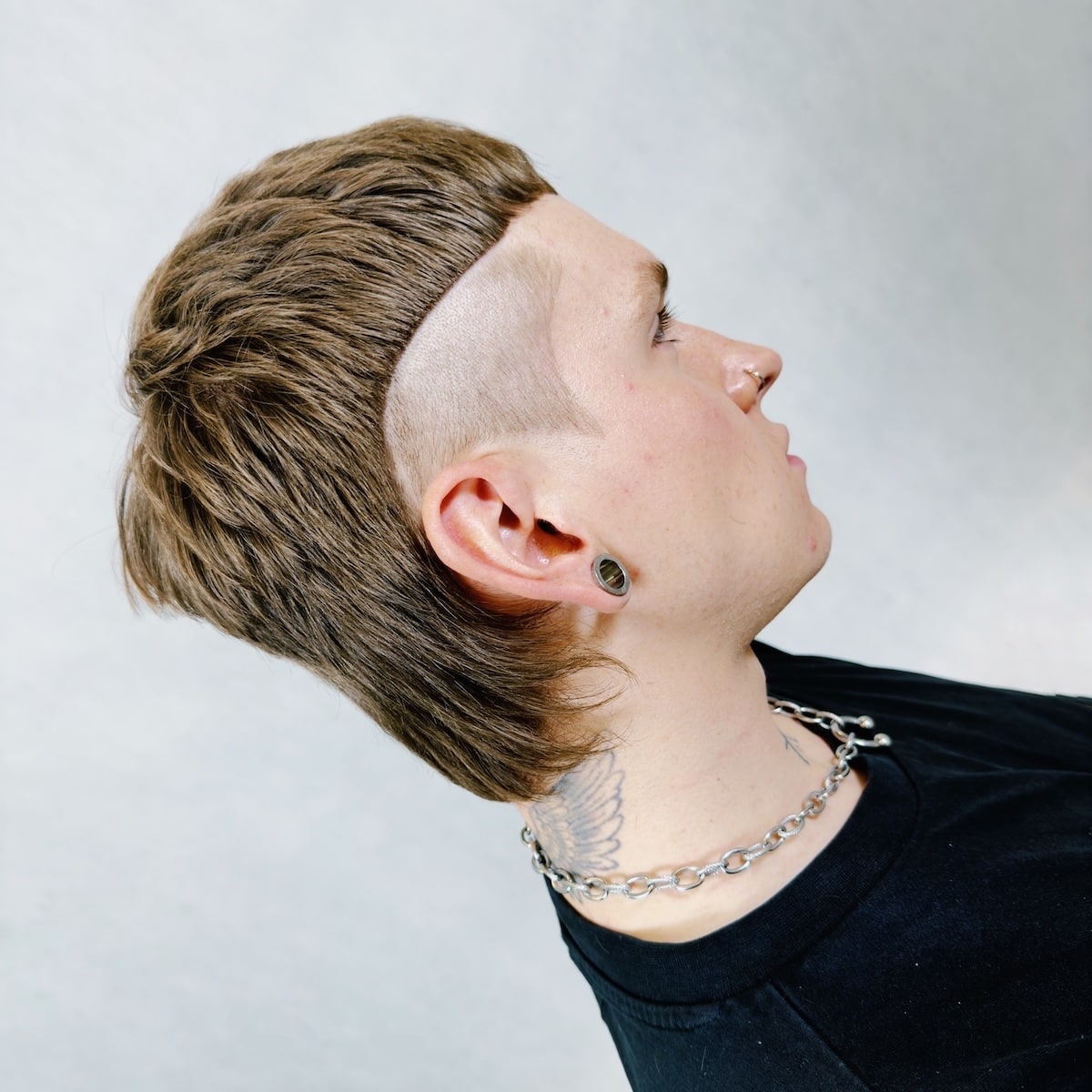
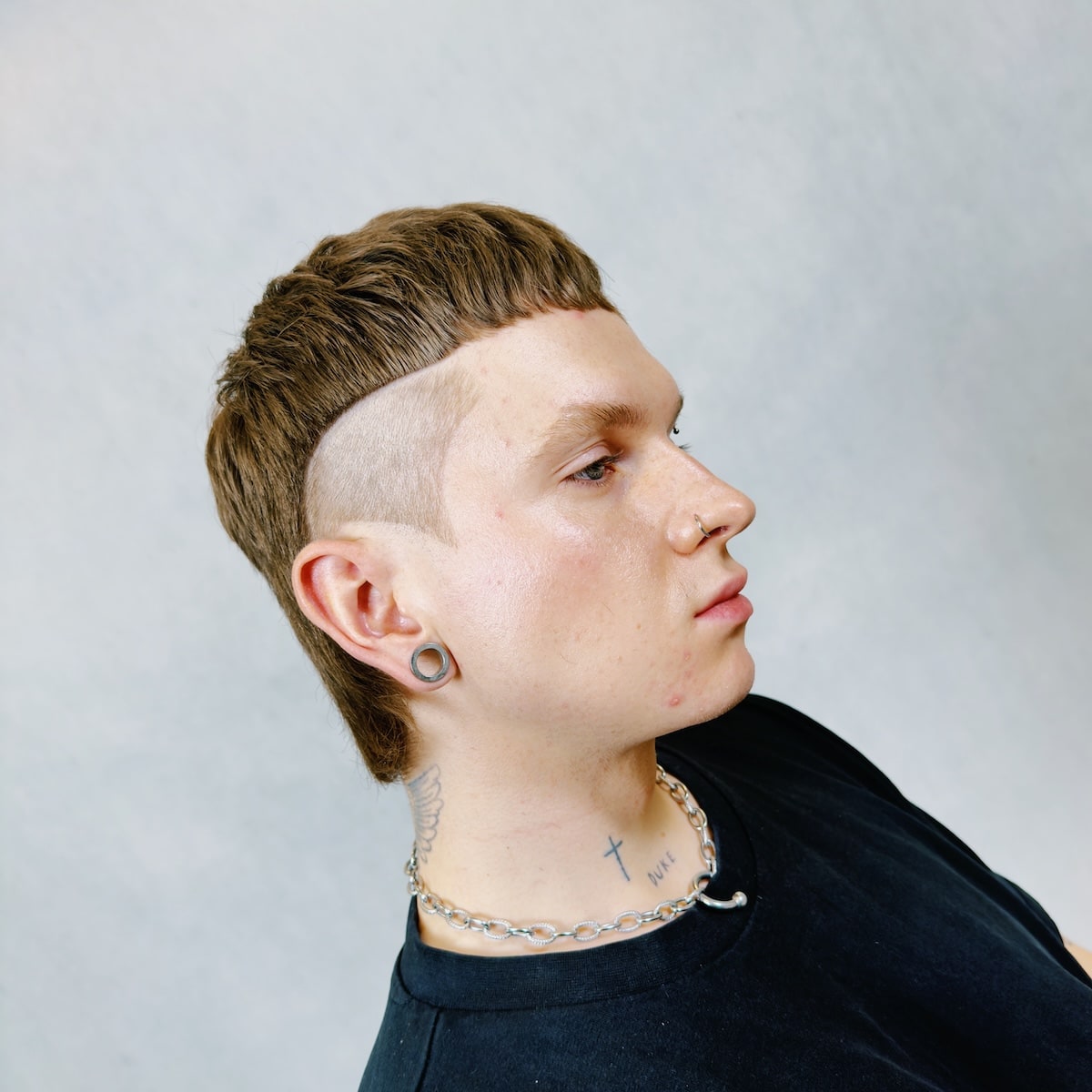
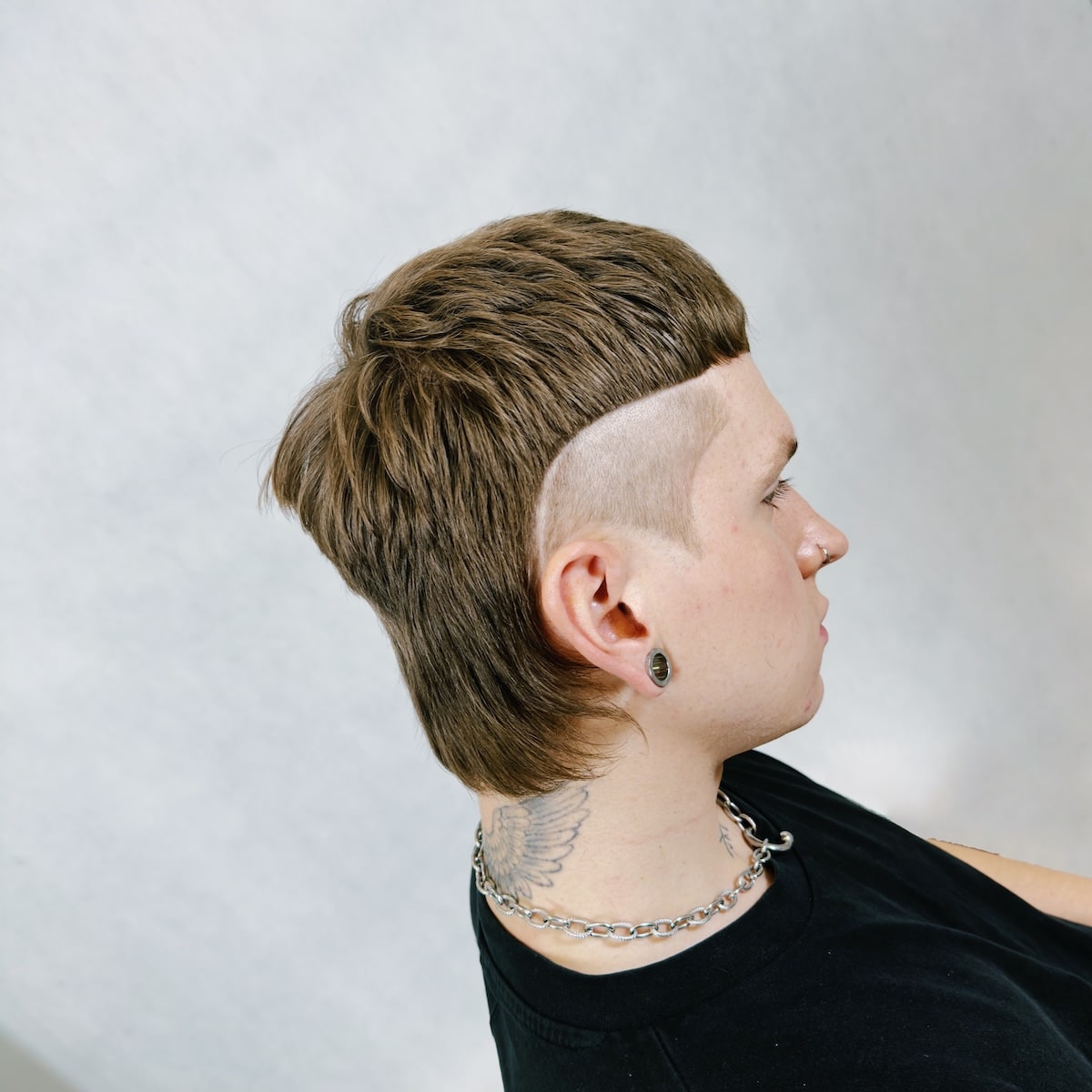
Men's haircutting course on the Mullet Crop. Learn how to build volume on a flat occipital area and combine precise cutting with asymmetric fade blending on the sides (reverse fade and taper fade).
Result and process
About the course
Mullet Crop in Paweł Pollheimer's version is a signature technique for building a modern, fully connected, and wearable men's hairstyle. The course shows how to combine the precision of geometric cutting - working in a circle shape and two reversed triangles on the occipital area - with dynamic texture and asymmetric fade blending on the sides. This is a haircut for clients looking for a bold yet controlled shape that corrects a flat occipital area and gives the hair character.
Paweł Pollheimer guides you through the entire process step by step, starting with an analysis of the model's flat occipital area and a plan for building up volume. You'll see how to create a circle-shaped stationary guide on the occipital area, then build the entire form vertically, using elevation to belly level for the triangular shape and elevation to chest level for the square shape. The course breaks down in detail two different approaches to fading the sides: a reverse fade on one side and a classic high taper on the other.
In this course, you'll see
- Building the shape at the back using two reversed triangles that add volume to a flat occipital area
- The difference between elevation to belly level (triangular shape) and to chest level (square shape), and how to work with intention using them
- Texturizing the entire top with a razor - a C-shaped motion for maximum lightness and closing the hair cuticle
- The full process of creating a reverse fade: from outlining the line with scissors to blending around it
- A classic high taper fade on the other side, executed with a descending technique starting from a 6 mm guard downward
- Final styling using a diffuser and a signature product mix (curl cream + matte paste) to enhance the texture
After this course, you'll start working with intention, using geometry (circle, triangle, square) to build complex yet fully connected shapes. You'll master the razor technique for creating texture and learn to execute two completely different types of fading within a single hairstyle. The Mullet Crop will stop being just a trend and become a precise tool in your craft, allowing you to create signature haircuts for more demanding clients.
What you will learn
- 01How to build up volume on a flat occipital area using two reversed triangles.
- 02How to work with intention using elevation to belly level and to chest level.
- 03How to texturize wet hair with a razor to achieve maximum lightness.
- 04How to execute two different fades step by step: reverse and classic taper fade.
- 05How to build a fully connected hairstyle shape by working in a circle.
- 06How to create a stationary guide on the occipital area that serves as the base for the entire shape.
Before you start
This course assumes you already have:
What's inside
Full access with the course 0:31
0:3101Plan for a flat occipital area
My model's occipital area is flat. So I'll want to build up a bit of volume.
 16:11
16:1102Intentional, light disconnection at the back
I won't be blending this top section of hair with the back. This is where that element of light disconnection comes in.
 25:19
25:1903Blending the shortest hair with the longest
We turn the comb around and blend the shortest hair with the longest section on the nape.
 28:38
28:3804Why texture with a razor, not scissors
Cutting with scissors leaves the hair open, while the razor closes it into a feather-like point.
 47:55
47:5505Moving on to fading - Reverse Fade
I'll start on the side where I want to create what's called a reverse fade.
 59:10
59:1006Sharpening the fade line with a razor
We can go back and gently try to sharpen this line itself with the razor.
 1:03:22
07The descending technique for the taper fade
We'll direct all the guards from a #3 downward into this one space.
 1:13:01
08Intentionally leaving a soft line at the front
I don't want to make this front line very sharp with the trimmer - we'll leave a softer element.
FAQ
Will this technique work for clients with a flat occipital area?
Is this haircut fully connected, or does it have elements of disconnection?
What tools are needed besides scissors and clippers?
How do the fades differ on each side of the head?
What geometric shapes is this cut based on?
Does Paweł explain the difference in working with hair elevation?
How long is this video course?
Details
Educator

Paweł Pollheimer
Educator · 5 courses
Owner of Royal Barbershop in Gdynia, whose education is built on one universal cutting method. In his teaching, he shows that men's hairdressing is simple and logical, placing the main emphasis on technical aspects, cleanliness, and precision of work. He builds all forms based on fundamental geometric shapes-circle, square, and triangle. He draws inspiration from English academies, including Menzpier.
Ready for the next level
Unlock full access to the Connected Hair course library.
Join the Academy