
Structural Middle Part
A men's haircutting course in which Michał Daniel shows how to transform a shapeless middle part into a deliberate, technical structure. Learn to control weight and create a strong, aggressive shape.
Result and process




About the course
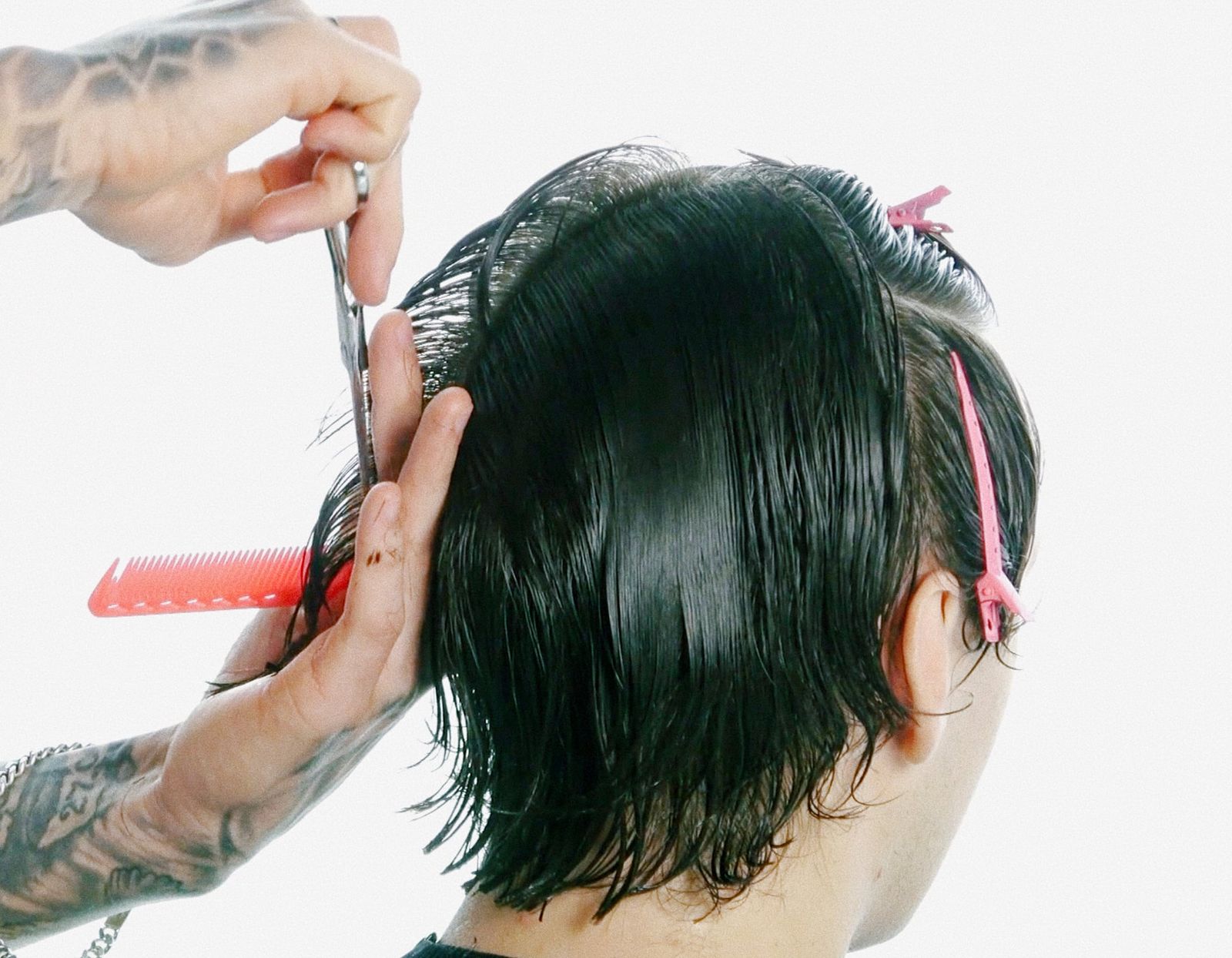
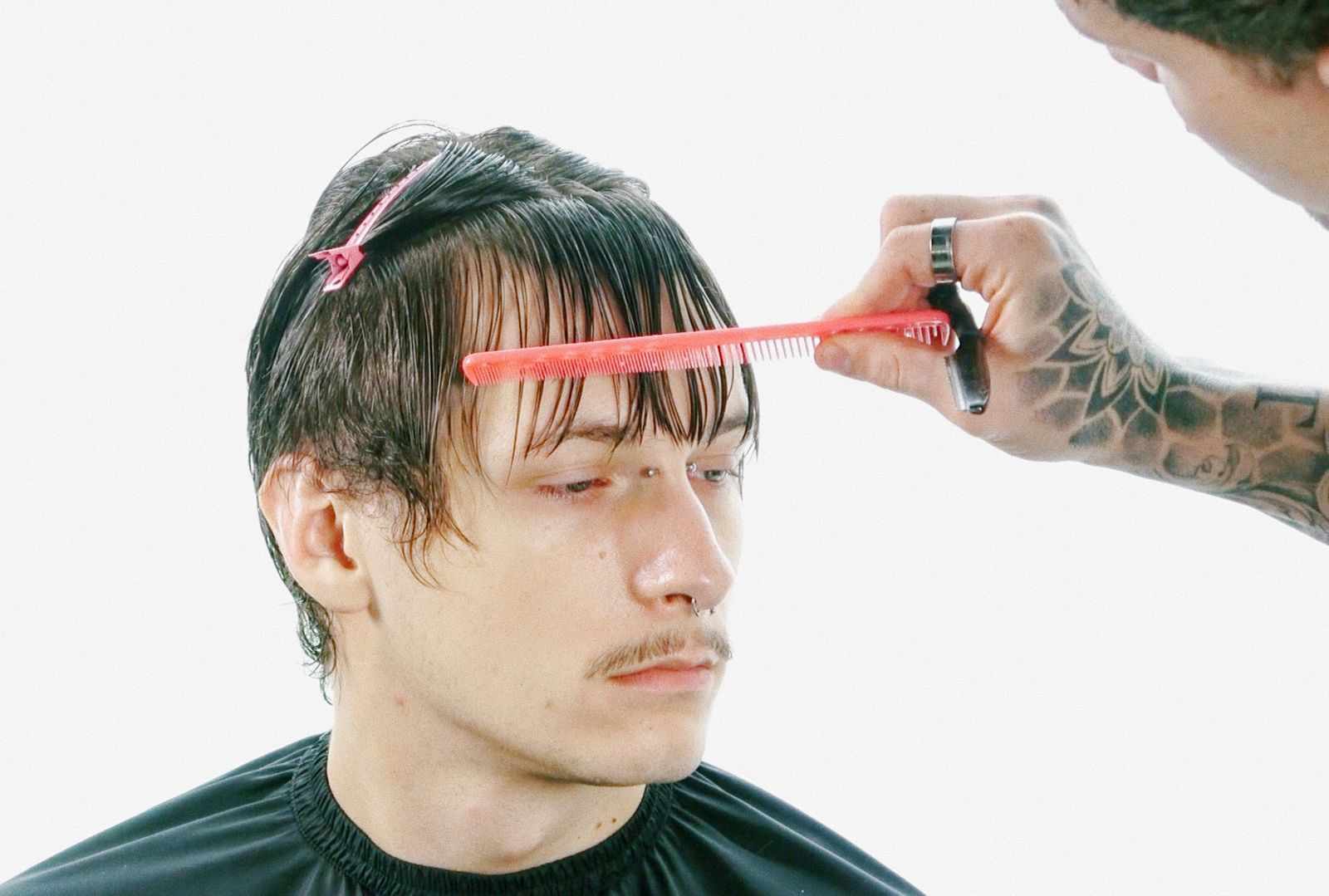
Structural Middle Part is a technical interpretation of the classic center part that turns a shapeless weight of hair into a deliberately engineered structure. The course shows how to regain control over a hairstyle that has lost its waist and started widening the client's silhouette, giving it a clean line, proportion, and lightness without losing visual density.
Michał Daniel guides you through the full process of building the form step by step: from dividing the head into key sections (lower and upper occipital, sides, front), through establishing the baseline, to introducing controlled graduation in the occipital zone. Work on the sides is carried out in vertical sections, where length is carried over from the back and weight is reduced selectively to avoid a "helmet" effect and give the whole a sleeker silhouette.
In this course you'll see
- Building the foundation at the occipital area: from a clean baseline to controlled graduation that adds lightness to the whole silhouette
- Working on the sides in vertical sections with length carried over from the back - how to selectively reduce weight without losing density
- Intentionally leaving the sideburns in disconnection - when and why it's worth disconnecting part of the haircut to preserve its character
- Cutting the top by blending two shapes: round vertically and square horizontally, to achieve a strong, aggressive line
- Blending the disconnection at the nape using a razor - how to smoothly connect two different lengths without a visible cut line
- Adjusting the fringe length so it works with the haircut's outline and visually connects with the sideburn line
- Point texturizing that supports movement and natural hair fall without destroying the previously built structure
This course is for hairdressers and barbers who want to create a middle part in a technical, fully controlled way. After watching the material, you'll start consciously managing the structure, balance, and proportions of the haircut, turning weight reduction and work with natural hair fall into precise tools for building a clean, structural form.
What you will learn
- 01How to build the haircut's foundation through controlled graduation at the occipital area.
- 02How to work on the sides in vertical sections, selectively reducing weight.
- 03Why it's worth leaving the sideburns in disconnection to preserve the haircut's character.
- 04How to blend a round shape vertically with a square shape horizontally on top.
- 05How to blend the disconnection at the nape using a razor.
- 06How to carry length from the back to the sides, creating a cohesive line.
Before you start
This course assumes you already have:
What's inside
Full access with the course 1:32
1:3201Plan for a square shape
Here I'd like to bring out as square a shape as possible - something strong.
 7:06
7:0602Length reference point at the occipital area
This will be my length reference point and the element that disconnects it from the nape section.
 11:15
11:1503The rule of thinner sections
I'm always in favor of taking two thinner sections rather than one thicker one.
 18:39
18:3904Decision to blend the disconnection
I think we'll blend it slightly, because otherwise it seems like it'll turn into too much of a bulge.
 27:20
27:2005Technique for elongating toward the face
By redirecting the section, I'll get elongation toward the face, which will be great.
 33:02
33:0206Choosing the razor for the fringe
Here I need a lot of texture, an irregular finish, and a nice, choppy character.
 40:50
40:5007Preserving the sharp corner
I want to preserve this sharp corner, so I'll hold it out at ninety-degree elevation.
 55:46
55:4608Work philosophy - stop and look
To actually stop and take in these haircuts, so you don't fall into the loop of 'next, next.'
FAQ
Is this course suitable for beginner hairdressers?
What tools are essential for this haircut?
Will this technique work on wavy hair?
What client problem does this haircut solve?
Are all the sections connected to each other in this haircut?
How long is the entire video course?
Details
Educator
Michał Daniel
Educator · 2 courses
Michał Daniel is a barber with over 6 years of experience, working day-to-day at Barberhood in Rzeszów, where he co-creates the academy and develops the team. His approach is built on working with intention and understanding the cutting process, so every move is a deliberate decision, not a coincidence. In his courses, he shares structured methods based on geometry and technique analysis, delivering repeatability and precision in everyday client work.
Ready for the next level
Unlock full access to the Connected Hair course library.
Join the Academy