
Graduation and Layers
See how to build a men's haircut starting from the fringe, seamlessly blending graduation and layers. A course for barbers who want to create hairstyles with controlled weight and natural texture.
Result and process

About the course
Graduation and Layers is a men's cutting method where the entire form is built from the fringe rather than the nape. The course shows you how to stop thinking of graduation and layers as two separate techniques and start consciously switching between them within a single haircut - because it's the same angle, just a different reference point. The result is a hairstyle with controlled weight and natural texture that falls into place on its own, with no effort from the client.
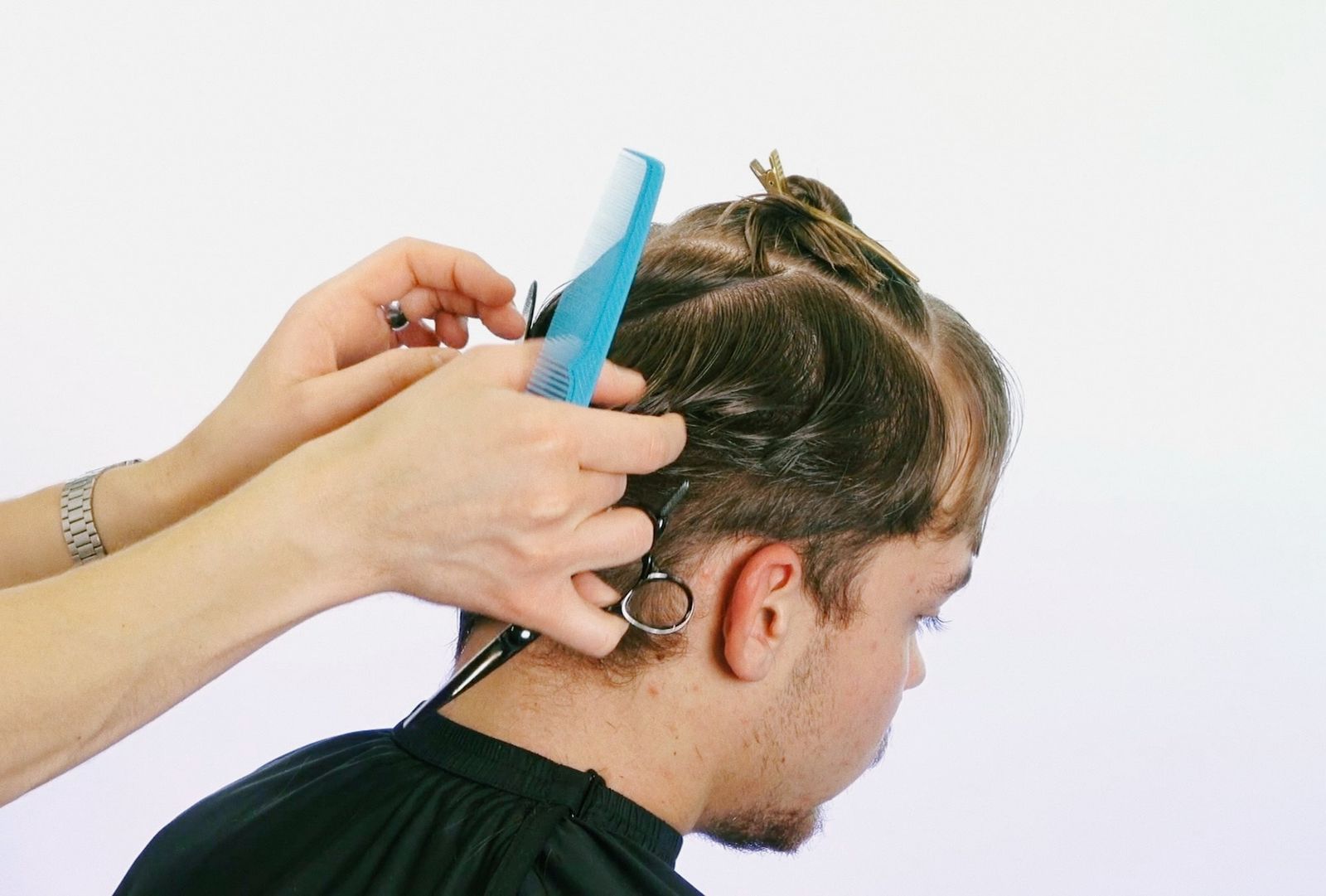
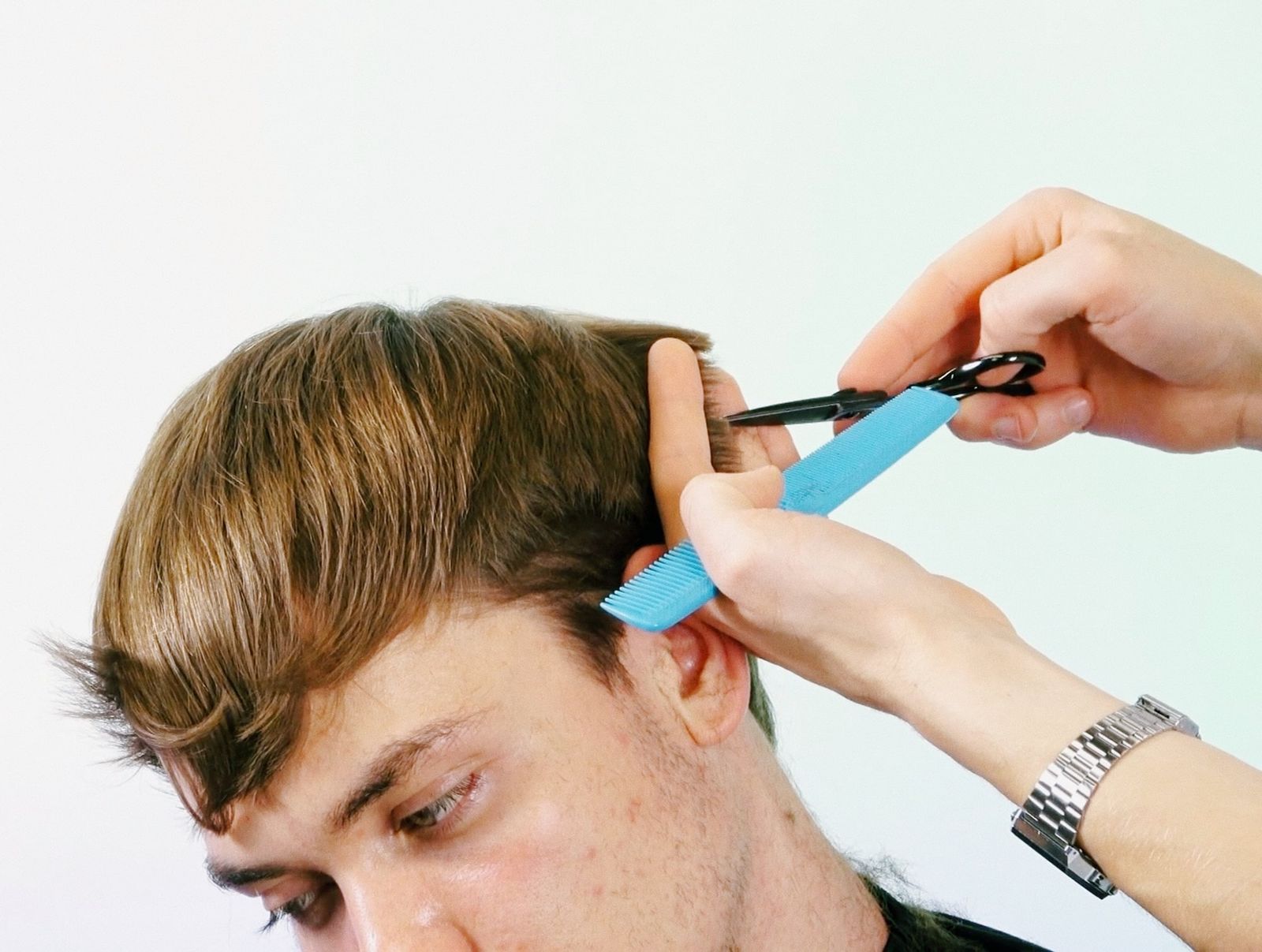
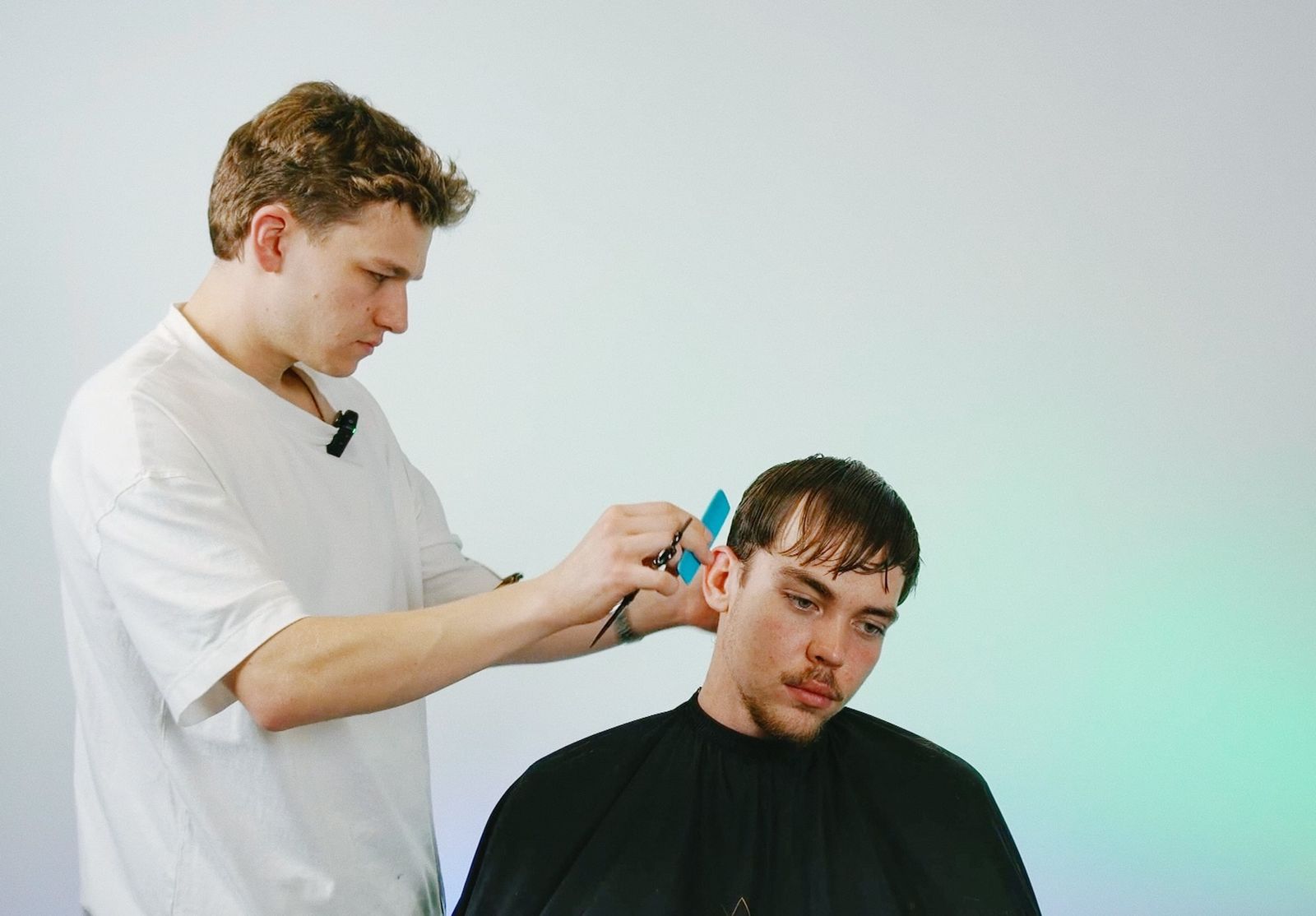
Andrzej Janusz guides you through the entire process step by step: from the consultation and sectioning the head according to anatomy (a line through the temple bulge to the mastoid process), through setting the first line on the fringe, to carrying length with a stationary guide across the following panels. The course shows you how to consciously change elevation and angle to achieve graduation in one area and layers in another, using the same movement. The second half of the course focuses on dry work, where wet structure turns into personalized texture through point cutting, micro-notching, and razor line-up finishing.
In this course, you'll see
- How to treat graduation and layers as two working modes of the same angle - the change comes purely from the reference point
- Building the entire form from the fringe - why setting the first line at the front gives you greater control over the final shape
- Sectioning the head according to anatomy - a line through the temple bulge to the mastoid process as your cutting roadmap
- Dry work as texture personalizing - locating where weight accumulates and reducing it through point cutting and micro-notching
- Finishing the nape line-up with a razor - how to refine the ends for a soft, natural effect without a hard line
- Blending the top with the sides through disconnection - building a round shape vertically and a square shape horizontally to control proportions
- Final styling with a blend of matte paste and shine paste, applied to dry hair for maximum texture and minimal weight
After this course, you'll stop choosing between graduation and layers and start using them as tools to build an intentional form within a single hairstyle. You'll learn to build the haircut from the fringe, giving you full control over the final result, and you'll turn dry personalizing into a precise craft that makes the client's hairstyle fall into place on its own - with no extra product and no effort.
What you will learn
- 01How to treat graduation and layers as two working modes of the same angle.
- 02How to build the entire form from the fringe for greater control over the shape.
- 03How to section the head according to anatomy for precise work.
- 04How to move from wet structure to personalized texture on dry hair.
- 05How to use point cutting and micro-notching for intentional weight reduction.
- 06How to finish the line-up with a razor for a natural, clean effect.
Before you start
This course assumes you already have:
What's inside
Full access with the course 3:29
3:2901Tension from the comb, not the fingers
And as you know, we generate tension from the comb, not from the fingers.
 10:27
10:2702A clean cut with a backward-drawing movement
I keep in mind the backward-drawing scissor movement so that the cut is as clean as possible.
 15:49
15:4903Symmetry through replicating posture
If your posture and the client's head tilt are replicated on the other side, you'll get a symmetrical result.
 46:39
46:3904Vertical and horizontal shape
So horizontally, a more square shape, whereas vertically, a round shape.
 54:38
54:3805Assessing the natural fall of the hair
I let the hair settle in its natural way. And I assess what I'd still like to improve.
 1:07:16
06Transitioning from structure to texture
Here we had a slightly deeper point cut, and here it gets shallower and shallower.
 1:22:32
07The rule for working on the line-up
I no longer touch hair that I previously cut with scissors.
 1:28:42
08Choosing the tool for facial hair
It's not as precise as a trimmer, it doesn't create such harsh cutoffs.
FAQ
Will this cutting technique work on fine hair?
Why does this course start the haircut from the fringe rather than the nape?
Is this course intended for beginner or advanced barbers?
Does the course show dry-cutting techniques?
What tools are needed for this haircut?
Does the course explain how to blend the top with the sides?
How long is the entire video?
Details
Educator
Andrzej Janusz
Educator · 2 courses
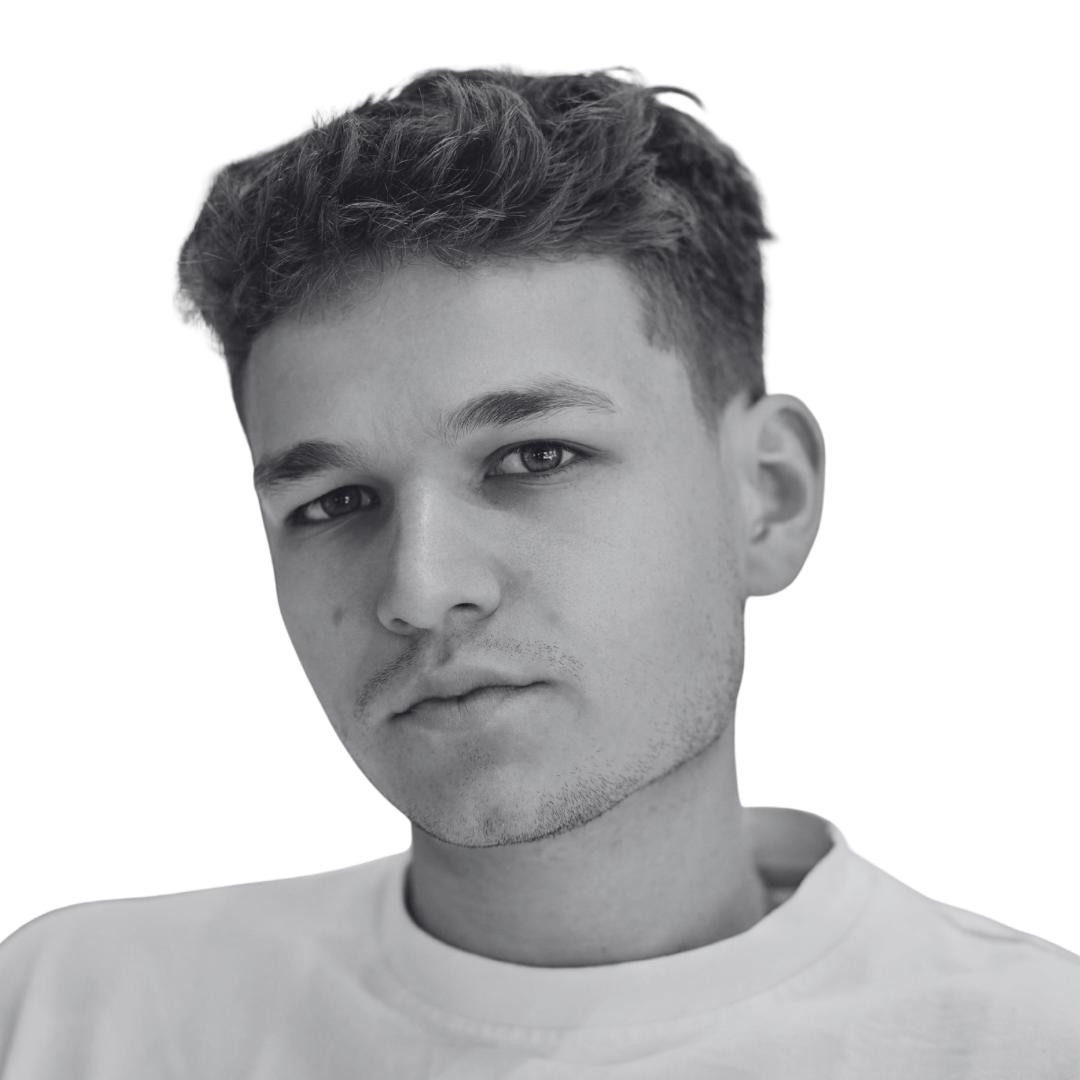
Andrzej Janusz, a barber with eight years of experience, takes a craft-based approach to his work. He treats every haircut as an individual project, preceded by an analysis of head proportions, hair growth direction, and client needs. In his courses, he focuses on teaching practical methods that allow you to make conscious technical decisions in salon conditions, rather than relying on chance.
Ready for the next level
Unlock full access to the Connected Hair course library.
Join the Academy