
Textured Crop Inspired by the Warrior Cut
A men's cutting course in which Dalibor Hajdin combines scissors and clippers to turn a simple textured crop into a textured, warrior-cut-inspired hairstyle. Learn to section with the horseshoe and T-parting, cut graduation and point cut, then taper with clippers using the Guard Fade Reverse technique.
Result and process
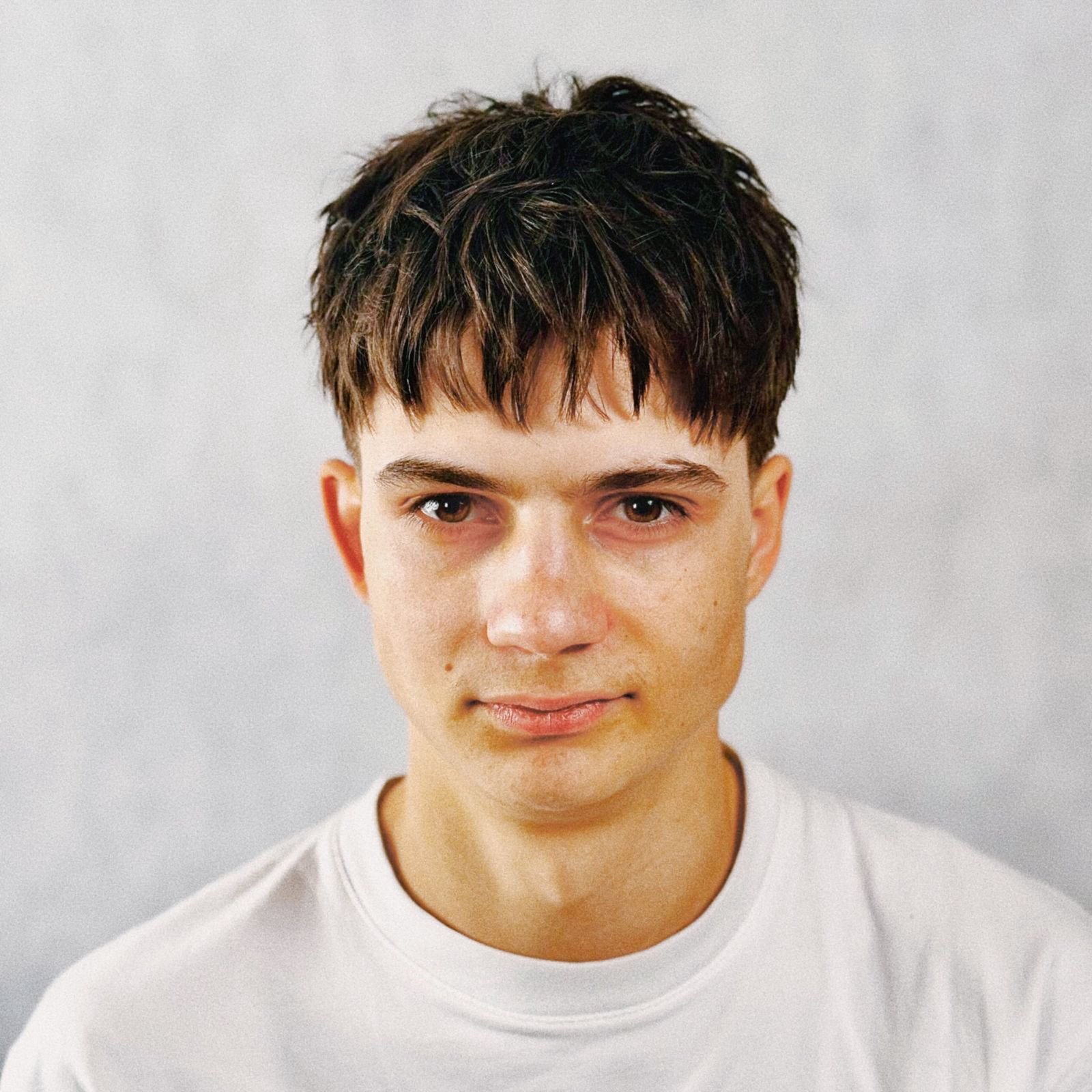
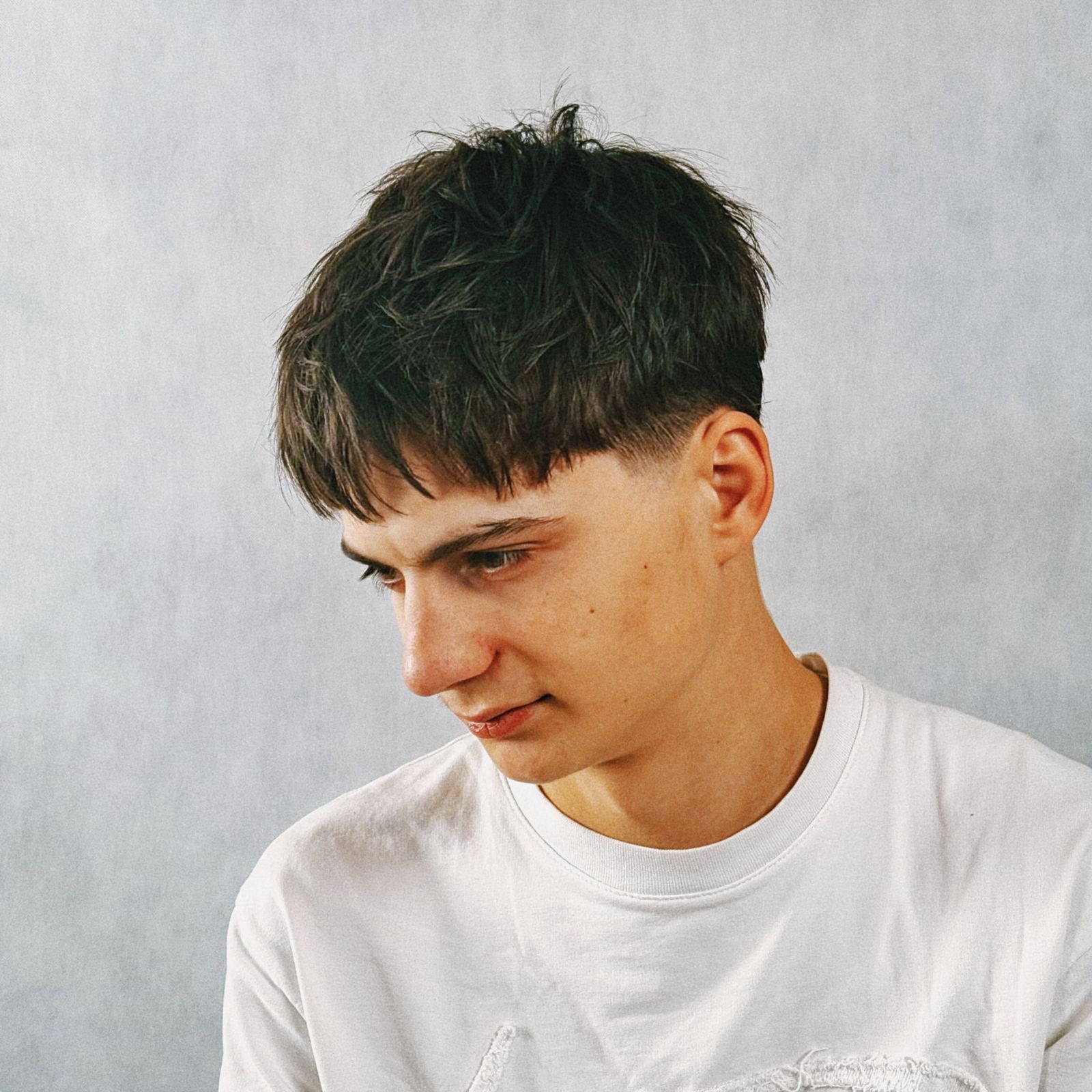
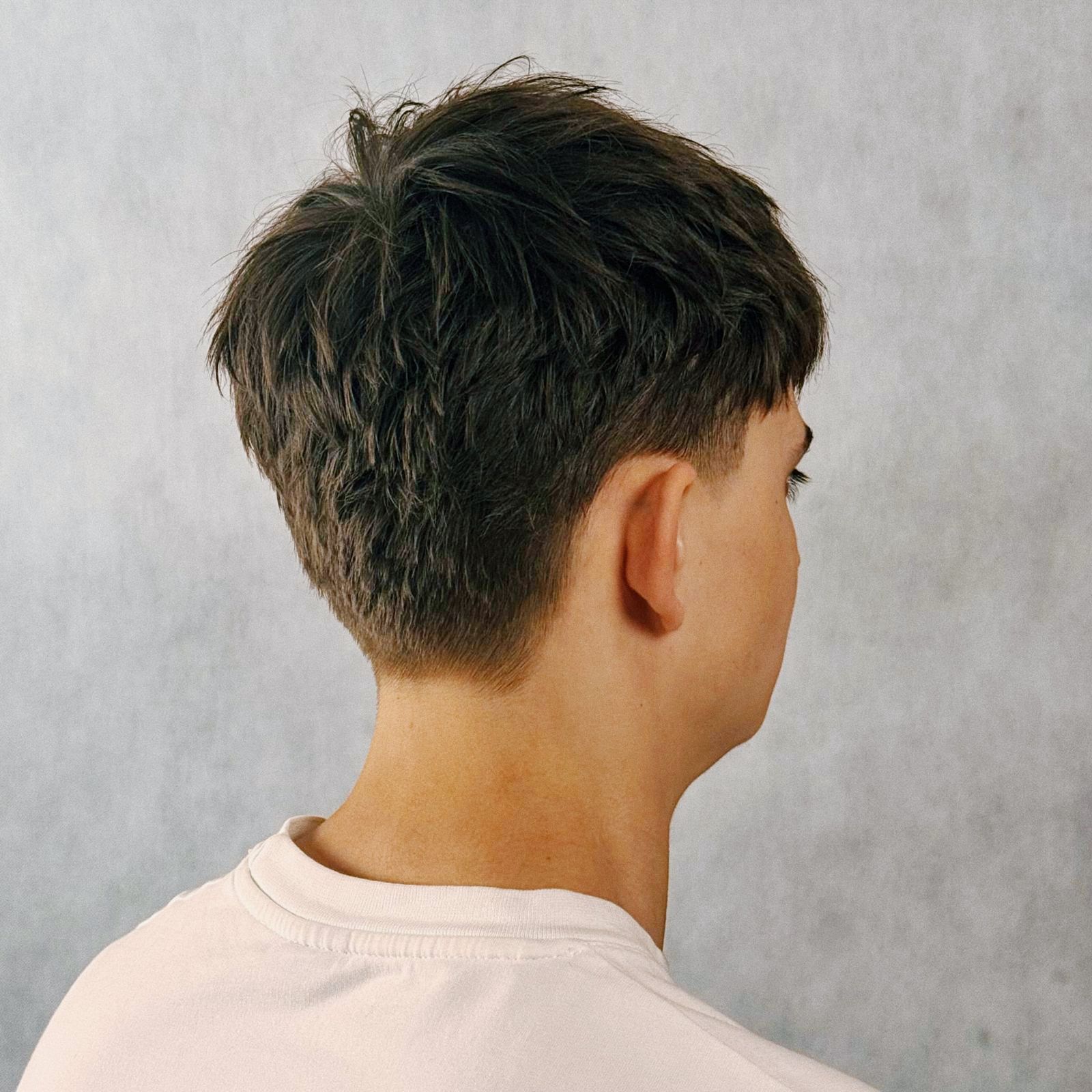
About the course
Textured Crop Inspired by the Warrior Cut is a men's haircut in which Dalibor Hajdin deliberately steps away from a plain, uniform texture crop cut entirely with clippers. He picks a specific length for the sides and back, then finishes the rest with scissors, giving the cut more movement, more texture and a looser, rawer character inspired by the warrior cut.
The course walks through the entire process step by step: from the consultation and hair growth analysis, through the horseshoe part and reducing weight with scissors at a 90 degree angle, all the way to working the crown through T-parting, building texture with point cut at a 45 degree angle and the final clipper taper with the Guard Fade Reverse technique. You will also see how Dalibor Hajdin reads his body position relative to the client and why he opens the consultation by asking what the client doesn't want.
In this course you will see
- Parting the head into a horseshoe section with one smooth comb stroke and the logic behind placing the parting line
- Reducing weight with scissors at a 90 degree angle to the head, which creates graduation instead of random layers
- Working the crown through the radial section and T-parting, which controls the lift of the top area
- Building texture with point cut at a 45 degree angle, including changing the cutting direction on the second side of the head
- Clipper tapering on the number 2, 1.5 and 1 guards together with the Guard Fade Reverse technique for a soft transition
- The finishing ritual: a head and face massage and choosing a styling product that keeps the texture at home
What you will learn
- 01How to run a consultation by asking the client what they DON'T want instead of what they want, to match their expectations faster.
- 02How to part the head into a horseshoe with one stroke, and why a precise parting line decides the whole cut.
- 03How to cut with scissors at a 90 degree angle to the head to get graduation instead of random layers.
- 04How to build texture with point cut at a 45 degree angle, and why changing the cutting direction on the second side of the head strengthens the effect.
- 05How to combine scissor work with a clipper taper, including the Guard Fade Reverse technique, for a soft transition with no hard line.
- 06How to finish the service with a head massage ritual and product choice, so the client keeps the texture at home.
What's inside
Full access with the course 0:04
0:0401Introduction: a variation on the textured crop
Today I'll show you a variation on the textured crop.
 0:39
0:3902Consultation: what the client doesn't want
I usually start the consultation by asking what doesn't work for the client, what they don't like, and what they're not used to.
 1:22
1:2203Horseshoe: parting the head like a horseshoe
Horseshoe means it goes in an arc around the head.
 8:23
8:2304Graduation versus layers
Graduation is the opposite of layers, because when we have layers, we're on one side of the angle split in the hair, and graduation is on the other side.
 19:59
19:5905T-parting: controlling the crown
What we'll do is pick the simplest way to control what we want to create here, and we'll do a T parting.
 33:29
33:2906Point cut at a 45 degree angle
Point cut works at a forty five degree angle.
 34:41
34:4107Changing point cut direction for more texture
If we want it more textured with more structure, I'd recommend trying a point cut the opposite way, since one side is like this and the other side can be cut this way.
 47:31
47:3108Why skip thinning shears
I'm not a fan of thinning scissors, the so-called shears.
 56:32
56:3209The Guard Fade Reverse (GFR) technique
Or better said, the guard fade reverse technique is about using a fade guard and flipping the clipper around.
 1:11:20
10The trick for holding the client's ear
With one finger, great, or two. It's easier than fighting with the comb and scissors and risking his ear, or my fingers.
 1:13:18
11Ritual: head and face massage before styling
The first thing I do is massage the forehead, the front area.
 1:17:56
12The final name: textured crop inspired by the warrior cut
So this would be my variation on the textured crop inspired by the warrior cut.
FAQ
Who is this course for?
How does this variation differ from a classic textured crop?
What tools do I need?
Why scissors first, and only then clippers?
What if the client has very thick hair?
Can this technique be used on other hair lengths?
Details
Educator
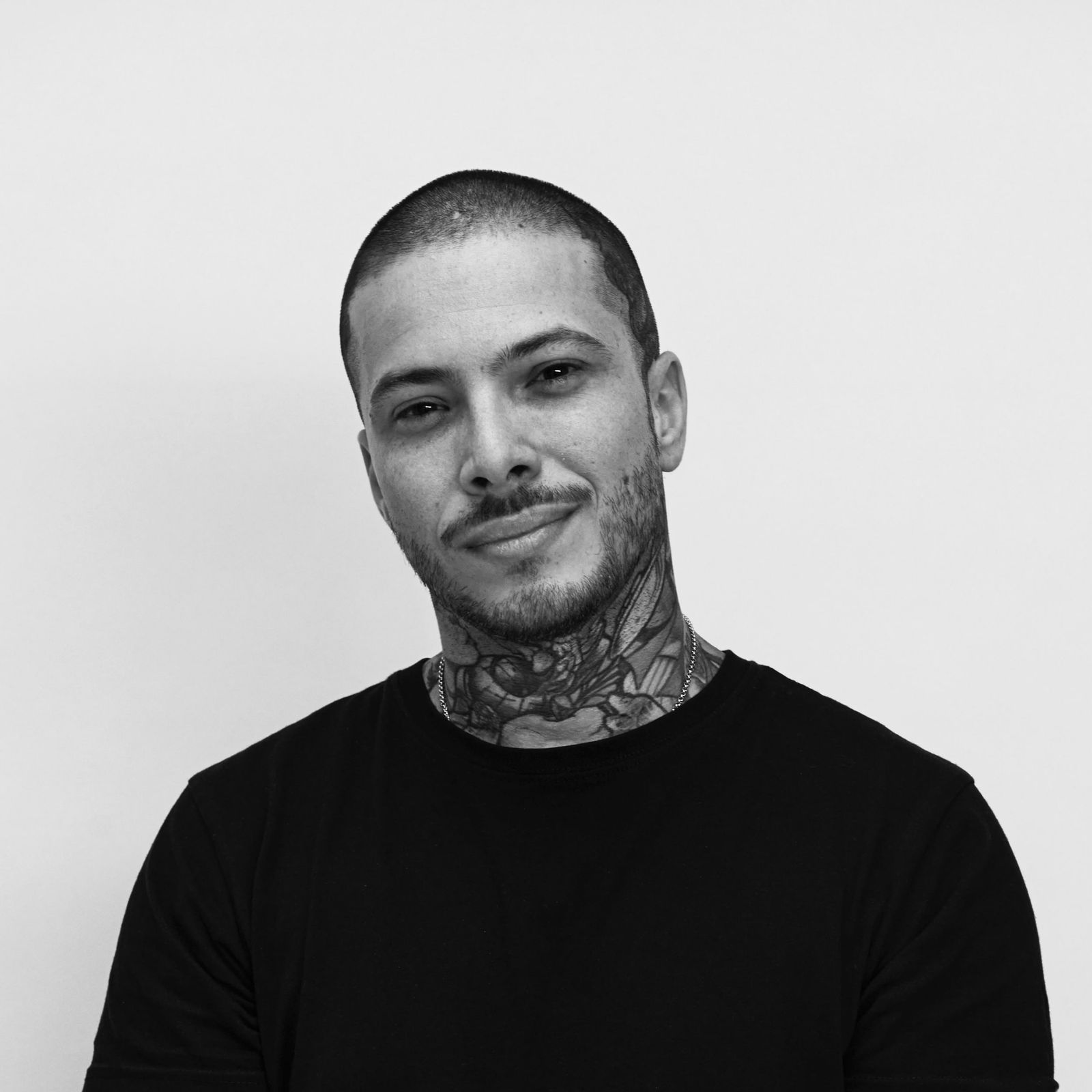
Dalibor Hajdin
Educator · 1 course
Dalibor Hajdin is a hairdresser of Slovak origin with Balkan roots, living and working in the Czech Republic, where he runs his own salon together with a colleague. Alongside cutting clients, he trains other hairdressers, and he calls the consultation the most important part of his work, where he first asks the client what they don't want instead of what they want. He values long-term relationships with his clients, some of whom come to see him regularly every week, and away from the salon he unwinds with motorcycles and combat sports.
Ready for the next level
Unlock full access to the Connected Hair course library.
Join the Academy