
Radial Pivot Graduation
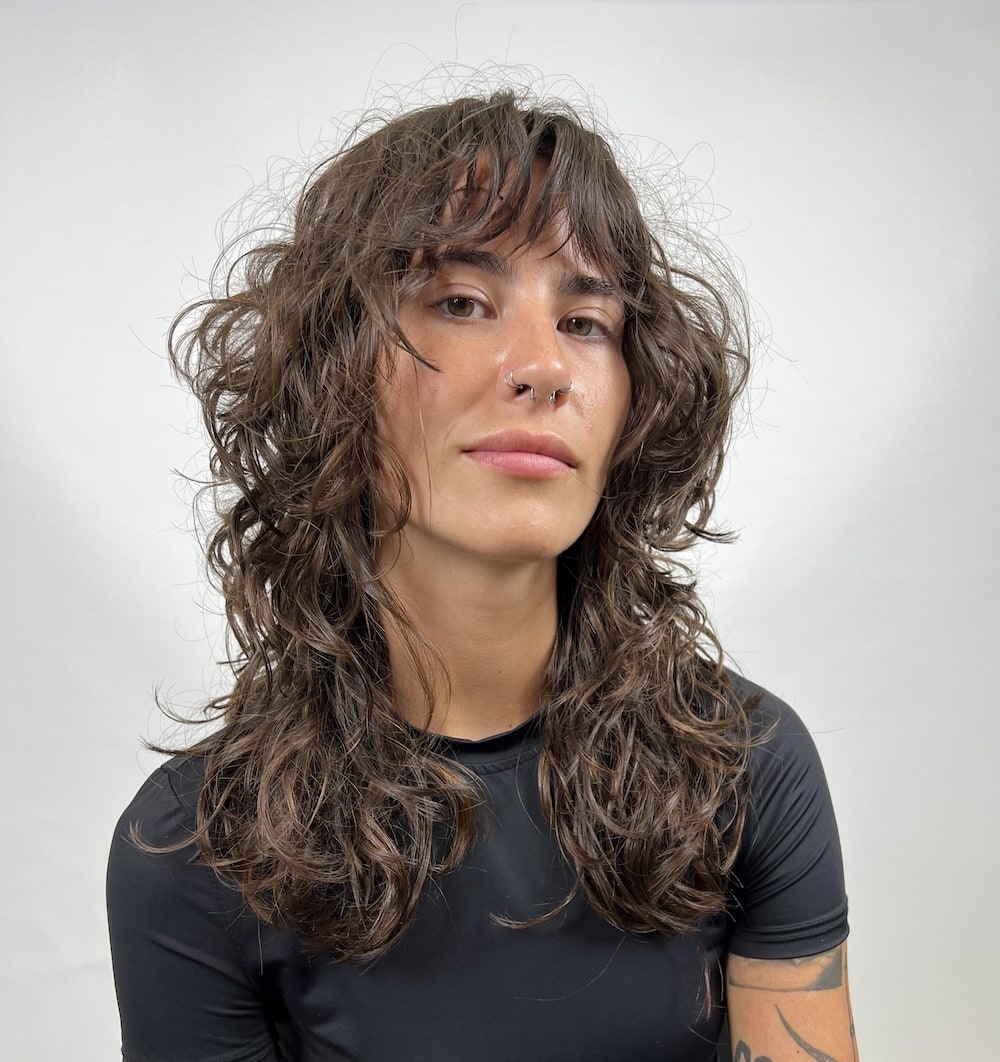
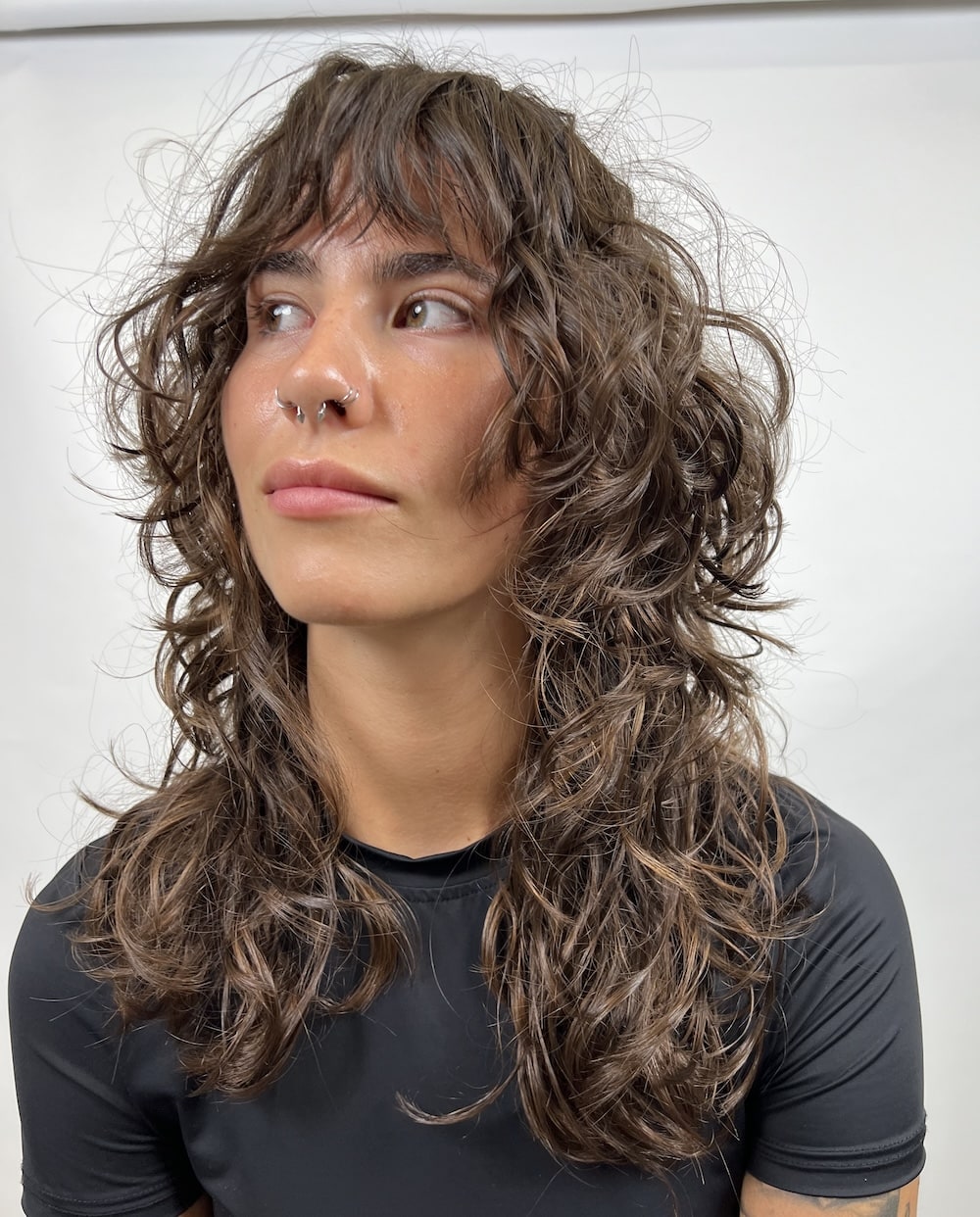
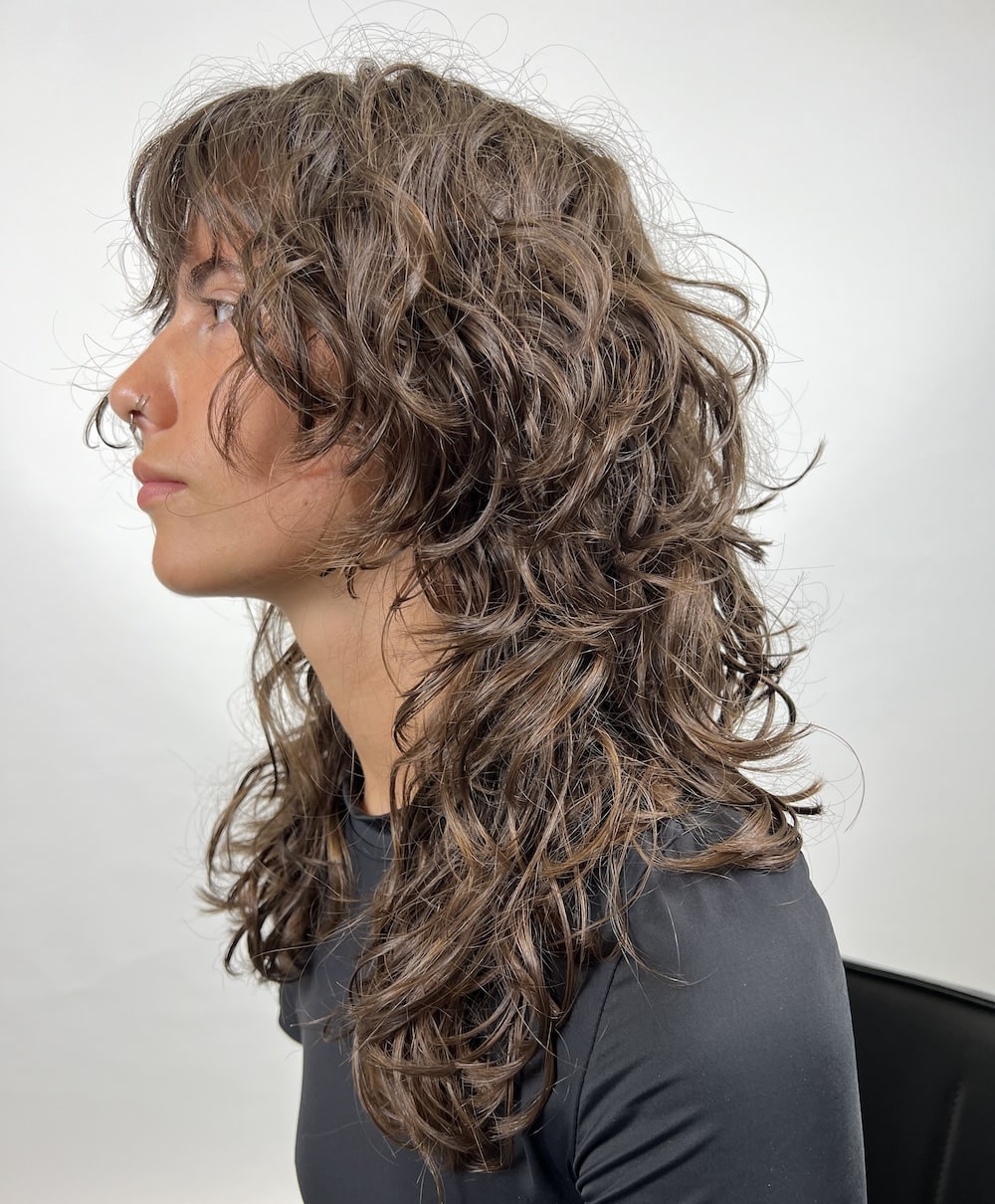
A course on radial pivot graduation for thick, curly hair. See how to reduce weight and build maximum volume, highlighting facial features and making everyday styling easier.
Result and process
About the course
Radial pivot graduation is a cutting technique for thick, curly hair that reduces weight while building maximum volume, lightness, and movement. The course shows how to turn heavy curls - hard to style day to day - into a hairstyle that highlights the cheekbones and gives the face a defined contour, while making everyday styling easier for the client.
Piotr Adaszkiewicz guides you through the entire cutting process step by step: from finding the highest point on the head and creating a cross parting, through working with pivoting sections, to consciously working angles from 180° down to 140° to reduce weight without sacrificing length. The course shows how to mirror the anatomy of the head in the round shape of the haircut to achieve natural yet controlled volume.
In this course you'll see
- Working with pivoting sections - how to section out triangular shapes from a single, central point at the crown of the head.
- Conscious angle control from 180° to 140° - why stopping at 140° is key to protecting length while reducing weight.
- The method for perfect balance - how to set four control points (front, back, sides) before starting the cut to avoid symmetry errors.
- Creating an irregular fringe with a razor - how to cut at a 45-degree angle on wet hair for a soft, feathered finish.
- Body positioning while cutting - when to pull sections toward you and when to push them away, to keep technical precision on both sides of the head.
- Full styling on curly hair with a diffuser - how to blow-dry with the head down for maximum volume and use dry hairspray as a filter to protect against humidity.
After this course, you'll start consciously using geometry and the pivot technique to sculpt volume in thick, curly hair. Instead of fighting excess weight, you'll learn to control it, creating light, dynamic hairstyles that highlight your client's features and that she can easily style at home herself.
What you will learn
- 01How to work with pivoting sections shaped like triangles.
- 02How to consciously control angles from 180° to 140° to protect length.
- 03How to set 4 control points to maintain a perfectly balanced hairstyle.
- 04How to create an irregular fringe with a razor, cutting at a 45° angle.
- 05Why body position is key to cutting precision in the pivot technique.
- 06When to pull sections to the side and when to replicate length at the back.
Before you start
This course assumes you already have:
What's inside
Full access with the course 1:20
1:2001Setting the parting from the highest point of the head
By placing the comb, we were looking for a certain kind of high point - the most elevated element.
 6:03
6:0302Warning against over-redirecting
The moment we redirect too strongly, every following section will keep getting shorter.
 9:22
9:2203Creating a new guide on the side
In this area you'll need to create a new guide, because you don't have a reference point at the front.
 14:41
14:4104Choosing your position - pulling vs. pushing
Either I change the comb, meaning I'll now push, or I move to the other side and pull.
 24:20
24:2005Moving to the back - the classic method
I'd like to test the classic method - carrying over an even length.
 29:12
29:1206Correct body position in the pivot technique
My arm mirrors the shape of the section - I'm not standing facing the strand.
 56:12
56:1207Working technique with the razor
The hair quality is much better when we cut with the razor on wet hair.
 1:09:02
08Drying with the head down for volume
We use natural gravity to achieve even greater volume.
FAQ
What hair type is the radial pivot graduation technique for?
Does this haircut significantly shorten hair length?
How do you maintain symmetry and balance on both sides of the head with this technique?
What special tools are needed for this haircut?
Does the course also show how to style curly hair after cutting?
How long is this video course?
Details
Educator
Piotr Adaszkiewicz
Educator · 2 courses
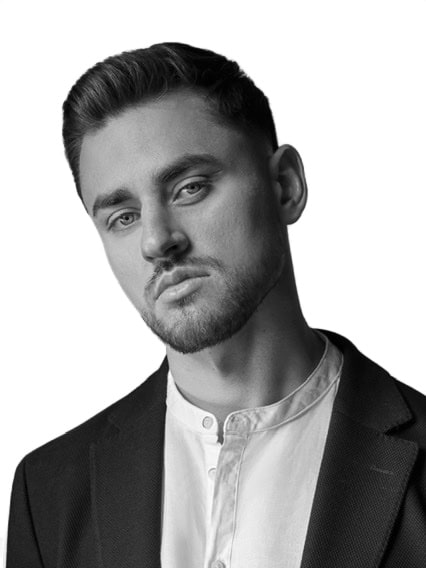
Piotr Adaszkiewicz is the founder of Cut Cut Academy and creative director of three salons. In his educational work, he moves away from teaching rigid patterns in favor of "intentional hairdressing." He focuses on understanding anatomy, spatial visualization, and intentional form design-giving ambitious hairdressers the tools to develop their own, individual style.
Ready for the next level
Unlock full access to the Connected Hair course library.
Join the Academy