
Square Layer Technique
A course on the square layer technique for hairdressers working with long, dense hair. Learn how to remove weight and add movement while preserving length, by building a form based on square geometry.
Result and process
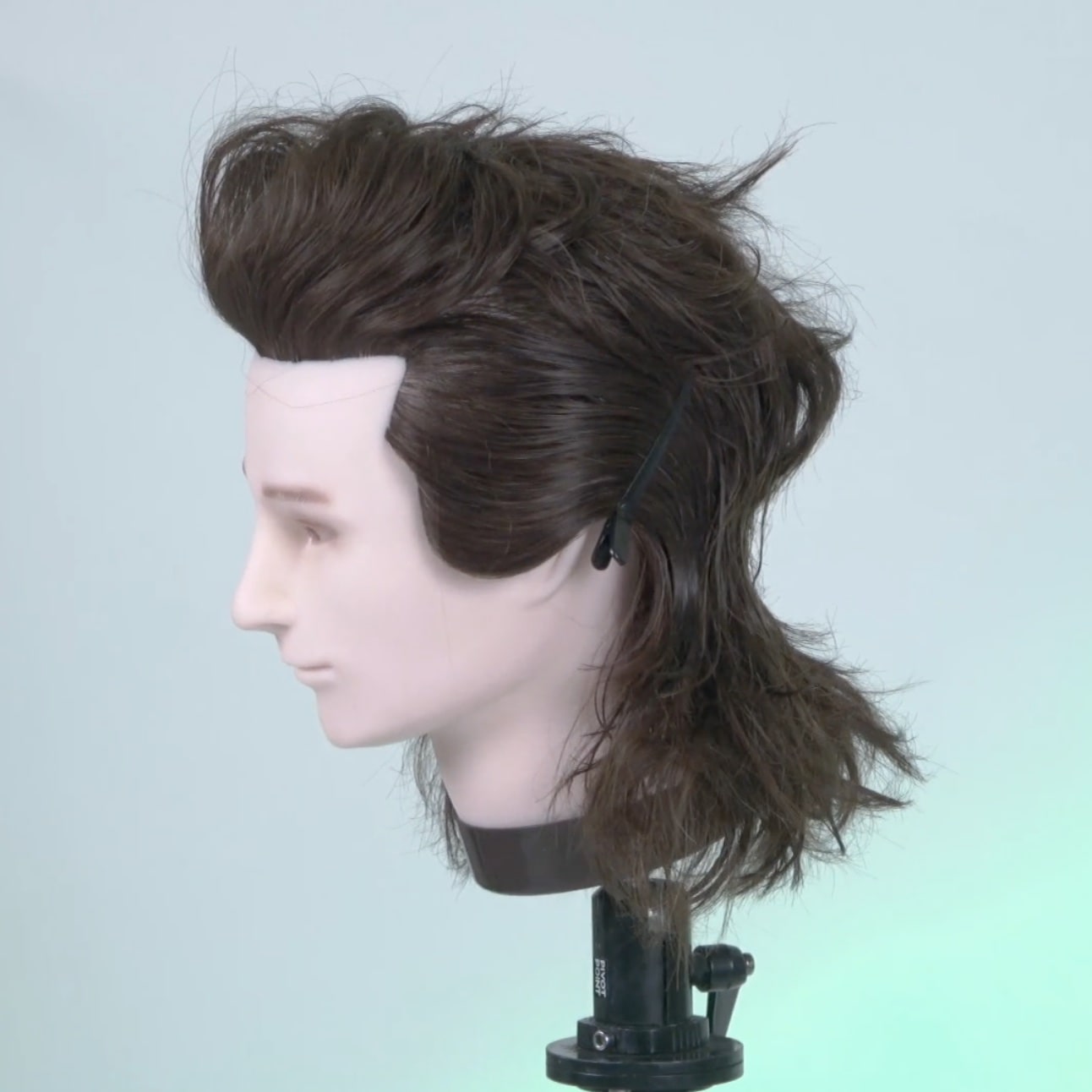
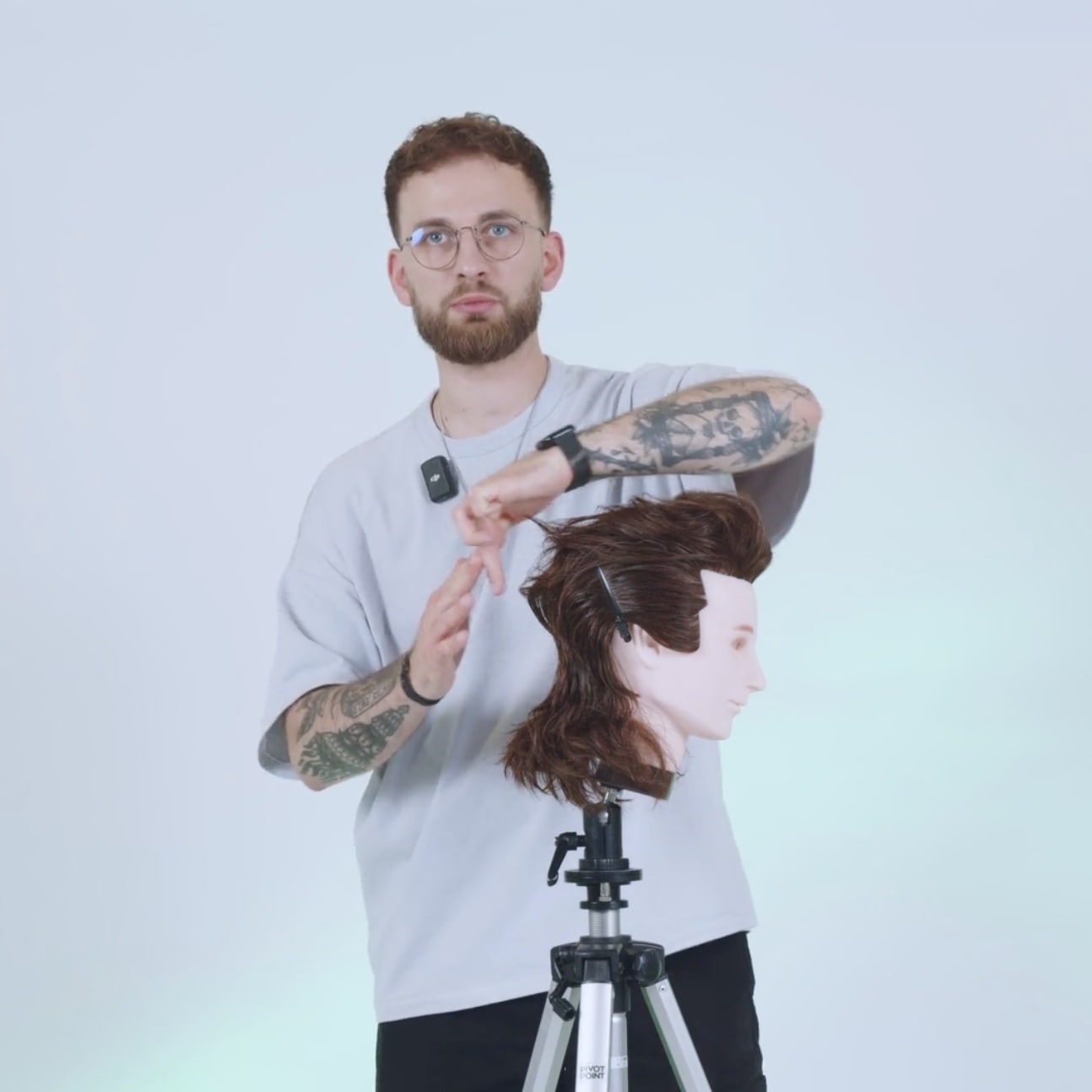
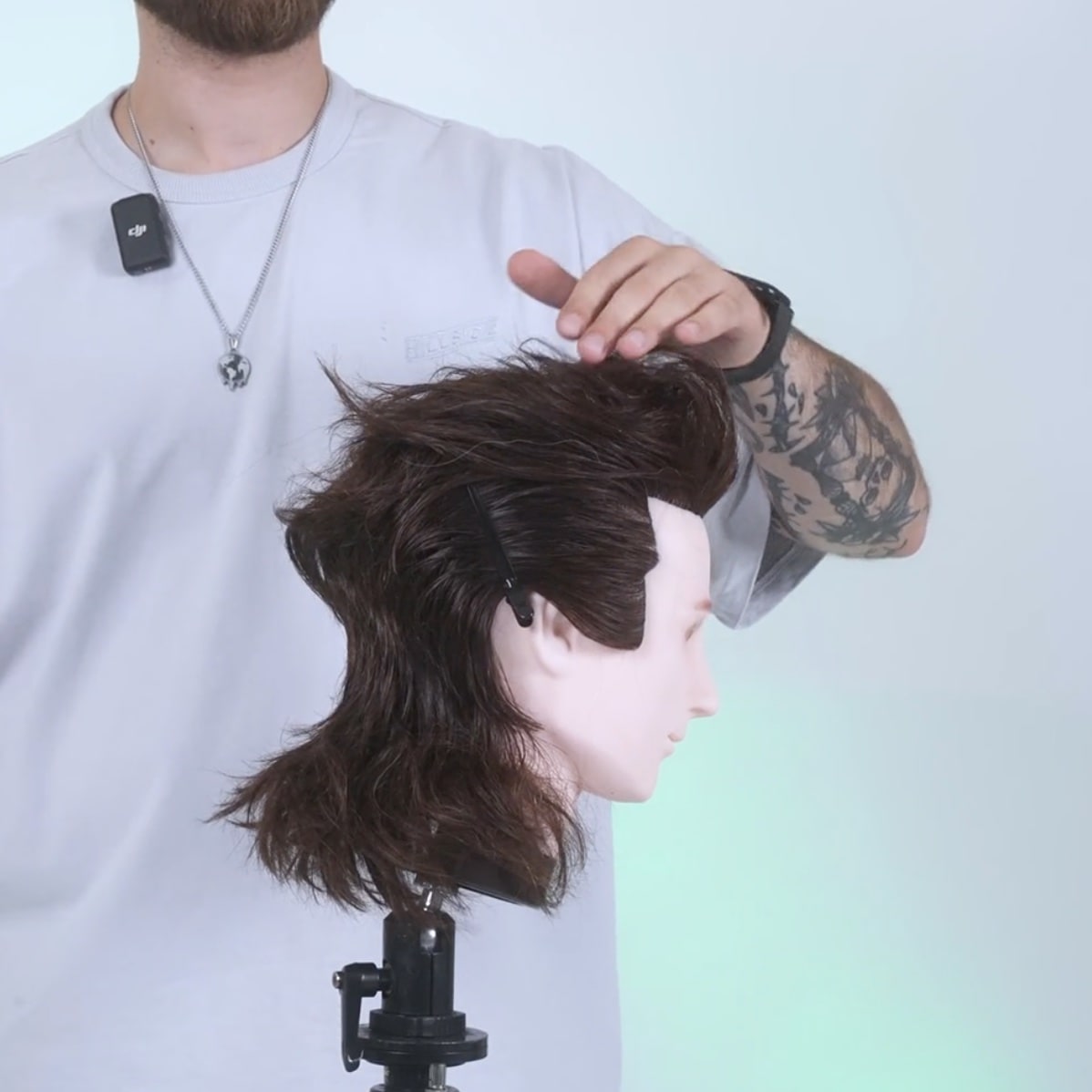
About the course
The square layer technique is a precise layering method aimed at removing excess weight and bulk from the hair without shortening its length. The course shows how to build a form based on square geometry on long, dense hair - creating five intentional corners at the rounded points of the head. The result is a haircut that keeps its length while gaining lightness, movement, and dynamics, solving the "heavy nape" problem.
Marek Krzyminski guides you through the entire process, starting with the fundamental principle of dividing the head along angle bisectors - precise lines that determine the position of each of the five corners of the haircut. Step by step, he shows how to maintain a constant 90-degree projection and control the shape on two planes: vertical, using the cutting line, and horizontal, through the rotational "two to one, three to two" separation system. This is a craft built on working with intention on head geometry, not just repeating movements.
In this course, you'll see
- How to divide the head based on angle bisectors - how to find the rounding points of the skull and mark out the sections where the corners will form
- The "two to one, three to two" separation rotation system for building a flat shape on the round surface of the head
- How to check that the rotation is correct by watching the small "triangle" under your hand and the sharpness of the cutting line in the mirror
- Why 90-degree projection is key to the square shape - and how to avoid accidentally building weight (graduation) or removing too much weight (round shape)
- Working on the outer side of the hand and keeping your chest perpendicular to the cutting line as a condition for clean technique
- A full styling routine using a diffuser and clips to build shape, reshape the form, and imitate the natural drying process of the hair
- Finishing the outer line with a razor to keep the balance between internal movement and a cohesive line at the nape
After this course, you'll start using head geometry with intention to create predictable shapes and corners. The square layer technique will let you offer clients with long, heavy hair a solution that preserves their favorite length while adding lightness, volume, and dynamics to the haircut. Instead of randomly "layering," you'll start sculpting the form with full control over the hair's weight and movement.
What you will learn
- 01How to mark out sections based on the angle bisectors of the head.
- 02How to apply the "two to one, three to two" rotational separation system.
- 03How to maintain a constant 90-degree projection to achieve a square shape.
- 04How to check the rotation is correct by watching the small "triangle" and the sharpness of the cutting line.
- 05How to remove weight from long hair without shortening its length.
- 06How to adjust the separation rotation for flat and round areas of the head.
Before you start
This course assumes you already have:
What's inside
Full access with the course 0:11
0:1101The goal of the layer technique - removing weight
Its job is to remove excess weight and bulk from the outer sections.
 9:49
9:4902Correcting partings - the key to success
If you spot a mistake during sectioning, don't be afraid to fix it right away.
 21:51
21:5103Controlling the shape with rotational movement
The shape on the horizontal plane will be controlled by the rotational movement of the separation.
 36:10
36:1004The technique of pushing the separation on the other side
Now I won't be pulling the two-to-one separation, I'll be pushing the two-to-one separation instead.
 59:32
59:3205Carrying length over from the back to the sides
I'm taking a piece of the separation from the back, which I'll use to carry the length over to the sides.
 1:09:44
06Taking length for the crown section
From the spot where my bisector ran, so there's a parting, I'm taking the length.
 1:21:20
07An unusual way to check the shape of the haircut
Taking the head off the stand and checking the shape upside down.
 1:28:59
08How the diffuser works during styling
The diffuser's job is to break up the airflow and give the hair just the heat.
FAQ
What type of hair is the square layer technique designed for?
Is this course suitable for beginner hairdressers?
What is the main goal and effect of this haircut?
Does the course explain how to adapt the technique to different head shapes?
What's the key challenge in this technique?
What tools are needed to perform this haircut?
How long is the full video?
Details
Educator

Marek Krzyminski
Educator · 8 courses
Barber and men's hairdresser, creator of the FUTURE MEN'S HAIR project and author of the book "MODERN x OLDSQL HAIRCUTS MIXTAPE." His analytical approach to cutting is built on geometry and kinetics, allowing for precise breakdown of every form. As an educator, he emphasizes building a hairstyle with intention and understanding the fundamental techniques. Silver medalist at the WELLA NATIONAL TREND VISION AWARD 2021 in the Men's Hair category.
Ready for the next level
Unlock full access to the Connected Hair course library.
Join the Academy