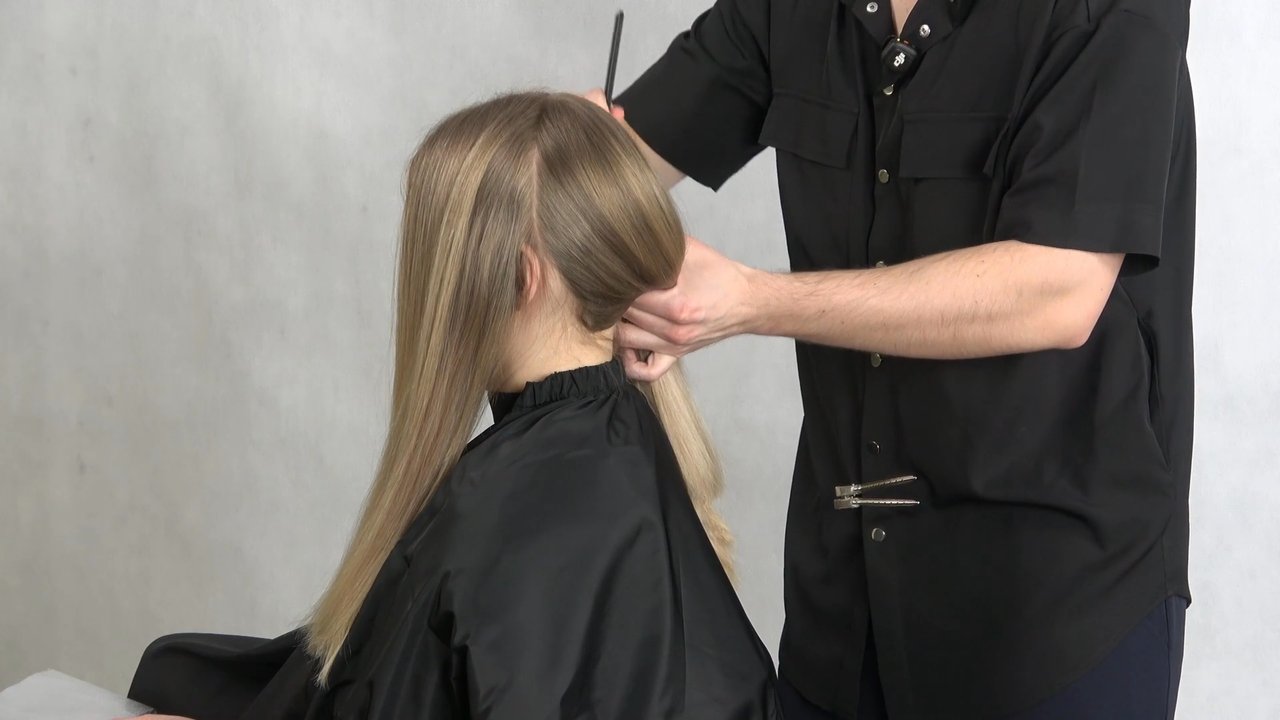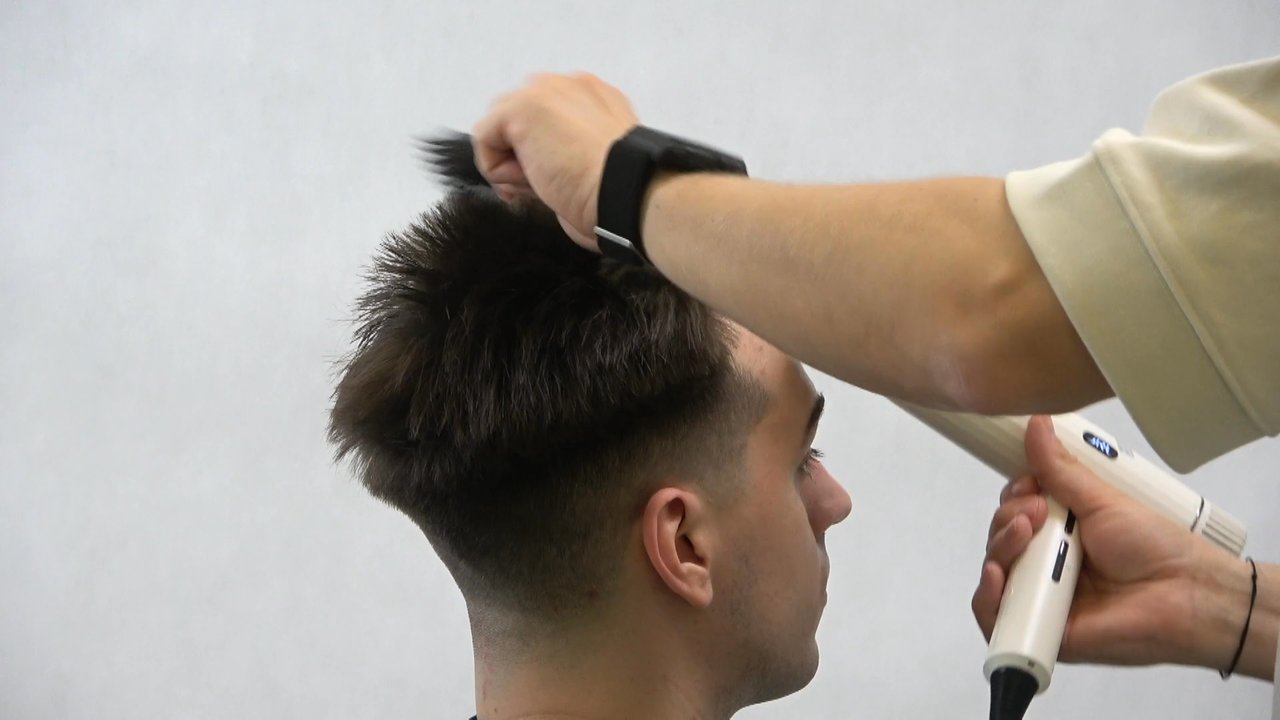
A hairdresser who does the same haircut with the same technique year after year will sooner or later lose a client who wants something they can't deliver. Below are ten competencies that genuinely raise the value of your chair: from color and fade, through curly hair and updos, to trichology and running a business. For each one, concrete techniques to master — not vague generalities.
Why hairdressers need continuous courses
The reasons are practical, not marketing fluff. Every new technique is a service your local competitors can't offer, and one you can charge more for. Courses also shorten the trial-and-error path: instead of arriving at a good fade or a clean balayage through hundreds of imperfect heads, you work through it under the guidance of someone who's already made that mistake. Learning regularly lets you:
- expand your service menu with higher-priced offerings (color, extensions, occasion styling),
- work confidently on hair types you used to avoid (strongly curled, damaged by lightening, very fine),
- cut treatment time through better work organization and sectioning,
- build a recognizable style that brings clients back to you specifically.
The Connected Hair Academy runs online hairdressing courses covering most of the competencies described below.
1. Advanced Color
Why it's worth it
Color is a service that keeps a client coming back for years: regrowth forces a visit every few weeks. Clients no longer ask for “blonde” — they want the exact result from a photo, and the difference between a good colorist and an average one is visible to the naked eye in the transition line and tone evenness.
What you actually need to master
The starting point is the lightening level (1-10 scale) and the color wheel: without deliberately neutralizing unwanted pigment (yellow, orange, red), every lightening job ends up “brassy” or “yellow.” On top of that comes working with developer volume (the higher the percentage, the stronger and faster the action, but also the greater risk to the hair structure) and reading the color history in the hair before ever touching the lightener.
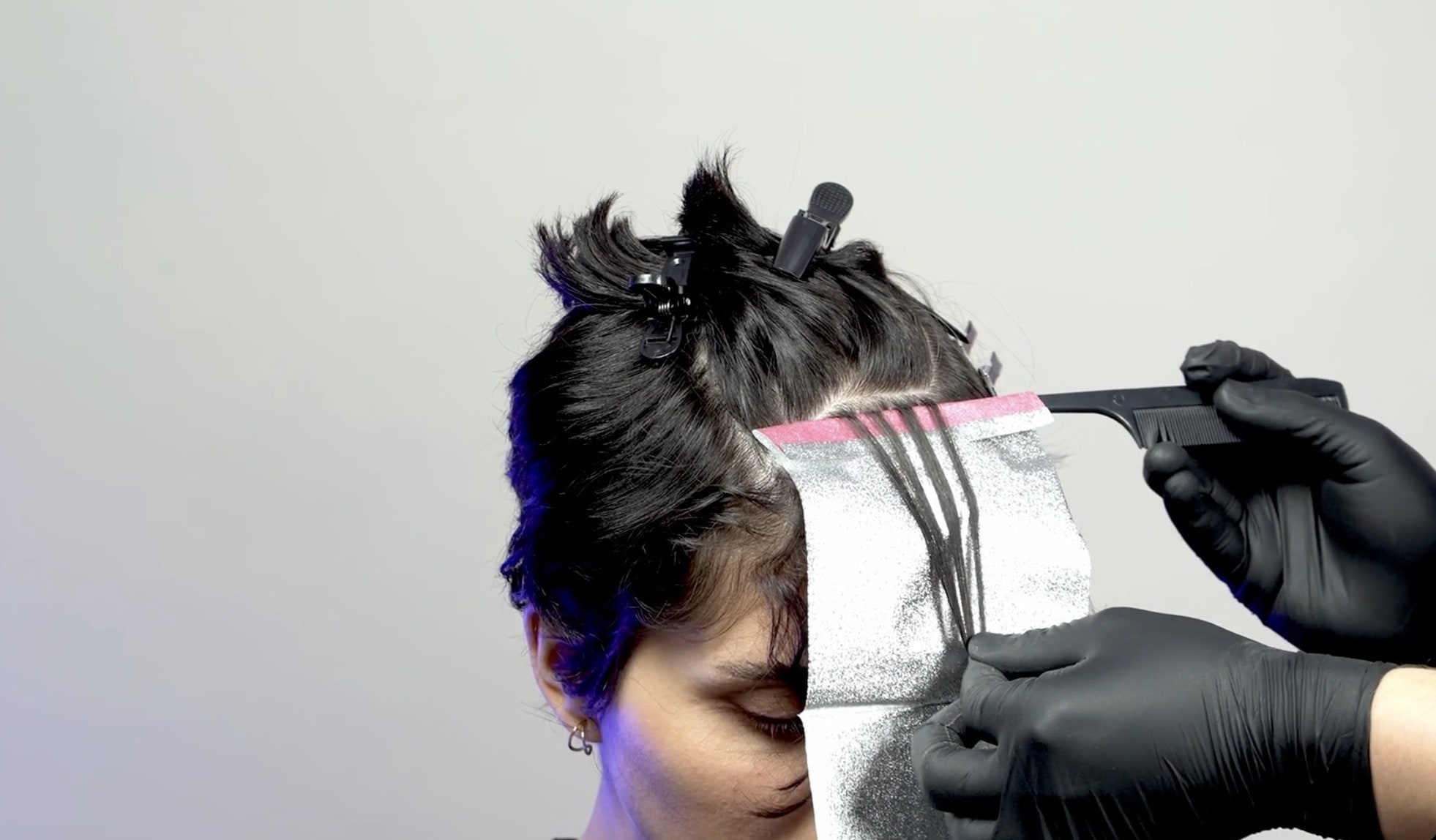
- Balayage — hand-painted application, smudging the root (smudge) so the transition is seamless and doesn't create a hard regrowth line.
- Multi-tonal color — building depth through several shades on one head, a darker base at the root and lighter strands along the length.
- Protecting the structure while lightening — matching developer strength to hair condition, controlling processing time, and using bond builders to avoid over-drying and breakage.
These topics are broken down step by step in Bartłomiej Łacz's course, Hair Coloring.
2. Textured Cutting
Why it's worth it
Texturizing removes weight without shortening length, and it determines whether a hairstyle falls into place on its own or the client fights with it every morning. It's a technique that can turn the same base cut into a soft, tousled effect or a dense, full one.
What you actually need to master
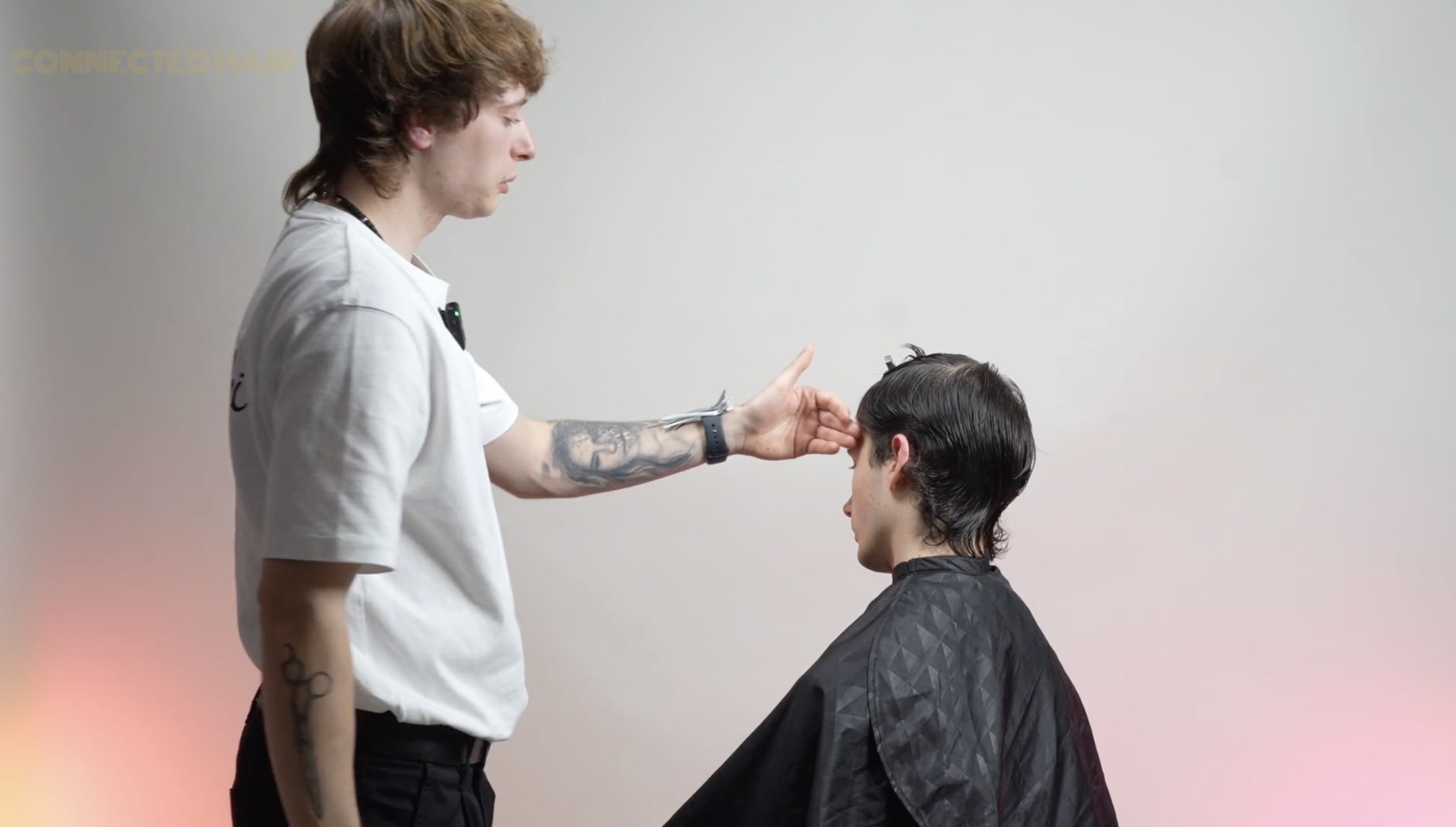
The most important thing is matching the tool to the goal: straight-blade scissors shorten, thinning shears remove weight in a controlled way, and slide cutting and point cutting give soft, irregular ends. The angle at which you hold the scissors against the section determines how much weight you remove: cutting close to the root removes a lot of weight, while cutting at the ends only breaks up the line. You always work with sections of the same thickness — otherwise the texture comes out uneven.
- Point cutting — cutting the ends with the tip of the scissors at an angle, for a natural, soft finish without a hard line.
- Sectioning and dividing strands — precisely dividing the head into zones so each section is cut in reference to the neighboring one (extending the line).
- Working with the natural growth direction — reading whorls and root direction so the texture works with the hair instead of fighting it.
The course Hair Graduation and Texturing Techniques walks you through these techniques step by step.
3. Men's Fade
Why it's worth it
Fade is the foundation of modern barbering and the most common reason a client switches barbers. A clean, seamless transition from skin to length is a mark of craftsmanship, and a poorly done one shows immediately: lines, patches, and what's known as “steps” appear.
What you actually need to master
The core of fade work is the “scoop” technique — removing hair with the clippers in an arcing motion — along with deliberately setting the weight line (where the transition begins). You start with the shortest guard at the bottom and work up with progressively longer guards, blending each transition between guards so no visible step is left. The key is graduating with the clipper lever and closing off the shortest sections with a trimmer or clippers on zero with foils.
- Skin fade — a transition down to bare skin; requires the cleanest blending and zero-length work.
- Taper fade — a gentle shortening at the ear and nape line, the most versatile and safest option.
- Burst fade — a fan-shaped transition around the ear, popular with a longer top and mullets.
Get the full execution with a line-up in the Side Part Skin Fade course.
4. Styling Curly Hair
Why it's worth it
More and more clients are wearing their natural curl instead of straightening it. But curly hair follows different rules than straight hair: it behaves differently once dry, reacts differently to cutting, and doesn't forgive mistakes in length selection. A hairdresser who understands this gains a group of clients who've been told elsewhere that “nothing can be done” with hair like theirs.
What you actually need to master
The most common mistake is cutting curls wet as if they were straight: hair can shrink several centimeters once dry and lose its shape. That's why cutting strand by strand in its natural curl pattern (curl by curl) and assessing length on dry, styled hair are essential. Styling relies on hydration and definition — not heat, which breaks up the curl.
- Cutting in the natural curl pattern — working on dry hair or correcting each curl individually, accounting for its spring-back.
- Hydrating and defining — applying product to wet hair using the scrunch method or distribution technique to bind the strand into a clear curl.
- Drying without breaking up the curl — diffuser drying or air drying, with minimal touching of the hair to avoid frizz.
The cutting technique that brings out the curl instead of losing it is shown in the course Bringing Out the Curl with Circular Cutting.

5. Hair Extensions
Why it's worth it
Extensions are a premium, high-margin service that few people truly do well. Clients pay not just for the strands, but for them to be invisible at the root, not pull, and not damage their natural hair. This is a competency that can keep your calendar full on its own.
What you actually need to master
Every method has its own selection rules: distance from the scalp, section size relative to the density of the client's natural hair, and an application direction that matches how the hairstyle will be worn. Just as important is matching the shade and blending the attached strands with cutting, so the length transition isn't visible. The client should leave with care instructions and a maintenance appointment scheduled.
- Tape-in — strands on tape applied “sandwich-style”; quick to apply, with regular maintenance as regrowth occurs.
- Micro rings — attached with clamped rings, no heat or glue, less demanding on the hair.
- Keratin method — heat-fused with keratin, durable and discreet at the root.
New courses in this area are being added to our course catalog.
6. Bridal and Occasion Hairstyles
Why it's worth it
Wedding season and special occasions generate demand regardless of the economy, and you can price a bridal updo higher than a standard styling. On top of that there's a network effect: a great bridal hairstyle is seen by every guest and bridesmaid.
What you actually need to master
An occasion updo has to survive many hours of dancing, so a solid foundation is essential: backcombing at the root for volume and support, correctly placing pins crosswise (so they hold rather than poke), and securing accessories on a firm base. A trial run before the date lets you adjust the hairstyle to the dress and face without rushing on the day itself.
- Long-lasting updos — buns, waves, and twists with a backcombed base, resistant to movement and weather.
- Braiding techniques — selected braids, fishtails, and weaves incorporated into the updo.
- Styling with accessories — securing veils, combs, and ornaments so they can be safely removed later.
7. Trichology Basics
Why it's worth it
A client with thinning hair, dandruff, or an irritated scalp comes to the hairdresser before they see a specialist. Knowing what's within your scope and what needs to be referred onward builds trust and protects you from performing a treatment that makes the hair condition worse.
What you actually need to master
The foundation is hair structure (shaft, follicle, cortex) and its growth cycle, because that explains why some hair always sheds and how much length can realistically be “grown out.” Add to that recognizing the most common scalp conditions and consciously matching aftercare to porosity and hair condition, especially after coloring.
- Hair structure and growth cycle — the anagen, catagen, and telogen phases and their effect on density.
- Scalp conditions — telling dryness apart from oiliness and irritation, and knowing the line between aftercare and referral to a specialist.
- Choosing aftercare — products matched to porosity and the hair's treatment history.
8. Business Skills
Why it's worth it
Even the best craft can't save a poorly priced service and an empty calendar. What turns a hairdresser into a profitable business is calculating costs, pricing your work, and whether clients come back — not just the quality of the cut itself.
What you actually need to master
The starting point is knowing your own hourly rate and product cost per service, because without that your price list is just guesswork. Beyond that, what matters is deliberate calendar management (minimizing gaps), acquiring clients through social media, and service that turns a one-time visit into a regular client and a referral.
- Finances — calculating service cost, pricing your work, controlling product margins.
- Marketing and personal brand — a consistent social media presence, a coherent portfolio, building a recognizable style.
- Client service — pre-treatment consultation, managing expectations, an appointment reminder system.
9. Hairdressing Photography
Why it's worth it
For most clients, the first contact with your work is a photo on Instagram, not the chair itself. A weak photo can “kill” a great haircut, while a strong, consistent portfolio works for you around the clock, even while you sleep.
What you actually need to master
Lighting changes everything: even, soft light without harsh shadows shows texture and color as they truly are. Add to that a consistent background, fixed shots (front, profile, back, transition detail), and restrained editing that doesn't shift the color tone. Consistency in framing and lighting gives you a feed that looks like a portfolio, not a random collection of photos.
- Composition and framing — repeatable shots from every angle, a clean background, showing the detail of the transition or line.
- Lighting — diffused, even light that brings out texture and true color.
- Editing — subtle correction that preserves the true shade, without discoloration or over-sharpening that ruins the result.
10. Sustainable Salon Practices
Why it's worth it
Some clients deliberately choose salons that reduce water use and reach for eco-friendly products. For the salon, it's also real savings on bills, so sustainability and lower costs often go hand in hand.
What you actually need to master
The simplest changes concern daily routine: controlling water use when washing, choosing biodegradable products, and sorting and reducing waste. Some salons collect cut hair and foils separately for recycling instead of throwing everything away together.
- Products — organic and biodegradable cosmetics, conscious supplier selection.
- Water and energy — reducing use during washing and drying, energy-efficient equipment.
- Waste — sorting, recycling, and reducing single-use items in the salon.
Connected Hair Academy doesn't currently run a dedicated course in this area. New courses are announced in our current course catalog.
Where to Start
Don't try to master all ten competencies at once. Pick the one that will raise the value of your chair the fastest: for a barber, that's usually fade; for a women's hairdresser, it's color or working with curly hair. Take it to a level clients are happy to pay more for — only then add the next one.
Most of the techniques described here can be found in the online courses at Connected Hair Academy, which you work through at your own pace. Browse our hairdressing courses or start with a free registration to try the platform with no commitment.