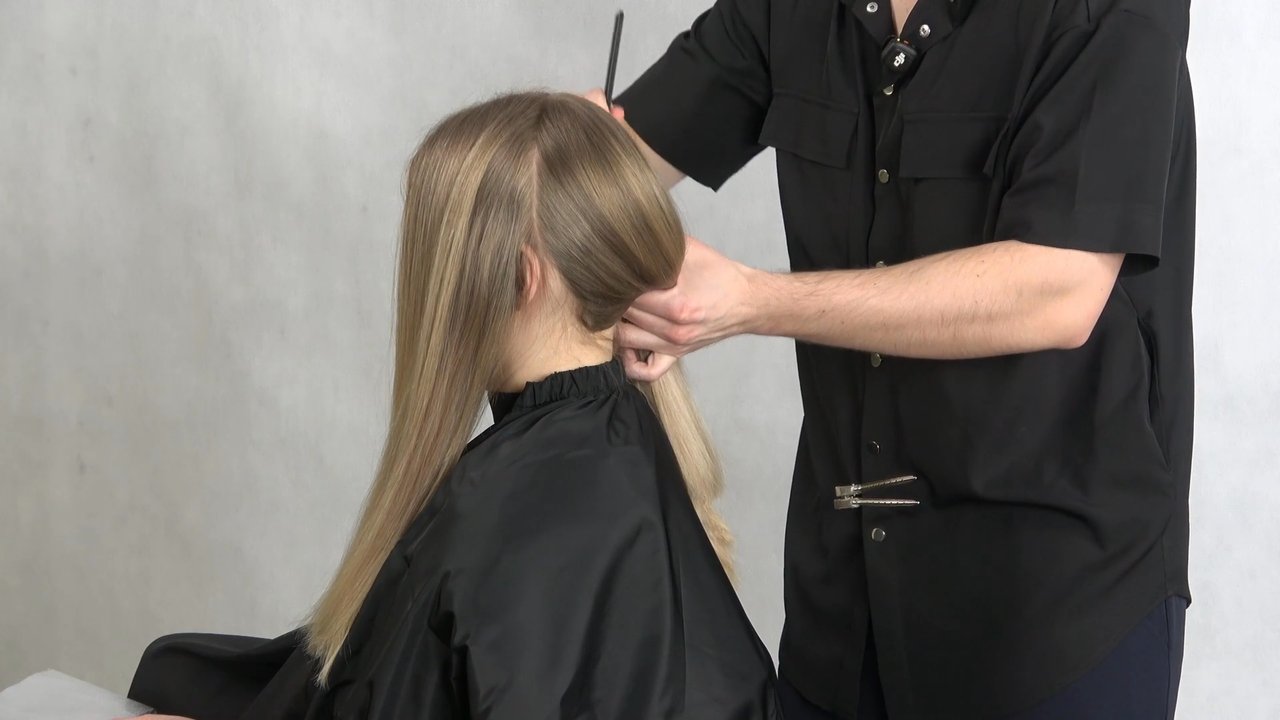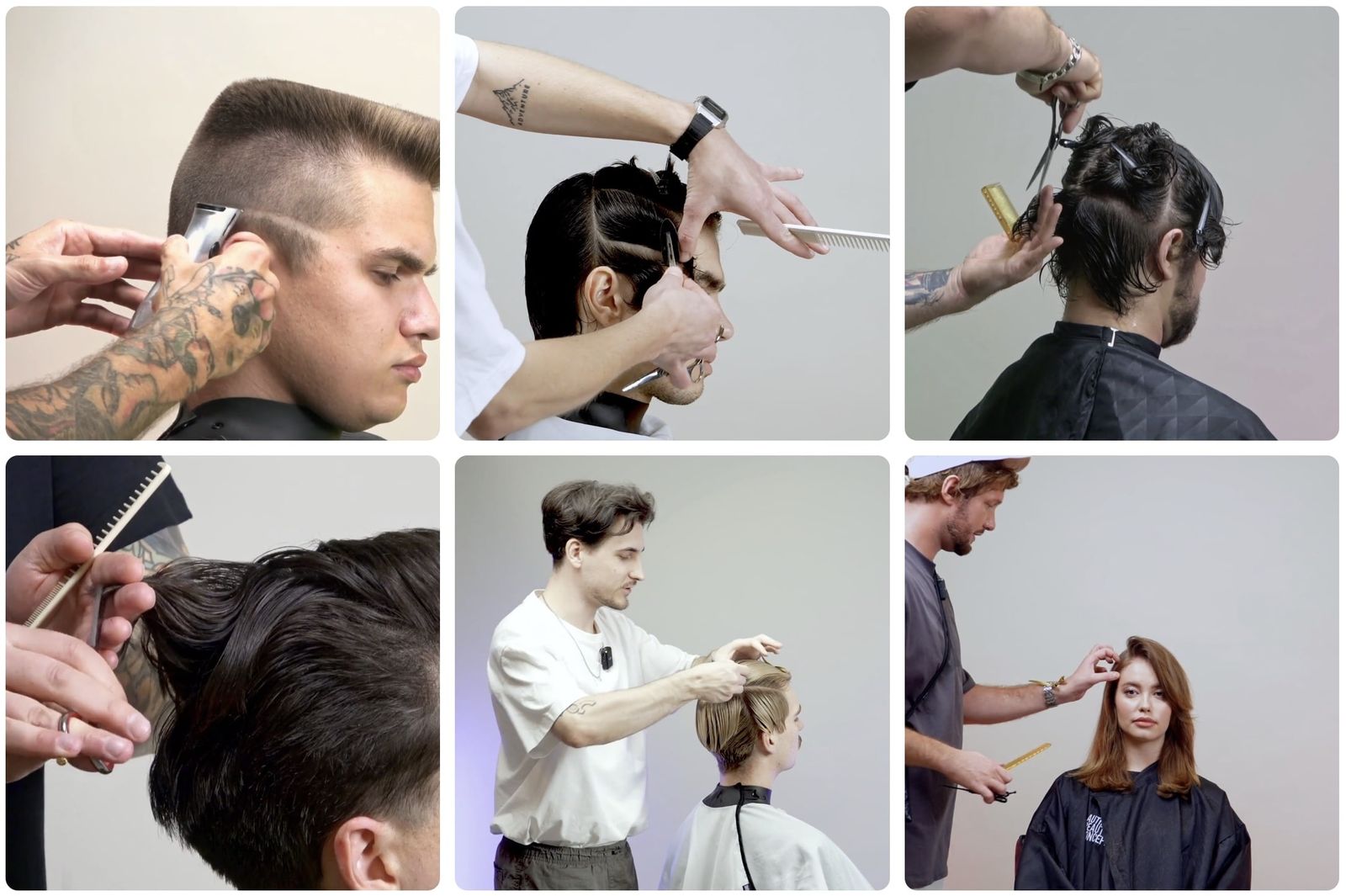
Work behind the chair waits for no one. Clients bring in Instagram photos and expect you to recreate a hairstyle you may have never done before. In this article, we break down the five techniques clients ask about most often: the modern mullet, textured men's haircuts, creative colouring, cutting for natural curl, and sustainable salon practices. For each one, you'll find concrete behind-the-chair tips and a link to an online hairdressing course led by a practising professional.
Why is continuous learning so important in the hairdressing industry?
A cutting technique that was the standard five years ago often isn't enough to meet client expectations today. Fashion changes, so does the way people wear their hair, along with the tools and products available. A hairdresser who stops learning starts repeating the same four or five hairstyles, and clients can tell. Taking regular courses delivers concrete results:
- you expand your repertoire of cuts and colours, so you turn fewer clients away
- you learn how professionals who create a given effect every day actually handle their tools
- you work with more confidence, and confidence translates into higher service prices
- you build a portfolio that attracts clients looking for a specific style
The Connected Hair Academy gives you access to step-by-step online courses where you can see every move of the scissors and clippers up close, at a pace you can pause and repeat.
Trend 1: Modern Takes on the Mullet
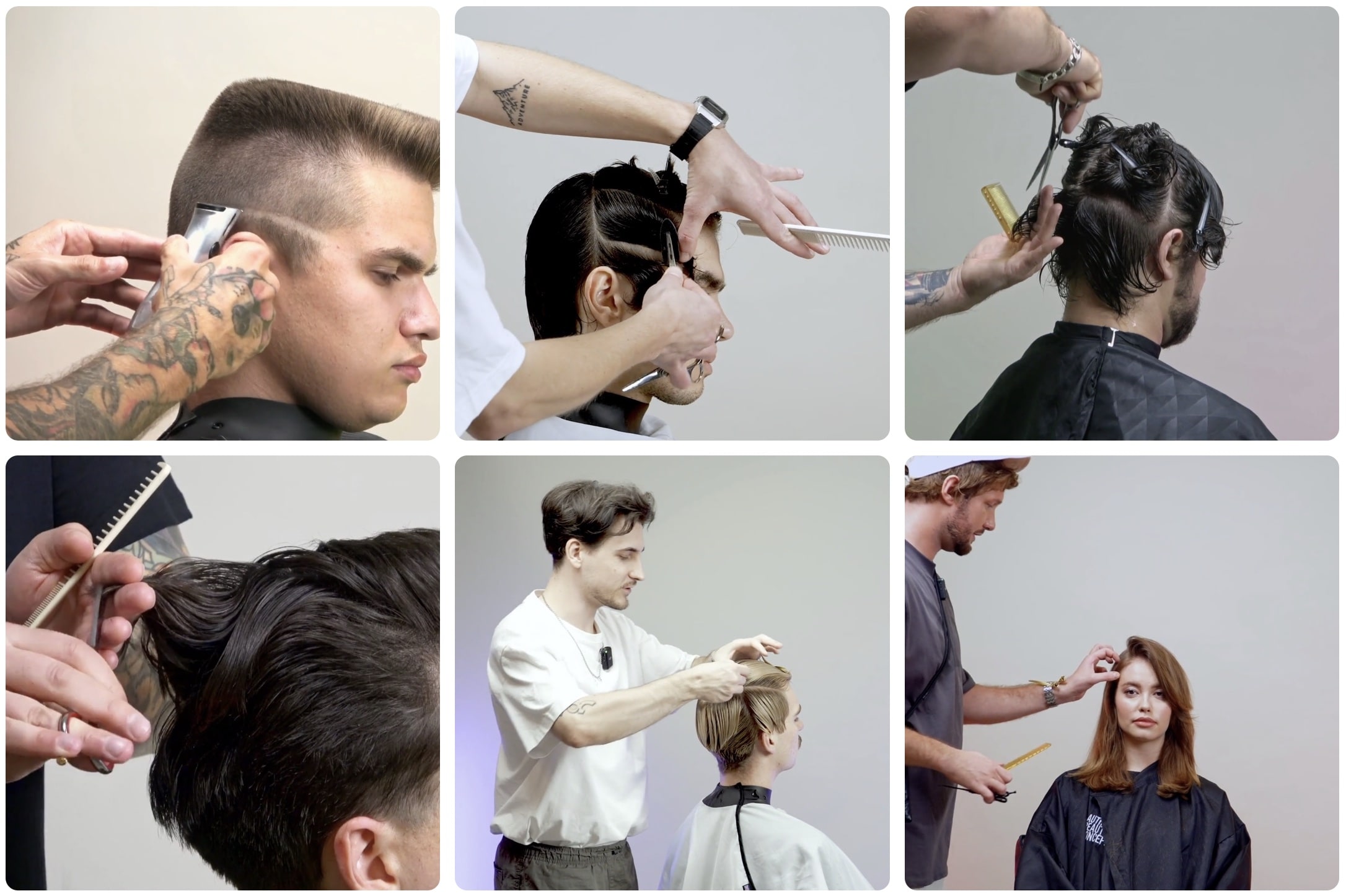
The 80s mullet was a sharp contrast: very short top and sides, long back. The modern version is a smooth, controlled length transition, where the back is longer but doesn't stick out, and the top and fringe work with texture. Less shock value, more wearability — which is why both teenagers and clients in their thirties ask for it.
Why do clients ask for it?
The modern mullet gives a hairstyle a strong silhouette without a daily styling battle. It can be cut more conservatively or heavily textured, so it works for different face shapes and personalities. It's a hairstyle that stands out, but doesn't require the client to be ready for an extreme look.
What to base the cut on
- Sectioning by zone. Divide the head into the top zone, sides, temples, and back (occipital area). Cut each zone separately, since it's what determines the length proportions in a mullet.
- Graduation on the sides. You usually work the sides and temples with clippers and guards, going from longer to shorter down the head, and blend the transition zone with a guard or comb (the clipper-over-comb technique) to avoid leaving a hard line.
- The transition to the back. The trickiest moment is blending the short sides into the longer back. Cut over your fingers, guiding each section at a consistent angle and checking length against the stationary guide, so length builds up gradually rather than in jumps.
- Texturizing the top and back. Thin out the ends using point cutting (cutting with the tips of the scissors at an angle) or slide cutting, to remove weight and give the hair movement instead of a solid, even line.
How to master this trend
The Dynamic Crop Mullet Hybrid course walks you through the entire cut step by step: how to plan out the zones, how to balance short sides with a longer back, and how to finish the texture so the hairstyle holds its shape between visits.
Trend 2: Textured Men's Haircuts
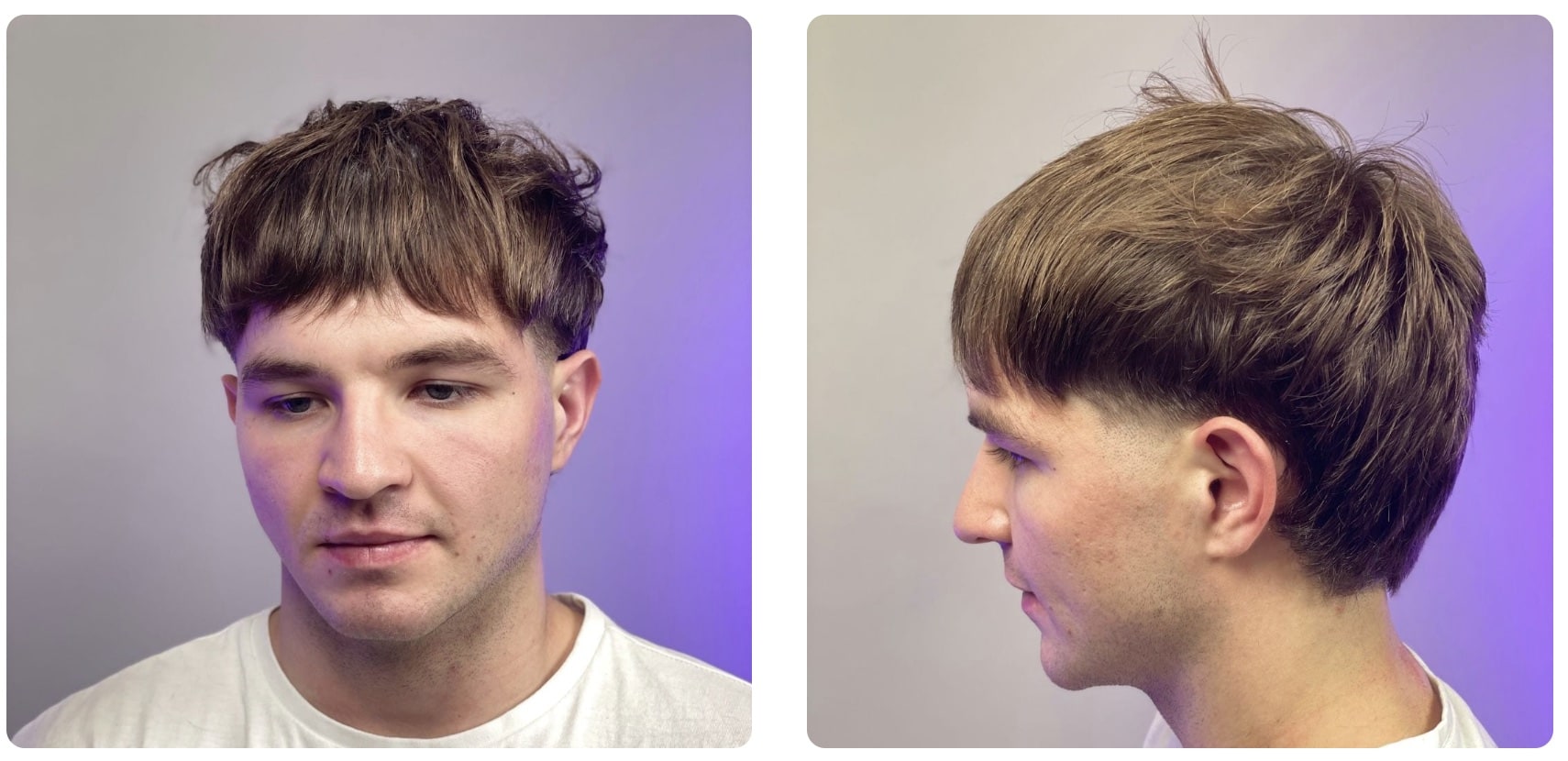
A textured men's haircut looks relaxed and natural, but that impression is built on a precise structure. The hair should give an impression of depth and movement rather than flat, uniform weight. In this cut, the finishing and the interplay of lengths matter more than the perimeter line itself.
Why do clients ask for it?
Clients want a hairstyle that still looks good even when they don't have time to style it. Texture lets the hair fall naturally with minimal product, and a well-thinned top holds its shape longer between haircuts. It's a smart compromise between style and everyday convenience.
What to base the cut on
- Graduation as the base. You work the sides and back with graduation (a fade or a soft transition) to set the line-up. Agree the degree of transition with the client, from a skin fade to a gentle taper.
- Working with the hair growth direction. Before you start texturizing the top, check the whorl and natural growth direction. Cutting against the natural pattern makes the hair stick up and the hairstyle refuses to sit properly.
- Separating sections. You cut the top in smaller sections, guiding each section vertically to control length precisely and avoid leaving any dense areas.
- Removing weight. Depth comes from removing weight from within the hair: point cutting on the ends, deep point cutting, or thinning. These are what create movement, not length alone.
How to master this trend
The Hair Graduation and Texturizing Techniques course led by Kacper Orzechowski shows you how to build graduation as a base and layer texture on top of it, to achieve depth and movement in a men's cut.

Trend 3: Creative Colouring
Colouring is no longer just about changing shade. Clients come in for an effect: brightened strands, depth, multi-dimensional colour that works with the structure of the cut. The bolder the effect, the bigger the role played by application technique and control over hair condition during lightening.
Why do clients ask for it?
Colour has become a form of self-expression and the fastest way to transform your look. Clients want a result that looks like it was done by a professional, not a home box dye. What matters here isn't just choosing the right shade, but also whether the hair is still in good condition afterwards.
What to base the service on
- Balayage. Hand-painting lightener in a freely guided line down the strand creates a soft, natural transition without a hard regrowth line.
- Multi-tonal colouring. Combining several shades and depths in one hairstyle builds dimension. Plan the placement of tones in relation to the cut, so the colour highlights the shape instead of fighting it.
- Protecting the hair during lightening. Keep an eye on developer strength, processing time, and strand condition throughout. This is the stage where hair is most easily over-dried or damaged, so sectioning and even product application matter just as much as choosing the colour itself.
How to master this trend
The Hair Colouring course led by Bartłomiej Łacz introduces advanced colouring techniques: how to plan tone placement, how to apply product, and how to manage lightening to get the result without over-stressing the hair.
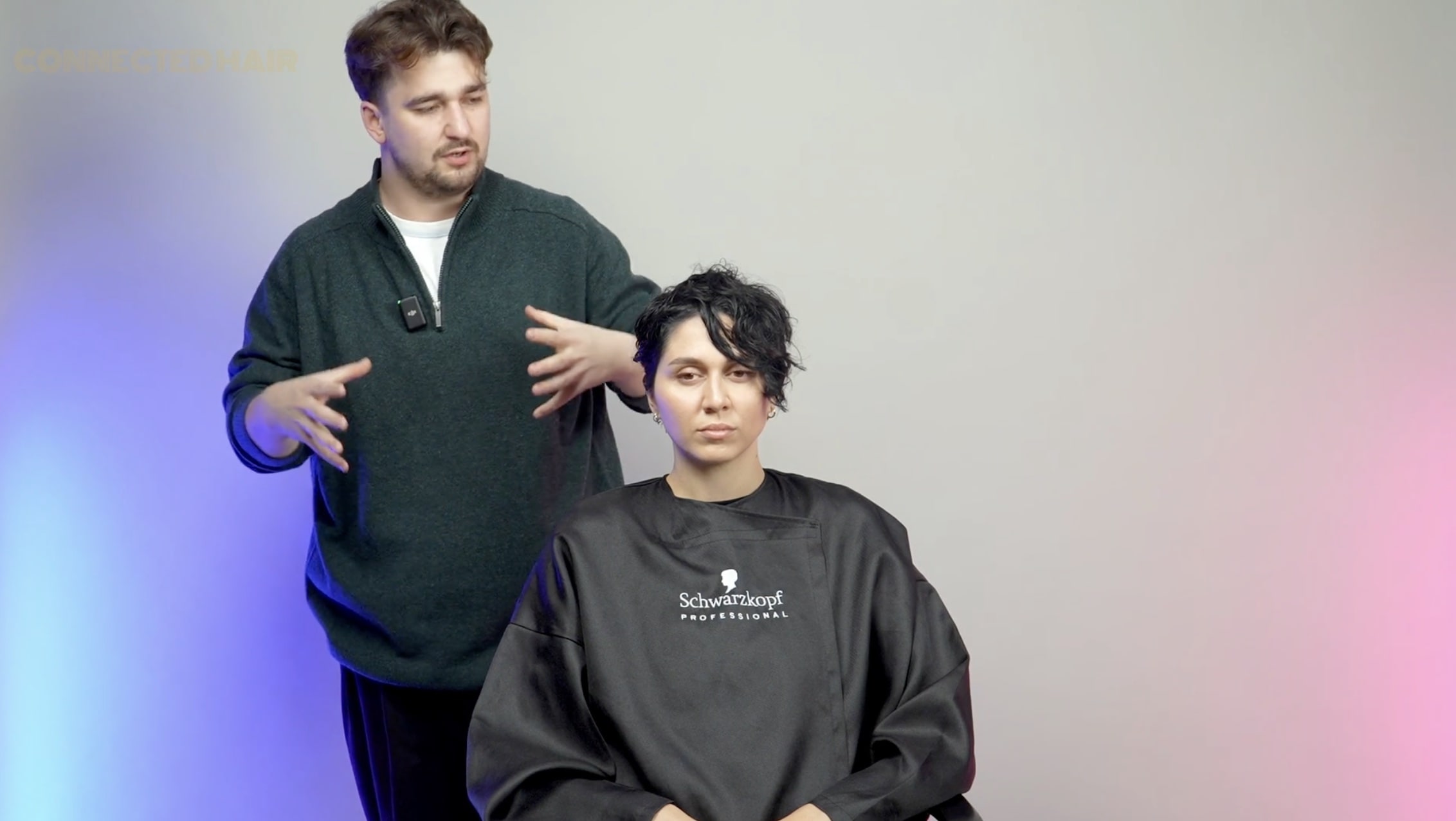
Trend 4: A Return to Natural Texture in Women's Hairstyles
More and more clients no longer want to straighten or force their hair into submission. They want a cut that works with their natural curl, wave, and density instead of fighting them. It's a hairstyle meant to look good after air-drying, without daily use of a flat iron.
Why do clients ask for it?
For clients, going natural means saving time and putting less stress on the hair from heat styling. Well-cut curly or wavy hair falls into place on its own, which is why this service builds loyalty: the client comes back because someone finally showed her how to wear her own hair.
What to base the cut on
- Diagnosing the curl before cutting. Assess the curl type and direction, and how much the spring shortens the length once dry. Curly hair “bounces up,” so when cutting wet, leave extra length in reserve.
- Cutting for natural curl. Work in line with how the hair falls on its own, usually dry or with the section shaped into its natural spring, to keep an even curl shape.
- Highlighting texture. Instead of flattening volume, distribute it where it builds shape. Avoid over-thinning curly hair, since this breaks up the curl's spring and creates a frizzy effect.
- Minimalist finishing. The goal is a hairstyle the client can recreate at home without a flat iron, so tailor the shape to how she actually styles her hair day to day.
How to master this trend
The Enhancing Curl Through Circle Cutting course shows you how to work with naturally curly and wavy hair, to bring out its curl and shape instead of flattening it.

Trend 5: Sustainable and Eco-Friendly Salon Practices
Sustainability in the salon isn't just a marketing slogan — it comes down to concrete decisions: which products you use, how much water and energy you consume, and what you do with waste. More and more clients pay attention to this when choosing where to get their hair cut.
Why does this matter?
An eco-conscious client looks for a salon that shares their values, and those values build brand loyalty. For the salon, it's often real savings too: less water and energy use means lower bills.
Core practices
- choosing organic and biodegradable products
- reducing water and energy use in day-to-day work
- sorting, recycling, and upcycling salon waste
How to bring this into your practice
- Deepen your knowledge of eco-friendly products and practices through industry publications and your own research.
- Introduce small changes step by step: sorting waste, reusable towels, mindful product dosing.
- Choose suppliers who offer environmentally friendly products.
- Talk to your clients about it, building eco-awareness and setting your salon apart.
At the Connected Hair Academy, we track industry trends and plan to expand our offering with more topics. Follow our latest courses to stay up to date as our educational offering grows.
How do online courses help you master these techniques?
Learning a cut or colouring technique up close, at a pace you control, has several practical advantages over a one-off in-person course:
- You learn at your own pace – after work hours, with no need to close the salon for a day of training.
- You see practitioners at work – watching how specific results are achieved by people who do them every day.
- You can repeat the tricky parts – rewind and rewatch a key transition or colour application moment as many times as you need.
- You can revisit the material later – refresh the whole process before performing the technique on a client for the first time on your own.
Where to start?
You don't have to master every technique at once. Pick the one clients ask you for most often, and that you still find tricky to execute, and start there. Every new cut or colour effect you add to your offering raises the value of your services and strengthens your portfolio.
Browse the full list of hairdressing courses and see which of the techniques covered here you can start practising right now.
Join the Connected Hair Academy for free and try out the platform, no strings attached.