Hairdressing traditions from around the world offer a ready-made vocabulary of forms: braids, plaits, updos, and textures refined over centuries for specific hair types. For a hairstylist, these are real technical solutions — provided you understand where a given form comes from and how to execute it correctly on a client's hair. This guide shows you how to draw on these sources with intention: which techniques are worth mastering, what to watch for with different hair types, and where the line falls between inspiration and cultural appropriation.
Why Cultural Inspiration Has Real Craft Value
Hairstyles have long carried identity, status, and religious or social meaning. From a craft perspective, they're also a laboratory of technique: each tradition solved the challenge of holding a braid, distributing tension, and working with a specific hair structure in its own way. Drawing on these solutions gives you something concrete:
- you expand your repertoire of braids and updos that you won't learn from a single cutting school
- you learn to work with different hair types, from straight to tightly coiled (type 4)
- you build unique styles by combining sectioning and textures from different traditions
- you grow your client base because you can handle hair that others in the area won't touch
Popular Hairstyles from Different Cultures and Their Technique
Before we get to the rules for using these forms responsibly, let's look at a few of them in terms of meaning and execution. A short technical breakdown helps you gauge what a given style really demands before you offer it behind the chair.
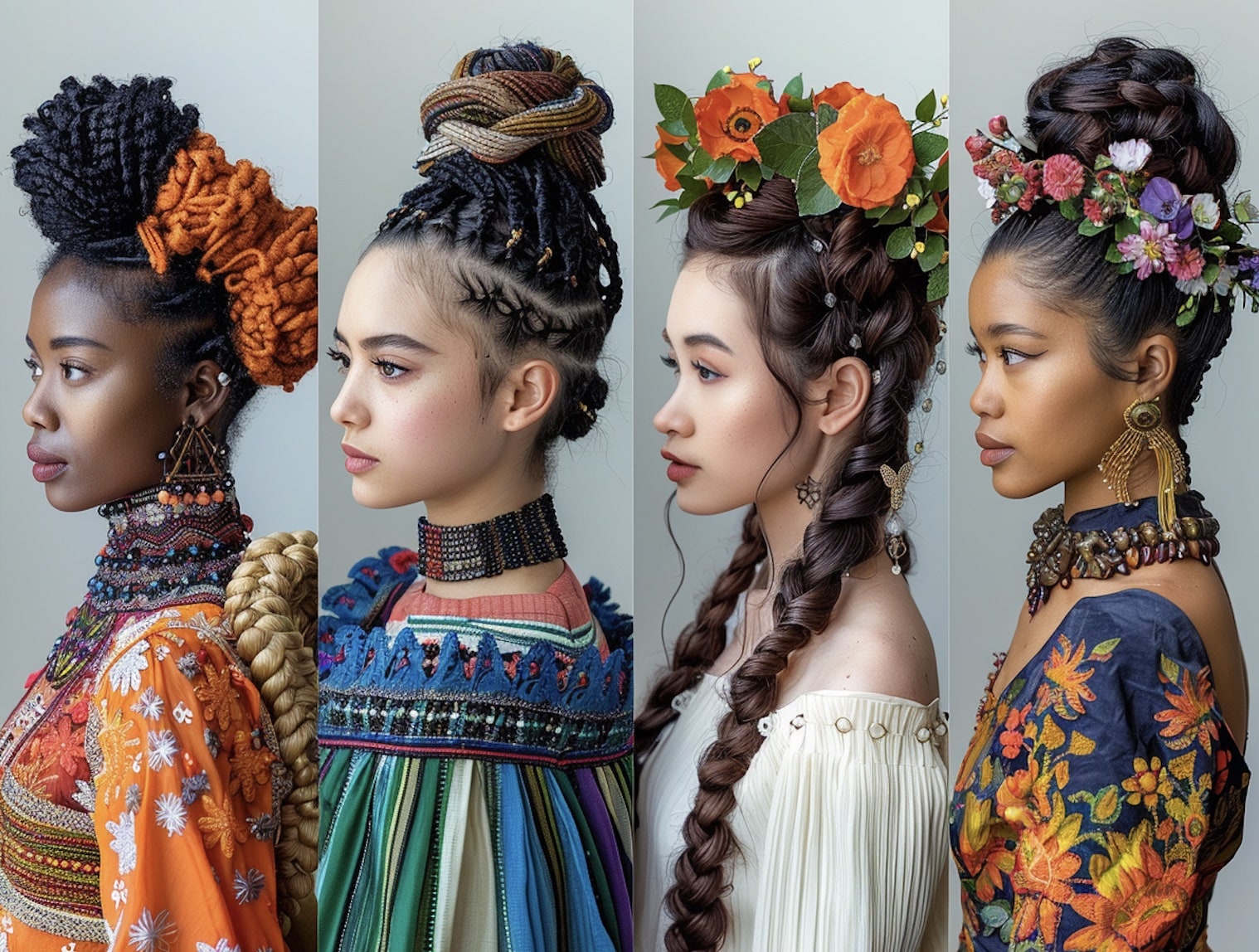
African Braids and Locs
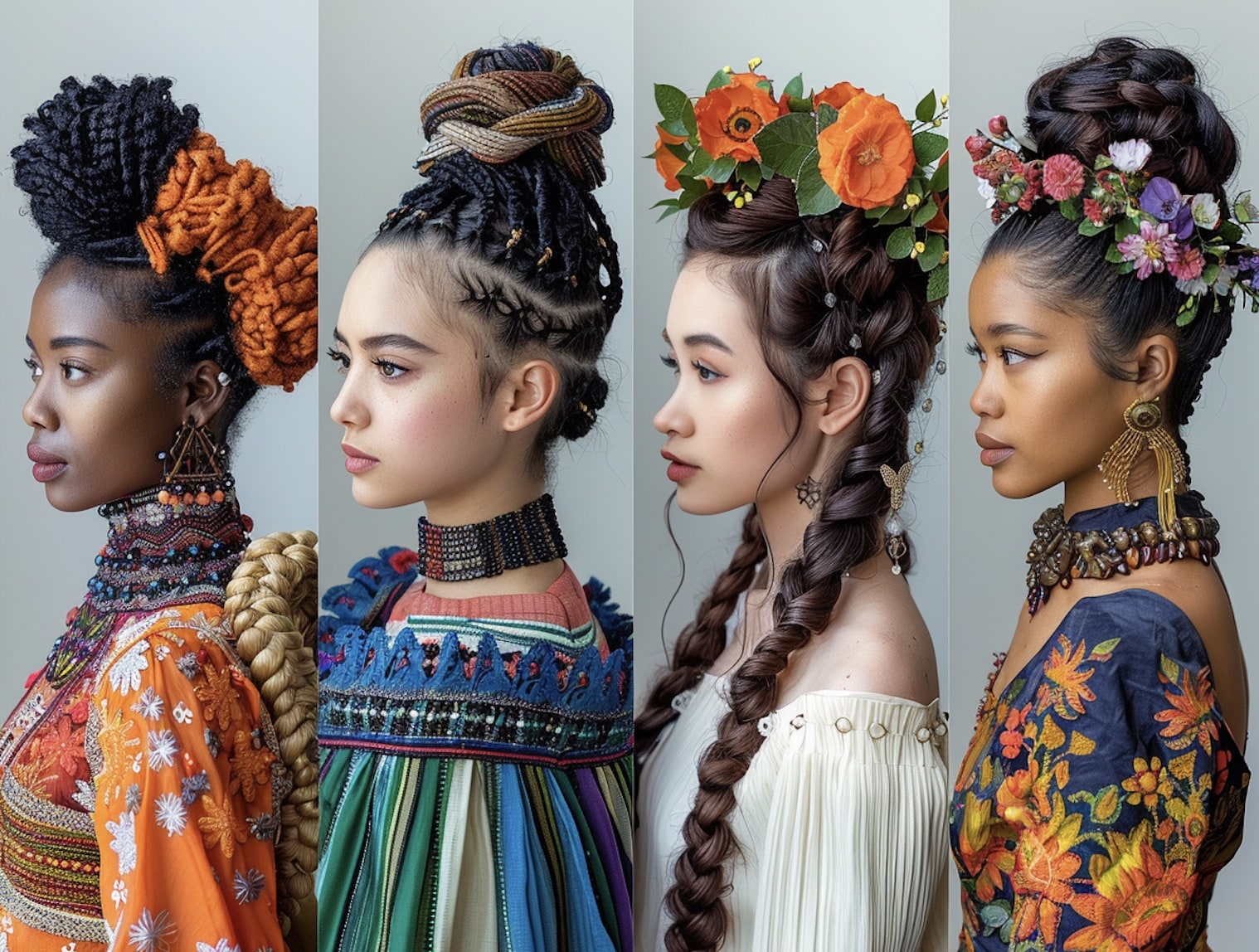
Meaning: in African American culture, a symbol of identity, pride, and resistance, with a strong historical context.
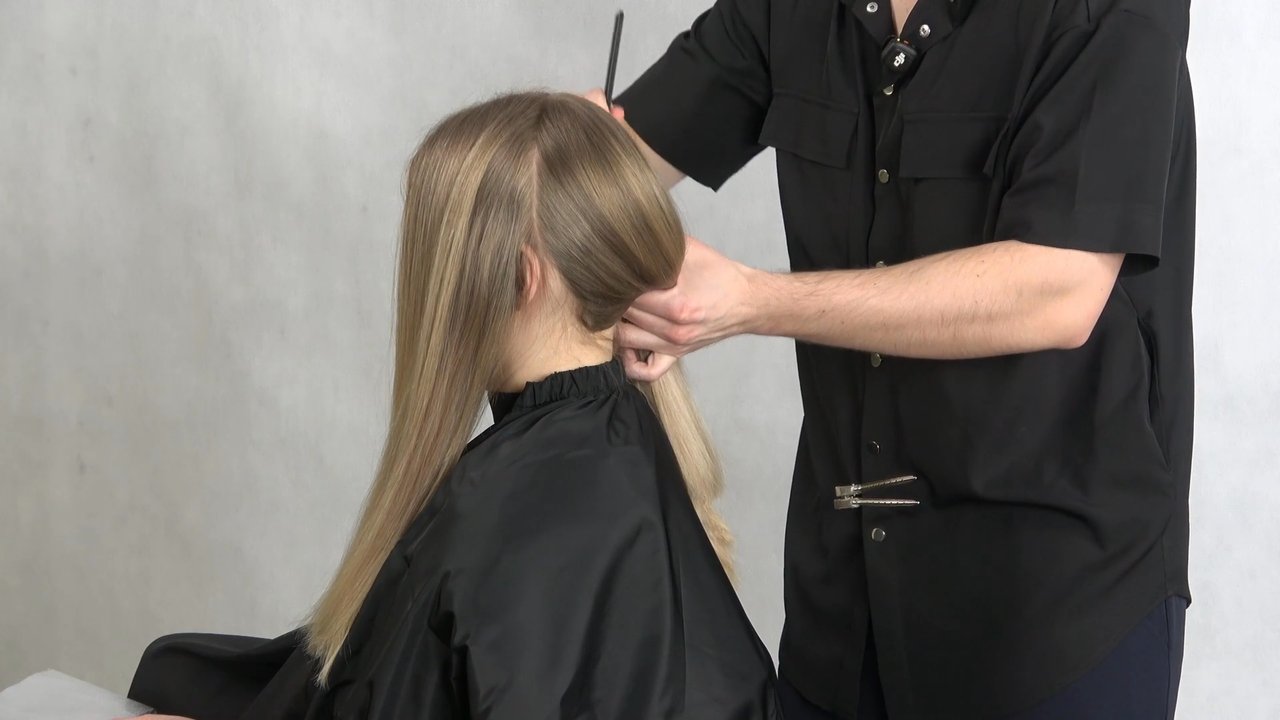
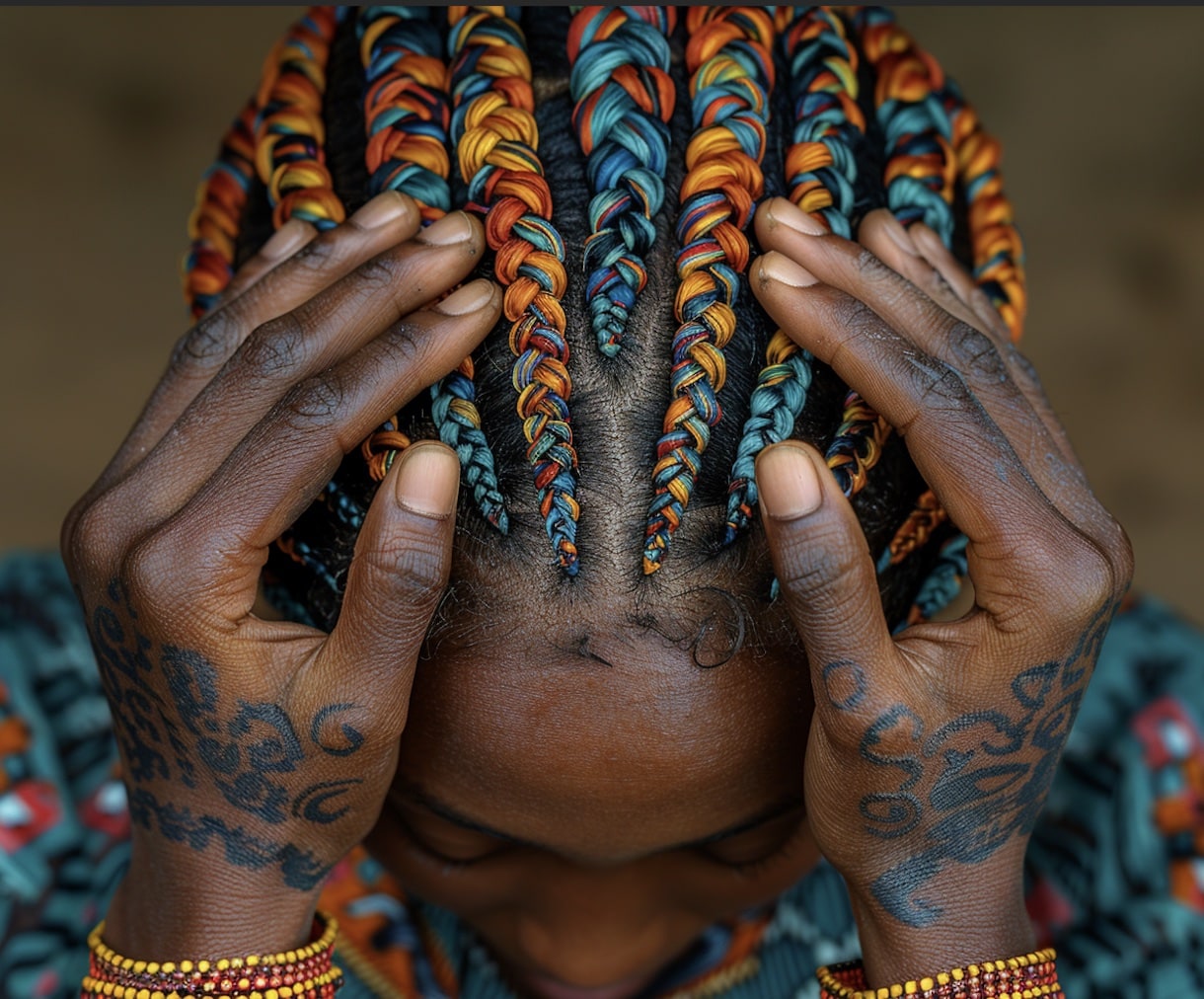
Technique: you're working on coiled hair (type 3C to 4C), so even, fine sectioning is essential. Guide your partings with a thin, pointed tail comb, and clip each section to hold the tension. Cornrows braided flat against the scalp require steady, even pull and picking up strands at an angle close to the parting, otherwise the braid drifts off-line. Braiding too tightly at the root puts strain on the follicles, so keep the tension at mid-length, not at the root. Locs are formed through square sections and gradual texture compacting, not a single cut or braid.
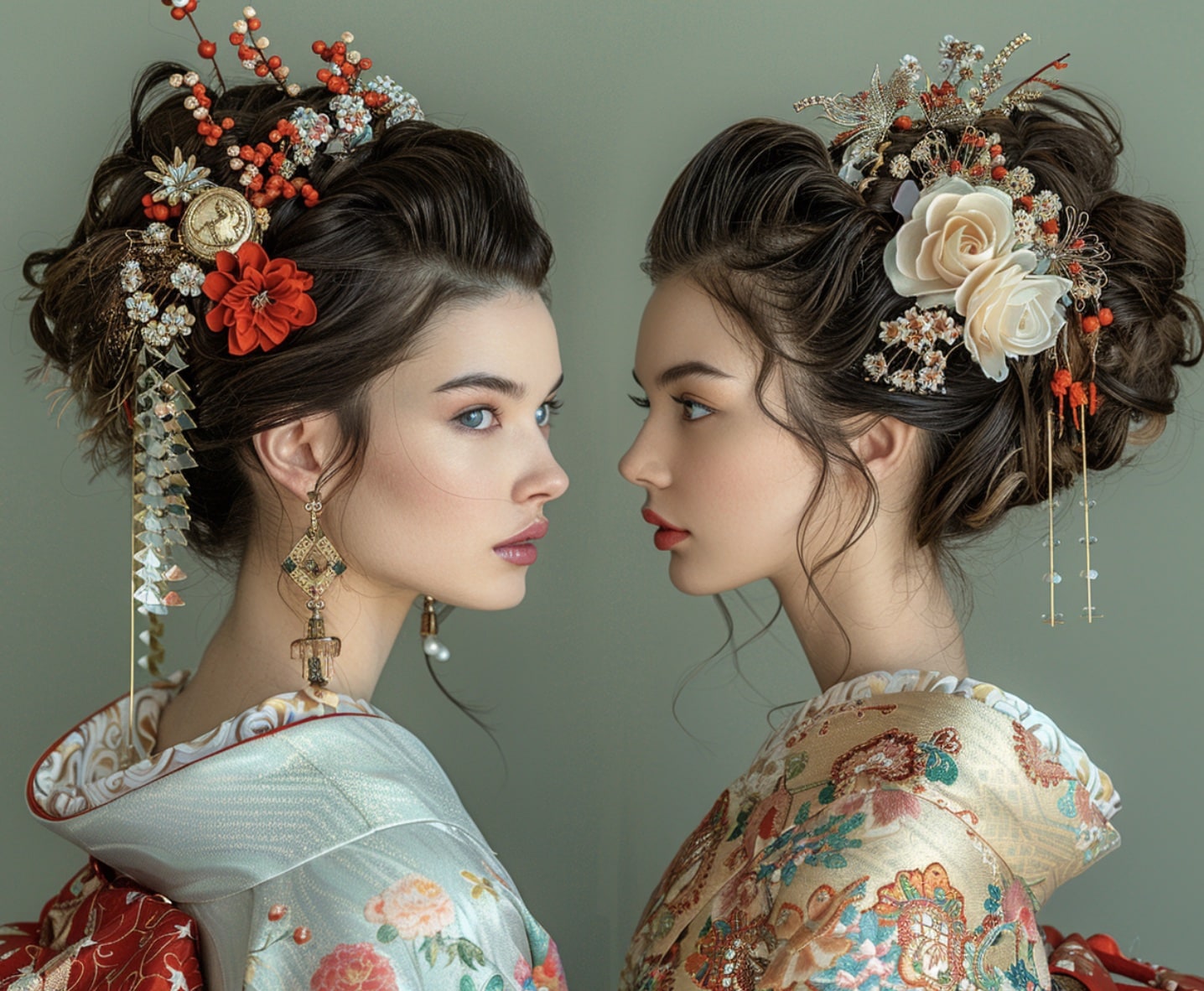
Japanese Geisha Buns
Meaning: in traditional Japanese culture, a symbol of status and artistry.
Technique: careful updos built on a clean base and a strong structure. You first smooth and organize the hair, build a base with a cushion or hairpiece, and distribute volume symmetrically around it. Sections are secured invisibly, with pins driven in at an angle to the base of the bun rather than flat, so they hold all day. Finishing means smoothing the surface and controlling individual flyaways.
Indian Braids
Meaning: a symbol of femininity and tradition.
Technique: long, thick braids, often decorated with flowers or jewelry. You're working with dense, straight or wavy hair, so even distribution across the three strands and consistent tension along the full length matter, to keep the braid from twisting sideways. Decorations are woven in as you go, during the braiding, not added afterward.
Celtic Braids
Meaning: historically signified social status and clan affiliation.
Technique: intricate braids and patterns, often combined (e.g., a braid within a braid) and worked along the curve of the skull. They require a solid sectioning plan mapped out in advance, since one misguided parting ruins the whole pattern. A light dampening or texturizing product helps by giving the strands grip.
Mexican Flower Updos
Meaning: an element of traditional dress, often tied to celebrations.
Technique: colorful updos with fresh flowers woven into braids that wrap around the head. Flowers are secured to a stable braided base, not to loose strands, so the composition holds up throughout the celebration.
To work more confidently with the texture and volume that recur across many of these styles, check out our course Curl Definition Techniques, which builds a solid foundation for styling curly hair.
Current Directions in Culturally Inspired Hairdressing
Interest is growing in forms drawn from different traditions but filtered through modern sectioning and finishing. You'll most often see:
- modern interpretations of African braids, with cleaner, geometric partings
- minimalist versions of Japanese buns, built around a single, strong shape
- fusions of Indian and Western updos, combining a thick braid with a looser finish
- a revival of Celtic braids in avant-garde hairstyles
- contemporary adaptations of Mexican updos, with longer-lasting decorations instead of fresh flowers
See more of the latest hairdressing trends
How to Draw Inspiration Responsibly
1. Know the Context Before You Bring the Form Behind the Chair
Before you add a hairstyle inspired by a specific culture to your service menu:
- learn its history and cultural meaning, not just how it looks in a photo
- check whether the element has a ceremonial or sacred character
- if possible, consult people from that culture or hairstylists who work within it
2. Acknowledge the Source of Inspiration
- name the hairstyle correctly and tell your client where the form comes from
- appreciate and respect the culture you're drawing from, rather than treating it as a passing gimmick
- avoid stereotypical or offensive language in your service descriptions and communication
3. Adapt, Don't Copy One-to-One
- instead of recreating a traditional hairstyle in full, take the technique from it (the braiding method, the sectioning) and build your own style on top of it
- combine elements from different styles with intention, being careful not to mix forms that carry strong symbolic meaning
- fit the hairstyle to the client's hair type, face shape, and density — not to a photo taken on a different hair type
4. Be Genuinely Inclusive
- make sure your salon is open and welcoming to clients from different cultures
- learn to work with different hair types, including tightly coiled hair, because without that skill inclusivity is just a slogan
- offer a range of services and products that match the real needs of a diverse clientele
5. Avoid Stereotyping
- don't assume that everyone from a given culture wears a specific hairstyle
- don't present hairstyles from other cultures as an exotic novelty
- cultures evolve, and contemporary hairstyles often differ from traditional forms
How to Avoid Cultural Appropriation
Cultural appropriation means taking elements of one culture as an outsider, without understanding or respecting their original meaning. In hairdressing, this line can be especially delicate, since some forms carry a ceremonial character or a strong historical context.
What to Do
- appreciate and respect the original culture
- educate yourself and your clients about the origin of the form
- collaborate with representatives of that culture whenever possible
- create fusions and new styles based on technique, instead of copying the form wholesale
What to Avoid
- don't treat cultural hairstyles as exotic or bizarre
- don't use sacred or ceremonial elements in everyday styling
- don't promote stereotypical ideas about a given culture
- don't ignore the historical context of certain hairstyles (e.g., locs in Rastafari culture)
Skills for Hairstylists Working with a Diverse Clientele
To confidently create hairstyles inspired by different cultures, develop these specific craft skills:
- Recognizing hair types. Working with straight, wavy, and coiled hair (types 1 through 4) differs in tension, product choice, and detangling method. Coiled hair is detangled wet, using your fingers or a wide-tooth comb, working from ends to roots.
- Braiding techniques. The three-strand braid, the feed-in braid, cornrows braided flat against the scalp, and the Dutch braid form the base that most ethnic styles build on.
- Sectioning. Clean, repeatable partings guided with a tail comb determine the final look more than the braid itself.
- Matching product to structure. A texturizing product gives one kind of grip on coiled hair, while a light wax or spray gives a different hold on straight hair for updos.
- Client communication. The ability to ask about expectations, context, and an acceptable service time before you even pick up the comb.
Check out 10 key skills every hairstylist should learn
Promoting Diversity in the Salon
- Courses for staff. Run workshops on cultural diversity and techniques for different hair types, so the whole team can handle any structure.
- An inclusive portfolio. Showcase hairstyles on different hair types and models of different backgrounds, so clients can see you work on their structure too.
- A tailored product range. Stock products for coiled and curly hair, not just straight hair, and choose brands that produce ethically.
- Open communication. Encourage clients to share their traditions, and stay open to feedback and ongoing learning.
- Working with local communities. Build connections with different groups in your area and learn from people who wear these forms every day.
- Educational materials in the salon. Provide books and magazines showcasing the diversity of hairstyles, to build awareness among clients and staff.
Ethical Sourcing of Culturally Inspired Products
When bringing culturally inspired products into your salon, stick to a few principles:
- check the source and origin of the products
- support brands owned by members of the cultures they represent
- avoid products that misuse cultural symbolism
- explain to clients the origin and meaning of the products you use
Build Your Craft Through Online Courses
The fastest way to master the techniques behind culturally inspired hairstyles is to practice them under an instructor's guidance. Here are courses that build a solid foundation for working with texture, volume, and avant-garde forms:
Learn more about the benefits of online courses for hairstylists
Key Takeaways
Hairdressing traditions from different cultures offer concrete technical solutions: braids, sectioning, and ways of working with texture that are worth mastering and bringing into your own craft. The key is to take the technique, not a form stripped of context that carries strong symbolic meaning. If you understand where a hairstyle comes from, can work with different hair types, and name things correctly, drawing on diversity becomes a real advantage behind the chair, not a risk.
Trends change, but the technical foundation stays. Read more about current directions in our article on the hottest hairdressing trends.
Want to expand your technique repertoire and work more confidently with different hair types? Check out Connected Hair's hairdressing courses and raise your game.