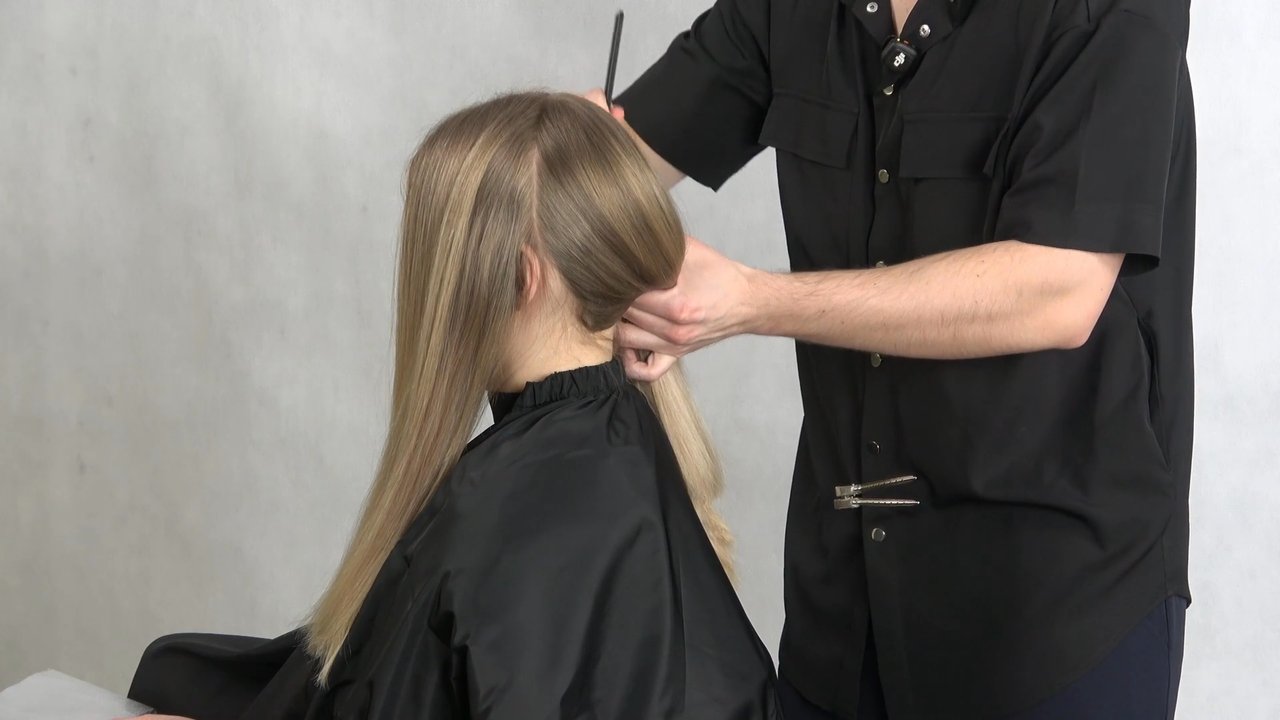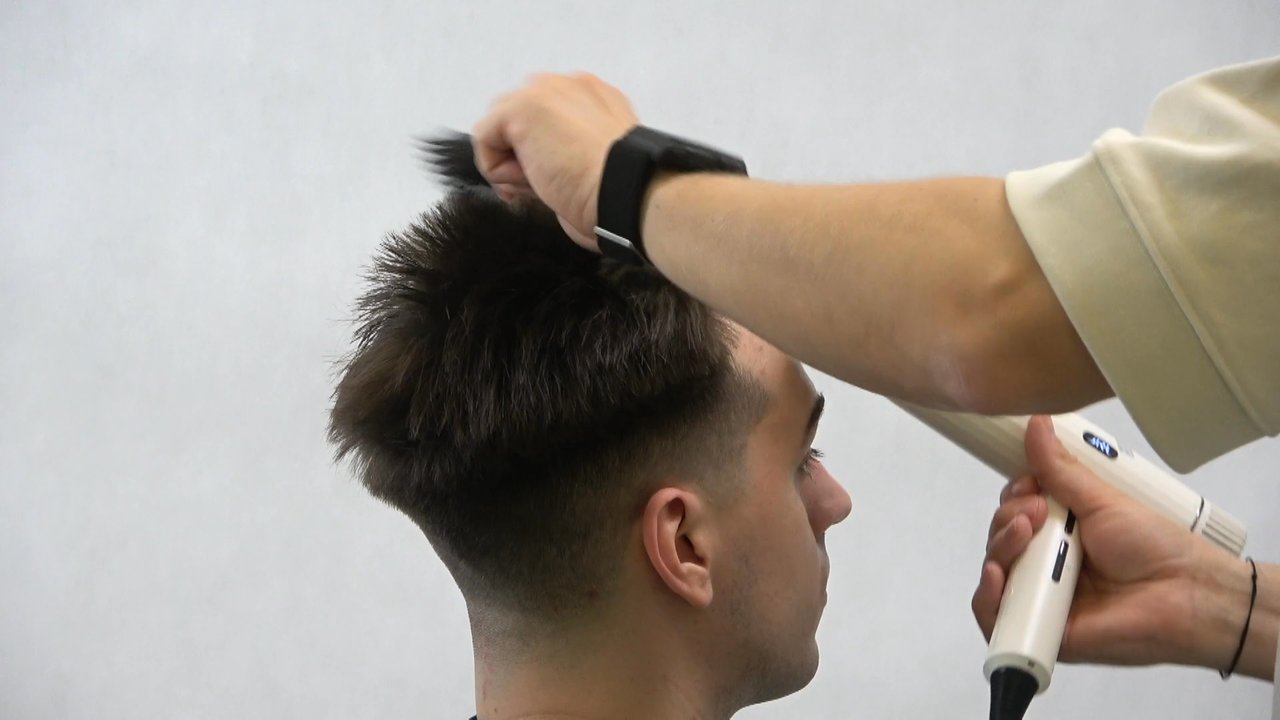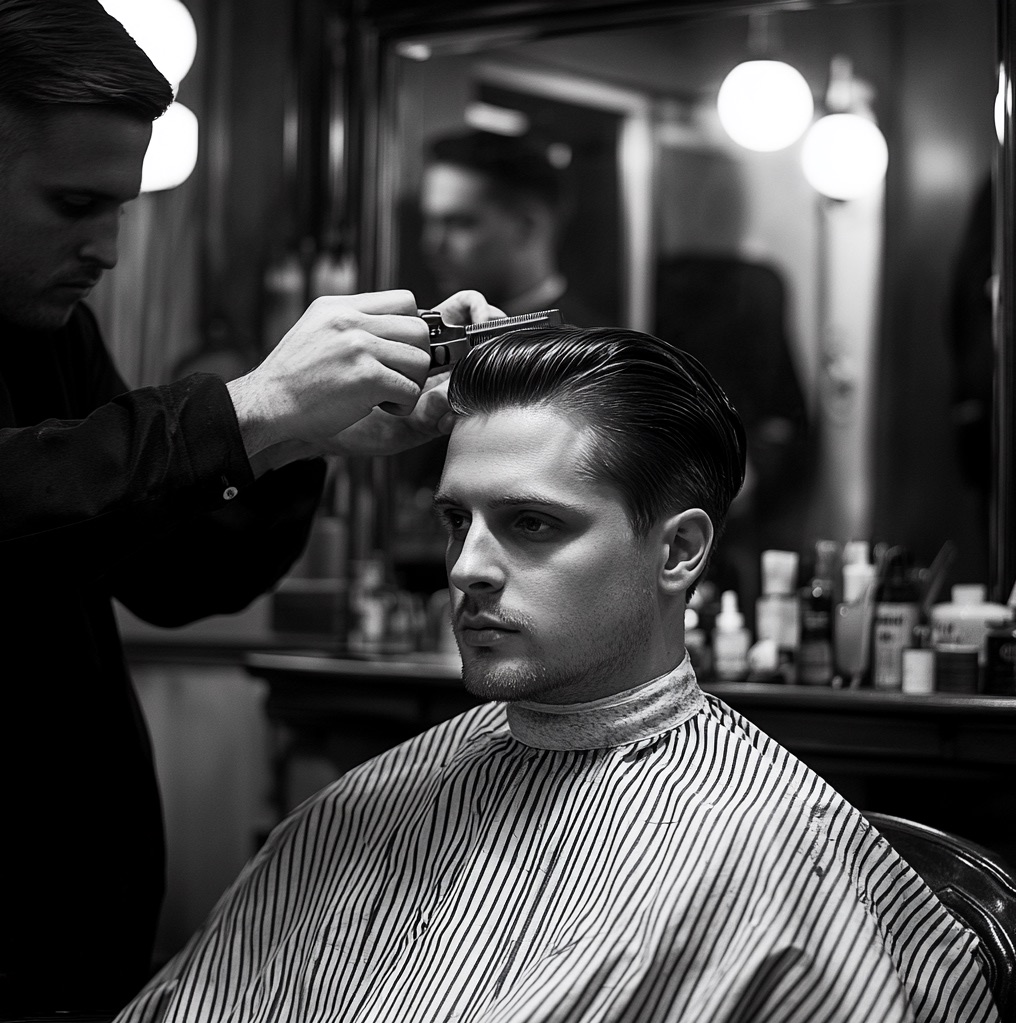
Straight men's hair looks easy—until you take it under the scissors. With no curl to forgive mistakes, every uneven line, every over-blended section, and every hard transition from clippers to scissors shows in plain sight. This guide brings together techniques that genuinely work on straight hair, from sectioning and tool angles, through texturizing, to finishing and product selection.
Characteristics of Straight Men's Hair
Straight hair has no natural curl or wave, so it falls under its own weight and lies flat against the scalp. This creates a common impression of thinness, even with high density, and faster oiliness, since sebum travels unobstructed down the straight strand. On the other hand, this hair type styles easily and holds direction—it just loses its shape just as quickly.
For cutting, this brings three consequences worth keeping in mind throughout the work:
- Every cut line is visible. A straight section doesn't mask unevenness the way curly hair does, so precise sectioning and consistent tension control matter more than anywhere else.
- Volume has to be built through technique, not left to the hair itself. Flat sections are lifted through texturizing and proper layering, not simply by shortening length.
- The shape has a short lifespan. A haircut on straight hair needs thoughtful finishing and product, or it will fall flat by midday.
Preparing for the Haircut
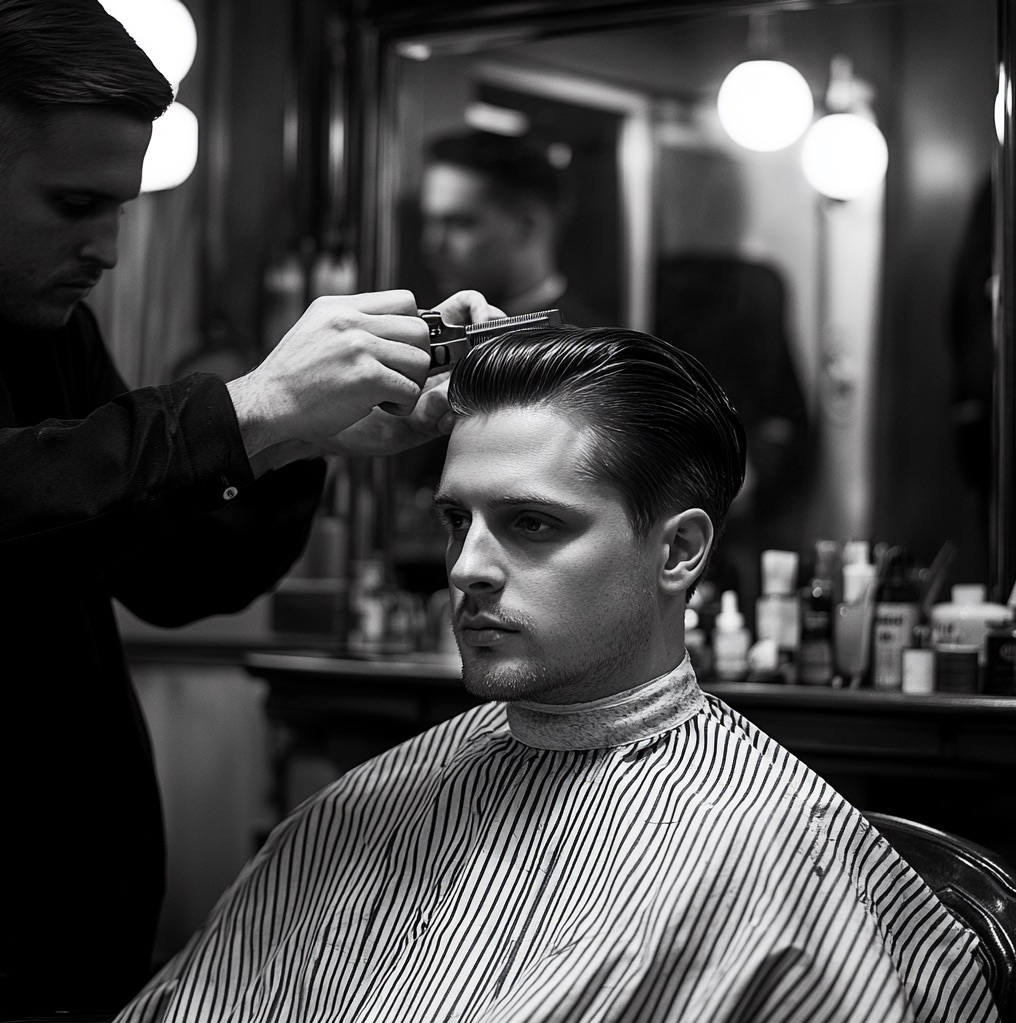
A great haircut on straight hair is won before the first cut. Wash the hair, comb it thoroughly, and assess it dry before wetting it down—dry hair reveals the true growth direction, density across different zones, and where cowlicks appear (unruly tufts at the crown, top, and hairline).
Before you reach for the scissors, establish a few things:
- Growth direction and whorls. Check the crown and hairline. These determine whether the fringe will lie flat or stick up, and where you'll need to leave extra length for control.
- Density by zone. The temples and occipital area tend to be thinner than the top. Where hair is sparser, be more cautious with graduation and short guards to avoid the scalp showing through.
- Face shape and client expectations. Settle on side length, transition height, and the character of the top before you start—not halfway through the cut.
- Moisture level. Cut the main shape on evenly damp hair. Drying sections shrink unevenly and distort length.
Learn more about haircut preparation in our article How to Advise Clients on Choosing a Hairstyle: A Guide for Barbers.
Techniques for Cutting Straight Hair
On straight hair, what matters isn't just the tool you cut with, but the angle at which you hold the section, how you section it, and the tension you maintain. Below is a foundation of techniques, from clipper work to scissor graduation.
Clippers and Transitions (Fade, Taper)
Sides and the nape are usually built with clippers using the clipper-over-comb technique, or with guards moving from the shortest at the bottom to the longest at the top. For a fade, work through a series of guards (e.g., 0.5 – 1 – 1.5 – 2), pushing each subsequent line higher, and blend the contact zone with a scooping motion, tilting the clipper's spine away from the head at the end of each stroke. This breaks up the hard bands that stand out so clearly on straight hair.
- Always cut against the grain, moving the clippers against the direction of growth in a smooth, even stroke.
- Set the guard line with intention. Higher for stronger contrast, lower for a softer taper. On thinner temples, keep it lower to avoid exposing the scalp.
- Finish blending the sides into the top with a comb and scissors (scissor-over-comb) so there's no visible step between the clipper work and the scissor work.
Wet Cutting vs. Dry Cutting
Wet cutting gives clean, even lines and repeatability, so you establish the shape and guideline lengths while the hair is wet. Remember to allow for shrinkage: straight hair shortens as it dries, so plan for a bit more length than the final result. Dry, you return to the finished silhouette to assess actual length and volume, even out the line-up, and place texture exactly where the hair actually falls.
Sectioning and Layering
Work with clean sections and clearly defined guidelines. The elevation angle determines the layering: a section held close to the head (low elevation) leaves more weight and length, while one held high (up to 90 degrees and beyond) builds layers and lifts weight from the top. On straight hair, graduation shows mercilessly, so maintain consistent tension and even section divisions, or you'll end up with steps.
Texturizing and Weight Removal
This is where straight hair gains movement and apparent volume. The key techniques:
- Point cutting – cutting the ends vertically, notching into the section. It breaks up a hard, straight line and adds texture and movement at the tips. The deeper you go, the stronger the thinning effect at the ends.
- Slicing (slide cutting) – sliding half-open scissors along the section. It removes weight and creates soft, nearly invisible layers that give straight hair movement without visible steps.
- Razor cutting – the razor gives the softest, most graduated finish on the ends. Cut only on wet hair with a sharp blade, holding it flat. Be cautious on fine hair, since the razor can over-thin the ends and expose the scalp.
- Thinning shears – targeted weight removal at the mid-length, never right at the ends or near the scalp, to avoid flyaway fuzz and puffy sections.
Learn more about advanced cutting techniques in our course Shaping Volume and Form in Men's Haircutting.
The Most Popular Hairstyles for Straight Hair
Straight hair handles shapes built on clean lines and contrast between the sides and top well. Each of the following hairstyles, however, calls for a different technical approach:
- Undercut – strong contrast: short, uniform sides on clippers (or a sharp disconnected style) with a longer top cut with scissors. Finishing the top with point cutting helps keep it from looking like a flat toupee.
- Pompadour – requires root volume and a soft, textured top. Build guideline length toward the front and top, remove weight at the ends with point cutting, and rely on product and lifted blow-drying at the root.
- Buzz cut – uniform, short length on clippers. Straight hair is an advantage here since it lies flat and even. Keep an eye on symmetry in the line-up and a clean hairline.
- Quiff – shorter sides, longer lifted front section. Texturizing the top is key so the quiff holds volume instead of falling onto the forehead.
- Side part – the classic parting. A clean parting line looks great on straight hair, but it demands precise, even cutting, since any unevenness is visible.
Find more inspiration in our article on the most popular celebrity-inspired men's hairstyles.
Tools and Station Maintenance
On straight hair, tool quality shows immediately. A dull blade doesn't cut—it crushes the tip, and on a straight section, that ragged end stands out. The basic kit:
- Sharp hairdressing scissors for the main shape, plus thinning shears for targeted weight removal.
- Clippers with a full set of guards for building side lengths and transitions.
- A trimmer (liner) for a clean line-up around the hairline, temples, and nape.
- Combs with varying tooth density: fine-toothed for precision and over-comb work, wide-toothed for detangling and length control.
- A blow-dryer to assess how the hair actually falls and to set direction, plus an optional razor for soft finishing.
Clean, oil, and sharpen your blades regularly. Clippers with a dirty, dry blade pull the hair and create uneven lines—something straight hair forgives least of all.
Find more grooming advice in our complete grooming guide.
Tips for Professionals
A few rules that make the difference between a correct and a truly clean haircut on straight hair:
- Check balance on dry hair, viewing the head from the front and back, and cross-checking lengths finger-section by finger-section. A mirror plus a second mirror for the nape is standard practice, not a luxury.
- Maintain consistent tension on the section. Any variation in tension on straight hair immediately produces an uneven line.
- Leave zones with whorls and cowlicks a touch longer, or texturize them more heavily, instead of fighting them with a forced short cut.
- Tailor the haircut to how the client actually wears it day to day and how much time they spend on it in the morning. The best shape is the one the client can recreate themselves.
Trends in Cutting Straight Men's Hair
Among the shapes that work well on straight hair, the textured crop remains strong: a short haircut with a densely texturized top, often paired with a fringe, where all the work happens in point cutting and weight removal on the top so flat hair gains movement and character. The modern mullet is also making a comeback—a contemporary take on the classic short-top, long-back shape—which looks clean on straight hair since the lengths fall evenly.
Methods are increasingly combined within a single haircut: a clean scissor shape plus a soft razor finish on the ends creates texture that's hard to achieve with just one technique. What always matters is personalizing the cut: matching length, transition height, and the character of the top to the client's face shape, zone density, and lifestyle—rather than copying a template.
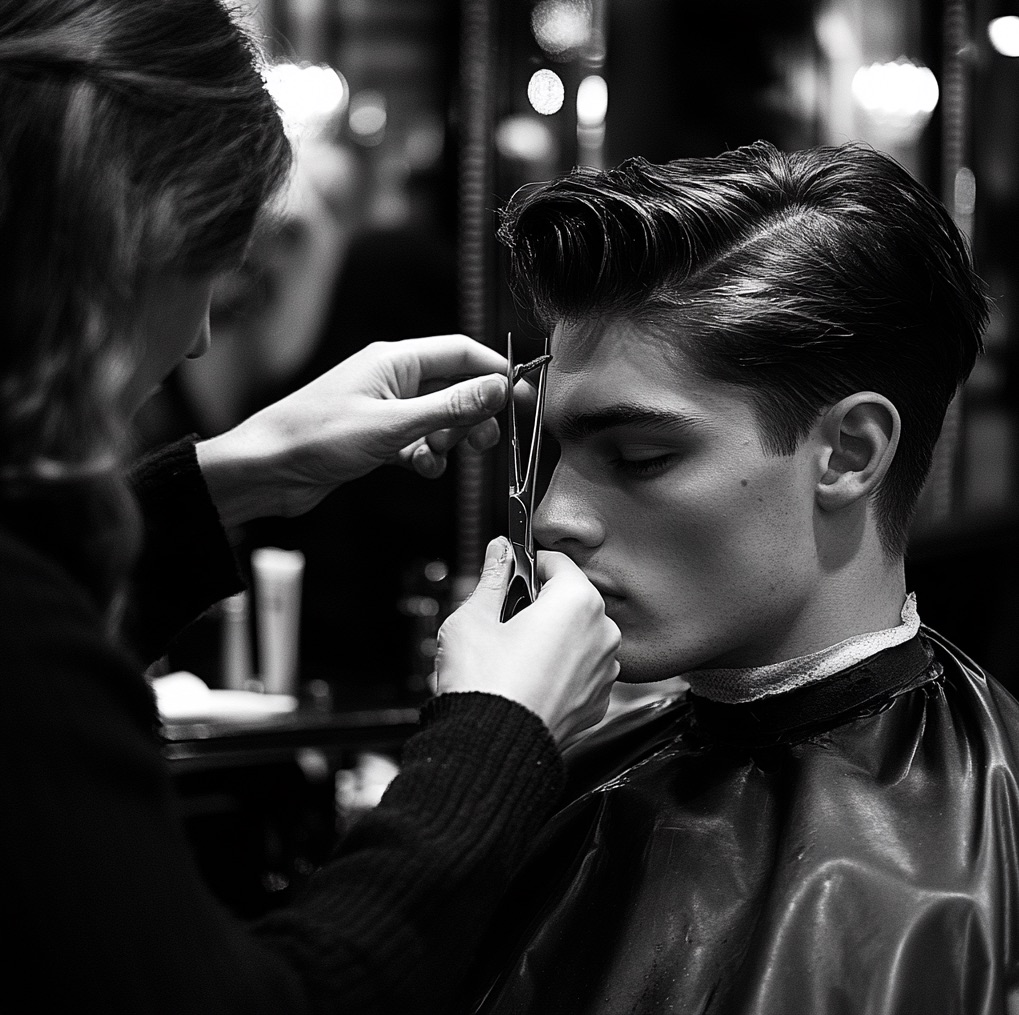
Challenges in Cutting Straight Hair and How to Handle Them
The most common issues with straight hair and proven solutions:
- Lack of volume. Lift flat, motionless sections by texturizing the top (point cutting, slicing) and layering with a higher elevation angle, and support the roots with lifted blow-drying and the right product.
- Visible cutting imperfections. Every unevenness shows on straight hair. Work with clean sections and consistent tension, and check the result both wet and dry.
- Quick loss of shape. Add texture (e.g., razor cutting on the ends, point cutting on top) so the hair holds direction longer, and choose a hold product matched to the haircut.
- Difficulty with layers. Hard graduation is too visible on straight hair. Use slicing to introduce delicate, nearly invisible layers that add movement without steps.
- Cowlicks and stubborn tufts. Instead of fighting the whorl, work with it: leave more length for control, or texturize the zone to mask the lift.
Styling Products for Straight Men's Hair
On straight hair, it's easy to overdo product and weigh the haircut down. Choose lightweight formulas and matte finishes that build texture without a greasy look:
- Matte pastes. They build texture and volume without shine. Warm a small amount between your palms and apply to slightly damp hair, working from the roots.
- Hair powders. They give instant root volume. Use very sparingly, applying directly to the scalp, since too much will clump the hair together.
- Light pomades. For classic, combed-back shapes (side part, pompadour). Apply to dry hair, starting with a small amount to avoid weighing the haircut down.
- Texturizing sprays. They help maintain volume and movement throughout the day. Spray from about 20 cm (8 inches) away, focusing on the roots.
- Dry shampoos. They refresh the hair and add volume between washes. Apply to dry hair at the roots, let it sit for a moment, then comb through.
There's one rule: less is more. Too much product weighs straight hair down, flattens the haircut, and makes it look greasy.
Educating Clients on Straight Hair Care
A haircut isn't finished until the client is home. Take a moment to show them how to recreate and maintain it:
- Washing. Washing too often fuels the cycle of dryness and oiliness. Recommend washing 2-3 times a week with a shampoo suited to straight hair.
- Blow-drying and styling. Show them how to blow-dry with root lift for volume and how much of the recommended product to use. This is often the difference between the salon look and flat hair the next day.
- Regular trims. Emphasize that the shape on straight hair loses definition faster, so it's worth coming back every 4-6 weeks to maintain the line.
- Heat protection. If the client uses a blow-dryer or straightener, recommend a heat-protectant product.
- Nighttime care. A silk or satin pillowcase reduces friction and tangling, which helps longer shapes hold direction.
Celebrity Inspiration for Straight Hair
A few recognizable examples of straight-hair styling that give clients a clear sense of direction:
- Zac Efron – a texturized quiff that adds volume to straight hair.
- Ryan Gosling – a classic side-swept style that sits cleanly on straight hair.
- Tom Hiddleston – longer, slicked-back shapes, an example of elegant styling for straight hair.
- Chris Hemsworth – short cuts with a texturized top, a solid source of inspiration for straight hair.
- David Beckham – from short crops to longer combed-back styles, showcasing the versatility of straight hair.
Always translate inspiration to the specific client: face shape, zone density, and how much time they'll actually spend on styling.
See it in practice: in the line cutting course with Kamil Cesarski, you'll follow the entire process step by step on a model, with commentary from the instructor.
Summary
Cutting straight hair is a game of precision: clean sections, consistent tension, a deliberate elevation angle, and texturizing that builds the volume the hair doesn't have on its own. Add thoughtful finishing, a lightweight product choice, and a quick set of instructions for the client, and the shape will hold up well past the first wash.
If you want to refine your clipper work, transitions, and volume shaping on men's hair, check out Connected Hair's hairdressing courses.