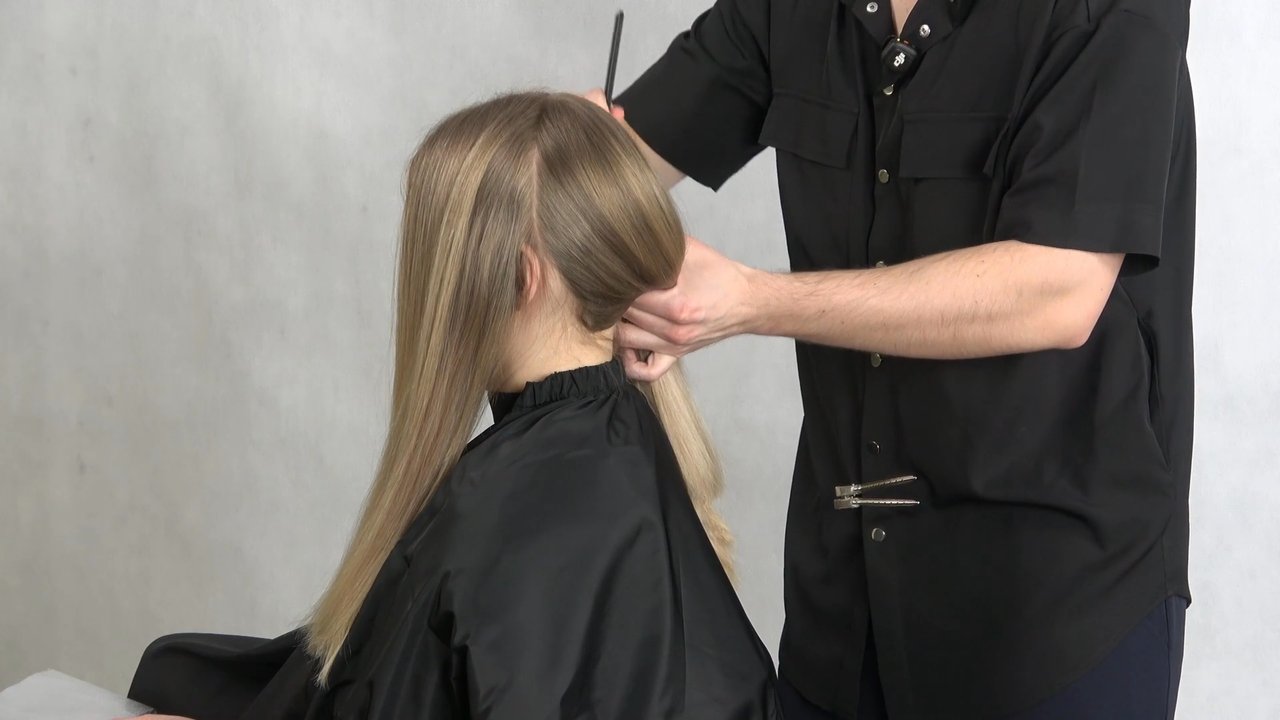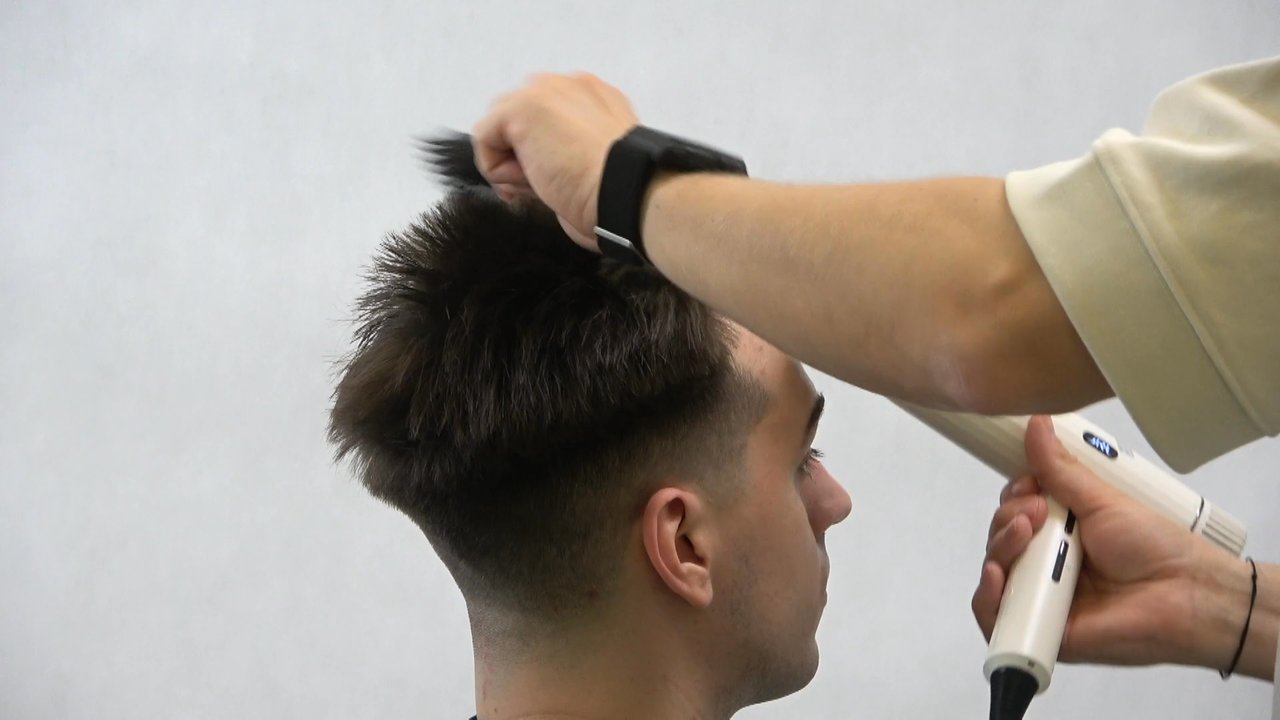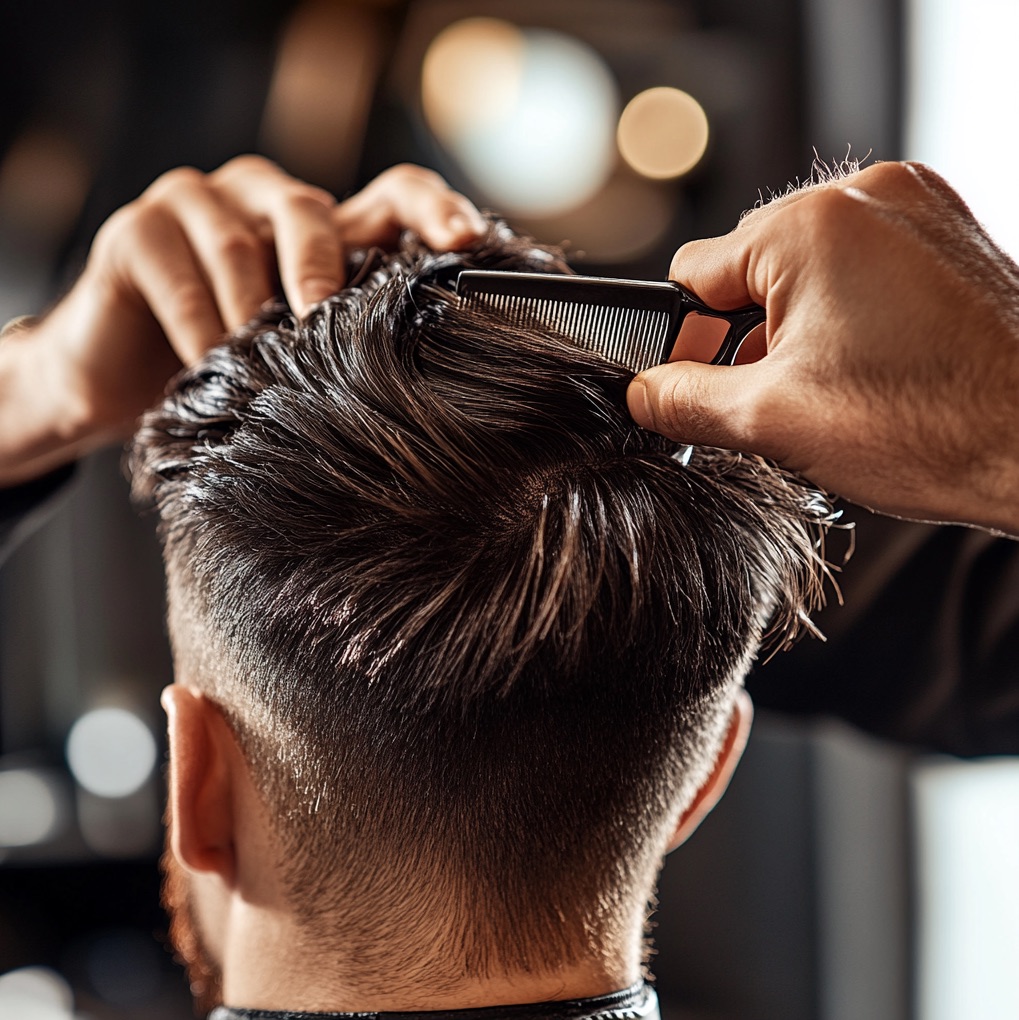
Thick men's hair is a material that forgives less than any other. Every cut shows, every uneven layer sticks out, and the wrong length choice makes the top “stand up” and refuse to lie down. At the same time, this is hair you can build strong texture, height, and hairstyles that hold their shape all day. Below is a complete workshop: how to read this type of hair, how to section it, which techniques reduce weight, and how to finish it.
Characteristics of Thick Men's Hair
Before you choose a technique, you need to know what you're working with. Thick hair differs from fine hair not just in appearance, but above all in how it reacts to cutting and blow-drying.
- A larger diameter per strand, which gives the whole mass significant stiffness and its own spring-back. After cutting, the hair readily bounces back upright instead of falling down.
- Rapid volume build-up – the growing weight lifts from the root, especially around the temples and crown.
- Resistance to damage and a good response to product, but also a tendency to frizz in high humidity.
- Pronounced cowlicks and growth directions, which on thick hair can throw off the entire shape if ignored.
This leads to one main rule: with thick hair, you're not fighting for length – you're fighting for weight control. The most common mistakes are the “helmet” effect – a dense, immovable mass – and vertical standing after cutting too short. You avoid both with the same tool: intentional volume reduction from within, not just shortening the length.
Preparation for the Haircut
A good consultation and analysis shorten the actual work and eliminate surprises. With thick hair, corrections are costly – once you've cut away weight, you can't put it back.
1. Client Consultation
- Establish not just the target shape, but how much time the client realistically spends styling in the morning. Thick hair without styling looks different than in a salon photo.
- Ask whether the hair “stands up” after a short cut and whether it frizzes in humidity. This will tell you how much weight needs to come out from the inside.
- Set realistic expectations: a smooth comb-over on dense, stiff hair requires a different amount of product and care than on fine hair.
2. Hair and Head Analysis
- Assess density and strand thickness separately – dense but fine hair is handled differently from sparser but very thick hair.
- Locate cowlicks, the hairline at the temples and nape, and areas where the hair grows at an angle. Plan your cutting direction around them.
- Check the head shape: bumps and hollows determine where to leave weight and where to remove it, so the silhouette of the haircut stays even.
3. Preparation and Sectioning
- Wash and comb through the hair, and work on damp – not dripping – hair for cutting. Wet thick hair lies unnaturally flat and misleads you about the length once it dries.
- Divide the head into sections: two side sections, the back, and the top zone. A clean parting with the comb lets you control how much weight comes off each area.
- Remember shrinkage – thick hair shortens and lifts as it dries. Leave extra length, especially on the top and the fringe.
4. Tool Selection
- Sharp hairdressing scissors for guiding length and thinning shears for weight reduction.
- Clippers with a full set of guards for the sides and the fade, ideally with an additional trimmer for finishing the line.
- Combs with different tooth density: fine-toothed for guiding and fading, wide-toothed for lifting weight and controlling the top.
Basic Cutting Techniques
This is the foundation every men's haircut on thick hair is built on. These techniques give you control over length, transitions, and the amount of weight.
Scissor Layering
- Point cutting – you cut the ends vertically, with the scissor tips pointed into the section, instead of a straight horizontal cut. This breaks up a hard, straight line and softens the edge, which on thick hair can otherwise look blunt and blocky.
- Slide cutting – the scissors glide along the section, removing length smoothly. This creates soft transitions between areas and helps “melt” the weight without creating steps.
Clipper Layering and the Fade
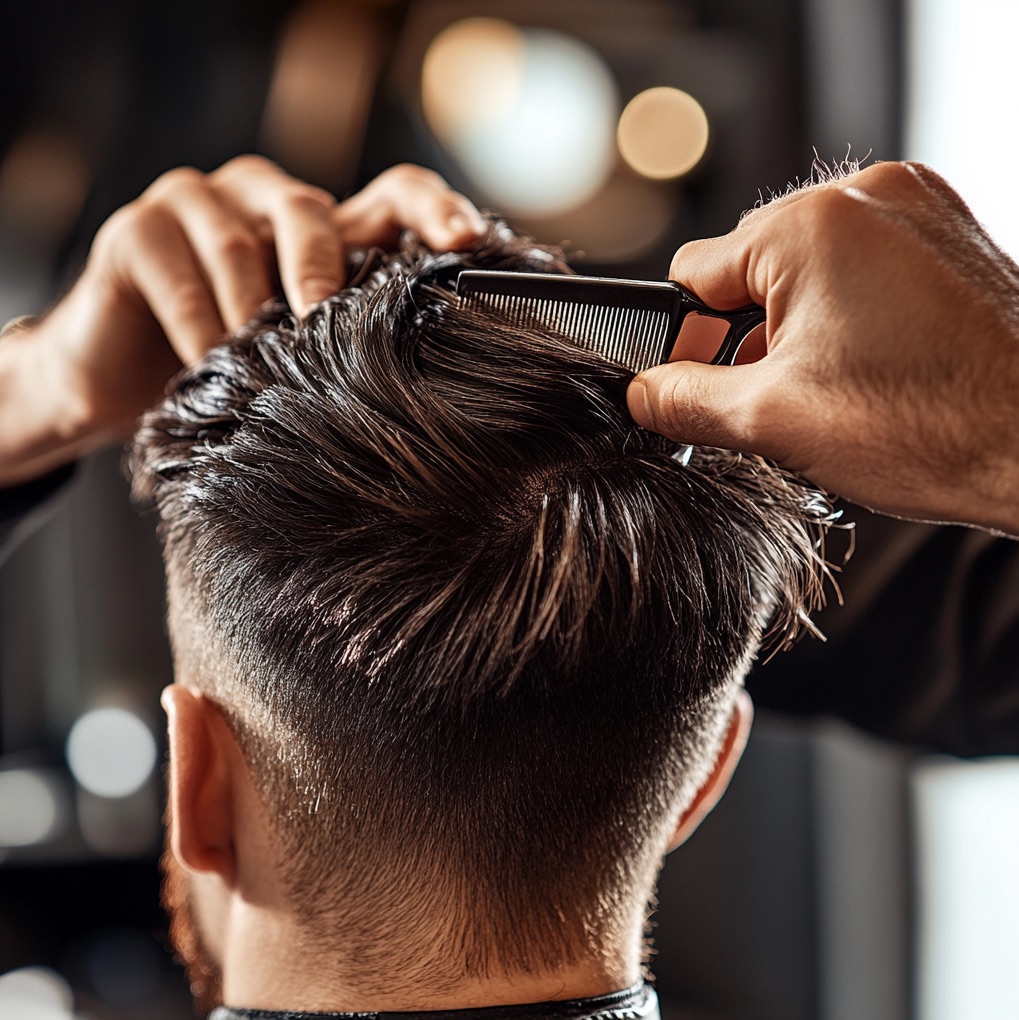
- The sides and nape are where weight builds up fastest, so a short clipper setting controls volume there really well. Work from the shortest guard upward, graduating through the guards.
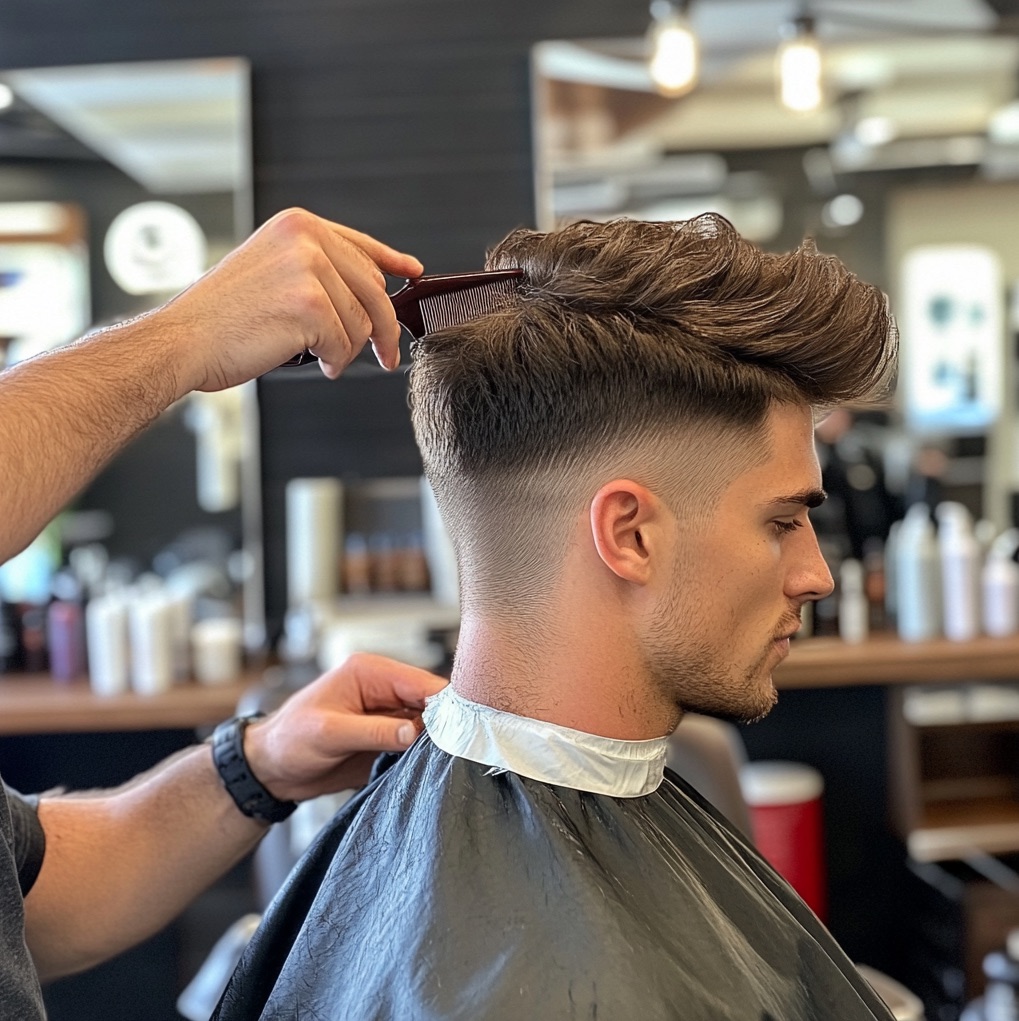
- For the fade, move the clippers using a flicking motion, tilting the back of the clippers away from the head as you go, to move from one guard to the next without a hard line. Blend the transition zone with the open clipper (lever open) or an intermediate guard until the boundary disappears.
- On thick hair, check the result from every angle against the light – a hard transition line shows up much more than it does on fine hair.
Layer Cutting
- By lifting sections at an angle and gradually shortening them, you remove weight from the interior layers while keeping length on the top layer. This is the basic way to give a thick top movement instead of standing like a solid mass.
- Work section by section and control the elevation angle: the higher you lift the section, the shorter the interior layers and the lighter the result.
Choppy Cutting
- Irregular, short jabs into the ends create texture and separate the strands. Great for relaxed, slightly “tousled” hairstyles, where movement and an undefined edge matter most.
- On thick hair, this technique also “breaks up” the weight at the ends, so the top doesn't look heavy.
These four techniques are the base. Once you've mastered them and learned to combine them in a single haircut, you'll move smoothly into more advanced weight-reduction methods.
Advanced Techniques for Thick Hair
This is where real control over weight begins. These techniques let you keep the length and shape while significantly lightening the haircut from the inside.
Chunking
- Cutting out larger sections of weight from the interior layers, without touching the length on top. Ideal when the hair is dense and heavy, and the client doesn't want to lose length.
- This requires precision and work deep beneath the top layer – otherwise you'll get visible holes and gaps. Keep the reduction away from the outer line.
Razor Cutting
- The razor cuts the end at an angle, so the section tapers toward the tip. It gives very soft, natural edges you can't achieve with straight scissors.
- Always work on damp hair with a sharp blade – a dull one tears and damages thick hair. Use a light hand and an angle close to parallel with the section, so you don't remove too much at once.
Channel Cutting
- Creating “channels” in the weight – you work the reduction in sections following the styling direction, so the hair falls more readily where you want it.
- Especially effective on hair that sticks out and won't lie in one direction.
Deep Layering
- Intensive reduction of the interior layers close to the root, while keeping full length on top. The strongest weapon against the “helmet” effect on very dense hair.
- It requires a feel for where the weight is actually a problem. Too close to the root, and the ends of the top layer will start to stick out, propped up by short hairs underneath.
Disconnection
- Intentionally leaving a clear contrast between areas – for example, a long top and very short sides – with no smooth transition. A bold, striking effect.
- It requires a plan from the start – you have to design the boundary with intention, because a poorly placed disconnection line on thick hair looks like a mistake, not a choice.
These techniques require practice and a feel for hair structure. If you want to practice them under an instructor's guidance, check out the hairdressing courses at Connected Hair.
Popular Hairstyles for Thick Hair
Thick hair works well in hairstyles that need strong structure and height. With each of the following, what matters is how you handle the transition between the sides and the top, and how much weight you remove from the inside.
Classic Undercut
- Short, uniform sides and back, with a noticeably longer top. Short sides cut away the most built-up weight, so thick hair immediately looks lighter.
- It only holds its shape with regular trims on the sides – regrowth quickly blurs the contrast.
Textured Quiff
- Height and movement at the front – here, hair thickness works in your favor, since the weight holds the lift on its own.
- Texturizing the top is key, so the quiff shows separated strands instead of one dense, solid mass.
Side Part
- An elegant shape, but on thick hair it needs thorough thinning so the strands lie down instead of lifting.
- Clean layering on the sides and a defined parting give a smooth transition. Ideal for formal occasions.
Short Textured Crop
- The easiest-to-maintain choice for very dense hair. A short, textured top with a fringe and clean sides control volume beautifully.
- Texture on top, for example through point cutting, highlights the structure instead of flattening the hair.
Medium Length with Layers
- For the client who wants more length. Layers remove weight from the inside and add movement, so a thick top doesn't feel heavy.
- This requires skillful layer placement, since poorly distributed layers create frizzy “steps”.
When choosing a hairstyle, always weigh the client's face shape, lifestyle, and how much time they'll spend styling at home.
You'll find more inspiration in our article on the most popular men's hairstyles.
Tools and Products
The right tools and products are key to effectively cutting and styling thick men's hair.
Tools
- Sharp hairdressing scissors – the basis for guiding length and precise cutting.
- Thinning shears – for reducing weight from the inside and soft thinning without disturbing the outer line.
- Clippers with a full set of guards – for the sides, the fade, and precise transitions.
- A hairdressing razor – for advanced texturizing and soft edges.
- Combs with different tooth densities – for combing through, guiding, and lifting weight.
- Brushes – for styling and controlling direction while blow-drying.
Styling Products
- Matte pastes – control volume and add texture with a natural finish.
- Styling creams – a smooth finish and frizz control, good for heavier hair.
- Texturizing sprays – add structure and separate strands on top.
- Pomades – for classic, slicked-back hairstyles with shine.
- Gels – for strong hold on very dense, hard-to-style hair.
When choosing products, go by the hair's character and the client's habits. The better the cut and weight reduction, the less product is needed to hold the style.
Styling and Care
Even the best cut will fall apart with poor blow-drying, so it's worth giving the client specific everyday advice.
Styling
- Blow-drying: direct the airflow from the roots toward the ends to smooth the hair down and control volume. On very dense hair, a diffuser helps tame frizz.
- Products: apply to damp hair, starting from the ends toward the roots, distributing evenly between your palms.
- Texturizing: separate strands with your fingers or a wide-tooth comb. Avoid finishing with a brush, as it increases frizz on thick hair.
- Finishing: a light spray holds the shape without weighing the hair down or causing a “crunchy” effect.
Care
- Washing: use a shampoo formulated for thick hair, and wash 2-3 times a week to avoid over-drying.
- Nourishing: a hydrating mask once a week keeps the hair's spring and makes it easier to style.
- Protection: a heat-protectant product before every heat-styling session.
- Trimming: regular touch-ups every 4-6 weeks maintain the shape and contrast before regrowth blurs them.
You'll find more care tips in our complete care guide.
Tips for Barbers
A few rules that make the biggest difference when working with thick hair:
- Weight reduction first, length second. A thick top “stands up” not because it's too long, but because it's too heavy.
- Read the cowlicks and growth direction before making your first cut. On thick hair, an ignored cowlick will throw off the entire shape.
- Check the result dry and against the light. Wet thick hair is deceptive about length and volume.
- Work gradually – once you've removed weight, you can't put it back. On thick hair, every mistake is visible and costly.
- Teach the client how to style the haircut at home and pick one or two products for them. Without this, thick hair won't look the same at home as it did in the chair.
- Choose the shape based on the face and lifestyle, not on a photo from Instagram.
Common Mistakes When Cutting Thick Hair
Most unsuccessful cuts on thick hair come down to the same handful of mistakes. Each one has a simple fix.
Overly Aggressive Weight Reduction
- The problem: overly heavy thinning damages the structure, creates gaps, and strips the hair of its natural look.
- The fix: reduce gradually, section by section, checking the result on dry hair regularly. Keep the thinning shears away from the outer line.
Ignoring Growth Direction and Cowlicks
- The problem: the haircut sits unevenly, with hair sticking out in unexpected spots.
- The fix: locate the cowlicks at the start and guide the length in line with the hair's natural direction.
Mismatched Shape for the Face
- The problem: even a cleanly executed haircut doesn't suit the client's features.
- The fix: match the proportions of the top and sides to the face shape before you pick up the clippers.
Not Enough Texturizing
- The problem: the “helmet” effect or excessive puffiness, because the weight was never broken up.
- The fix: regularly apply point cutting, slide cutting, or razor cutting to separate the strands and remove weight.
Cutting the Top Too Short
- The problem: thick hair cut too short “stands up” vertically and can't be styled down.
- The fix: shorten gradually, leave extra for shrinkage after drying, and check whether the hair still falls.
Overlooking Lifestyle and Client Education
- The problem: the client can't recreate the haircut at home, and thick hair without styling looks completely different.
- The fix: ask about their daily routine, match the shape to their real habits, and show them the blow-drying technique and product choice.
Over-Reliance on Product
- The problem: masking a weak cut with a heavy amount of product weighs down the hair and gives an artificial look.
- The fix: focus on a good cut and weight reduction. Then the style holds with minimal product.
Summary
Cutting thick men's hair comes down to one thing: managing weight. The key takeaways:
- Start with an analysis of the hair, cowlicks, and head shape, and only guide the length after planning the weight reduction.
- Combine techniques – from point cutting and slide cutting to deep layering – to remove weight without losing shape.
- Choose the hairstyle based on the hair type, face, and lifestyle, not just the trend.
- Check the result dry and work gradually – on thick hair, every cut shows.
- Educate the client on blow-drying and product choice so the haircut looks just as good at home.
If you want to refine your weight-reduction, fade, and texturizing techniques for thick hair under an instructor's guidance, check out our online hairdressing courses, featuring in-depth cutting and styling curricula.