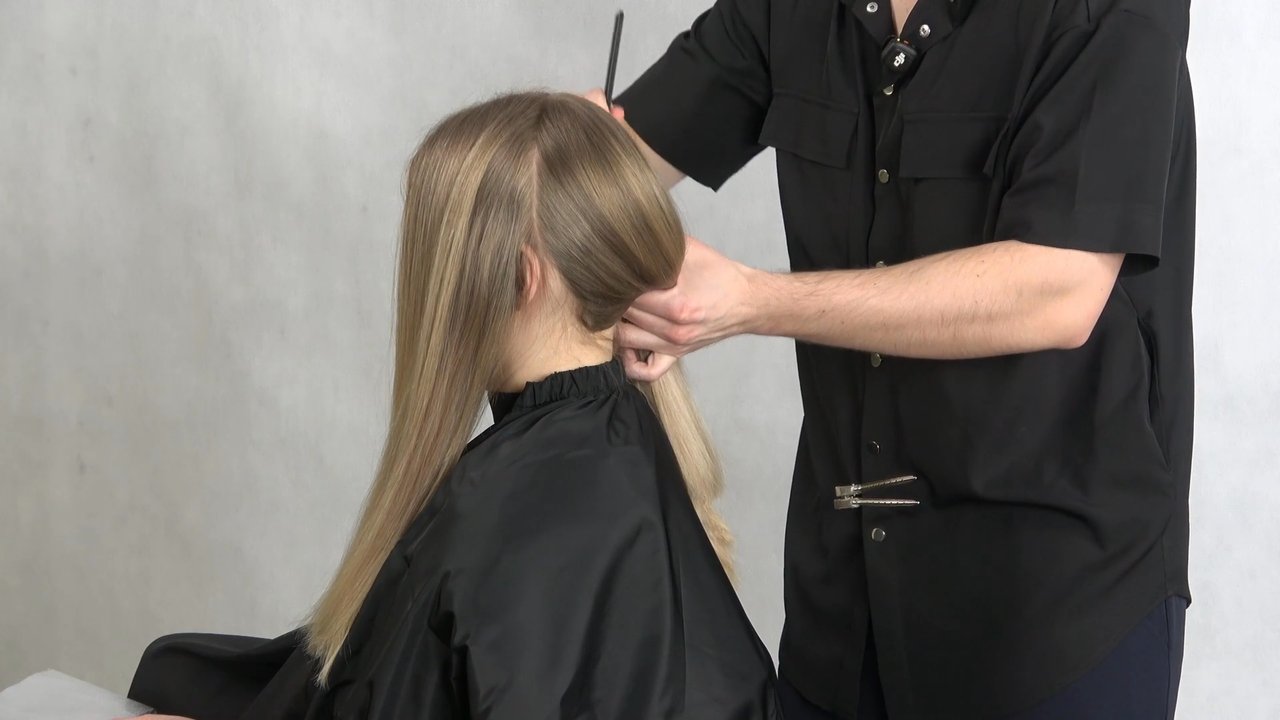
The model's hair was very long, heavy, and full of volume all the way down to the occipital area, but instead of curling, it just waved. This is exactly where the flow mullet starts: with the decision of where to remove weight and where to keep length, to pull as much curl and lightness as possible out of that wave.
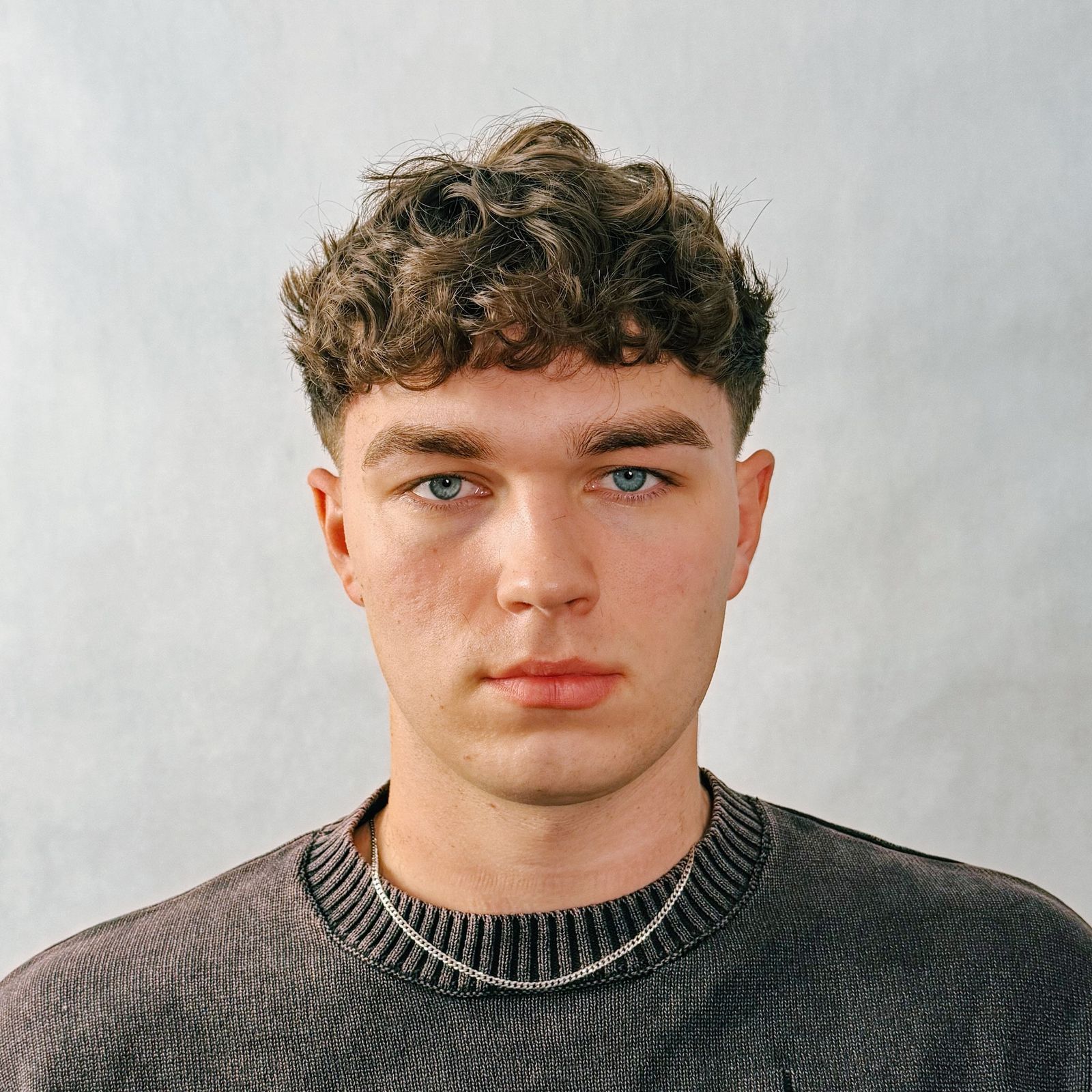
The flow mullet is a creative variation of the mullet for wavy and curly hair, where the long, mobile back gets curl and a so-called S-shape, while the sides are cut short under a bold, distinctive taper. The back is cut using three techniques — layers, high graduation, and point cutting — to give it life and movement. The sides are finished with an aggressive taper that makes the whole haircut pop and sets it apart from a classic mullet.
How the flow mullet differs from a classic mullet
The flow mullet follows the same idea as the mullet — long back, shorter sides — but played out more creatively, with a stronger back shape and a bolder taper. Albert Banaszek says it plainly while working on the model: it's about a more creative mullet, with a bold, distinctive taper, so there's more going on.
A classic mullet often sticks to a simple split between long back and shorter sides. Here, Albert goes further: he divides the back into separate sections, adds disconnection, and plays with shape to give it more life. It's a close cousin of the modern mullet and a sibling to cuts from the wolf cut family, just with a stronger emphasis on the taper and a mobile, curly back.
See how Albert defines the goal of the cut right from the start, and why the taper needs to be this bold:
This premise — a bold taper as a counterpoint to the long back — determines everything else in the work. The sides go short, while the back stays long and mobile.
Who the flow mullet is for
The flow mullet works best on wavy and curly hair that has plenty of volume and length but loses its curl under its own weight. That was exactly the starting point with the model: very long, heavy hair reaching down past the occipital area at the back, more wavy than curly. The right cut takes off the weight and lets the curl come back.
From the profile, you could see a round shape and excess weight. With this kind of round shape and thick hair, a bold taper on the sides plus an elongated, mobile back help pull attention toward the shape itself, rather than the volume alone. It's a haircut for someone with thick, long hair who wants to bring out character, not just trim it down.
We want a bolder mullet, more creative, so we'll cut these sides down for our taper and finish it off with a pretty aggressive taper.
Albert Banaszek
How the flow mullet comes together, step by step
The flow mullet is built section by section — starting with the base length at the back, moving through layers and high graduation, then on to disconnection and the taper on the sides. Albert starts with clean partings, because they're what keep you from losing track of length and cutting off what you don't want to.
The order of work looks like this:
- A natural parting of the back from the top, run down to the mastoid process, plus a parting of the sides from the top marked out with a comb at the crown.
- Isolating a disconnection above the occipital area and a helper triangle at the top, to leave some length in reserve.
- The back cut using a layering technique, with sections held out at 90° elevation, to build the S-shape from longer to shorter.
- High graduation blending into the layers, sections held perpendicular to the body, worked around following the shape of the head.
- The sides cut short for the taper and blended into the back with point cutting.
- The fringe and top cut into a tangerine shape: a square vertically, a circle horizontally with elongated points.
The heart of this whole construction is the base length at the back. The entire haircut is built from it, so Albert sets it very intentionally, holding the section perpendicular and deciding how strong the disconnection should be between the hair below the occipital area and above it. See this moment:
Everything else depends on that one decision. Albert controls each following section against the shape of the head rather than pulling it out to one flat line, combing perpendicular to the body and working around in a circle. Horizontally he builds a circle for lightness, vertically a square for volume, and he finishes the whole thing with point cutting to leave some texture in the curly hair and avoid a hard, blunt line.
Disconnection and taper
Albert deliberately softens the disconnection at the back, while setting the taper on the sides tight rather than stretched out, to make it bolder. First he closes the length gap at the disconnection, pecking with point cutting as high up into the layers as possible, because too sharp a disconnection would show clearly once the hair is dried, and the goal here is a natural effect.
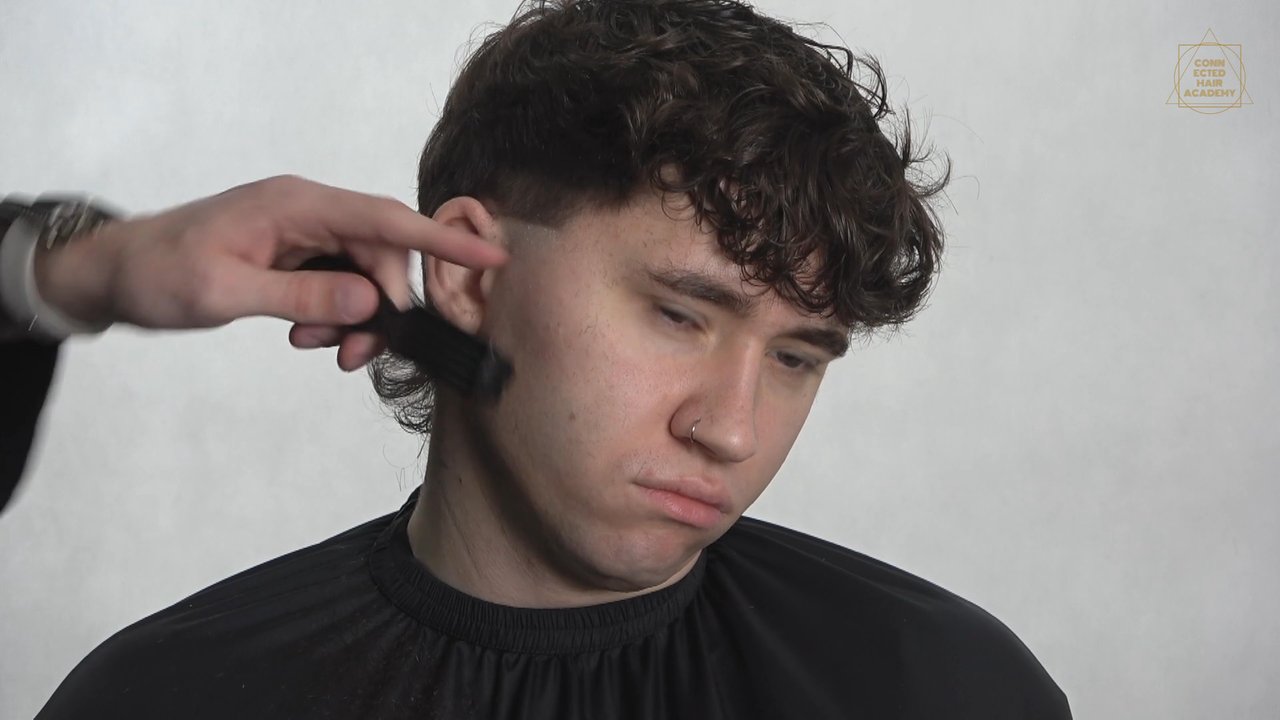
The taper itself is built using guards and trimmers. Albert plans out where the zero line should sit, cleans up the line-up with a shaver leaving a millimeter of difference so the edge isn't too hard, and works with his wrist, opening the blade by one notch. On the sides he reaches for the trimmer, because he won't get the same curl there as up top. See how he decides on the character of the taper:
A tight taper gives more contrast and light right above the ear, which makes the long back stand out even more. This is the detail that sets the flow mullet apart from the soft, blurred transition you'll see in a calmer messy taper.
Styling the flow mullet
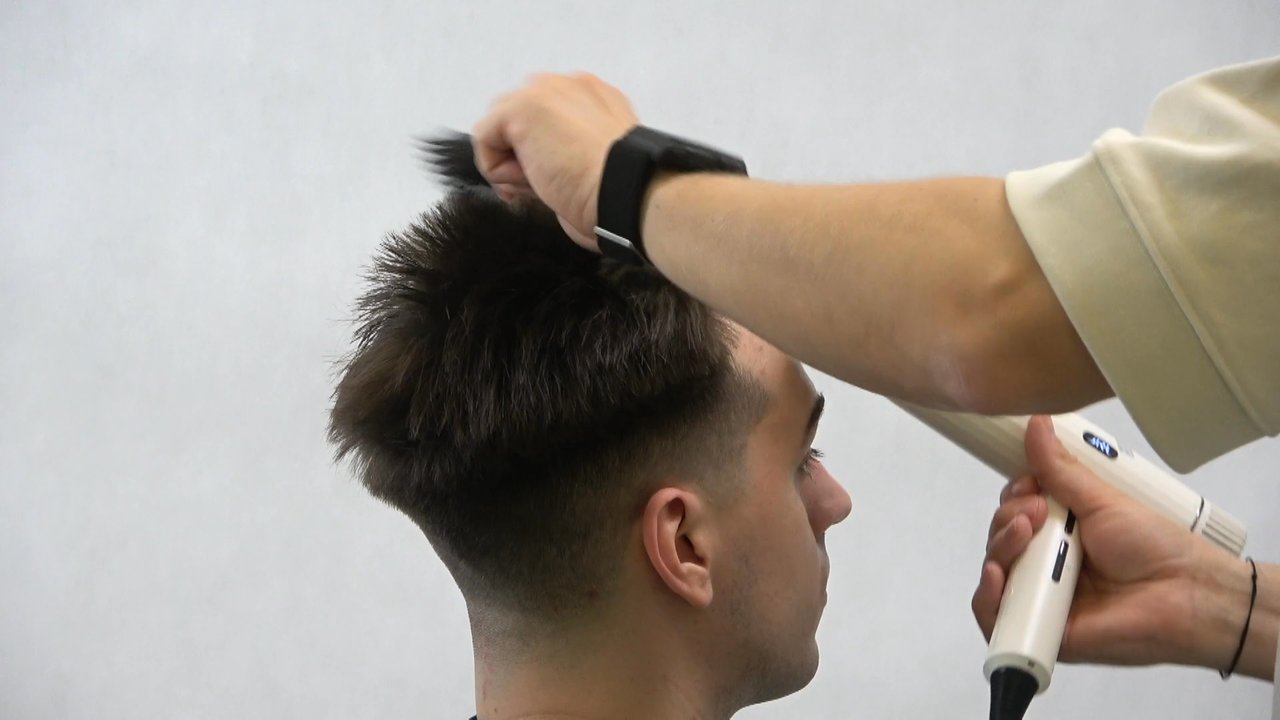
The flow mullet is styled on slightly damp hair with matte paste and dried with a diffuser on low heat and low speed. Before drying, Albert adds a bit of mousse so the curly hair doesn't dry out, since it likes a bit of product and water but can't stand high heat.
When drying the top, Albert doesn't dry the hair all the way, so it curls on its own, and instead focuses attention on the sides and on blending the top into the sides. He doesn't touch the curls directly with the diffuser, just boosts the curl: lifting, twisting, and tightening the sections. At the end, he adds a bit of paste on his finger, scrunches and tousles the hair to bring out the curl and show off the S-shape at the back.
How long the flow mullet holds up
The flow mullet is designed to fall naturally even without styling, so it handles regrowth well without looking like it's falling apart. Albert points out that this is a more creative mullet than the standard version, but even unstyled it will still look natural.
Because the weight is distributed and the back has a built-in S-shape, the haircut keeps its character as the hair grows out. This is a cut for someone who wants to keep growing their curly hair while still having a bold shape in the meantime, rather than just more and more weight.
If your curly-hair mullets keep losing their curl to excess weight, or the taper comes out too soft and blurred, it comes down to how the layers are distributed and where the zero line sits. Albert Banaszek walks through the entire cut step by step in the Flow Mullet course: how to remove volume from the back, build the S-shape with layers and high graduation, soften the disconnection with point cutting, and set a tight, distinctive taper, then finally bring out the curl with a diffuser and matte paste.