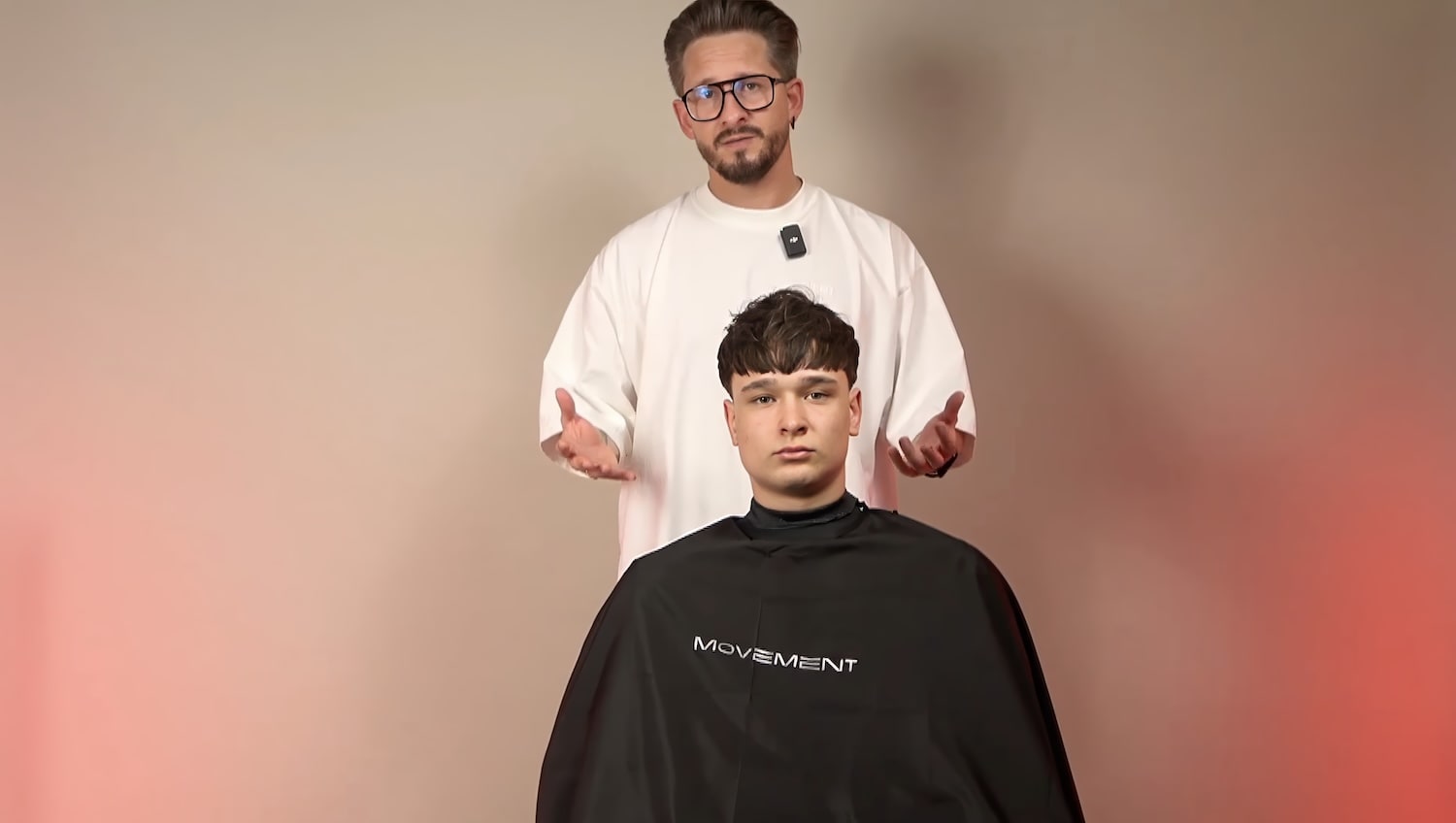
French Crop holds a top spot in men's hairdressing for a simple reason: a short, textured top with a fringe swept forward and a clean fade on the sides suits most face shapes and is easy to style at home. The problem starts with fine hair. Here there's no margin for error, because any section cut too aggressively shows through the scalp, and a flat top instantly gives away the lack of density. This is exactly the situation the course “French Crop on Fine Hair – Texturizing and Styling Techniques”, led by Miłosz Mikołajczak, breaks down step by step.
Why French Crop Is Harder on Fine Hair
On thick, dense hair, French Crop forgives a lot. You can cut more aggressively, and the hair's weight will still build the fringe and fill out the top. On fine, thin hair, the rules reverse: every millimeter of length you leave matters, and so does every decision about where to remove weight and where to leave it. Three things determine the result.
- The illusion of density instead of real density. You can't add more hair, so all the work comes down to distributing length and texture in a way that masks the scalp showing through.
- The line where the top meets the sides. A fade taken too low exposes the temple and visually reduces volume. The transition zone must be set with intention, not left to chance.
- The finish of the fringe. A fine fringe cut with a blunt edge looks thinner than it actually is. A textured tip breaks up the edge and makes the hair look visually denser.
Sectioning and Cutting the Top
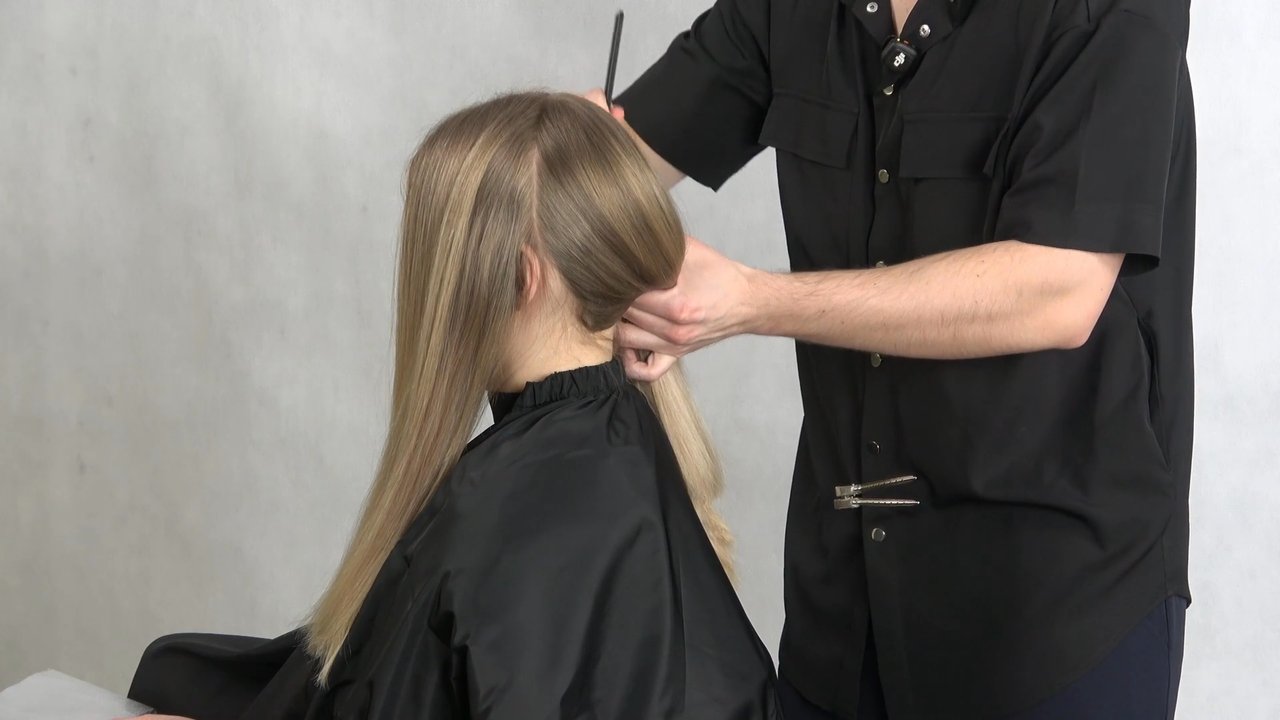
On fine hair, the top is built by first establishing the guide length, not the fade. You decide how much length you have at the crown first, then match the sides to it. In practice, the workflow looks like this.
- Divide the top into a clean scissor zone, separated by a parting from the side sections. Work on dry or slightly damp hair, because on wet hair it's easy to cut too short.
- Establish a guide section at the crown and work section by section from back to front, combing each section perpendicular to the scalp. Consistent elevation gives you even, controlled length.
- As you move toward the front, lower the elevation of the sections so the fringe stays longer than the rest of the top. This is what creates the forward drop onto the forehead that's characteristic of French Crop.
- Check symmetry by combing the top forward and comparing the fringe edge on both sides of the face. Make only minimal corrections, since on fine hair there's no way to undo them.
This is the point where techniques from modern men's haircutting come into play, along with knowing how to advise a client on a hairstyle matched to their actual hair density — not to a photo from the internet.
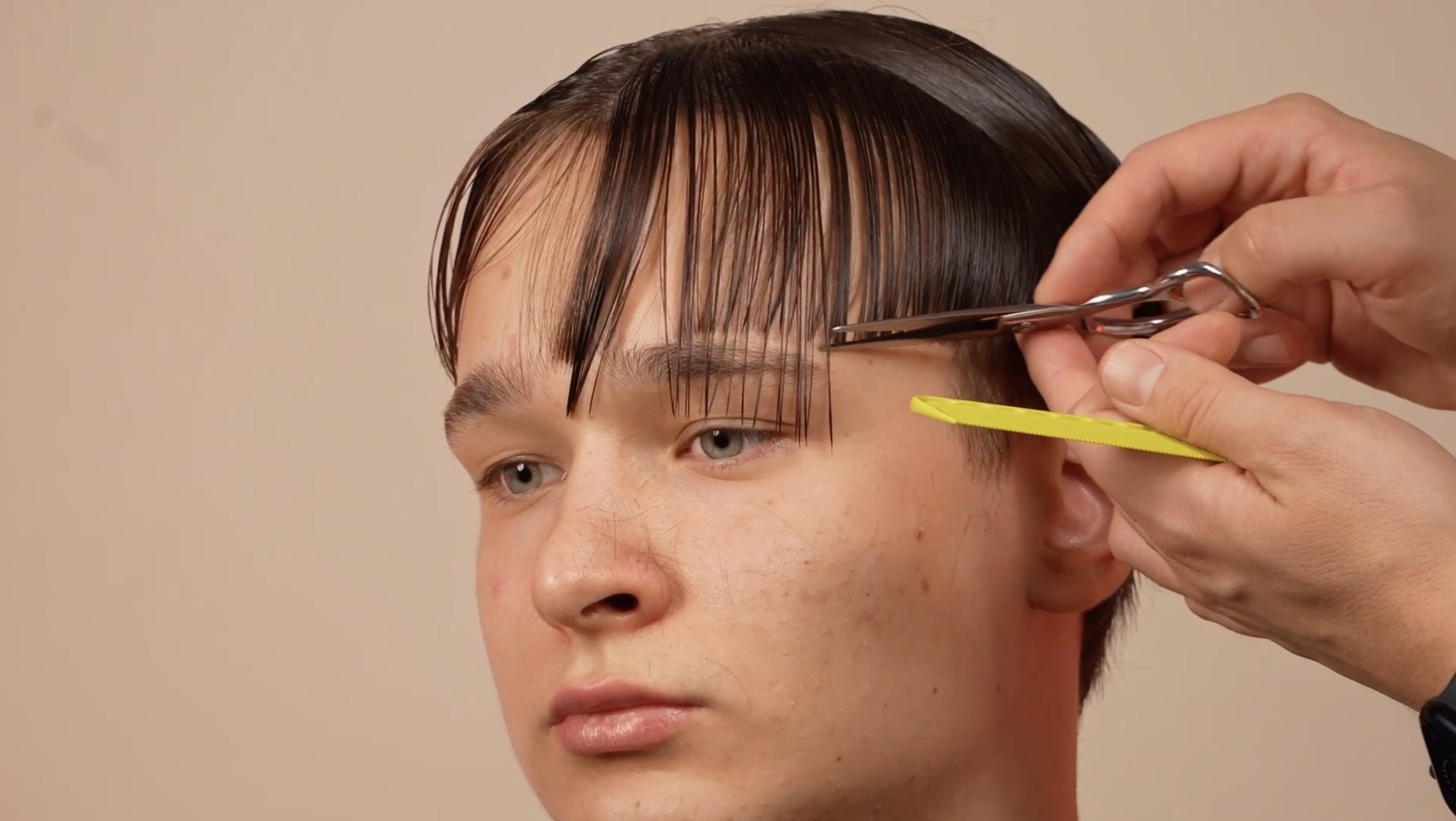
Texturizing: Point Cutting and Pointing
On fine hair, texturizing isn't about removing weight — it's about breaking up hard, uniform edges that give away how sparse the hair is. That's why the work here is done sparingly, with the tips of the scissors, not with texturizing shears along the full length.
- Point cutting means cutting into the edge with the scissor tips at an angle, vertically into the section. It breaks up the blunt line, creates a soft, irregular finish, and visually thickens the fringe.
- Pointing is done deeper into the section to vary the lengths and give the top movement. On fine hair, keep the depth under control, because cutting too aggressively will leave empty, see-through spots.
- Cut dry and assess the result as you go. Wet hair always looks denser, so make texture decisions on hair in its final, styled state.
The course also covers the line method and section redirection — deliberately guiding the length so weight stays where it builds the fringe, while lightening zones that wouldn't hold volume on fine hair anyway.
A Fade Suited to Fine Hair
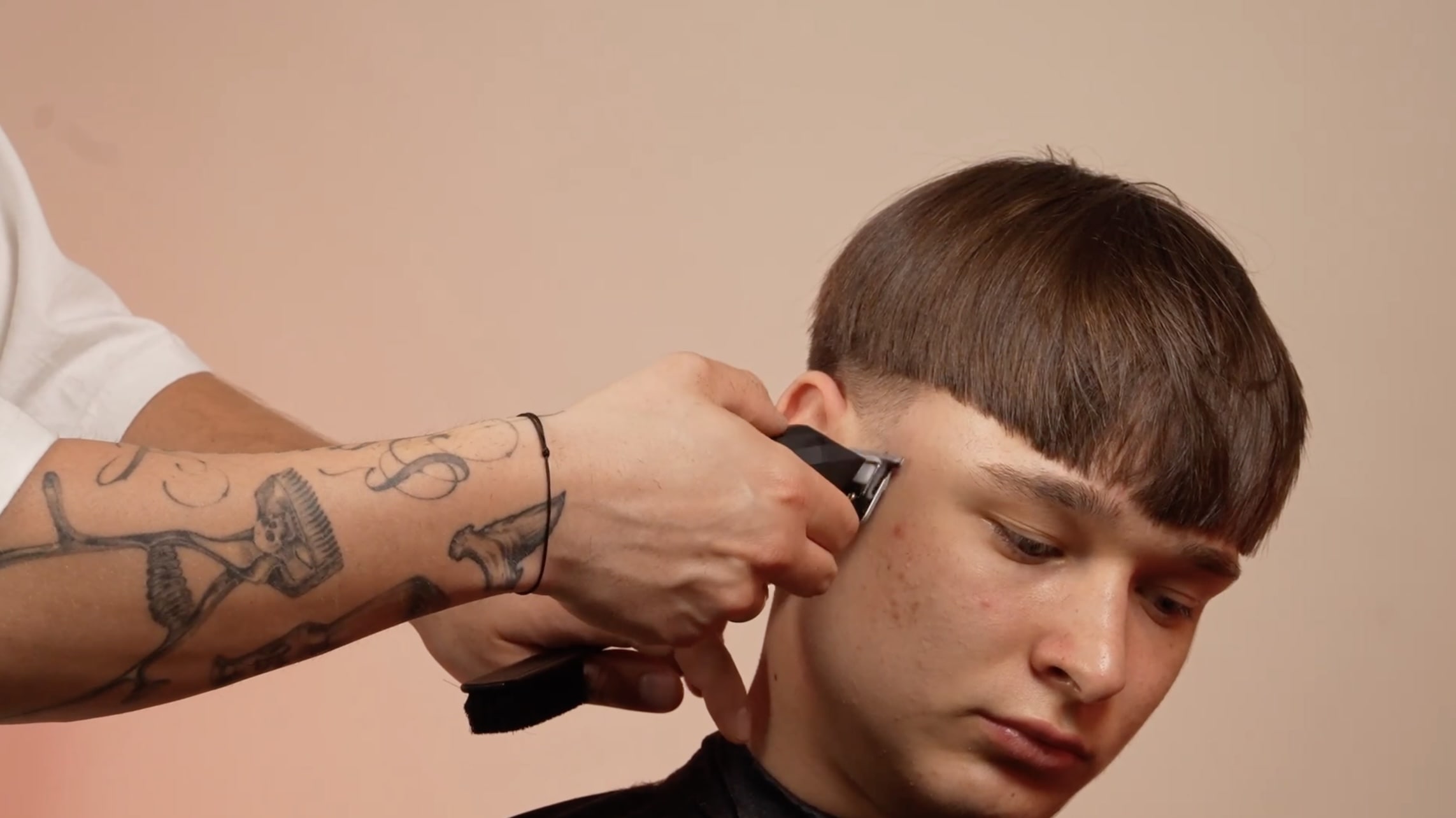
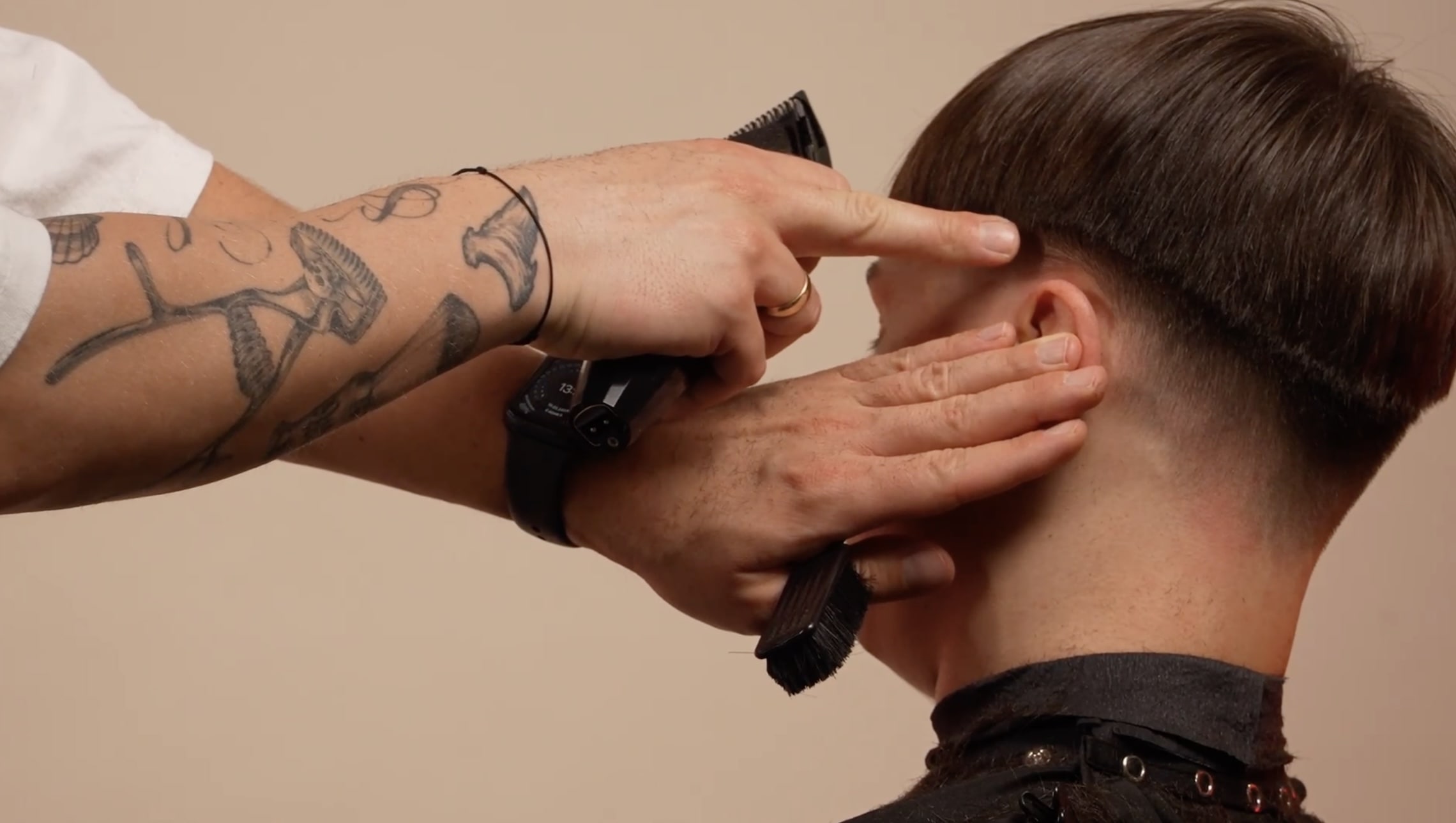
On fine hair, the fade shouldn't go as low as it would on thick hair. The lower and more aggressively you take the clippers, the more scalp you expose, and the more you visually cut down the volume of the top. The goal is a clean transition that adds contrast without stripping the head bare.
- Set the fade's starting line higher, at temple height, to preserve the band of hair that builds density near the scissor zone.
- Work the clippers with a fanning motion, opening the guard as you lift away from the head, so you don't leave a hard cutoff line. Each pass overlaps the previous one.
- Close out the transition zone between clippers and scissors with a comb and scissors, or with bare clippers guided over a comb, so the upper part of the fade blends smoothly into the texture of the top.
- Step down the guard lengths as you work your way down, and control the clipper angle — it's the angle, not the guard alone, that determines how smooth the transition is.
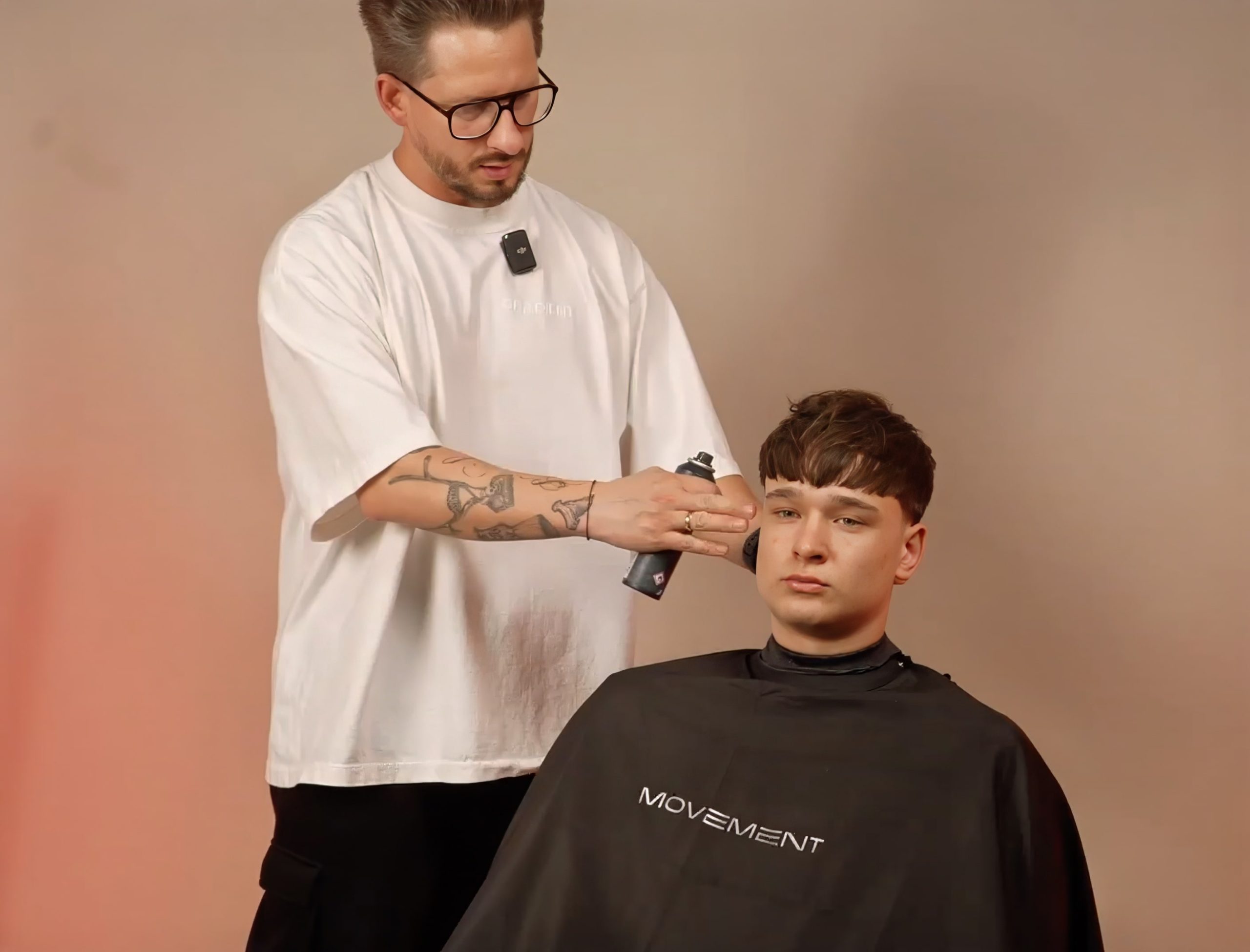
Styling and Finishing
A good haircut accounts for 80 percent of the result, but on fine hair, styling determines whether the haircut will also work at the client's home. What matters here is a lightweight product and a dry base.
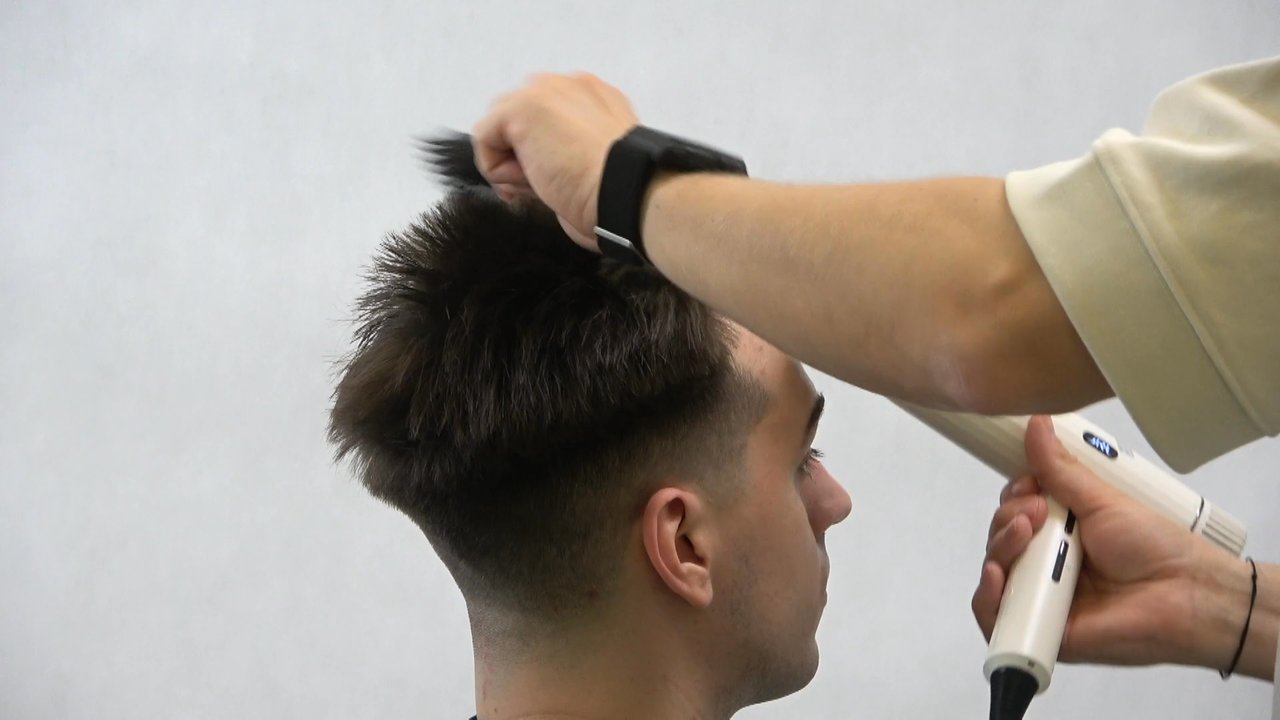
- Build volume by blow-drying the roots with lift before you even reach for a finishing product. A heavy product on wet hair will weigh down a fine top and kill the effect.
- Choose a matte finish with a light hold. Shine on fine hair emphasizes the scalp showing through, while matte masks it and creates the impression of density.
- Style the fringe forward and slightly down, breaking it up with your fingers so the textured edge works the way you cut it.
- Show the client how to recreate the look with a minimal amount of product. Fine hair is ruined fastest by overloading it.
Miłosz Mikołajczak – Course Instructor
Miłosz Mikołajczak is an educator specializing in men's hairdressing. In the French Crop course, he combines cutting techniques with practical tips from everyday work behind the chair, showing not just how to cut, but also how to read the client's hair and make decisions on the spot for every type of density.
What Mastering This Technique Gives You
- Expanding your client base to include people with fine, thin hair, who often struggle to find a stylist who can handle it well.
- A repeatable result instead of a hit-or-miss one, which translates into returning clients and a stronger position in the hairdressing market.
- Portfolio material that makes it easier to stand out in the industry and demonstrate a concrete skill.
- A foundation for combining French Crop with men's hair coloring, which further enhances the impression of texture and depth.
Why the Online Format Works for Learning to Cut
Texturizing and fade techniques are hard to master from a single live demonstration, because the key moments — the clipper angle or the depth of the point cutting — last only seconds. An online course lets you pause them and go through them as many times as you need.
- Learning at your own pace, between clients or after work.
- Access to the materials 24 hours a day, 7 days a week.
- Detailed instructional videos with a breakdown of each technique.
- The ability to revisit the trickier parts and practice them on a training head before your first client.
French Crop and a Wider Client Base
French Crop is a hairstyle that's universal in terms of face shape and easy to maintain day to day, which is why it fits well into the gender-neutral hairdressing trend. Being able to adapt it for fine hair opens up your salon to clients who are usually told their hair is too thin for a textured cut.
The Course as Part of Pro Academy
The course “French Crop on Fine Hair – Texturizing and Styling Techniques” is available as part of the Pro Academy subscription on the Connected Hair platform. With one subscription, you get not just this course, but the entire course library.
What Pro Academy Includes
- Unlimited access to every course in the Connected Hair catalog.
- Courses led by different educators, each with their own approach and specialization.
- Regular updates and access to newly added courses.
- Freedom to choose your own topics and learning pace.
This is the solution for hairdressers who treat technical development as an ongoing part of the job, not a one-off course. Join Pro Academy and start with French Crop on fine hair — one of the most demanding versions of this haircut.
See it in practice: in the French Crop on fine hair course with Miłosz Mikołajczak, you'll follow the entire process step by step on a model, with commentary from the instructor.