Online courses have stopped being a substitute for in-person courses and have become the main channel for continuing education for hairdressers and barbers who don’t want to close the chair for two days to attend a workshop. The question is no longer “whether”, but “which platform and which courses to choose”. This guide organizes the selection criteria and shows what the techniques that most often make it into course programs today actually involve.
Why do hairdressers choose online courses?
Cutting and coloring techniques evolve faster than the traditional school system can keep up with. The burst fade, a standard in barbershops today, was a niche technique just a few years ago. Online, you learn a given technique the moment your client starts asking for it—not six months later, when it finally appears in the program of the nearest in-person workshop. On top of that, you can pause, rewind, and rewatch a key cut as many times as you need to understand the hand movement and the angle at which the tool is guided.
The main advantages of online learning:
- Time flexibility – you watch lessons after work hours, between clients, or on your day off, without blocking out a whole day for travel.
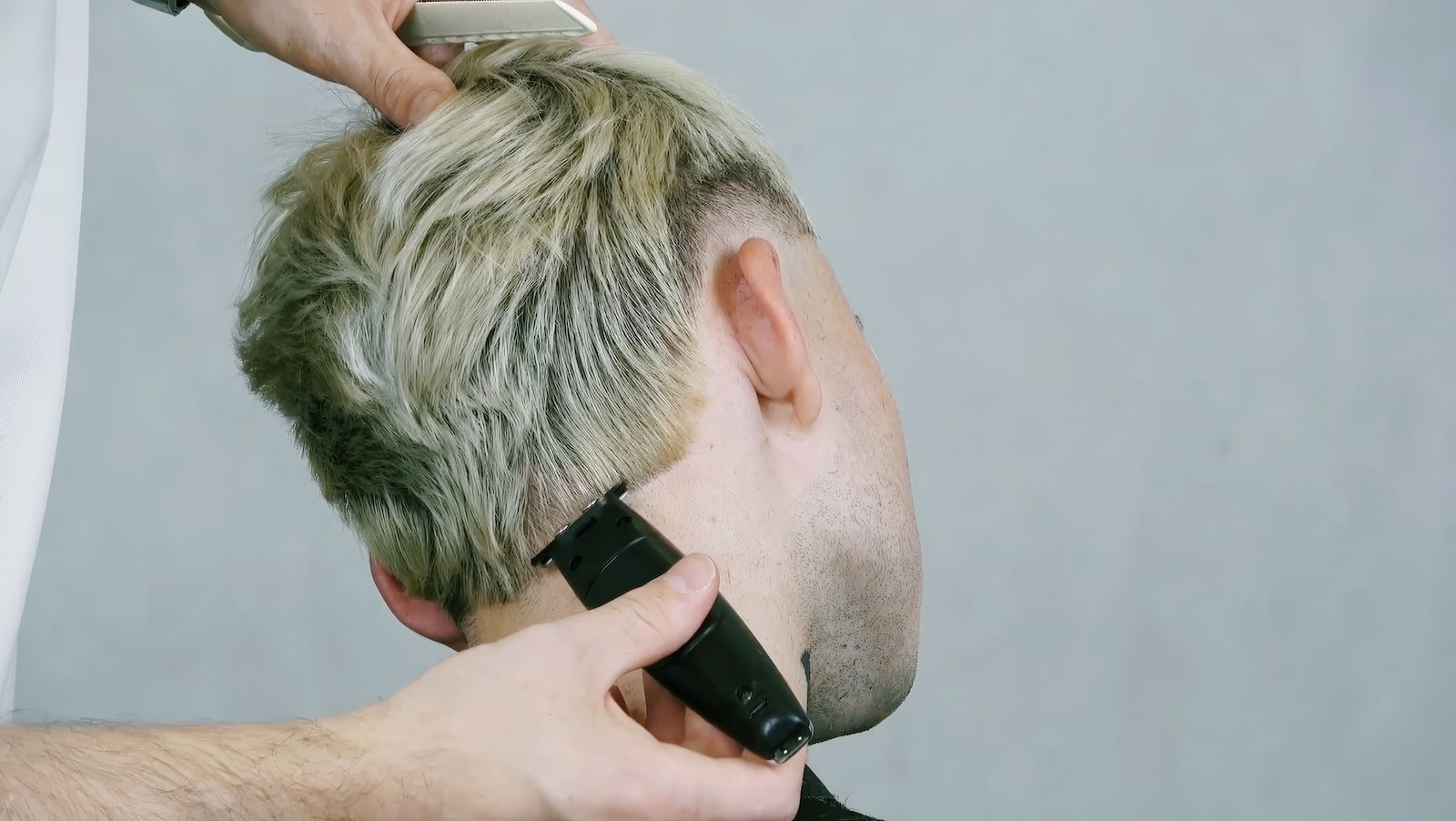
- Repeatability – key moments, such as the point where the clippers move through the transition zone, can be rewound and watched in slow motion as many times as needed.
- Access to educators from across the country – you’re not limited to whoever happens to be teaching a course in your city.
- Up-to-date content – new techniques and hairstyles are added to the library as they emerge, without waiting for the next edition of an in-person course.
- Lower entry cost – no travel, accommodation, or a day of lost chair revenue.
What to look for when choosing a platform?
1. Quality of educators
The most important criterion. A good educator shows not just the final result, but above all the technical decisions made along the way: how they section the head, where they set the transition line, which clipper guards they use to build the gradient, and how they correct mistakes. Before choosing a platform, check:
- Are the educators practicing professionals who work behind the chair every day, not just people who teach courses?
- Do the lessons explain “why”, not just “how” – for example, why they choose a specific elevation angle for a section rather than another?
- Do they show work on different hair types and head shapes, or only on one “easy” model?
2. Timeliness of materials
Hairdressing is an industry of trends, but also of evolving technique. A platform should:
- Add new courses regularly, not just once a year.
- Show up-to-date versions of cuts, because the same fade or mullet looks different today than it did two seasons ago.
- Maintain production quality – good lighting, a camera angle that shows the tool at work, and clear audio commentary.
3. Diversity of levels
A good platform takes you from the fundamentals to advanced techniques, instead of lumping everyone together:
🎯 Beginners:
- Coloring fundamentals and color theory (e.g., the Color Wheel) – without this, every future correction is guesswork.
- Cutting fundamentals: sectioning, elevation angles, building volume and shape (e.g., Volume and Shape Modeling).
- Care and treatment techniques (e.g., Perm Waving – Basics).
🚀 Intermediate:
- Modern cuts with a clean shape (e.g., Middle Part, Pompadour).
- Creative hybrids combining several techniques (e.g., Dynamic Crop-Mullet Hybrid).
🏆 Experts:
- Advanced global coloring (e.g., Total Blonde).
- Specialized layering and zone-blending techniques (e.g., Disconnection and Graduation Techniques, Burst Fade).
4. Access model
Before you click “buy”, compare the terms:
- Subscription vs. individual courses – if you plan to learn systematically, a subscription is usually cheaper than buying courses one by one.
- Length of access – whether you can revisit a technique six months from now, when the right client comes along.
- Ability to cancel – whether the contract doesn’t lock you in rigidly.

The most popular techniques in hairdressing education
Below are the most popular hairstyles that hairdressers and barbers are learning today, with a technical breakdown of what makes each one challenging.
1. Wolf Cut
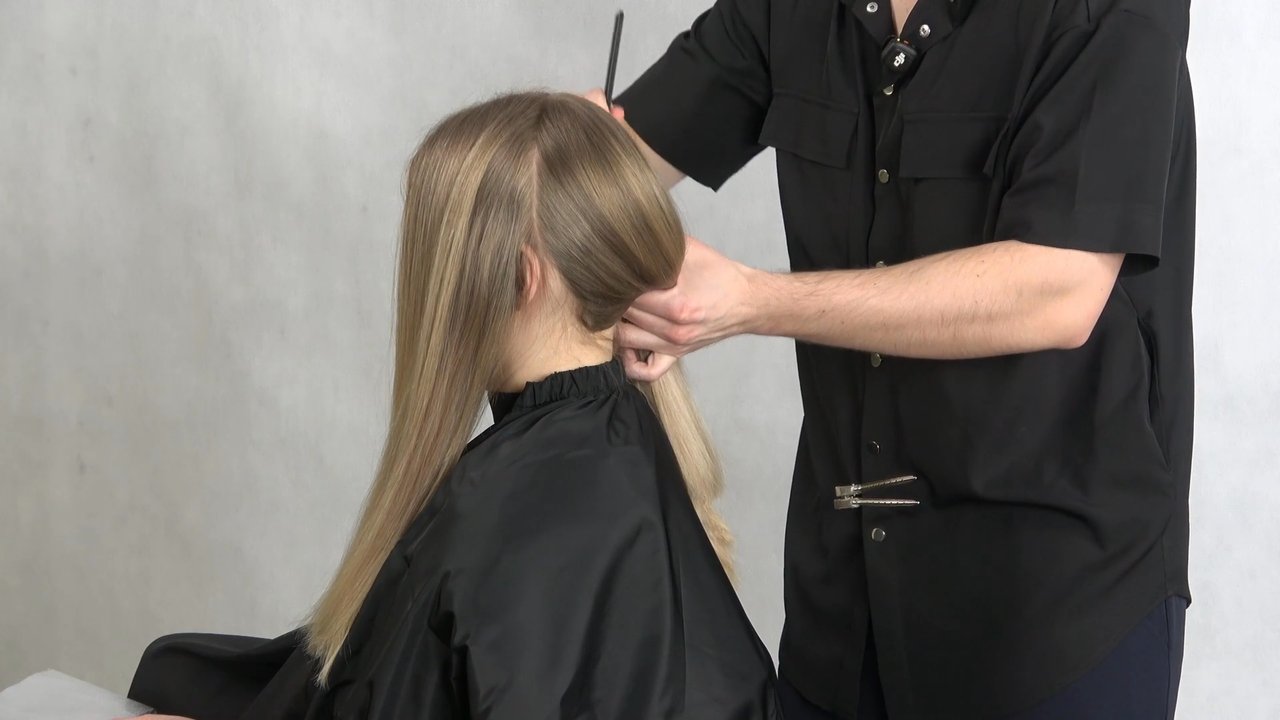
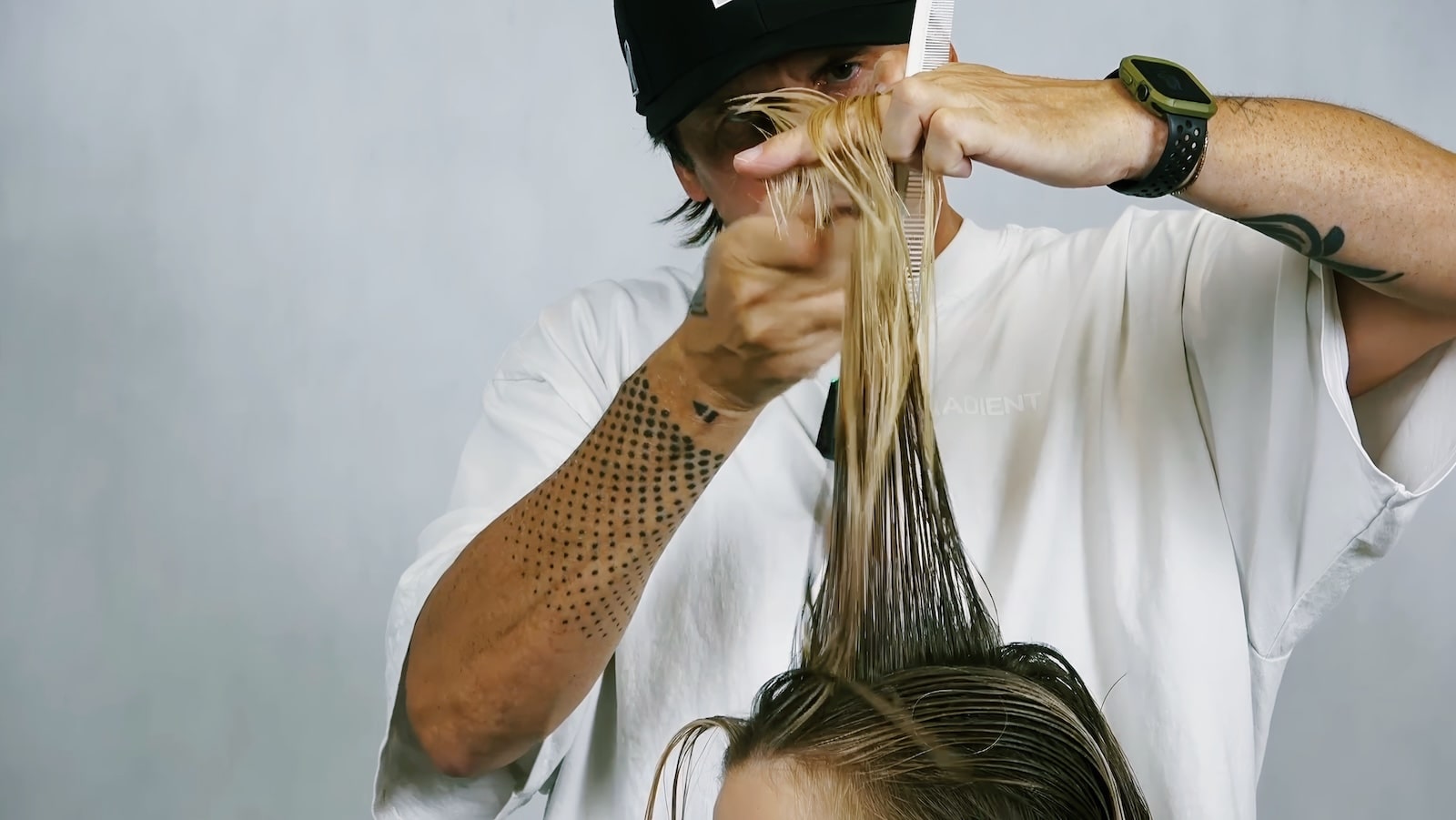
A heavily textured, layered cut combining the shag with the mullet. The key is working on sections held out vertically and point cutting – angling the scissor tips – to create choppy, light ends instead of a hard line. The top layers build volume around the face, while the longer back sections create the signature “tail”. It’s easy to overdo it here, so volume is distributed gradually, controlling the weight section by section.
2. Total Blonde
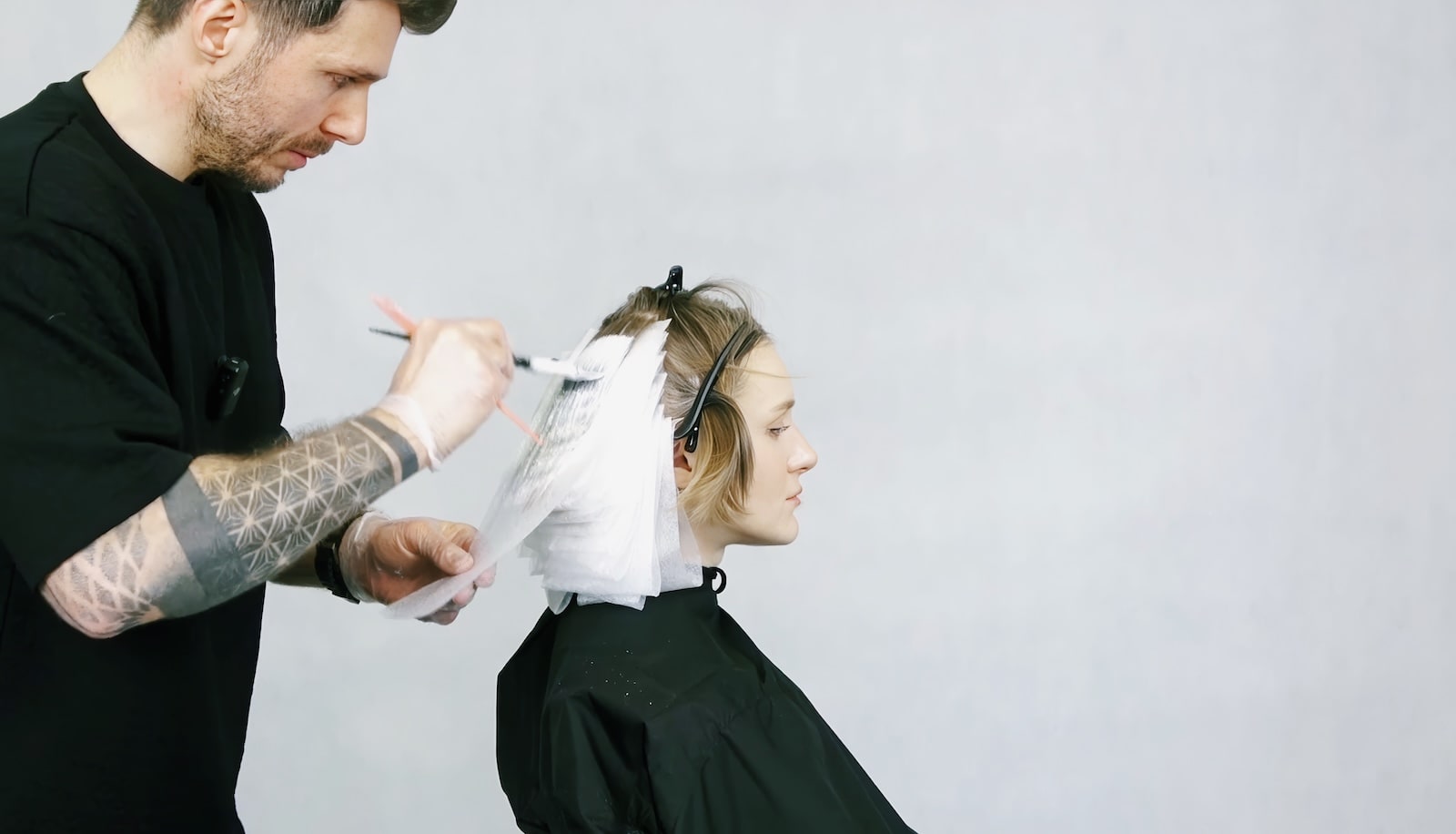
Global lightening to a clean blonde without excessive hair damage. This is a technique for experienced professionals: what matters is even application of the lightener from section to section, controlling processing time, and properly diagnosing hair condition before starting. There are no shortcuts here – sectioning and application discipline determine whether the result is uniform and the hair stays in good condition.
3. Middle Part
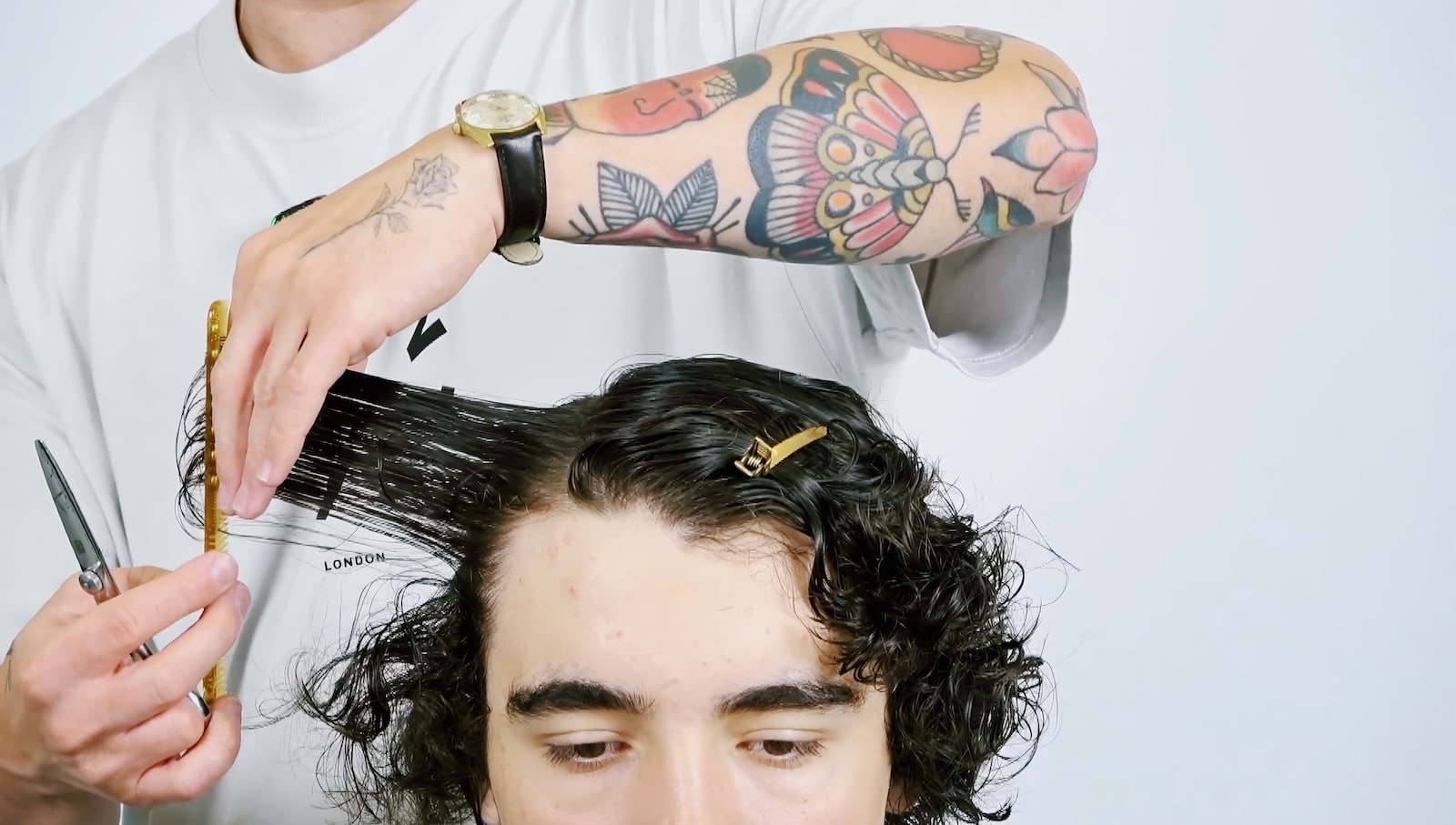
A middle part looks simple, but this cut forgives the fewest mistakes: any asymmetry immediately stands out. What matters is symmetrical sectioning around the center line, equal length on both sides, and shaping the sections around the face so the hair falls outward instead of flopping. Finishing is often done on dry hair, to correct the lines exactly the way they’ll actually fall once dry.
4. Burst Fade
A fade that radiates in an arc around the ear, with longer hair left at the back. Unlike a straight fade, the transition here curves in a semicircle, so the clippers are guided in a fanning motion, moving down through the guards from longer to shorter and blending out the boundary lines. The hardest part is getting an even arc on both sides of the head and a clean fade down to the skin at the lowest point, without any hard edges.
5. Pompadour
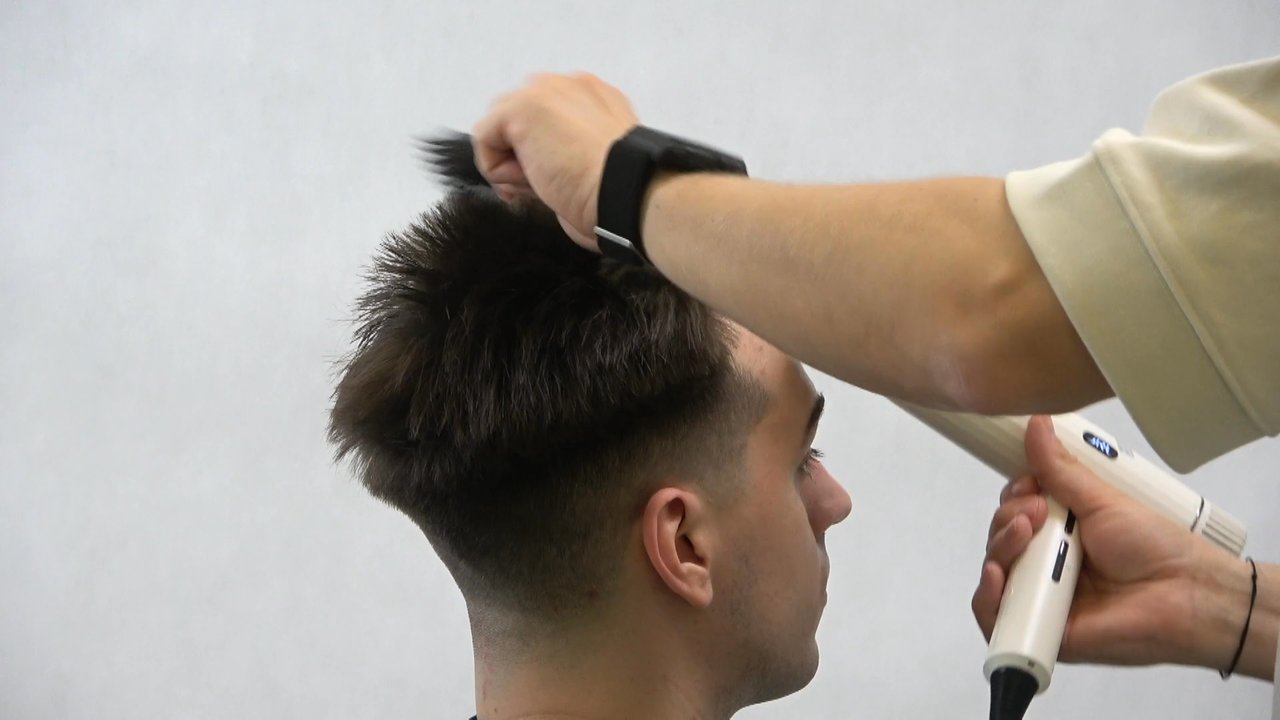
A classic style with strong volume over the forehead and shorter sides. The shape rests on two pillars: the cut, which leaves enough length and weight on top to have something to style, and the styling itself – blow-drying with a back sweep and building height at the root. The sides are usually done as a taper or fade, matched to how bold the client wants to wear the top.
How to evaluate a course’s quality before buying it?
✅ Check these things:
- Preview clip – can you see how the educator actually guides the tool, not just a trailer showing the final result.
- Program description – does the agenda spell out exactly which techniques you’ll learn (sectioning, guard selection, finishing).
- Duration – is it proportional to the complexity of the topic; a full haircut explained in five minutes is a red flag.
- Participant reviews – what other hairdressers say after applying the material behind the chair.
- Support – can you ask the educator for help if you get stuck at a specific stage.
❌ Red flags:
- No option to preview even a fragment of the lesson.
- Unclear access terms and duration for the material you’re buying.
- No information about who’s teaching the course and what their track record is.
- Overly promotional language without a single technical detail.
Support and community – why do they matter?
Learning online doesn’t have to mean learning alone, and with techniques that forgive few mistakes, being able to ask a question can be the difference between a successful result and a failed one. The best platforms offer:
- Access to educators – you can ask about a specific problem, like how to fix an uneven fade transition.
- A community of learners – sharing experiences and photos of results with other hairdressers.
- Extra materials and Q&A sessions – expanding on the topics that cause the most difficulty.
- Technical support – help using the platform if something isn’t working.
Who might online courses not be right for?
Not every learning method suits everyone. Online courses might not be the best choice if:
❌ You need immediate feedback on your own head, section by section
❌ You require state certification for specific procedures
❌ You expect live, hands-on practice on models under an instructor’s direct supervision
❌ You don’t have basic equipment (clippers with guards, scissors, a comb, a training head) to practice with
Online works best for hairdressers who value flexibility, learn at their own pace, and can transfer a technique on their own from the screen to a training head, and then to a client.
How to get the most out of online learning?
Before you start:
- Set up your space – position the screen so you can watch the lesson while practicing on a training head at the same time.
- Plan your time – shorter, regular sessions give better results than one long marathon.
- Prepare your equipment – clippers with a full set of guards, scissors, a comb, and a training head, so you can start practicing right away.
While learning:
- Note down key parameters – section order, elevation angles, guard selection. These come back into play once the technique becomes part of your work.
- Practice on the training head right away, then on a model – theory alone won’t translate into a confident hand.
- Ask the educator questions – especially where your result diverges from what’s on screen.
After completing the course:
- Add the technique to your menu – offer it to the clients it suits, instead of putting it off for later.
- Share your results – feedback from other hairdressers will catch mistakes you can’t see yourself, faster.
- Keep learning – each new technique builds on the last, so it’s worth keeping up the rhythm.
Investing in growth – is it worth it?
PLN 149 a month for access to dozens of hours of courses is an investment that pays for itself with just one new service added to your price list. A single burst fade or total blonde client per month is enough to cover the subscription with room to spare.
For comparison, alternative forms of continuing education typically cost:
- In-person course: PLN 800-2000 plus travel and accommodation, a one-off cost for a single topic.
- Industry conference: PLN 500-1500 for 1-2 days.
- Private lesson: PLN 200-500 per hour.
Summary: 5 steps to choosing the perfect courses
- Assess your level – honestly diagnose where your gaps are: in sectioning, in clipper work, or in coloring.
- Check the educators – their hands-on practice and how they explain things are your guarantee of quality.
- Test the platform – watch preview clips before you decide.
- Plan your learning – regular sessions with practice on a training head give the best results.
- Bring the technique to the chair – theory without applying it on a client is a waste of time and money.