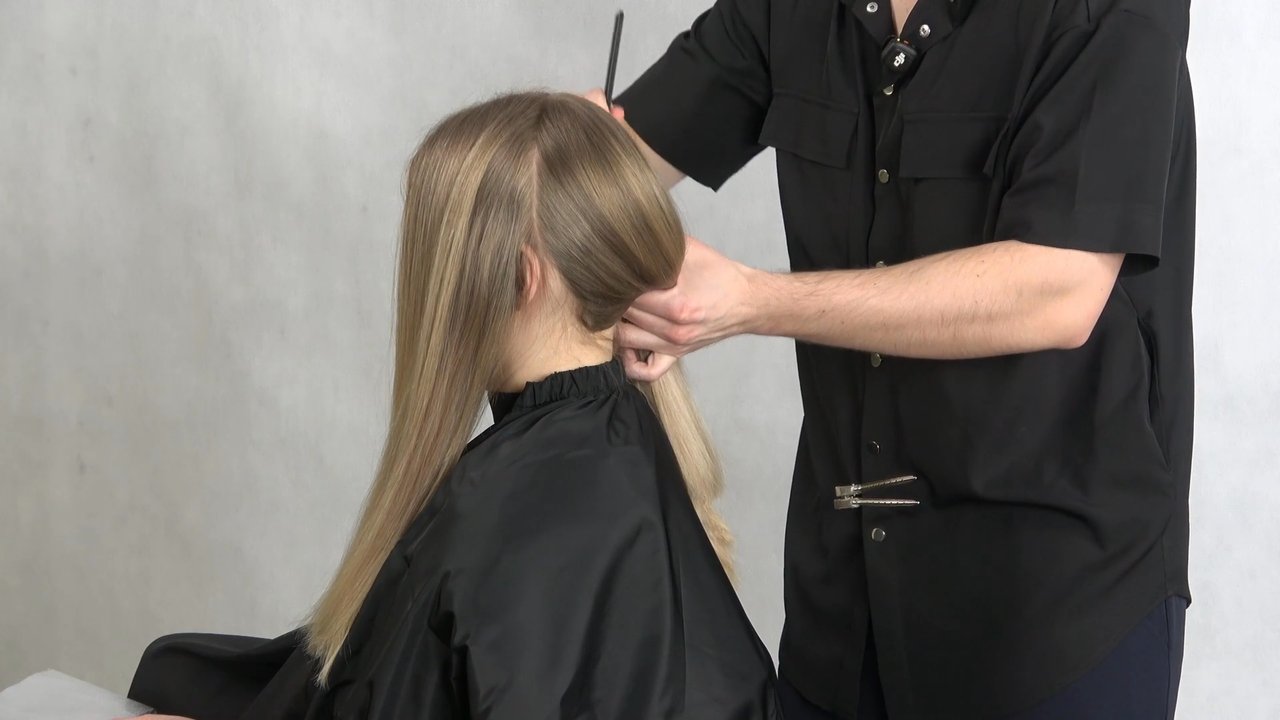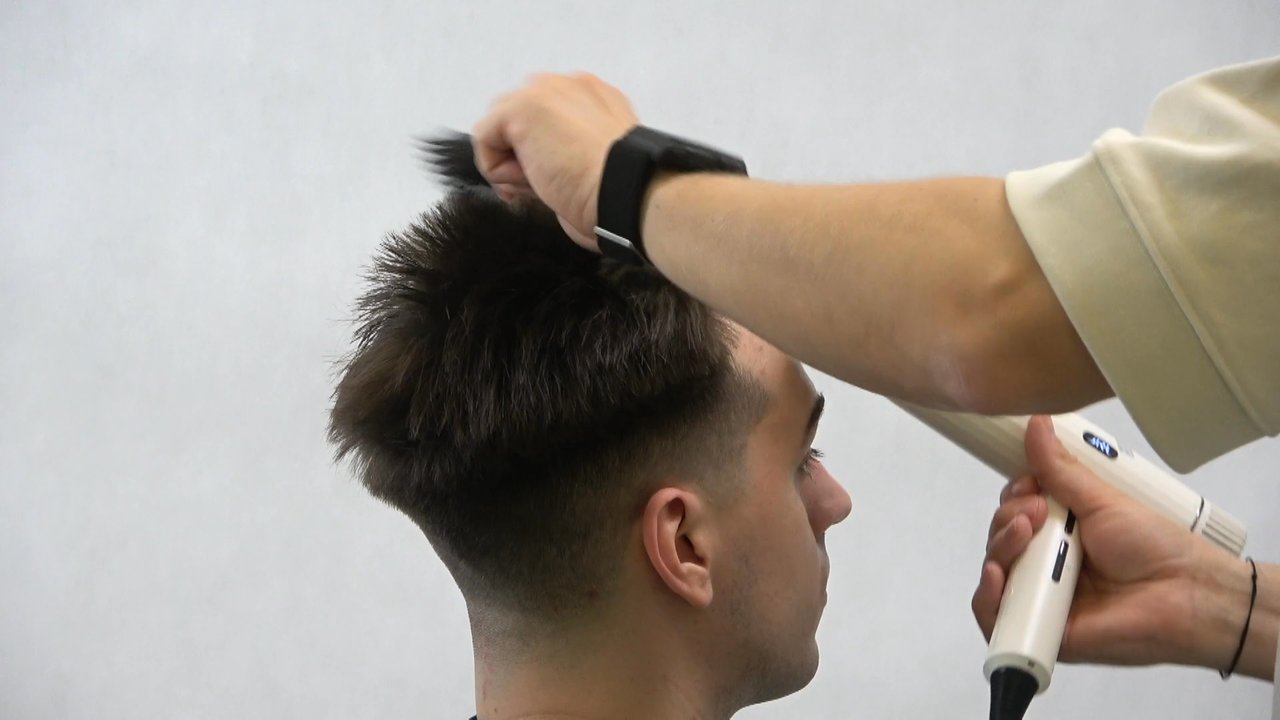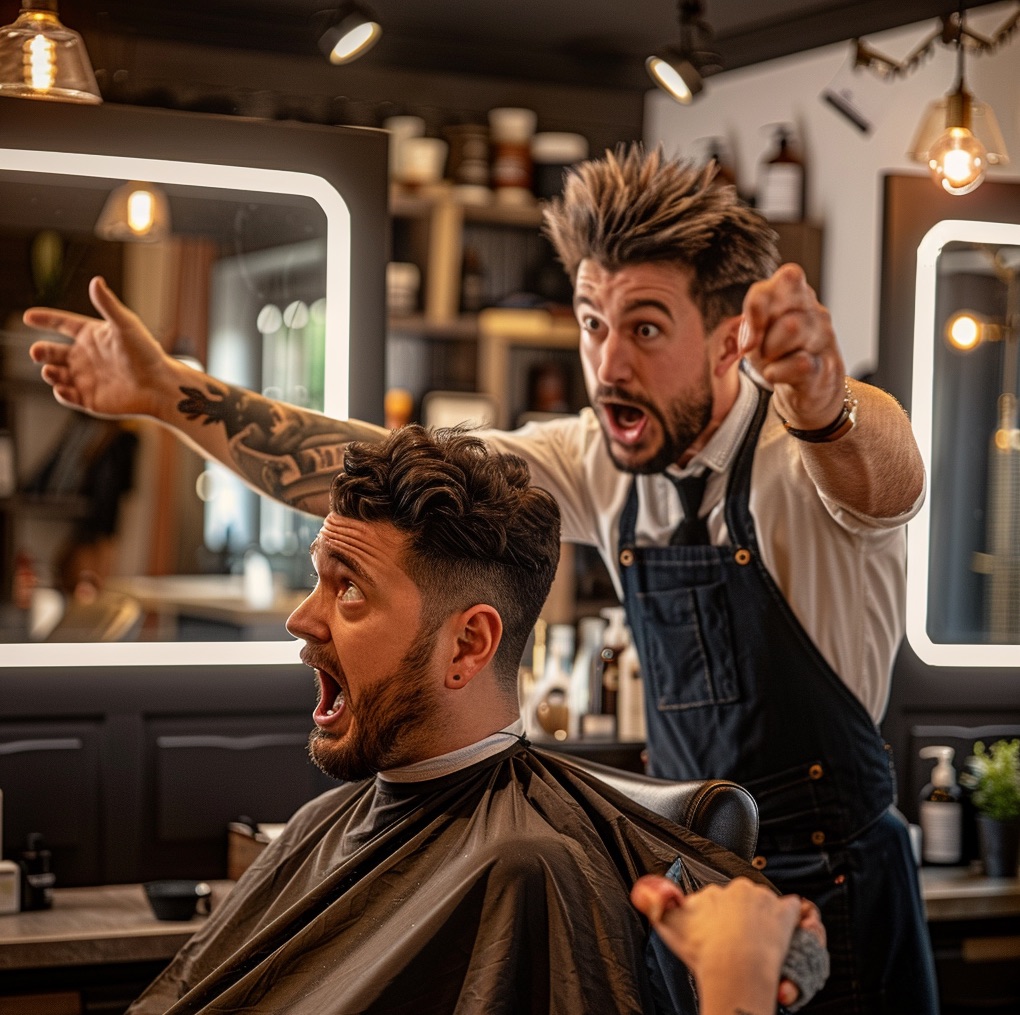
A difficult client isn't always rude. More often, they're unsure, tense, or simply can't put into words what they want. Your reaction in the first two minutes behind the chair decides whether they leave satisfied or with a complaint. Below you'll find concrete procedures: how to run a consultation, how to respond to typical situations, and how to set salon rules that take the pressure off you and your team.
Types of Difficult Clients and What's Behind Them
Before you choose a strategy, name the problem. Each of these behaviors is driven by a different need, and your response should address the need, not the symptom.
- The Indecisive: keeps changing their mind because they're afraid of making the wrong choice. They need you to narrow down the options and take on part of the responsibility.
- The Demanding: has very specific, sometimes unrealistic expectations. They need a clear boundary between what's achievable with their hair and what isn't.
- The Dissatisfied: will always find something to pick at. They're often testing whether you're really listening. They need a sense of control and a genuine response, not brush-offs.
- The Talkative: talks non-stop and distracts you from work. They need attention, but you need focus at precise moments (the cutting line, the line-up).
- The Impatient: is in a hurry and watches the clock. They need predictability — knowing how long it will take and what stage you're at.
- The Aggressive: raises their voice or is curt. They need to release emotion, but not at the cost of your safety and dignity.
- The Silent: it's hard to get information out of them. They need you to take the lead and give them concrete reference points, not an open-ended “so how do you want it?”
The Consultation That Prevents 80 Percent of Problems
Most complaints don't come from a technical mistake — they come from a gap between what the client had in mind and what you understood. A good consultation closes that gap before you pick up the clippers or scissors.
- Work with images, not words. “Short on the sides” means something different to everyone. Ask for a reference photo or show your own, touch the client's head, and point out the actual height where the fade will end.
- Read the hair and the head, not just the reference. Say it plainly if density, curl pattern, hairline, or head shape will make the result different from the photo. It's better to set realistic expectations now than to explain yourself afterward.
- Nail down specifics, not generalities. Confirm the length on top, the height of the fade, the shape of the line-up, and the finish of the hairline before you start. These four things determine whether the haircut meets expectations.
- Repeat what's been agreed in your own words. “So we're leaving enough on top to comb back, the sides go down to the skin, and the line-up is natural without a hard edge — right?” The client confirms, and you have a reference point for the end result.
- Show the halfway point. For a bigger change, pause midway, show them in the mirror, and give them a chance to adjust while you still have hair to work with. You can't make cut hair longer again.
You'll find a detailed framework for the advisory conversation itself in our article on advising clients on choosing a hairstyle.
Key Skills for Handling a Difficult Client
- Active listening: don't interrupt, ask follow-up questions, and paraphrase. A client who feels heard rarely escalates.
- Empathy without submission: you understand the client's emotion, but you're the one responsible for the technical result, and you don't promise things that aren't achievable.
- Patience: you set the tone and pace, no matter how worked up the client is.
- Assertiveness: you can say “I won't do that, because it will damage your hair, but here's what I suggest instead” without over-explaining and without aggression.
- Flexibility: within technical limits, you adapt to the client instead of forcing a single approach.
- Professionalism: you keep your station, tools, and language at a high standard even when the client doesn't.
Strategies for Specific Situations
A quick cheat sheet behind the chair: client type and the response that most often defuses the situation.
| Client Type | Strategy |
|---|---|
| Indecisive | Narrow it down to two options, show photos, recommend one, and explain why |
| Demanding | Clearly separate what's achievable with their hair from what isn't, and offer an alternative |
| Dissatisfied | Listen all the way through, apologize for the specific issue, and propose a real fix, not generalities |
| Talkative | Build rapport between cuts, but ask for a moment of focus during the line-up |
| Impatient | Give an estimated time at the start and update them on the stage you're at |
| Aggressive | Calm tone, short sentences, involve a manager or stop the service if needed |
| Silent | Take the lead, ask them to choose from specific options, and confirm direction as you go |
How to Talk So Things Don't Escalate
Language makes a difference. You can deliver the same information in a way that makes the client tense up, or in a way that makes them feel guided.
- Say what you can do, not what you can't. Instead of “that's not possible,” say “this will work better on your hair, and I'll show you why.”
- Paraphrase before cutting. Repeat what's been agreed in your own words to catch any mismatch before it's irreversible.
- Ask precise questions. With the indecisive, use closed questions (“shorter, or leave it?”); with the silent, use open but specific ones (“would you prefer a natural line-up or a sharp line?”).
- Be honest right away. If something can't be done without damaging the hair, say so at the consultation, not after the fact.
- Keep your tone lower than the client's. The louder they get, the calmer and slower you get. This defuses tension faster than any argument.
Preventing Difficult Situations
The easiest problem to solve is the one that never happens. These habits keep tension behind the chair to a minimum.
- A solid consultation before every service, even with a regular client, because expectations change from visit to visit.
- Realistic expectations: clearly state what you'll achieve today versus what will only be possible after regrowth or a follow-up visit.
- Education behind the chair: briefly explain why you're doing something a certain way and how to maintain the result at home. A client who understands complains less often.
- Ongoing communication: keep the client informed about the stage of work and that the result is still coming together. Silence during a change breeds anxiety.
Managing Stress
A difficult client costs you not just time, but also nerves. To keep that tension from spilling over onto your next client, it's worth releasing it as you go.
- Breathing. A slow inhale and a longer exhale in a tense moment lower your heart rate and help keep a steady hand.
- Reset between clients. A short break, some water, tidying your station before you seat the next person — these cut the emotional carryover from the previous visit.
- Separate facts from emotions. Criticism of the result is technical feedback, not an attack on you. This distinction protects against burnout.
- Team support. Discuss difficult visits at the end of the day. What one person went through prepares the rest.
Team Courses
If you run a salon, handling difficult clients can't rely on each person's individual intuition. Consistent quality comes from clear rules and shared training.
- Practice consultations and difficult conversations in pairs, using real scenarios, not just in theory.
- Discuss real situations from the past week in short team meetings.
- Encourage sharing what worked, so good responses become the salon's standard.
- Add a block on stress management, because a burned-out team escalates situations that could have been defused.
Salon Policy on Difficult Clients
Clear rules take the burden of deciding under stress off the hairdresser. When you know where the line is, it's easier to hold it.
- Set an escalation path: when the hairdresser calls the manager, and who makes the final call on complaints.
- Define clearly the situations in which you can refuse service, for example in cases of aggression or behavior that threatens safety.
- Introduce a single system for collecting feedback and fixes, so complaints don't get lost between staff members.
- Review the rules periodically and update them based on real incidents.
Learning from Mistakes
Every difficult visit is data. A lesson learned means the same situation won't catch you off guard a second time.
- After a difficult visit, calmly replay what happened: at what point did things start to go wrong.
- Identify the specific thing to change: too short a consultation, an unclear length, a missing check-in stage.
- Build the fix into your workflow so the lesson doesn't just stay in your head.
- Share it with the team, because one person's lesson can save others from a complaint.
Hairdresser Humor: When Life Gives You Difficult Clients, Turn Them Into Stories!
Sometimes the best response to tension is a bit of distance. Here are a few scenarios that can lighten the mood behind the chair:
- The Chameleon Client:
“I want to look like Brad Pitt… no wait, like Jason Statham… or maybe Thor?”
Solution: “How about the 'International Spy of Many Faces' haircut? You'll be able to play any of them, depending on your mood!” - The Precision Master:
“Please cut exactly 3.7 millimeters off the left side and 4.2 millimeters off the right.”
Solution: Pull out a ruler and say, deadpan: “Of course! Would you like me to use metric or imperial?” - Sleeping Beauty:
A client who falls asleep during the haircut and wakes up terrified at every snip of the scissors.
Solution: “Don't worry, we offer a special 'Haircut While You Sleep' service. You'll wake up with a new hairstyle and well-rested!” - The Vintage Lover:
“I want a hairstyle that's both modern and classic, like it's from the '50s, '60s, '70s, '80s, and '90s all at once.”
Solution: “Ah, I understand! You're looking for the 'Time Machine' haircut. I'll put together something that'll make it look like you just came back from a tour through every decade!” - The Style Ninja:
A client who wants a radical change, but in a way that nobody notices.
Solution: “I recommend our special 'Ninja Metamorphosis' service. The change will be so subtle, even you won't notice it!”
Use humor with care. The goal is to lighten the mood, not to embarrass the client. Joking about a difficult situation — not about the person — builds rapport and lowers your own stress level.
Summary
Handling a difficult client rests on three pillars: a thorough consultation that closes the gap in expectations, language that guides instead of creating tension, and clear salon rules that take the pressure of decision-making off you. Even the most demanding client can become a regular if they feel heard and see that you're in control of the situation.
If you want to deepen both your technique and your soft skills in working with clients, check out our online hairdressing courses. There you'll find courses that build not just your craft behind the chair, but also the skills essential for everyday client care.